

Property owners in Costa Rica face a constant challenge: balancing higher rental income with rising operational costs. The Southern Pacific Zone attracts thousands of tourists annually, but capturing that demand requires strategy.
At Osa Property Management, we've seen firsthand how the right approach to pricing, marketing, and cost control transforms a property's bottom line. This guide walks you through the tactics that actually work.
Understanding Demand and Competition in Costa Rica's Southern Pacific Zone
Tourism Drives Occupancy Rates Across the Region
The Southern Pacific Zone attracts visitors year-round, but the numbers reveal exactly when and how to price your property. In 2019, Costa Rica welcomed over 3 million tourists, and the southern regions captured a significant portion of that traffic, particularly around Manuel Antonio, Uvita, and Dominical. These destinations function as purpose-built eco-tourism hubs where guests actively seek vacation rentals. Peak season runs from December through April, when occupancy rates regularly exceed 70 percent. This matters because your pricing strategy cannot remain flat. Properties that charge the same rate year-round leave money on the table during peak months and struggle with occupancy during the shoulder season from May through November.
Seasonal Patterns Determine Your Annual Revenue
Dynamic pricing strategies for vacation rental properties in Costa Rica's tourism market follow a predictable pattern tied to weather and northern hemisphere holidays. December through April brings families and couples escaping winter. June through August attracts budget travelers and younger guests. September and October represent genuinely slow periods-some properties see occupancy drop to 30 percent or lower. Properties that implement dynamic pricing adjust rates upward during peak weeks and offer strategic discounts during slower periods rather than maintaining static pricing. Dynamic pricing boosts vacation rental revenue by 10-40% annually through real-time rate adjustments. The math is straightforward: higher rates during high-demand periods and competitive rates during low-demand periods maximize total annual revenue while maintaining occupancy.
Multiple Booking Channels Create Competitive Pressure
Airbnb, VRBO, and local booking platforms have flooded the market with rental listings. In popular zones like Uvita and Manuel Antonio, a single street might host ten competing properties. This abundance means guests have choices, and they make decisions based on price, photos, reviews, and location. Property managers who rely solely on one booking platform lose negotiating power and market visibility. Owners partnering with professional management companies that maintain presence across multiple channels-direct bookings, Airbnb, VRBO, and local networks-capture more inquiries and convert higher percentages into bookings. The competition will not disappear, so properties need management that actively optimizes listings, responds quickly to inquiries, and maintains booking momentum across platforms simultaneously. Professional teams understand how to position properties competitively across these channels and leverage their market presence to your advantage.
How to Price Right and Reach More Guests
Track Occupancy Data to Set Competitive Rates
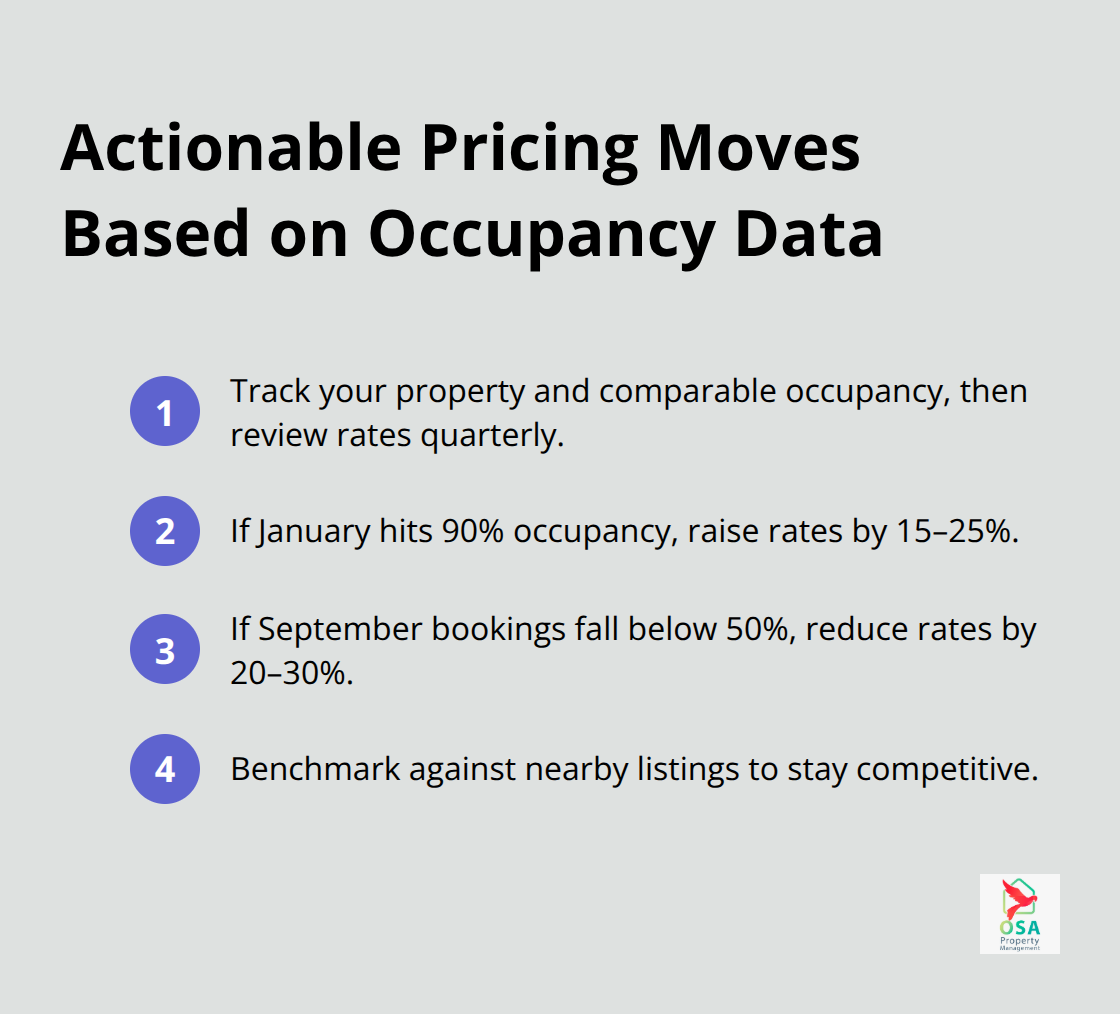
Pricing strategy separates profitable properties from those stuck in the middle. The Southern Pacific Zone's peak season (December through April) commands premium rates because occupancy exceeds 70 percent, yet many owners fail to capitalize on this demand. Properties charging $150 per night year-round during peak season leave thousands on the table while those same properties struggle to fill rooms at that rate during September and October when occupancy plummets to 30 percent. Track actual occupancy data for your property and comparable listings in your neighborhood, then adjust rates quarterly based on booking patterns. If your property reaches 90 percent occupancy in January, raise rates by 15–25 percent. If September bookings drop below 50 percent, reduce rates by 20–30 percent to attract price-sensitive travelers.
Properties implementing data-driven pricing strategies see revenue increases of 10–40 percent annually without necessarily attracting more guests. The approach works because it responds to real market conditions rather than guessing at the right price.
Expand Reach Across Multiple Booking Channels
Reaching potential guests across multiple channels multiplies bookings far more effectively than relying on a single platform. Airbnb and VRBO attract different traveler profiles, and direct bookings from your website eliminate platform commissions entirely, preserving 15–20 percent of revenue. Professional property management teams maintain active presence across all three channels simultaneously, ensuring your property appears when guests search, responding to inquiries within two hours, and managing calendars so bookings don't conflict.
Invest in Professional Photography and Presentation
Photography quality directly influences booking conversion rates. Professional photography showing natural light and outdoor spaces generates 25–40 percent more inquiries than smartphone photos. Different submarkets attract different guest types-families in Manuel Antonio seek eco-experiences while digital nomads in Uvita prioritize reliable Wi-Fi and workspace. Understanding which amenities and visual elements resonate with each submarket's travelers shapes how you present your property across channels.
The combination of strategic pricing grounded in your property's actual performance data, simultaneous presence across booking channels, and investment in professional photography creates a revenue engine that captures demand when it exists and maintains occupancy during slower periods. This foundation positions your property competitively, but capturing that revenue advantage requires equally disciplined cost management to protect your bottom line.
Protecting Your Profits Through Smart Cost Control
Maximizing revenue means nothing if operational costs consume your gains. The Southern Pacific Zone's competitive rental market rewards owners who control expenses without sacrificing guest experience. Costa Rican property managers often discover that 1.5% to 3% of their property's value vanishes into maintenance, cleaning, utilities, and administrative overhead yearly, averaging $10,000–$25,000. The difference between a property that generates 50 percent net profit and one that generates 70 percent net profit rarely involves charging more per night-it comes from spending less on operations while maintaining the quality that keeps guests booking and leaving five-star reviews. Property owners who thrive across Jaco, Manuel Antonio, Uvita, and Dominical share one trait: they treat vendor relationships and preventative maintenance as revenue generators, not expenses to minimize.
Build a Local Vendor Network That Delivers Speed and Value
Property owners who negotiate with individual vendors on a per-job basis waste money and lose response time. A broken air conditioning unit in peak season costs far more than the repair itself-it costs lost bookings and guest cancellations. Establish fixed relationships with trusted local cleaners, maintenance professionals, and landscapers who understand your properties and your standards. Request quarterly pricing agreements rather than paying retail rates for emergency calls. A reliable network of three to five preferred vendors who know your properties delivers 10–15 percent cost savings compared to reactive hiring and eliminates the scramble to find someone available when problems arise. These vendors should have insurance and clear communication channels through WhatsApp or email so you receive updates within hours, not days. Professional management companies maintain established vendor networks that took years to build-insured professionals with proven track records in your specific area rather than contractors you've never worked with before.
Invest in Preventative maintenance to Stop Expensive Repairs
Quarterly maintenance checks prevent catastrophic failures that drain thousands from your account mid-season. Air conditioning units, plumbing systems, and roofing deteriorate silently until they fail during your busiest booking period. Setting aside $100–$300 monthly for preventive maintenance is wise, along with an emergency repair fund for unexpected needs. A quarterly A/C service costs $150–250 and prevents a mid-season compressor replacement that costs $2,000–4,000. Roof inspections catch leaks before they damage interiors and trigger guest complaints. Plumbing checks identify slow leaks that waste water and inflate utility bills. Document all maintenance activities in a digital log so you know exactly when each system last received attention and can schedule future service accordingly. This systematic approach transforms maintenance from reactive crisis management into predictable, manageable costs that protect your property's condition and your guests' experience simultaneously.
Streamline Operations Through Digital Tools and Clear Processes
Administrative tasks consume hours weekly when handled manually across email, spreadsheets, and phone calls. Centralize booking management, guest communications, and financial tracking in a single property management platform so you track occupancy, revenue, and expenses in real time rather than discovering financial realities weeks after the fact. Digital house manuals reduce guest inquiries about WiFi passwords, appliance use, and local recommendations-questions that otherwise consume your time answering the same information repeatedly. Clear written processes for cleaning standards, maintenance requests, and check-in procedures eliminate confusion with your vendor network and reduce the back-and-forth communication that wastes everyone's time. Properties that implement these systems save five to ten hours weekly in administrative work, freeing time to focus on revenue-generating activities like marketing and guest relations rather than chasing information scattered across email threads.
Final Thoughts
Revenue maximization and cost control in Costa Rica's Southern Pacific Zone rest on three fundamentals: pricing your property based on real occupancy data rather than guesses, reaching guests across multiple booking channels simultaneously, and treating vendor relationships and preventative maintenance as profit protectors rather than line items to minimize. Properties that implement these strategies consistently outperform those relying on static pricing, single-platform listings, and reactive maintenance. The difference between a property generating 50 percent net profit and one generating 70 percent rarely involves charging guests more per night-it comes from spending strategically on operations while eliminating waste.
Your property's success depends on execution, not theory. Tracking occupancy patterns, adjusting rates quarterly, maintaining professional photography, building a trusted vendor network, and implementing preventative maintenance schedules require consistent attention and local market knowledge. These tasks demand time, coordination, and expertise that distract from your life outside property management, which is why professional Costa Rica property management delivers measurable value.
We at Osa Property Management have spent over 20 years building the systems, vendor relationships, and market expertise that transform properties into revenue engines across Jaco, Dominical, Manuel Antonio, Uvita, Ojochal, and Golfito. If managing pricing strategies, vendor negotiations, and operational details feels overwhelming, contact Osa Property Management to discuss how professional management protects your investment while maximizing returns.
To be contacted by an Osa Property Management representative and to learn more about our services, please send an email to info@osapropertymanagement.com or send a WhatsApp message to +17633068981 or +50671001006 / Para que un representante de Osa Property Management se ponga en contacto con usted y obtener más información sobre nuestros servicios, por favor envíe un correo electrónico a info@osapropertymanagement.com o un mensaje de WhatsApp al +17633068981 o al +50671001006.
Vacation rentals: https://costaricalasvillas.com