

Managing rental properties in Costa Rica requires balancing tenant relationships, maintenance demands, and legal compliance. At Osa Property Management, we've seen firsthand how poor communication and reactive maintenance drain both time and money from property owners.
This guide covers the practical strategies that make Costa Rica rental management work-from building trust with tenants to finding reliable service providers and staying compliant with local laws.
How to Build Real Tenant Trust in Costa Rica
Establish Clear Communication Channels From Day One
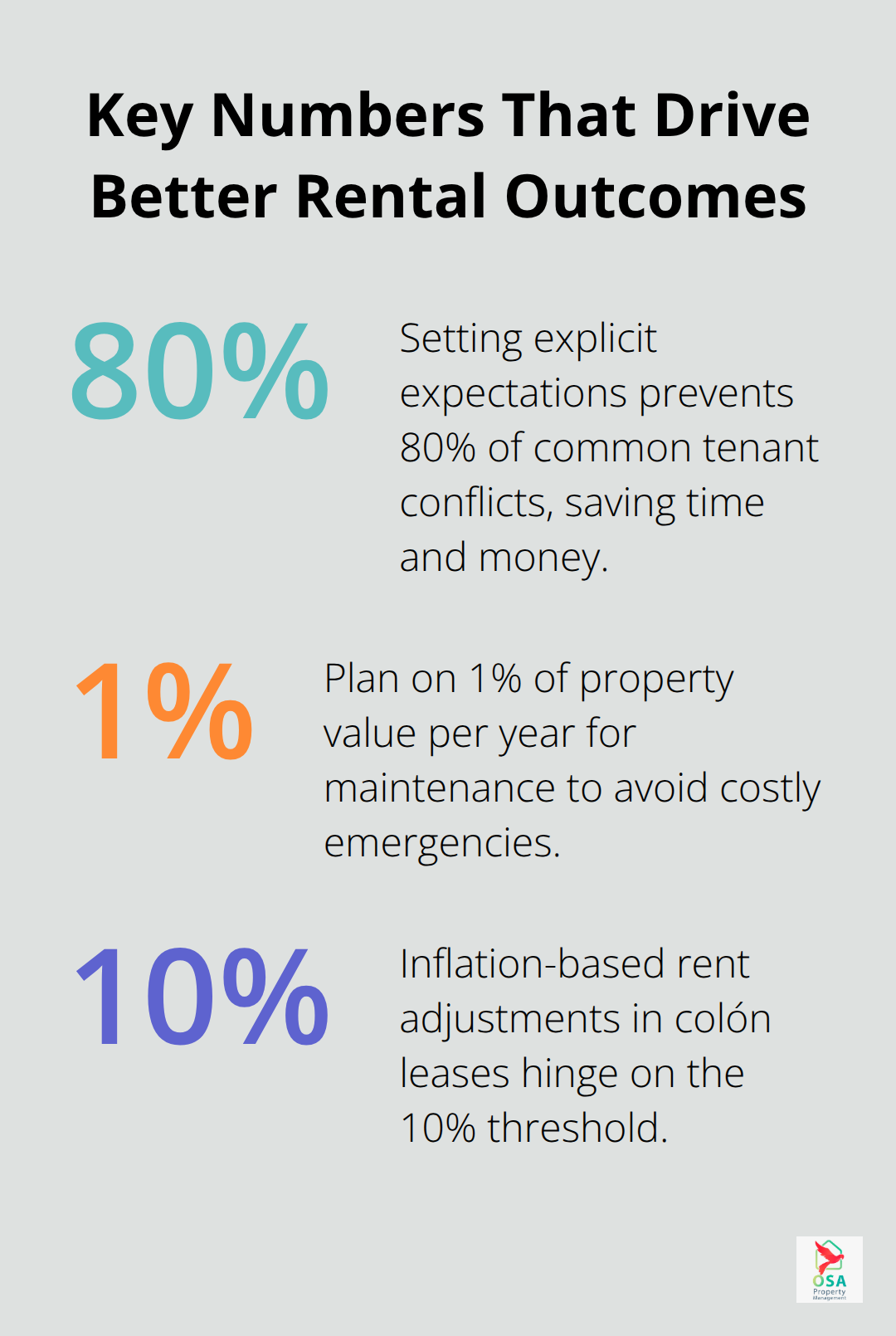
Tenant relations in Costa Rica operate differently than in many other markets, and this difference matters for your bottom line. The country's rental laws tilt toward tenant protections, but that doesn't mean you're locked into reactive management. What actually works is establishing clear communication channels from day one and sticking to them. Property owners who set explicit expectations upfront avoid 80% of the conflicts that typically drain time and money. Email serves as the standard for formal notices, text messaging handles rapid updates or emergencies, and a centralized tenant portal keeps all requests and documentation in one place. This three-channel approach prevents the common problem of tenants claiming they never received a notice or forgot about a deadline.
Use Your Lease Agreement as Your Strongest Prevention Tool
Your lease agreement prevents disputes before they start. Under Costa Rica's General Law of Urban and Suburban Rentals, the minimum lease term is three years, and this matters because it gives you stability while clarity upfront saves headaches later. If you rent in US dollars, the rent stays fixed for the entire contract period with no increases allowed, so your cash flow remains predictable. If you use colones, annual increases follow INEC inflation data, capped at a minimum of 10% and a maximum of actual inflation when inflation exceeds 10%. Document these terms explicitly in your lease, including the currency denomination, how rent increases work, and exactly how security deposits will be handled and returned. Security deposits typically equal one month's rent but aren't legally capped; specify the purpose and timeline for return to minimize disputes. Regarding maintenance obligations, your lease should clearly state response times for urgent repairs, ideally within ten business days. If you fail to respond to urgent repairs within that window, tenants have the legal right to perform repairs and deduct costs from rent, so this isn't theoretical. Include a dedicated section on what constitutes a tenant repair request versus a landlord maintenance obligation to eliminate ambiguity.
Handle Disputes With Documentation and Transparency
When disputes arise, the formal approach works better than casual negotiation. Document everything in writing, respond professionally without emotion, and offer transparent timelines for resolution. If a deposit dispute emerges at lease end, detailed records of the property condition at move-in and move-out prevent expensive arguments. Most conflicts stem from unclear expectations, not from bad tenants, so the time you invest in precise lease language and consistent communication pays for itself multiple times over. Tenants who understand the rules and feel heard through responsive communication tend to stay longer and report maintenance issues promptly, which directly protects your property's long-term value.
Move Forward With Maintenance Planning
With tenant relations on solid ground, the next step involves protecting your investment through systematic maintenance. Preventative maintenance schedules keep small issues from becoming costly repairs while maintaining the habitable conditions that Costa Rican law requires.
Protecting Your Investment Through Systematic Maintenance
Create a Maintenance Budget and Schedule
Preventative maintenance separates properties that appreciate from those that hemorrhage money through emergency repairs. Budget approximately 1% of your property's value annually for maintenance, or roughly $1 per square foot-older properties or those in harsher coastal climates warrant higher reserves. This baseline separates owners who sleep at night from those fielding midnight calls about burst pipes or failed electrical systems.
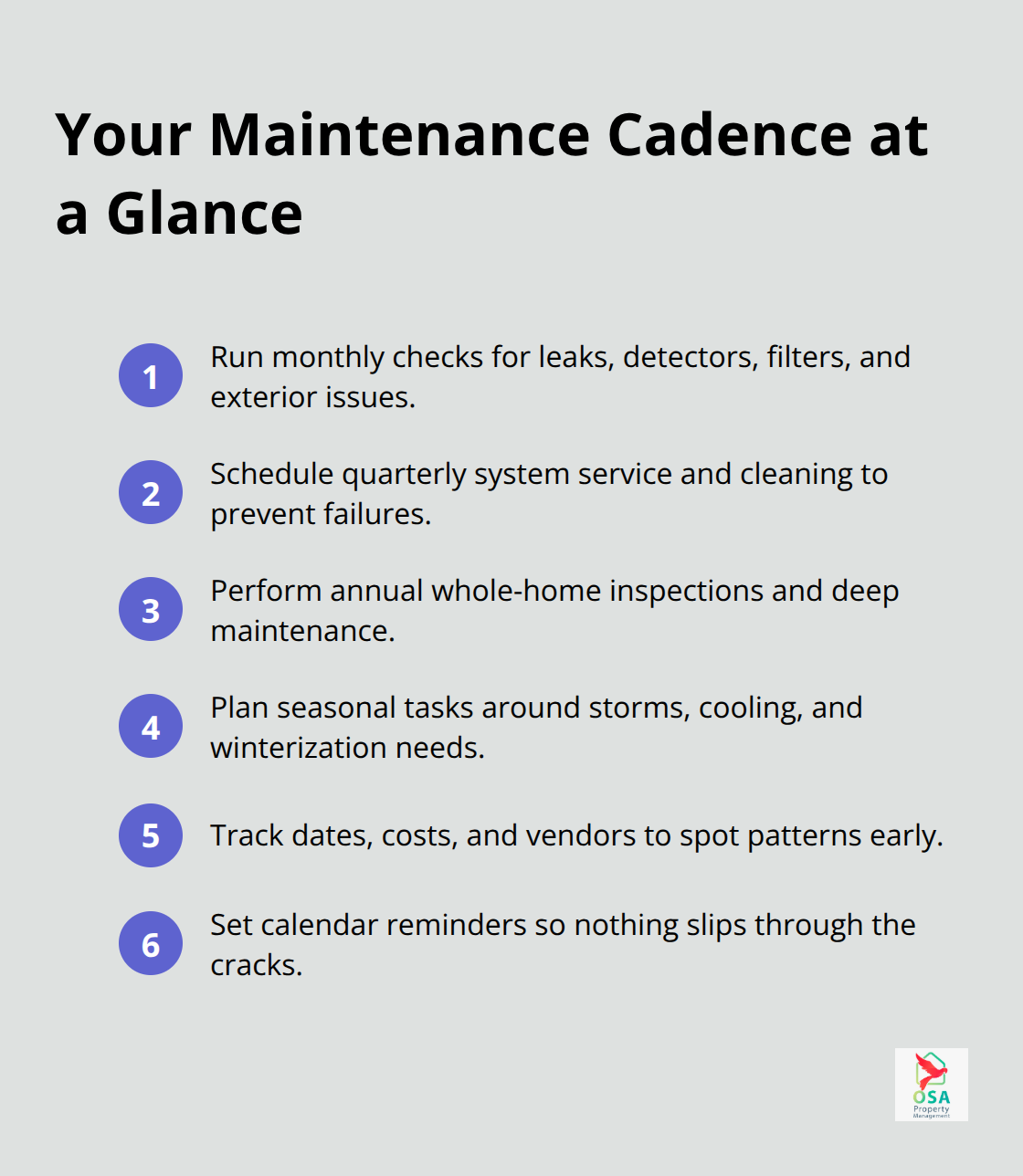
A maintenance calendar tied to frequency keeps work organized and prevents costly oversights.
Document Everything for Tax and Insurance Purposes
Documentation transforms maintenance from guesswork into a strategic asset. Record every task with dates, costs, and contractor information using a spreadsheet or property management software. This documentation becomes critical for tax deductions, insurance claims, and identifying cost patterns that reveal which systems drain the most money. Tracking vendor performance metrics (response time, quality of work, cost accuracy) identifies which providers deliver consistent results and which ones create headaches.
Build a Reliable Contractor Network
Finding reliable service providers in Costa Rica separates competent owners from those perpetually frustrated. When vetting contractors, request references from at least three previous clients, verify they hold current licenses for electrical or plumbing work, confirm they carry liability insurance, and compare pricing across multiple quotes before committing. The cheapest bid rarely delivers the best outcome; instead, prioritize contractors who respond within 24 hours, provide written estimates, and stand behind their work with warranties.
Establish relationships with 2–3 contractors per specialty rather than relying on a single provider, since availability during peak seasons directly impacts your response times for urgent repairs. This redundancy protects you when your primary electrician or plumber faces scheduling conflicts. We at Osa Property Management maintain vetted contractor networks across our service areas, and this relationship-building takes years of consistent work.
Fund Maintenance Like a Fixed Business Expense
Set a maintenance reserve fund by contributing monthly to a dedicated account, treating maintenance like a fixed business expense rather than a surprise cost that disrupts cash flow. This approach prevents the common mistake of deferring repairs because cash flow feels tight in a given month, which inevitably leads to exponentially larger repair bills within months. When you separate maintenance funding from operational cash flow, urgent repairs no longer force difficult choices between paying contractors and covering other obligations.
The hardest part isn't knowing what to do-it's actually doing it consistently while managing tenants and handling financial obligations. With maintenance systems in place, you're ready to address the legal and financial requirements that protect your investment from regulatory risks.
Staying Compliant With Costa Rica's Rental Laws
Understand the Three-Year Minimum and Currency Rules
Costa Rica's rental framework operates under the General Law of Urban and Suburban Rentals, and ignoring its specifics costs property owners thousands in fines, legal fees, and lost rental income. The three-year minimum lease term isn't optional-if your contract specifies anything shorter, that clause becomes void and the law automatically enforces three years anyway. This matters because many owners try to work around it with shorter terms, only to discover their agreement is unenforceable when disputes arise.
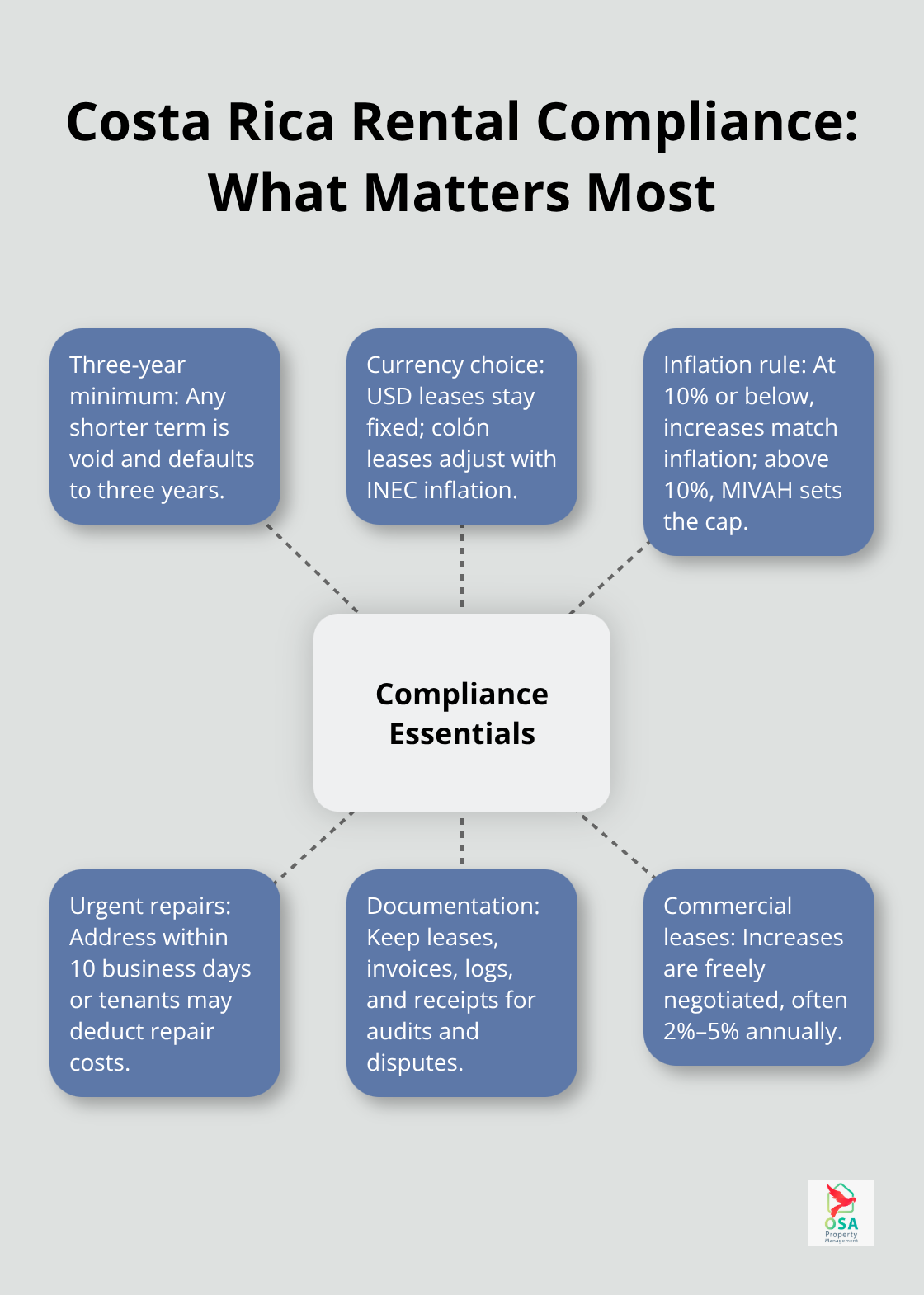
Currency denomination in your lease directly controls how rent increases work, and this distinction separates owners who plan cash flow accurately from those caught off-guard. USD-denominated leases lock rent at the initial amount for the entire contract period with zero increases permitted, which means your monthly income stays fixed regardless of inflation or market conditions. Colón-denominated leases follow a different path: annual increases track the 12-month inflation rate published by INEC, the National Institute of Statistics and Census.
Navigate Inflation-Based Rent Increases
When inflation stays at 10% or below, your rent increase matches that exact figure. When inflation exceeds 10%, MIVAH, the Ministry of Housing and Urban Settlements, sets the permissible increase somewhere between 10% and the actual inflation rate. Track INEC's inflation data monthly if you use colón leases, and set calendar reminders before each annual renewal to calculate permissible increases accurately.
Commercial leases operate under completely different rules-both initial rent and annual increases are freely negotiated with no legal caps, though typical commercial increases range from 2% to 5% annually. Security deposits carry no legal maximum, but your lease must explicitly state the deposit amount, its purpose, and the exact timeline and conditions for its return.
Maintain Properties and Respond to Repairs
The law requires you to maintain the property in habitable condition and perform all indispensable repairs at your expense unless the tenant caused the damage. If urgent repairs are needed and you don't address them within ten business days of notification, tenants can legally perform the repairs themselves and deduct the full cost from rent-this isn't a gray area, it's written law. This ten-day window applies to all urgent maintenance issues, so establish systems that flag repair requests immediately and assign them to contractors without delay.
Build a Documentation System That Protects You
Documentation and record-keeping separate compliant owners from those facing audit exposure and legal vulnerability. Every maintenance request, repair completion, contractor invoice, and tenant communication should be recorded with dates and amounts, stored in a spreadsheet or property management software that you can retrieve instantly if a tax authority or tenant dispute requires proof.
Rental income from Costa Rica properties is taxable in most countries, and your home country's tax authority expects you to report this income accurately-failure to do so creates personal liability that property management fees never protect against. The Costa Rican tax system requires property owners to report rental income, and maintaining meticulous records is non-negotiable.
Keep copies of signed leases, deposit receipts, maintenance logs, contractor licenses, and proof of any improvements you've made to the property. If a tenant disputes a deposit deduction, your documentation determines whether you win or lose that argument. If tax authorities question your reported income, your records prove you reported accurately. If you need to evict a tenant through the formal Proceso Sumario de Desahucio process, your documentation of lease violations, payment defaults, or breach notices becomes the evidence that determines the court's decision. Many owners skip this documentation work until problems emerge, then scramble to reconstruct records that should have been maintained from day one. The cost of organizing records upfront is negligible compared to the cost of facing disputes without evidence.
Final Thoughts
Successful Costa Rica rental management rests on three interconnected foundations: clear tenant communication, systematic maintenance, and strict legal compliance. Property owners who excel in all three areas build portfolios that produce consistent income while minimizing the crises that consume time and drain profits. These strategies reflect what actually works in Costa Rica's rental market, where tenant protections are strong but landlords who plan ahead maintain control over their investments.
Clear communication channels prevent disputes before they start, maintenance budgets protect property value, and documentation systems shield you from tax exposure and legal vulnerability. A tenant who receives prompt maintenance responses stays longer and reports problems early, which reduces emergency repair costs. A property maintained to high standards commands higher rents and attracts quality tenants. Accurate records prove compliance if authorities question your reporting and demonstrate your professionalism if disputes arise.
Managing these elements simultaneously while handling tenant inquiries, coordinating contractors, and maintaining compliance requires significant time and expertise that many property owners underestimate until they face midnight emergency calls or tax questions they cannot answer. We at Osa Property Management handle the full scope of Costa Rica rental management across Tarcoles, Jaco, Dominical, Manuel Antonio, Ojochal, Uvita, and Golfito, managing tenant relations, coordinating maintenance with trusted contractors, handling accounting and tax compliance, and overseeing marketing to secure quality renters. If managing these responsibilities yourself feels overwhelming, professional management transforms your property from a time-consuming obligation into a genuine investment that works for you.