
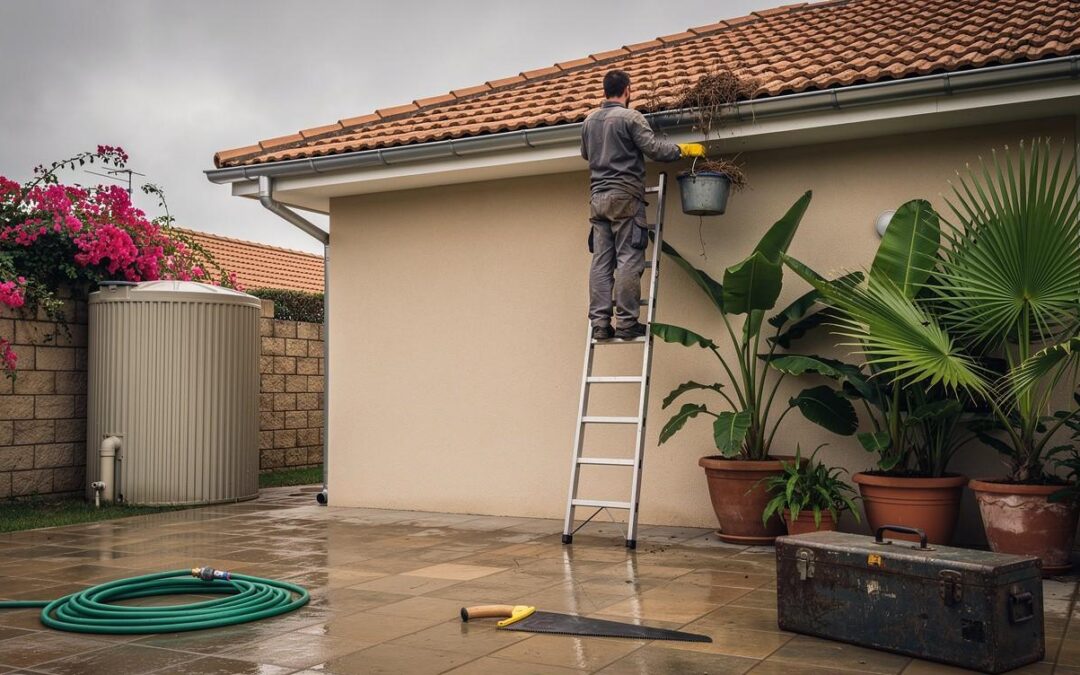
Costa Rica's tropical climate is beautiful, but it's relentless on homes. Humidity, salt air, and heavy rains damage roofs, corrode metal, and invite pests year-round.
At Osa Property Management, we've seen what happens when property owners skip maintenance-and what happens when they don't. This guide covers home maintenance Costa Rica tips that actually work, from seasonal checklists to the tasks that prevent expensive repairs.
What Destroys Costa Rican Homes Most Quickly
Humidity and Water Damage: The Silent Killer
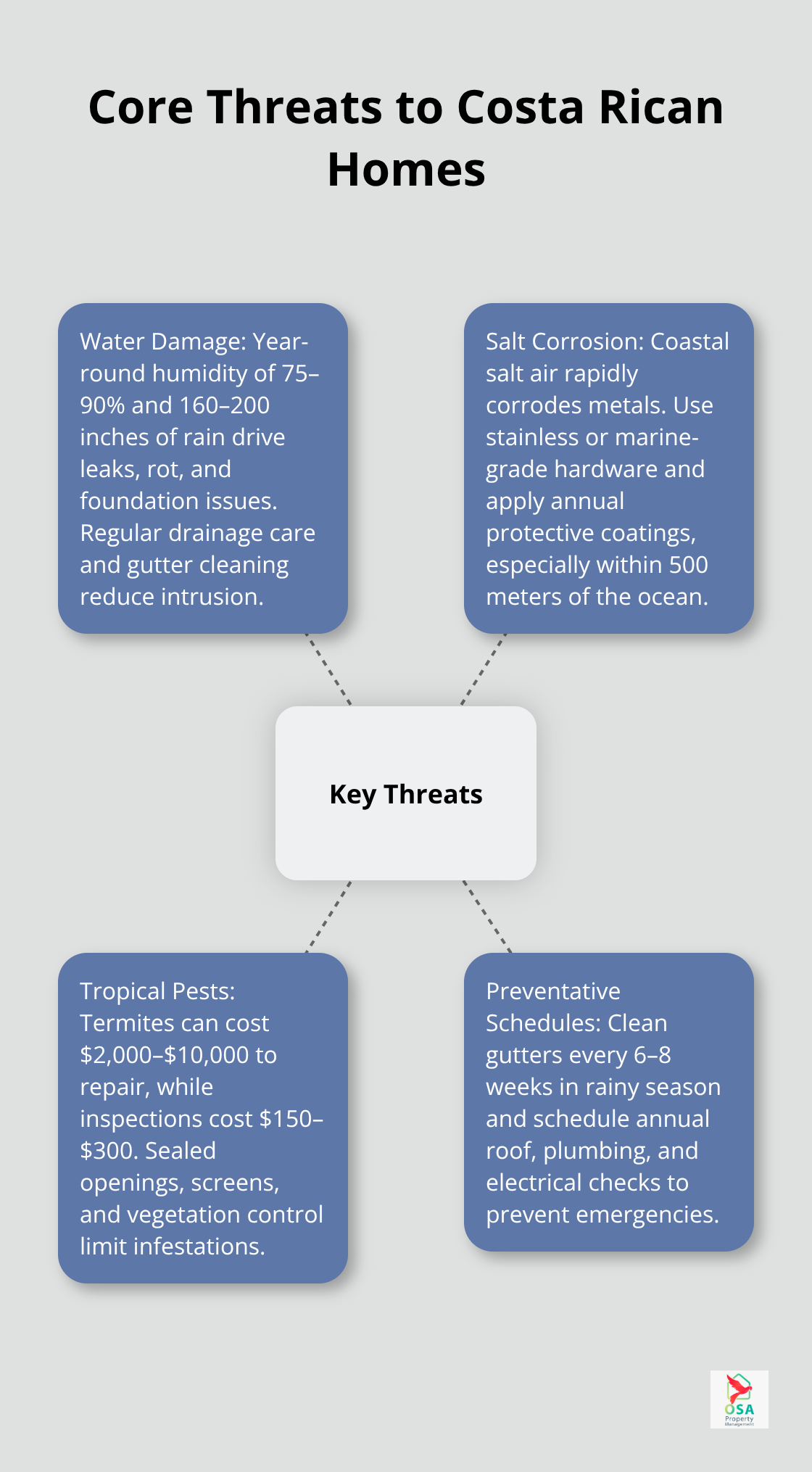
Humidity in Costa Rica averages 75 to 90 percent year-round, and this moisture penetrates everything. Wood rots faster here than almost anywhere else in the Americas. Metal corrodes within months without proper treatment. The rainy season delivers 160 to 200 inches of rainfall annually in some regions, which means water finds every crack, every joint, and every weak point in a structure.
Properties without consistent drainage maintenance develop foundation issues within 3 to 5 years. Concrete absorbs moisture like a sponge, and when it does, the rebar inside oxidizes and expands, creating cracks that grow wider each season. Gutters clogged with debris stop working immediately, forcing water to cascade down exterior walls instead of away from the foundation.
Most property owners inspect their gutters only after visible damage appears, which is already too late. Gutter cleaning every 6 to 8 weeks during rainy season prevents this problem entirely. Roof leaks start small and invisible, hidden in attic spaces where mold develops silently for months before anyone notices the smell or sees staining on ceilings.
Salt Air Corrosion in Coastal Properties
Coastal properties face an additional enemy that inland homes avoid entirely. Salt air corrodes aluminum, steel, and iron at accelerated rates in coastal environments. Coastal homes need stainless steel fixtures, marine-grade hardware, and annual protective coatings on any exposed metal.
Properties within 500 meters of the ocean require even more aggressive maintenance protocols. This proximity to salt spray accelerates deterioration dramatically, making preventative treatment non-negotiable rather than optional.
Tropical Pests and Structural Threats
Tropical pests thrive in humid conditions and find their way into homes through small openings that most owners never seal. Termites cause structural damage that costs between 2,000 and 10,000 dollars to repair once discovered, yet annual termite inspections run only 150 to 300 dollars. Mosquitoes carry dengue fever and other diseases, making screens and sealed windows health priorities, not optional upgrades.
Rodents nest in attics and walls, gnawing through electrical wiring and creating fire hazards. Professional pest inspections quarterly, combined with sealing gaps around pipes and electrical conduits using steel mesh or caulk, prevent most infestations. Maintaining clear vegetation around the property perimeter stops pests from establishing entry routes.
Properties that skip preventative pest work face treatment costs five times higher than maintenance would have cost. These three threats-water damage, salt corrosion, and pests-form the foundation of what every Costa Rican property owner must address. The specific tasks that tackle each threat require a structured approach tied to Costa Rica's seasonal patterns.
The Three Systems That Fail First in Costa Rica
Why These Systems Matter Most
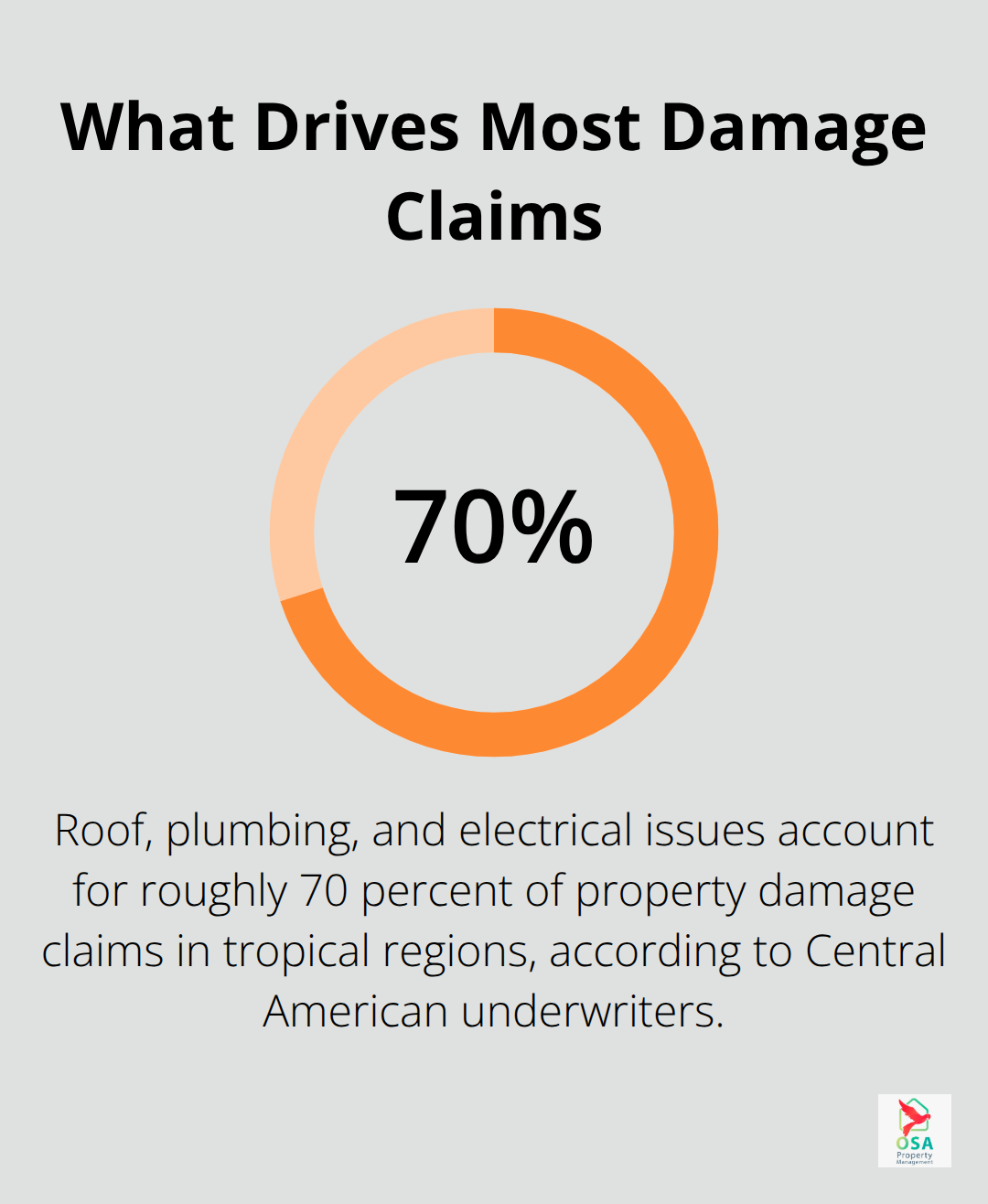
Roof leaks, plumbing failures, and electrical hazards account for roughly 70 percent of property damage claims in tropical regions according to insurance data from Central American underwriters. These three systems fail predictably in Costa Rica's climate, and early intervention costs a fraction of emergency repairs. Your roof deteriorates faster here than anywhere else because constant humidity weakens materials, salt air corrodes fasteners, and heavy rains exploit every weak joint.
Roof and Gutter Maintenance
Inspect your roof twice yearly-once before rainy season in May and again in September after the heaviest downpours. Look for missing tiles, cracked shingles, rust stains on metal roofing, and soft spots in wood that signal rot. Gutters demand attention every 6 to 8 weeks during rainy season because debris accumulation happens rapidly in tropical environments with dense vegetation.
Clogged gutters force water to overflow directly onto exterior walls and foundations, causing the moisture damage that costs thousands to repair. Use a pressure washer set to low pressure to clean gutters without forcing water into gaps, then check that water flows freely from downspouts at least 2 meters away from the foundation.
Plumbing System Vulnerabilities
Plumbing systems corrode from inside out in high-humidity environments, and most owners discover problems only after water stains appear on ceilings or mold smells emerge from walls. Copper pipes develop pinhole leaks within 5 to 8 years in coastal properties due to salt air and acidic groundwater, while PVC fittings become brittle and crack under the constant thermal stress of tropical heat cycles.
Check under sinks monthly for water drips or mineral deposits that indicate slow leaks. Inspect visible pipes for green oxidation on copper or white crystalline buildup on joints, and listen for hissing sounds behind walls that signal pressurized water escaping. Test water pressure annually using an inexpensive gauge-anything above 80 PSI indicates excessive pressure that strains pipes and fixtures prematurely.
Electrical System Safety
Electrical systems pose the greatest safety risk because moisture corrodes wiring insulation and creates fire hazards that develop invisibly within walls. Have a licensed electrician inspect your entire system yearly, paying special attention to outlets in bathrooms and kitchens where moisture exposure is constant. Replace any two-prong outlets with GFCI-protected outlets in wet areas, and demand that your electrician check for proper grounding and verify that your main breaker panel shows no signs of corrosion or water damage.
These three systems require different inspection schedules and maintenance approaches, but they share one common trait: they all respond well to preventative action. The seasonal patterns in Costa Rica create predictable windows for addressing each system before problems develop into costly emergencies.
When to Do What: Costa Rica's Maintenance Schedule
Rainy Season Preparation Starts in April
Costa Rica's climate splits into two distinct seasons, and each demands different maintenance priorities. The rainy season runs May through November, delivering torrential downpours that expose every structural weakness your property has. The dry season from December through April brings intense sun, temperature swings, and the chance to address exterior damage before the next rainy cycle begins. Property owners who ignore seasonal timing waste money on reactive repairs instead of strategic prevention.
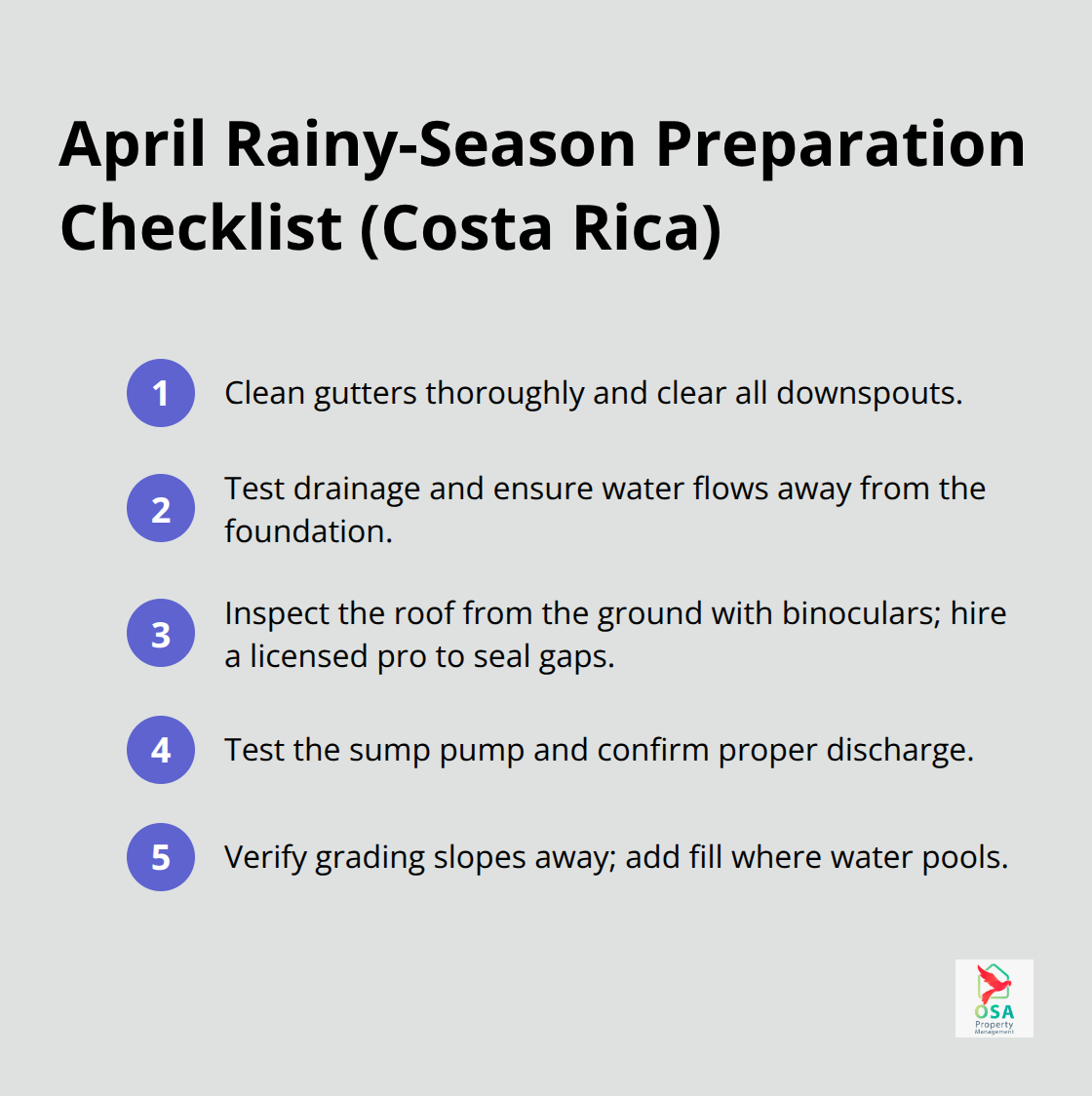
Start rainy season preparation in April, not May. This means cleaning gutters thoroughly, checking downspout extensions, and testing your drainage system before heavy rains arrive. Inspect your roof from the ground using binoculars to spot missing tiles or damaged flashing, then hire a licensed contractor to walk the roof itself and seal any gaps with marine-grade sealant. Test your sump pump if you have one by pouring water into the basin and confirming it activates and drains properly. Check that your property grading slopes away from the foundation by observing where water flows during a heavy rain, and add fill soil if water pools near your foundation.
During Rainy Season: Weekly and Bi-Weekly Tasks
Inspect gutters and downspouts every two weeks rather than waiting for visible problems, because debris accumulates rapidly in tropical environments with dense vegetation. Listen to your roof during storms for unusual sounds that indicate loose metal or structural stress. Check interior spaces weekly for water stains on ceilings, walls, or in closets, because water damage spreads fast once it starts. These frequent inspections catch problems before they become expensive emergencies.
Dry Season Work: Exterior Restoration and Maintenance
The dry season from December through April is your window for exterior work. Pressure wash exterior walls at low pressure to remove salt spray and mold buildup, then inspect concrete for new cracks that developed during rainy season. Paint metal railings, gates, and roof fasteners with rust-inhibiting paint formulated for tropical climates, because salt air corrodes unprotected metal within months. Inspect wooden structural elements, deck posts, and trim for rot by probing with a screwdriver; soft wood indicates decay that requires immediate replacement. Check all caulking around windows and doors, and replace any that has cracked or deteriorated. Test your water pressure gauge in February or March to establish a baseline, then compare it to readings taken after rainy season ends to identify pressure changes that signal plumbing problems developing inside walls.
Post-Storm Assessment Within 48 Hours
Post-storm damage assessment must happen within 48 hours of any major storm, not weeks later when secondary damage compounds the original problem. Walk your entire property looking for roof damage, fallen branches, debris in gutters, and water entry points. Check interior spaces for new leaks, water stains, or mold smells. Document all damage with photographs and timestamps for insurance purposes. Call your insurance company within the timeframe specified in your policy (typically within 30 days of damage discovery) and request a claims adjuster visit your property. Do not delay this step, because delayed claims often face coverage denials. If your roof sustained visible damage, hire a roofing contractor within one week to perform temporary repairs or tarping to prevent water intrusion until permanent repairs can be scheduled.
Final Thoughts
Costa Rica's climate demands consistent maintenance, not occasional attention. The home maintenance Costa Rica tips covered here work because they address the specific threats your property faces: humidity, salt air, and tropical pests. Skipping these tasks costs thousands in emergency repairs, while following a seasonal schedule prevents most problems before they start.
If you manage your own property, implement the seasonal checklist immediately: clean gutters every 6 to 8 weeks during rainy season, inspect your roof twice yearly, and check plumbing and electrical systems annually. Document everything with photos and dates so you have records for insurance claims and resale value. If property management feels overwhelming, professional management companies handle these tasks systematically, ensuring nothing falls through the cracks. Osa Property Management manages properties throughout Tarcoles, Jaco, Dominical, Manuel Antonio, Ojochal, Uvita, and Golfito, and maintenance coordination forms the foundation of what we do.
Start with your roof and gutters this week, as these two systems determine whether water stays outside your home or inside your walls. Once you address those, move through the plumbing and electrical systems on your annual schedule. Property ownership in Costa Rica rewards owners who act strategically rather than reactively.
To be contacted by an Osa Property Management representative and to learn more about our services, please send an email to info@osapropertymanagement.com or send a WhatsApp message to +17633068981 or +50671001006 / Para que un representante de Osa Property Management se ponga en contacto con usted y obtener más información sobre nuestros servicios, por favor envíe un correo electrónico a info@osapropertymanagement.com o un mensaje de WhatsApp al +17633068981 o al +50671001006.
Vacation rentals: https://costaricalasvillas.com