

Costa Rica's real estate market attracts investors worldwide, but many overlook a critical step: securing proper insurance for rental properties. Without the right coverage, a single storm, accident, or guest injury can wipe out years of profit.
At Osa Property Management, we've seen firsthand how inadequate insurance leaves property owners exposed. This guide walks you through the coverage types you need, the gaps most owners miss, and how to protect your investment properly.
Why Insurance Protects Your Costa Rica Rental Income
Costa Rica experiences an average of 160 rainy days per year, with the Pacific coast receiving concentrated rainfall during the green season from May to November. A single hurricane or tropical storm causes tens of thousands of dollars in structural damage, flooding, and mold-costs that uninsured property owners must cover entirely from their own pockets. Liability exposure presents equally serious risks: guest injuries on your property can result in lawsuits exceeding $100,000, especially when visitors require medical evacuation or hospitalization. Without proper liability coverage, your personal assets become vulnerable. Loss of rental income during repairs compounds the problem further-if your property becomes damaged and uninhabitable for three months, you lose three months of revenue while still paying property taxes, maintenance costs, and mortgage payments. A comprehensive insurance policy absorbs these shocks instead of your bank account.
Storm and Structural Damage in a High-Risk Zone
The Pacific regions where most rental properties operate-Jaco, Manuel Antonio, Uvita, and Dominical-sit directly in hurricane paths during Atlantic season. Historical data shows that major storms impact the area roughly every five to seven years, making coverage not optional but inevitable. Dwelling coverage protects your building's structure, roof, walls, and fixed systems like plumbing and electrical. Contents insurance covers furniture, appliances, and guest amenities that depreciate but still represent significant replacement costs.
Liability Claims Happen More Often Than Expected
Guest injuries occur frequently in rental properties: slips on wet surfaces, falls from balconies, food poisoning, or accidents during activities. A single serious injury claim reaches $50,000 to $150,000 depending on medical costs and legal fees. Umbrella policies extend your liability protection beyond standard limits and cost very little-typically $200 to $400 annually for $1 million in additional coverage.
Income Protection During Downtime
When storms, fires, or structural failures force temporary closures, rental income stops immediately while expenses continue. Loss of rental income coverage reimburses your monthly rental revenue during repair periods, maintaining your cash flow when you need it most. This protection matters most in regions like Uvita and Manuel Antonio, where seasonal weather patterns create predictable risk windows.
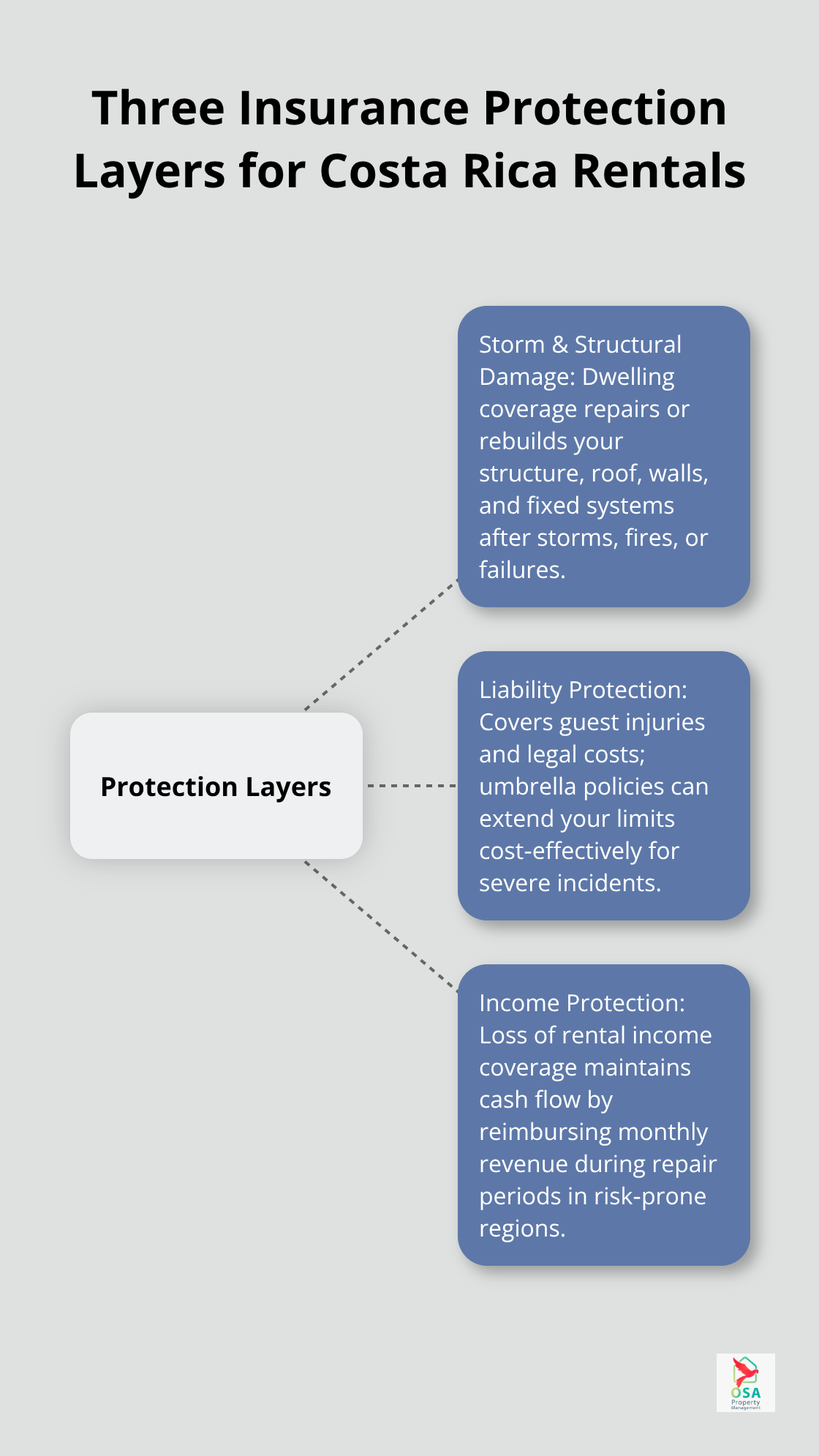
Understanding these three protection layers reveals why gaps in coverage create financial disasters. The next section examines which coverage types most rental owners actually carry-and which critical protections they consistently miss.
What Coverage Types Actually Protect Your Rental Property
Dwelling Coverage: Building Your Foundation
Dwelling coverage forms the foundation of any rental property insurance policy in Costa Rica, protecting the building's structure, roof, walls, electrical systems, plumbing, and permanent fixtures. This coverage pays for repairs or reconstruction after storms, fires, or structural damage, but the coverage limit matters enormously. Most property owners in coastal areas like Manuel Antonio and Uvita carry limits between $200,000 and $400,000, yet reconstruction costs in these regions now run $1,200 to $1,800 per square meter according to recent Costa Rican construction data.
If your 200-square-meter property has a $250,000 dwelling limit but reconstruction costs $300,000, you absorb the $50,000 gap yourself. Calculate your dwelling coverage based on current replacement costs, not the purchase price from five years ago. This approach prevents the painful discovery of underinsurance after a major loss occurs.
Contents and Furnishings: Protecting What's Inside
Contents and furnishings insurance covers the items inside your rental: beds, kitchen appliances, furniture, linens, and guest amenities. Many owners underestimate this value-a fully furnished two-bedroom rental typically contains $15,000 to $25,000 in replaceable items. Contents coverage usually carries a separate deductible, often $500 to $1,000, so confirm this with your insurer before purchasing.
One critical detail: contents coverage applies only to items you own, not guest belongings, so this protects your investment in furnishings but not a visitor's suitcase or electronics. This distinction matters when calculating your total replacement costs and determining adequate coverage limits.
Liability Coverage: Your Financial Shield Against Guest Injuries
Liability coverage addresses the financial exposure when guests suffer injuries on your property. Standard liability policies in Costa Rica typically offer $300,000 to $500,000 in coverage, but serious injury claims regularly exceed these limits. A guest requiring medical evacuation by helicopter and hospitalization for a balcony fall or water-related accident generates bills of $75,000 to $150,000 in medical costs alone, plus legal fees if litigation follows.
This is where umbrella policies become essential-they extend liability protection beyond your base policy limits for relatively minimal cost. Most insurers offer $1 million umbrella coverage for $250 to $450 annually in Costa Rica. The umbrella policy sits above your primary liability coverage and activates only after that coverage is exhausted, making it an efficient financial safety net.
Short-Term Rentals: Specialized Coverage You Cannot Ignore
Short-term rental properties face specific liability risks that standard policies sometimes exclude: guest injuries during organized activities, food poisoning from on-site meals, or accidents in common areas. Confirm explicitly with your insurance provider whether your policy covers short-term vacation rentals or if you need specialized vacation rental liability coverage, which typically costs 15 to 25 percent more than standard rental policies but provides the protection you actually need.
The gap between standard rental coverage and vacation rental protection has widened as insurers recognize the higher risk profile of short-term guests. Properties operating as vacation rentals without proper coverage face claim denials that leave owners financially devastated. Understanding these distinctions now prevents catastrophic gaps later, which brings us to the coverage gaps that plague most rental property owners across Costa Rica.
Common Insurance Gaps Rental Owners Face
Underinsurance: The Most Expensive Mistake
Most rental property owners in Costa Rica carry insurance that sounds comprehensive until a claim happens. The gap between what owners think they're covered for and what their policies actually pay becomes devastatingly clear only after disaster strikes. Underinsurance represents the most common mistake: owners purchase dwelling coverage based on their property's market value rather than its reconstruction cost. A beachfront home in Manuel Antonio worth $400,000 might require $600,000 to fully rebuild after hurricane damage because labor and materials in coastal areas cost significantly more than inland regions.
When owners discover their $350,000 dwelling limit falls short by $250,000, they absorb the difference themselves. Calculate replacement costs through a professional assessment, not estimates based on what you paid for the property years ago. Contents coverage carries similar pitfalls: owners routinely underestimate the replacement value of furnishings, appliances, and guest amenities, then face partial reimbursement that leaves them unable to restore the property to rental condition. A fully equipped two-bedroom property needs $20,000 to $30,000 in contents coverage in today's market, yet many policies carry limits of only $10,000 to $15,000.
Short-Term Rental Exclusions: A Hidden Catastrophe
Standard rental policies frequently exclude or severely limit coverage for properties rented through platforms like Airbnb or VRBO, treating short-term guests as higher risk than long-term tenants. This distinction matters enormously: a guest suffering a serious injury during a vacation rental stay might find the insurer denies the claim based on policy language excluding short-term occupancy. Specialized vacation rental policies cost 15 to 25 percent more than standard coverage but provide the protection your property actually needs.
Short-term rental exclusions create an entirely separate category of exposure that catches owners unprepared. Confirm explicitly with your insurance provider whether your policy covers vacation rentals or if you need specialized coverage. The difference between standard rental protection and vacation rental policies has widened as insurers recognize the higher risk profile of short-term guests. Properties operating as vacation rentals without proper coverage face claim denials that leave owners financially devastated.
Loss of Rental Income: The Forgotten Coverage
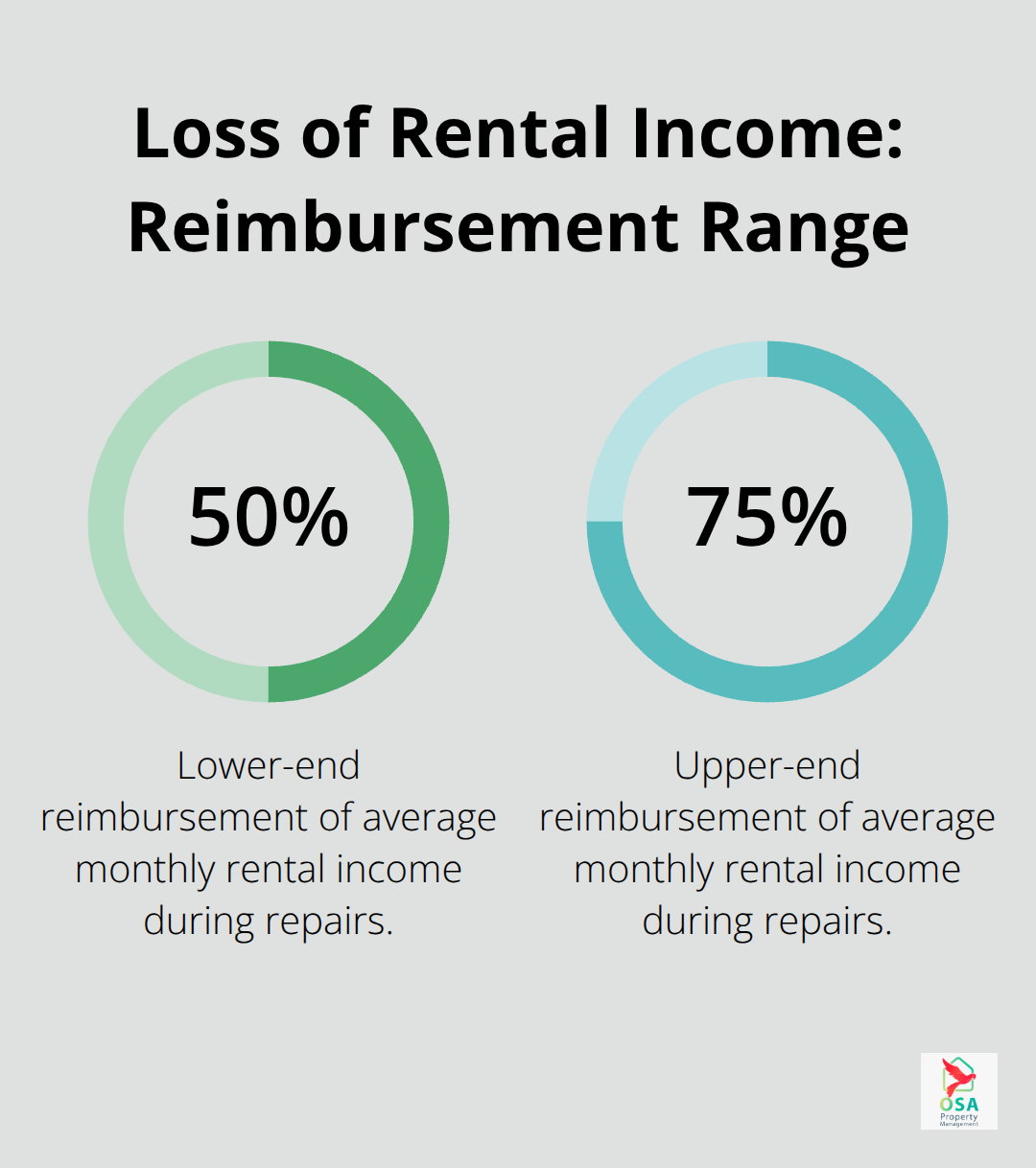
Loss of rental income coverage represents the third major gap, and frankly, most owners skip it entirely because they don't understand its value. When a storm damages your property and forces a three-month closure, your dwelling and contents coverage pays for repairs, but nothing reimburses the rental income you lost during those months while property taxes, maintenance fees, and mortgage payments continued. This coverage typically costs $300 to $600 annually and reimburses 50 to 75 percent of your average monthly rental income during repair periods, making it one of the most cost-effective protections available. The owners who understand this protection secure it; the owners who don't face months of financial strain while their property sits idle.
Final Thoughts
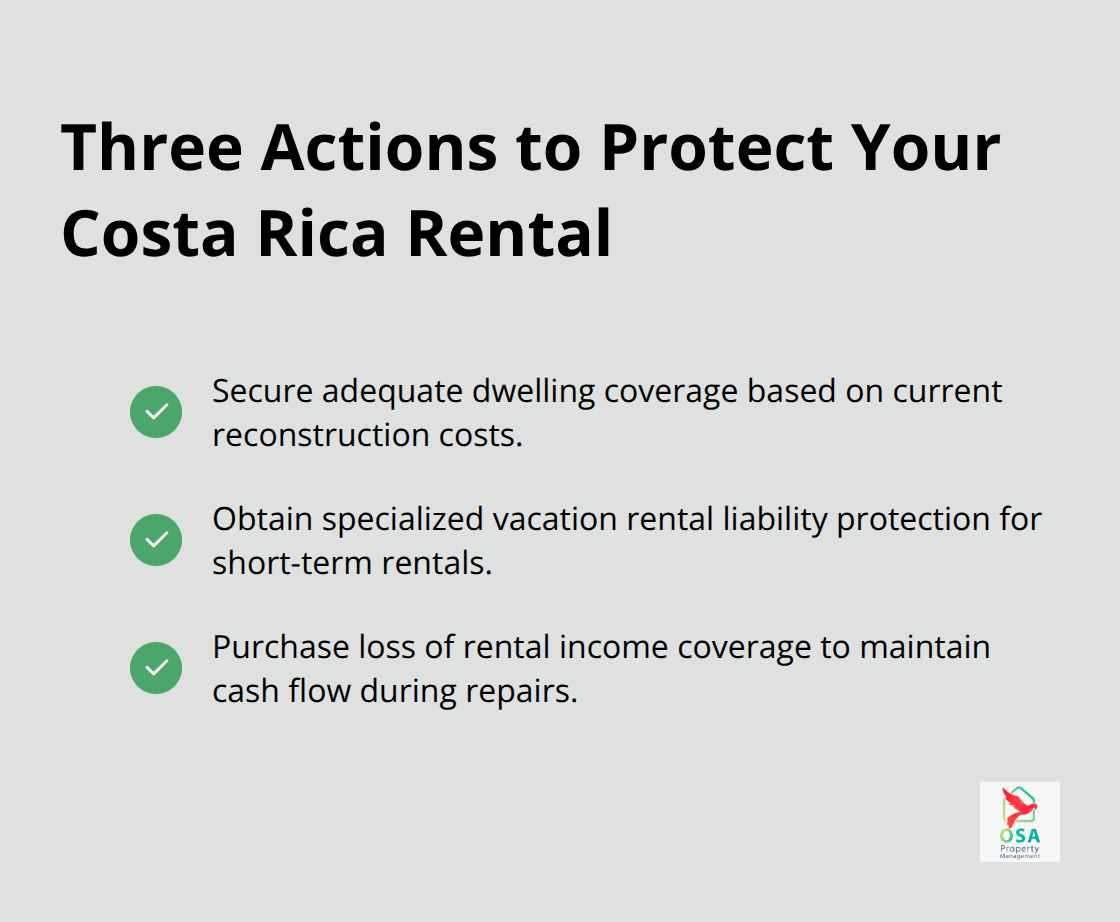
Protecting your Costa Rica rental property requires three concrete actions: securing adequate dwelling coverage based on current reconstruction costs, obtaining specialized vacation rental liability protection if you operate short-term rentals, and purchasing loss of rental income coverage to maintain cash flow during repairs. Most owners who experience major losses discover too late that their policies contained gaps they never anticipated.
Working with insurance professionals who understand Costa Rica's specific risks matters far more than shopping purely on price. Local experts recognize the hurricane exposure in Pacific coastal regions, the higher reconstruction costs in areas like Manuel Antonio and Uvita, and the liability complexities that vacation rental properties face. They identify the exclusions and coverage limits that generic policies miss, ensuring your insurance for rental properties actually matches your actual exposure.
Start with a professional property assessment to determine accurate replacement costs for dwelling and contents coverage, then contact your current insurer to confirm whether your policy covers short-term rentals or if you need specialized vacation rental protection. Add loss of rental income coverage to your policy immediately if it's not already included. Connect with Osa Property Management to review your complete coverage picture and identify remaining gaps.
To be contacted by an Osa Property Management representative and to learn more about our services, please send an email to info@osapropertymanagement.com or send a WhatsApp message to +17633068981 or +50671001006 / Para que un representante de Osa Property Management se ponga en contacto con usted y obtener más información sobre nuestros servicios, por favor envíe un correo electrónico a info@osapropertymanagement.com o un mensaje de WhatsApp al +17633068981 o al +50671001006.
Vacation rentals: https://costaricalasvillas.com