

Foreign investors in Costa Rica often overpay taxes simply because they don't know what deductions and strategies are available to them. Investment property tax planning doesn't have to be complicated, and the right approach can save you thousands of dollars annually.
At Osa Property Management, we've helped numerous property owners navigate Costa Rica's tax system and identify legitimate ways to reduce their tax burden. This guide walks you through the specific deductions, credits, and legal strategies that actually work for rental property investors.
How Costa Rica Calculates Property Taxes
The Cadastral Value System
Costa Rica's property tax system operates differently than most countries, and foreign investors frequently misunderstand the calculations, leading to overpayment or missed deductions. The tax authority, known as the Tributación Directa, bases property taxes on the cadastral value of your land, not the market price you paid or what your property would sell for today. This distinction matters enormously: your tax bill has nothing to do with your actual purchase price or rental income. The cadastral value gets updated periodically by the government, and these updates don't always reflect current market conditions-some properties sit assessed far below their actual worth while others face overvaluation. Foreign investors who paid premium prices for beachfront properties in Manuel Antonio or Uvita often find their tax assessments significantly lower than expected, creating an immediate advantage.
Annual Tax Rates and Payment Deadlines
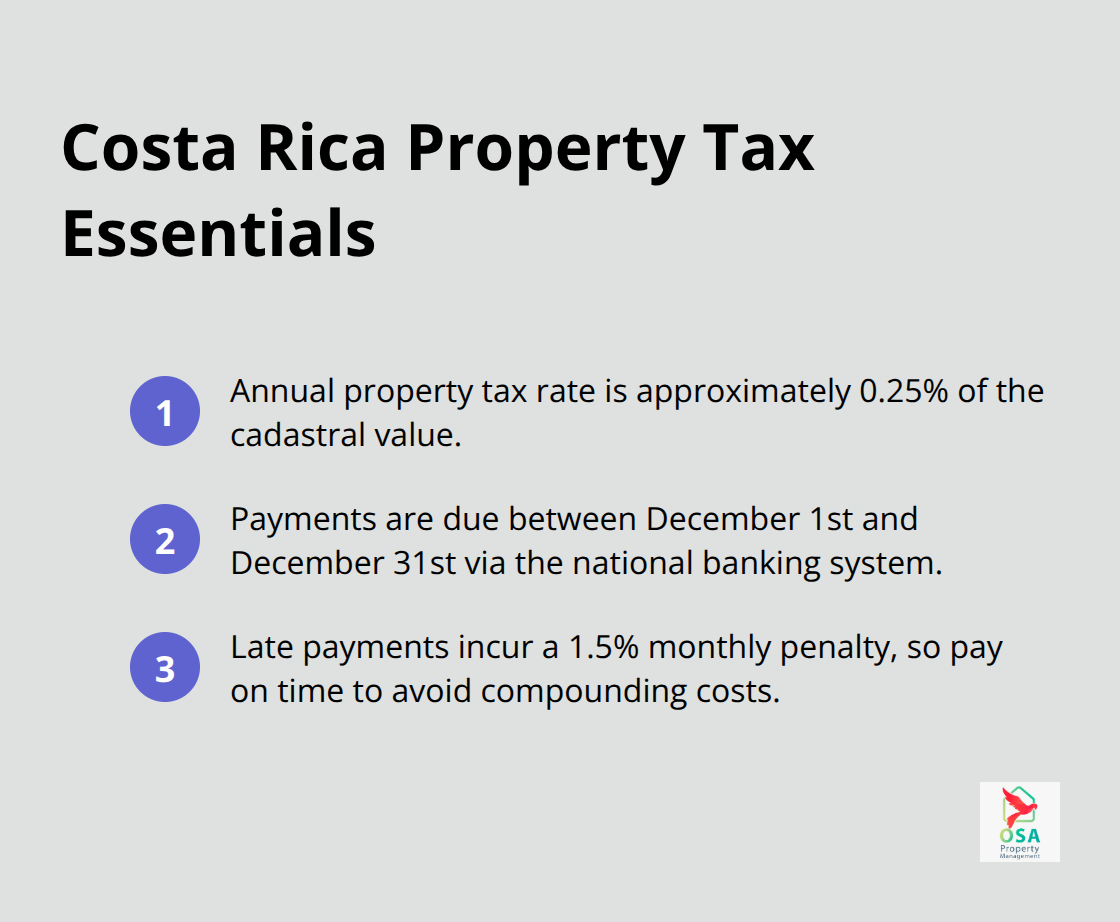
The annual property tax rate in Costa Rica sits at approximately 0.25% of the cadastral value, which is remarkably low compared to the United States where rates typically range from 0.5% to 2% depending on the state. Payment deadlines fall between December 1st and December 31st each year, and the tax authority accepts payments through the national banking system. Late payments incur monthly penalties of 1.5%, making timely payment essential to avoid unnecessary costs that compound quickly.
Filing Requirements for Foreign Property Owners
Foreign investors must file a tax return with the Tributación Directa even if they own property but generate no rental income, which surprises many new property owners who assumed taxes only applied to income-producing assets. If you rent your property, you're required to declare all rental income and pay income tax on net profits after deductions (which ranges from 10% to 25% depending on your total taxable income). Understanding this dual structure-property tax on cadastral value plus income tax on rental profits-separates successful investors from those who scramble to cover unexpected bills.
Verifying Your Cadastral Assessment
The key actionable step is to obtain your property's official cadastral assessment document immediately after purchase and verify it's accurate, because challenging an inflated valuation can reduce your annual tax burden substantially. Many foreign investors skip this step and pay taxes on assessments that could have been reduced through formal appeals. Obtaining this document and reviewing it carefully takes minimal effort but produces significant financial results. Once you understand your specific cadastral value and tax obligations, you can identify which deductions and credits actually apply to your situation-and that's where most property owners discover they've been leaving money on the table.
What Deductions Actually Reduce Your Costa Rica Rental Property Taxes
Operating Expenses That Lower Your Taxable Income
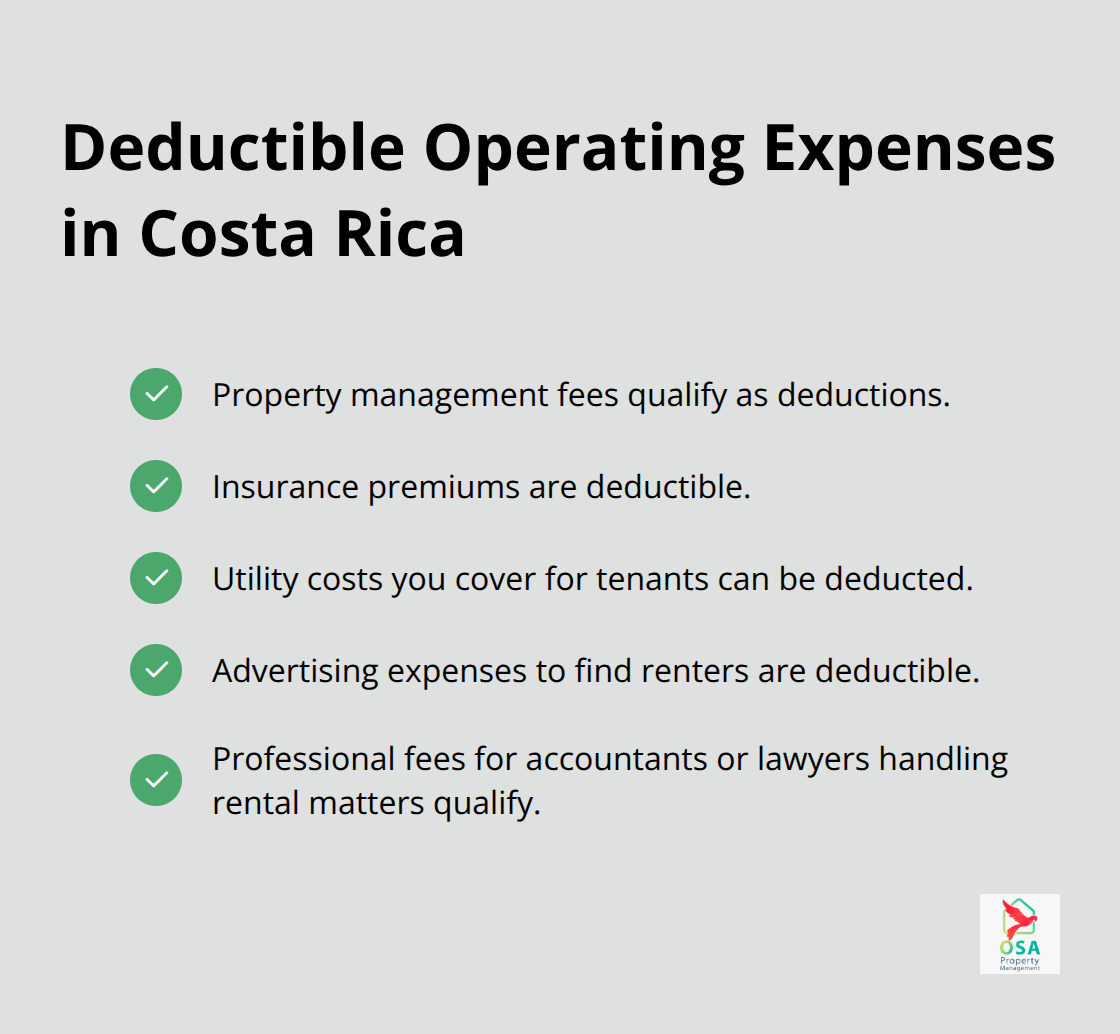
Rental property owners in Costa Rica can deduct legitimate operating expenses from their rental income before calculating income tax, which is where most foreign investors leave substantial money on the table. The tax authority permits deductions for expenses directly tied to generating rental income, and understanding this distinction separates savvy investors from those who pay taxes on inflated profits. Property management fees, insurance premiums, utility costs you cover for tenants, advertising expenses to find renters, and professional fees for accountants or lawyers handling rental-related matters all qualify for deduction.
Many foreign investors fail to document these expenses systematically, then discover during tax season they cannot substantiate their deductions-resulting in the tax authority rejecting legitimate write-offs and assessing penalties. Tracking receipts and maintaining organized records from day one prevents this costly mistake. A spreadsheet or accounting software that categorizes expenses by type takes minimal effort but protects you during audits.
Repairs Versus Capital Improvements: A Critical Distinction
Maintenance and repair costs reduce your taxable rental income substantially, yet the tax code distinguishes between repairs (fully deductible) and capital improvements (depreciated over time). A new roof that extends your property's useful life constitutes a capital improvement subject to depreciation, while fixing damaged tiles qualifies as a repair. This distinction matters financially: repairs reduce your current year taxes immediately, while capital improvements spread the benefit across multiple years through depreciation schedules.
Property owners who categorize improvements as repairs or vice versa face audit risk and back taxes with interest, making accurate classification essential from day one. When uncertainty arises about whether an expense qualifies as a repair or improvement, consult a local tax professional who understands Costa Rica's specific guidelines. The cost of professional advice pays for itself through proper categorization.
Depreciation: The Tax Benefit Most Investors Overlook
Depreciation benefits represent the most misunderstood advantage available to rental property investors in Costa Rica, yet they deliver genuine tax reductions without requiring cash outlay. The tax authority permits you to depreciate your building structure (but not the land) over 20 years, meaning you can deduct approximately 5% of your building's value annually as a non-cash deduction that reduces your taxable income. A property with a building valued at $200,000 generates $10,000 in annual depreciation deductions, lowering your taxable rental income even if you collected substantial rents that year.
Appliances, furniture, and fixtures depreciate faster-typically over five to ten years depending on the asset-creating accelerated deductions in early ownership years. Foreign investors frequently overlook depreciation entirely, paying income taxes on profits that should have been offset by depreciation deductions. Working with a local tax professional during your property purchase proves invaluable because they can properly allocate your purchase price between land and building, structure your asset acquisitions to maximize depreciation, and track these deductions through your ownership years.
Maximizing Your Deduction Strategy
The difference between reactive and strategic tax planning shows up dramatically in your annual tax bill. Investors who implement deduction strategies systematically reduce their annual tax liability compared to owners who address taxes only when filing deadlines arrive. Organizing your expenses, understanding the repair versus improvement distinction, and leveraging depreciation from your first year of ownership creates a foundation that compounds over time.
These deductions form only part of your tax reduction toolkit. Costa Rica's tax code also offers specific credits and legal ownership structures that further minimize your tax burden-strategies that work alongside deductions to create comprehensive tax efficiency for your investment.
How to Structure Your Ownership for Maximum Tax Efficiency
Corporate Ownership vs. Individual Ownership
Foreign investors often assume they must own rental properties as individuals, accepting whatever tax consequences follow. This approach leaves thousands of dollars on the table annually. Costa Rica's tax code permits you to own investment properties through a corporation, a strategy that fundamentally changes your tax position and cash flow.
Incorporating your property ownership creates a separate legal entity that files its own tax return, separates your personal liability from the property, and in many cases reduces your overall tax burden compared to individual ownership. The corporate structure works particularly well when you own multiple properties or plan long-term investments, because the corporation pays taxes on net profits after all legitimate deductions and operating expenses.
Tax Rate Comparison: Corporations vs. Individual Owners
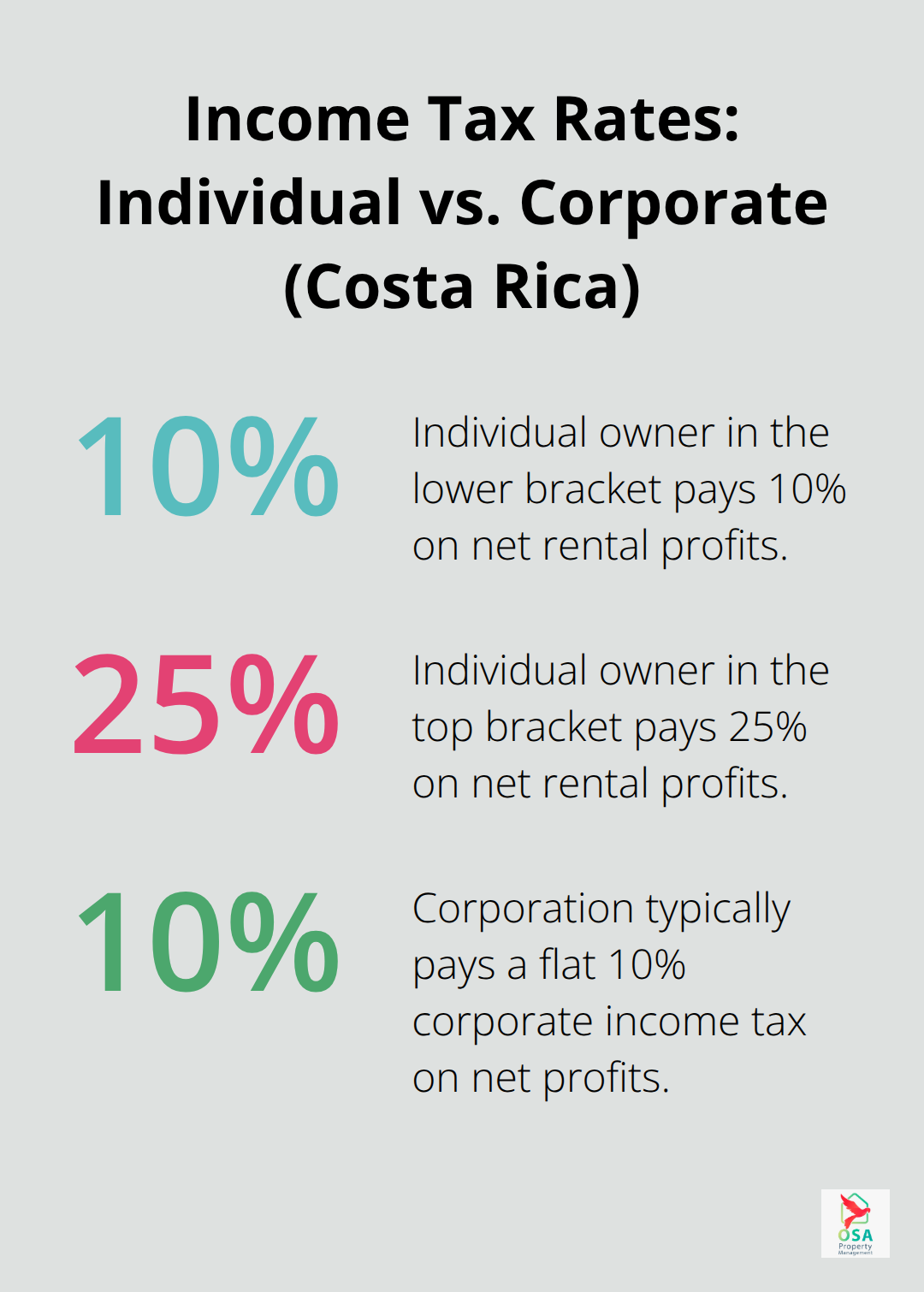
Individual owners face income tax rates ranging from 10% to 25% depending on total taxable income, while corporations in Costa Rica typically pay a flat 10% corporate income tax on net profits. This distinction matters enormously: a property generating $15,000 in annual net rental income would cost an individual owner in the 25% bracket $3,750 in income taxes, whereas the same property owned through a corporation would cost approximately $1,500 in corporate taxes, saving $2,250 annually.
The financial advantage compounds over time. A property owner with multiple units or a growing portfolio experiences substantially larger tax savings through corporate ownership. The corporate structure also provides asset protection by separating your personal assets from potential liability claims related to the rental property, which matters significantly if a tenant or visitor suffers injury on the property.
Implementation Costs and Timeline
Setting up a corporation involves legal fees ranging from $800 to $1,500 and annual compliance costs, but the tax savings typically recover these costs within the first year for properties generating substantial rental income. Many foreign investors dismiss incorporation as unnecessarily complex, but the financial advantage makes it worth serious consideration, especially as your portfolio grows.
Fiscal Incentives and Strategic Planning
Costa Rica offers specific fiscal incentives targeting property investors, though these programs contain strict requirements and expiration dates that catch unprepared owners off guard. The government periodically offers temporary tax reductions or exemptions for properties meeting specific criteria, such as developments in designated tourism zones or properties achieving certain environmental certifications.
These incentives rarely apply to existing rental properties, but if you develop new construction or undertake significant renovations, investigating current programs could reduce your project costs substantially. A qualified local tax professional can identify whether your specific property and investment plans qualify for any active incentives, potentially worth tens of thousands of dollars in tax savings.
Timing Your Professional Consultation
The critical error most investors make is discovering these opportunities after making purchasing or development decisions that would have qualified them for incentives had they planned differently. Consulting with a tax professional during the acquisition phase, not after closing, positions you to capture these benefits. The difference between informed planning and reactive tax management shows up directly in your investment returns.
Final Thoughts
Investment property tax planning in Costa Rica requires three fundamental actions that separate successful investors from those who leave money on the table. First, you must understand your specific cadastral assessment and verify its accuracy, since this single document determines your annual property tax obligation. Second, you need to track operating expenses, repairs, and depreciation from day one of ownership, as these deductions reduce your taxable income substantially. Third, you should evaluate whether corporate ownership makes financial sense for your portfolio, because the tax rate difference between individual and corporate structures often saves thousands annually.
The strategies outlined in this guide work only when you implement them intentionally and with professional support. Costa Rica's tax system contains nuances that catch unprepared investors off guard, and the cost of professional advice pays for itself through proper deduction categorization, accurate depreciation schedules, and strategic ownership structures (a qualified local tax professional identifies opportunities you wouldn't discover independently). Property owners who address taxes reactively during filing season miss opportunities that informed investors capture months earlier.
We at Osa Property Management work with property owners throughout the southern Pacific zone, and we've seen firsthand how proper investment property tax planning impacts investment returns. Our team handles accounting and tax compliance for our clients, ensuring they capture every legitimate deduction and maintain accurate records that withstand scrutiny. Contact Osa Property Management to discuss how we can help optimize your investment strategy.
To be contacted by an Osa Property Management representative and to learn more about our services, please send an email to info@osapropertymanagement.com or send a WhatsApp message to +17633068981 or +50671001006 / Para que un representante de Osa Property Management se ponga en contacto con usted y obtener más información sobre nuestros servicios, por favor envíe un correo electrónico a info@osapropertymanagement.com o un mensaje de WhatsApp al +17633068981 o al +50671001006.
Vacation rentals: https://costaricalasvillas.com