
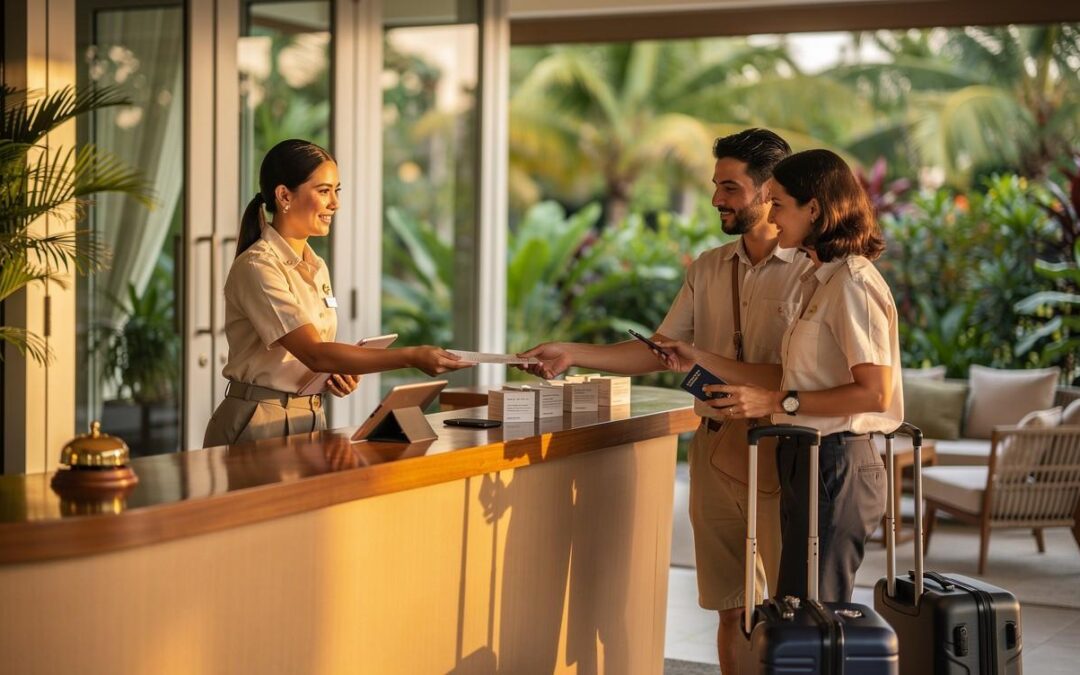
Manuel Antonio attracts thousands of visitors each year seeking unforgettable beach getaways and rainforest adventures. At Osa Property Management, we know that exceptional guest relations separate properties that thrive from those that struggle to fill bookings.
Strong Manuel Antonio guest relations start before guests arrive and continue long after they leave. This blog post covers the strategies, tactics, and real-world solutions that transform guest interactions into lasting loyalty.
What Guests Really Want in Manuel Antonio
Modern tourists arriving in Manuel Antonio don't want surprises-they want certainty. According to Amadeus research, 85% of hoteliers believe personalization could deliver more than 5% incremental revenue, yet most properties still treat guests as interchangeable bookings. Guests expect clean rooms, well-maintained facilities, good value, a quiet environment, and staff who recognize them as individuals, according to Deloitte's study on guest satisfaction. This means your property must nail the basics first: reliable Wi-Fi, quality toiletries, premium bedding, and responsive maintenance. But here's what separates Manuel Antonio properties that fill calendars from those that struggle-guests expect you to know them before they arrive.
How Reputation Shapes Booking Decisions
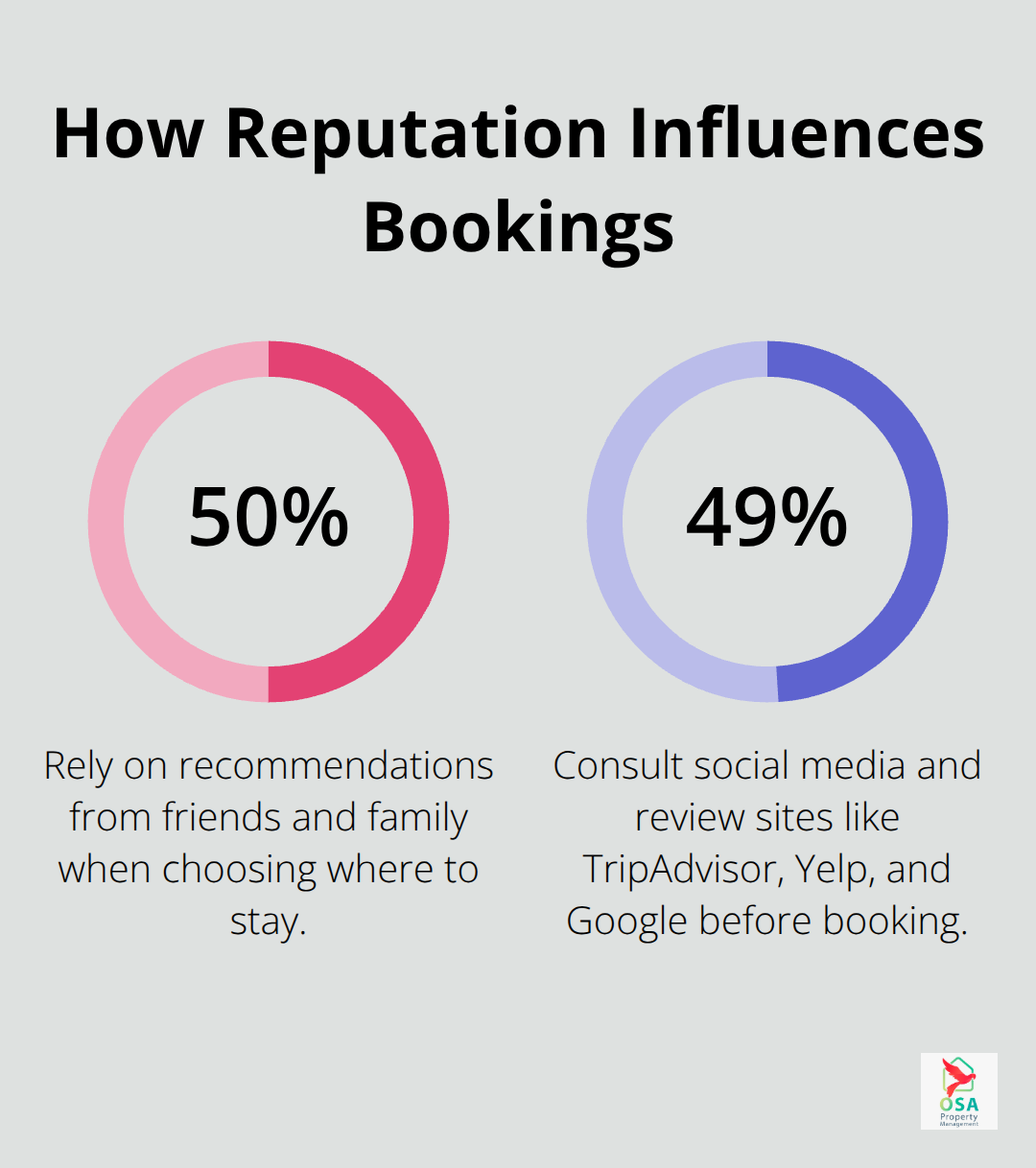
An Amadeus study found that 50% of travelers rely on recommendations from friends and family, while 49% consult social media and review sites like TripAdvisor, Yelp, and Google. This tells you that your online reputation directly influences booking decisions, and your pre-arrival communication sets expectations for the entire stay. Send a follow-up email after booking to collect preferences (ask about extra pillows, dietary restrictions, activity interests, and special occasions).
Why Personal Recognition Drives Repeat Bookings
The data is clear: guests who feel recognized book again. Small gestures work-a welcome gift upon arrival, complimentary items like local coffee or fruit, or remembering anniversary dates for returning guests create memorable moments that guests share on social media. Personalization also drives revenue. Properties that use guest data to tailor room upgrades, dining recommendations, and amenity offerings see measurable increases in repeat bookings and referrals. Your staff should know returning guests by name and recall previous preferences without asking. This requires capturing and organizing guest information in your property management system, then training staff to act on it. A 24-hour concierge service that responds to requests via SMS, WhatsApp, and messaging apps keeps guests connected and satisfied. 40% of guests selected smart TV/ability to stream entertainment, so technology should amplify your team's ability to deliver personal service, not replace it.
Turning Guest Feedback Into Operational Advantage
Guest feedback isn't optional-it's operational intelligence. Properties that actively manage reviews on TripAdvisor, Google, and Expedia see measurable improvements in booking conversion and guest satisfaction scores. Respond to every review within 48 hours, address complaints directly, and thank guests for positive feedback. This public responsiveness signals to potential guests that you take their experience seriously. Implement a post-stay survey to collect actionable feedback on specific areas: room cleanliness, staff friendliness, amenity quality, and value for money. Use this data to identify patterns (if multiple guests mention slow Wi-Fi or maintenance issues, fix them immediately). Guests in Manuel Antonio are comparing your property against competitors with ratings between 9.2 and 9.8 on Expedia, so mediocre service costs bookings. Properties that leverage guest feedback to make tangible improvements see higher repeat rates and stronger online reputations, which directly influences your next booking cycle.
How to Turn Pre-Arrival, On-Site, and Post-Stay Moments Into Loyalty
Capture Guest Preferences Before Arrival
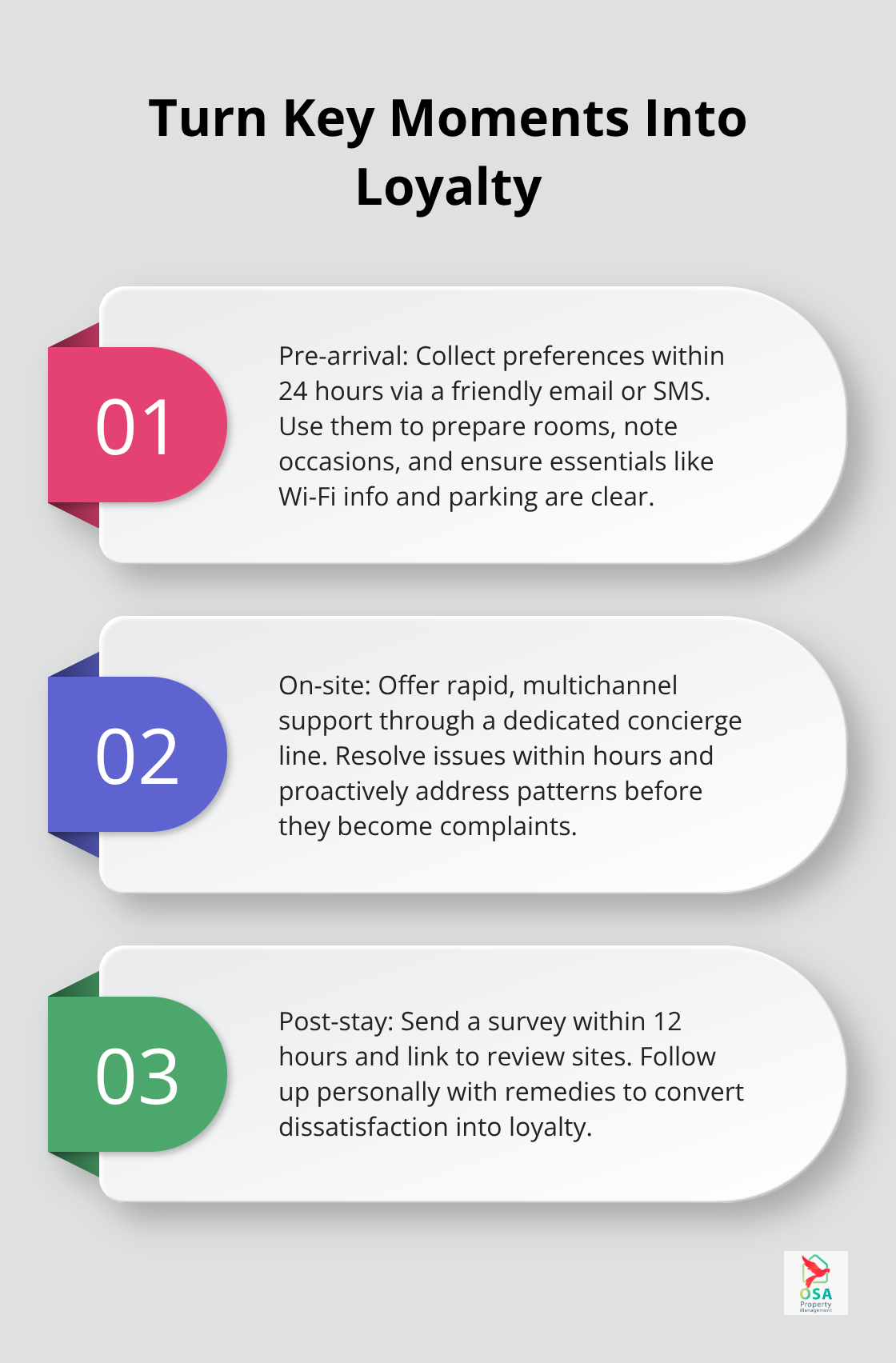
The window between booking and arrival is where most Manuel Antonio properties squander their competitive advantage. Many properties send a generic confirmation email and nothing else, then wonder why guests book elsewhere next time. Start collecting guest preferences within 24 hours of booking through a direct email or SMS that feels personal, not transactional. Ask about room preferences, dietary restrictions, activity interests, whether they're celebrating an occasion, and what time they prefer to check in. This information should live in your property management system so every staff member can reference it. If a guest mentions they're honeymooners, have champagne and fresh fruit waiting in the room. If they request extra pillows or a quiet location, note it prominently so housekeeping and front desk see it before arrival.
Send a second pre-arrival message 48 hours before check-in with weather updates, parking instructions, Wi-Fi passwords, and a direct contact number for your concierge. This removes friction and signals attentiveness. Properties that implement this two-step pre-arrival process see measurably higher satisfaction scores and guest reviews that mention feeling welcomed before they even arrived.
Respond to Guest Needs On-Site Within Minutes
The moment guests are on-site, your staff's job is to solve problems before they escalate into negative reviews. Train your team to recognize patterns: if three guests in a week mention the shower pressure is weak, fix it immediately rather than waiting for formal complaints. Implement a rapid-response system where guests can text, WhatsApp, or call a dedicated concierge number. For Manuel Antonio properties competing against resorts rated 9.2 to 9.8 on Expedia, slow response times cost you repeat bookings. Your staff should know returning guests by name and recall previous preferences without asking. This requires capturing and organizing guest information in your property management system, then training staff to act on it.
Close the Loop With Post-Stay Engagement
After checkout, send a post-stay survey within 12 hours asking for specific feedback on cleanliness, staff interaction, room comfort, and value. Include a direct link to leave a review on TripAdvisor or Google-guests who feel heard are more likely to leave positive reviews. Follow up personally with any guest who rated you below excellent, addressing their concern directly and offering a tangible remedy like a discount on their next stay or a complimentary service upgrade. This transforms a dissatisfied guest into a loyal one. Properties that systematically close the loop with post-stay engagement see 40% higher repeat booking rates than those that treat checkout as the end of the relationship.
Leverage Guest Feedback to Improve Operations
Guest feedback isn't optional-it's operational intelligence. Properties that actively manage reviews on TripAdvisor, Google, and Expedia see measurable improvements in booking conversion and guest satisfaction scores. Respond to every review within 48 hours, address complaints directly, and thank guests for positive feedback. This public responsiveness signals to potential guests that you take their experience seriously. Use post-stay survey data to identify patterns and make tangible improvements. Guests in Manuel Antonio are comparing your property against competitors with ratings between 9.2 and 9.8 on Expedia, so mediocre service costs bookings. Properties that leverage guest feedback to fix operational issues see higher repeat rates and stronger online reputations, which directly influences your next booking cycle.
The strategies above work only when your team executes them consistently. Staff training, clear communication protocols, and accountability systems transform guest relations from occasional gestures into a competitive advantage that fills your calendar year-round.
When Guests Report Problems, Act Immediately
Guest complaints in Manuel Antonio rarely stem from one mistake-they stem from slow responses to legitimate issues. A guest discovers weak water pressure, mentions it casually to staff, and hears nothing for two days. Another books a beachfront room but arrives to find a partial ocean view. A third disputes a charge they claim was never authorized. These situations escalate into negative reviews, refund demands, and lost repeat bookings because properties treat them as administrative tasks rather than urgent relationship moments. The first 24 hours after a guest reports a problem determine whether they leave satisfied or write a damaging review. Properties competing against Manuel Antonio resorts rated 9.2 to 9.8 on Expedia cannot afford slow problem resolution.
Respond to Booking Discrepancies Within One Hour
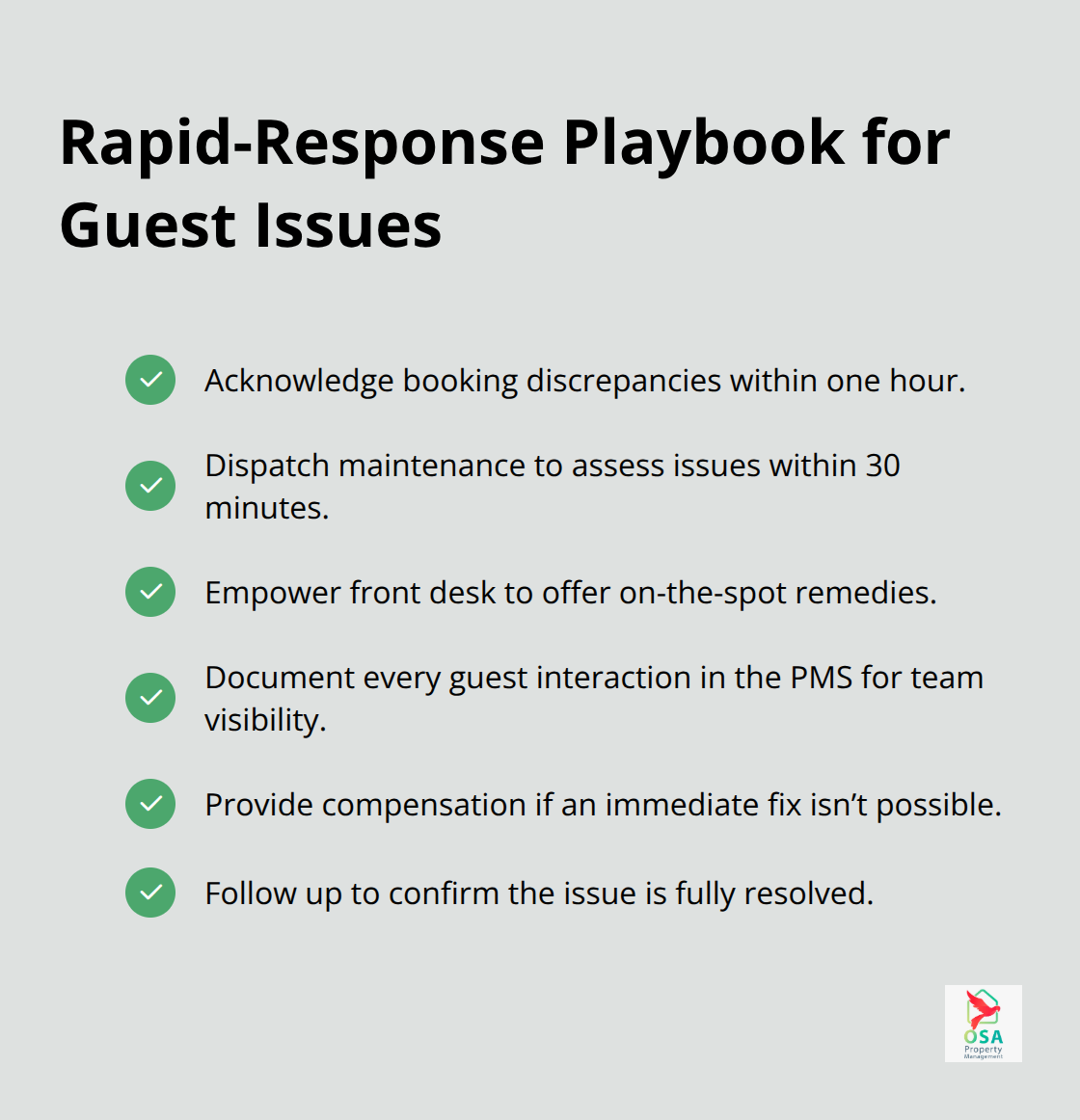
Your response protocol must be immediate, transparent, and empowered. When a guest reports a booking discrepancy-wrong room type, missing amenities, incorrect dates-your front desk staff should have authority to offer a remedy on the spot: a complimentary room upgrade, a service credit, or a discount on future stays. Do not escalate minor corrections to management while the guest stands waiting. If a guest booked a king bed and received two queens, acknowledge the error within one hour and fix it before evening. If they booked direct but were charged the OTA rate, credit the difference immediately plus a 15% service discount for the inconvenience. Guests who see swift, generous responses to their own mistakes become your strongest advocates.
Fix Maintenance Issues Before Evening
Maintenance complaints require a different approach than booking errors. Send someone to assess the issue within 30 minutes, not 24 hours. A broken air conditioner, non-functional shower, or malfunctioning smart TV is not a low priority-it directly impacts the guest's willingness to return and their online review. Establish a maintenance hotline separate from general concierge services so guests know their request reaches a technician, not an administrative queue. If the issue cannot be fixed immediately, move the guest to another room or provide tangible compensation (spa credit, dining discount, partial refund). Do not ask guests to tolerate substandard conditions while you schedule repairs.
Prevent Payment and Communication Conflicts With Documentation
Payment and communication conflicts often stem from unclear terms, not malicious intent. A guest was never informed that the resort fee covers certain amenities, so they dispute the charge. Another received conflicting information about cancellation policy from two staff members. A third booked through a third-party platform that failed to communicate house rules, and now they're frustrated about strict check-in times. These conflicts are preventable through documentation and redundancy. Include a detailed pre-arrival email that restates booking terms, itemizes all charges with explanations, clarifies cancellation and modification policies, and lists house rules. Have guests confirm receipt or sign acknowledgment digitally. When communication conflicts arise-guest claims they were promised late checkout but staff has no record-default to the guest's favor. The cost of a two-hour late checkout is far lower than the cost of a negative review that damages your conversion rate. For payment disputes, request proof of authorization from the guest and your payment processor before defending the charge. If documentation is unclear, offer a 50% refund as a gesture of goodwill rather than escalating into a refund dispute that damages your reputation.
Create a Unified Documentation System
Implement a communication protocol where all guest-facing staff document interactions in your property management system. When a guest mentions a preference, complaint, or request to anyone on your team-housekeeping, maintenance, concierge, front desk-it should be logged immediately so the next staff member sees it. This prevents the frustrating experience of repeating information and signals to guests that your team operates as a unified unit. Train staff to acknowledge problems without defensiveness: not "I don't know about that," but "Let me find out immediately and fix this." Guests in Manuel Antonio expect responsive, solution-oriented service because they have options. Properties that handle complaints with speed, authority, and genuine care transform complaints into opportunities to deepen loyalty.
Final Thoughts
Manuel Antonio guest relations transform into your strongest competitive advantage when your team executes consistently across every interaction. Properties that personalize pre-arrival communication, solve problems within hours, and follow up after checkout see measurable increases in repeat bookings and referrals. Guests who feel recognized and valued return to your property and recommend it to others, which strengthens your online reputation and booking conversion rate far more than any marketing campaign.
Your staff must treat guest relations as an operational priority, not an afterthought. This means training your team to solve problems on the spot, capturing guest preferences in your property management system, and holding everyone accountable for response times. Properties competing against Manuel Antonio resorts rated 9.2 to 9.8 on Expedia cannot afford slow or inconsistent service. Each satisfied guest compounds your reputation over time and influences future bookings.
If managing these systems feels overwhelming, Osa Property Management handles guest relations, concierge services, and reputation management for properties across Manuel Antonio and the southern Pacific zone. With over 20 years of experience and a team of 40 full-time employees, we manage the operational details that transform guest interactions into lasting loyalty and revenue growth.