

Costa Rica attracts thousands of foreign buyers each year, but the decision to invest there isn't straightforward. We at Osa Property Management have guided many clients through this choice, and we know the pros and cons of buying property in Costa Rica matter deeply to your decision.
This guide breaks down what makes Costa Rica appealing and what challenges you'll face. You'll get the facts you need to decide if it's right for you.
Why Costa Rica Stands Out for Property Buyers
Political Stability and Legal Protections
Costa Rica's political stability gives it a genuine edge over many emerging markets. The country has held democratic elections consistently since 1949, with no military coups or sudden government upheavals that plague other regions. This track record protects your property rights through established legal codes and a functioning court system. The Constitutional Court enforces property laws, and foreign ownership receives legal protection under Fee Simple ownership, meaning you can buy, sell, lease, and inherit property outright without requiring a Costa Rican partner. No other Central American country offers this level of clarity.

Climate Advantages and Rental Income
The climate and landscape pull people to Costa Rica for practical reasons that directly affect property values and lifestyle costs. Year-round temperatures between 70 and 85 degrees Fahrenheit eliminate heating bills and reduce construction wear compared to climates with freeze-thaw cycles. Coastal areas like Tamarindo and Playas del Coco stay consistently warm and dry during the tourist season, which supports vacation rental demand and occupancy rates. Mountain regions like La Fortuna near Arenal offer cooler temperatures and year-round green landscapes, appealing to buyers who seek a different aesthetic. The biodiversity and national parks anchor tourism infrastructure and property appreciation. Properties near established tourist areas command higher rental rates; a beachfront home in Tamarindo rents for significantly more per night than comparable properties in less-visited regions.
Affordability Compared to North America
Affordability compared to North America is stark and measurable. An oceanview home with three bedrooms in Playas del Coco ranges from $800,000 to $1.6 million, while similar properties in coastal California or Florida exceed $3 million. Starter homes in emerging areas like Ojochal run $200,000 to $400,000, offering entry points impossible in most U.S. markets. Property taxes at 0.25% of assessed value annually keep ongoing costs low-roughly $2,500 per year on a $1 million home. This combination of lower purchase prices, minimal property taxes, and strong rental income potential from tourism makes the financial case compelling for investors who prioritize cash flow. These advantages set the stage for understanding what challenges you'll encounter when you move forward with a purchase.
Challenges That Stop Foreign Buyers in Costa Rica
The Maritime Zone Trap
Coastal property ownership sits in a legal gray zone that most buyers don't understand until they're deep into escrow. The Maritime Zone Law reserves the first 50 meters from the high tide line as public land, and the next 150 meters as concession land that often requires Costa Rican involvement in ownership structures. You cannot own beachfront property outright the way you would in the United States. Instead, you typically lease the concession rights with one renewal option, creating an expiration date on your investment. Properties beyond the 200-meter zone avoid this problem, but the restriction eliminates a major category of oceanfront purchases that attract most foreign buyers.
Title Problems and Legal Risks
Title disputes happen because many properties lack clear ownership records going back decades. The National Registry is public, so hire a Real Estate Attorney to review the records before you commit money. This step costs $1,500 to $3,000 but prevents far worse losses later. Competing claims or incomplete documentation can collapse deals at the last moment. A thorough title search protects you from inheriting someone else's legal mess.
Currency and Tax Volatility
Currency fluctuations add unpredictable costs to property ownership. The Costa Rican colón trades against the US dollar with volatility that affects property taxes, maintenance bills, and utility costs if you hold accounts in colones. Property tax assessments shift when the municipality revalues properties, sometimes raising your annual 0.25% tax bill unexpectedly. This unpredictability makes long-term budgeting difficult for foreign owners who earn income in dollars.
Infrastructure Failures in Remote Areas
Infrastructure outside tourist corridors deteriorates quickly during rainy season, and rural road access becomes impassable without proper maintenance. Septic systems fail faster in the tropical climate than in temperate zones, and repairs run $3,000 to $8,000 depending on the system age and soil conditions. Water shortages hit some inland areas during dry season, and internet reliability drops sharply beyond major towns like Tamarindo or Playas del Coco. Remote properties require active management to prevent deterioration, which is why many investors hire professional management companies rather than attempting remote oversight from North America. These infrastructure challenges directly impact your ability to rent the property and maintain its condition over time.
Financial Considerations for Costa Rica Property Investment
Property Taxes and Maintenance Costs
Property taxes in Costa Rica run 0.25 percent of assessed value annually, which sounds low until municipalities revalue properties and your bill climbs unexpectedly. A $1 million home costs roughly $2,500 per year in property taxes, but add garbage collection fees paid quarterly to your municipality, and you're looking at another $300 to $600 annually depending on location. The real expense shock comes from maintenance in the tropical climate. Septic systems fail faster here than in North America because heat and humidity accelerate wear, costing $3,000 to $8,000 to replace. Roof repairs run $8,000 to $15,000 for a mid-sized home because salt air corrodes metal and heavy rain seasons stress structural integrity. Paint peels within 3 to 5 years on coastal properties, requiring fresh coats every few years at $2,000 to $5,000.

Water systems need annual inspection in dry season regions, and air conditioning units require servicing twice yearly. Budget an additional 1 to 2 percent of your property value annually for unforeseen repairs beyond routine maintenance. Professional property management companies handle these tasks and coordinate with trusted contractors, which protects your investment from the deterioration that remote oversight allows to happen.
Rental Income Potential and Market Demand
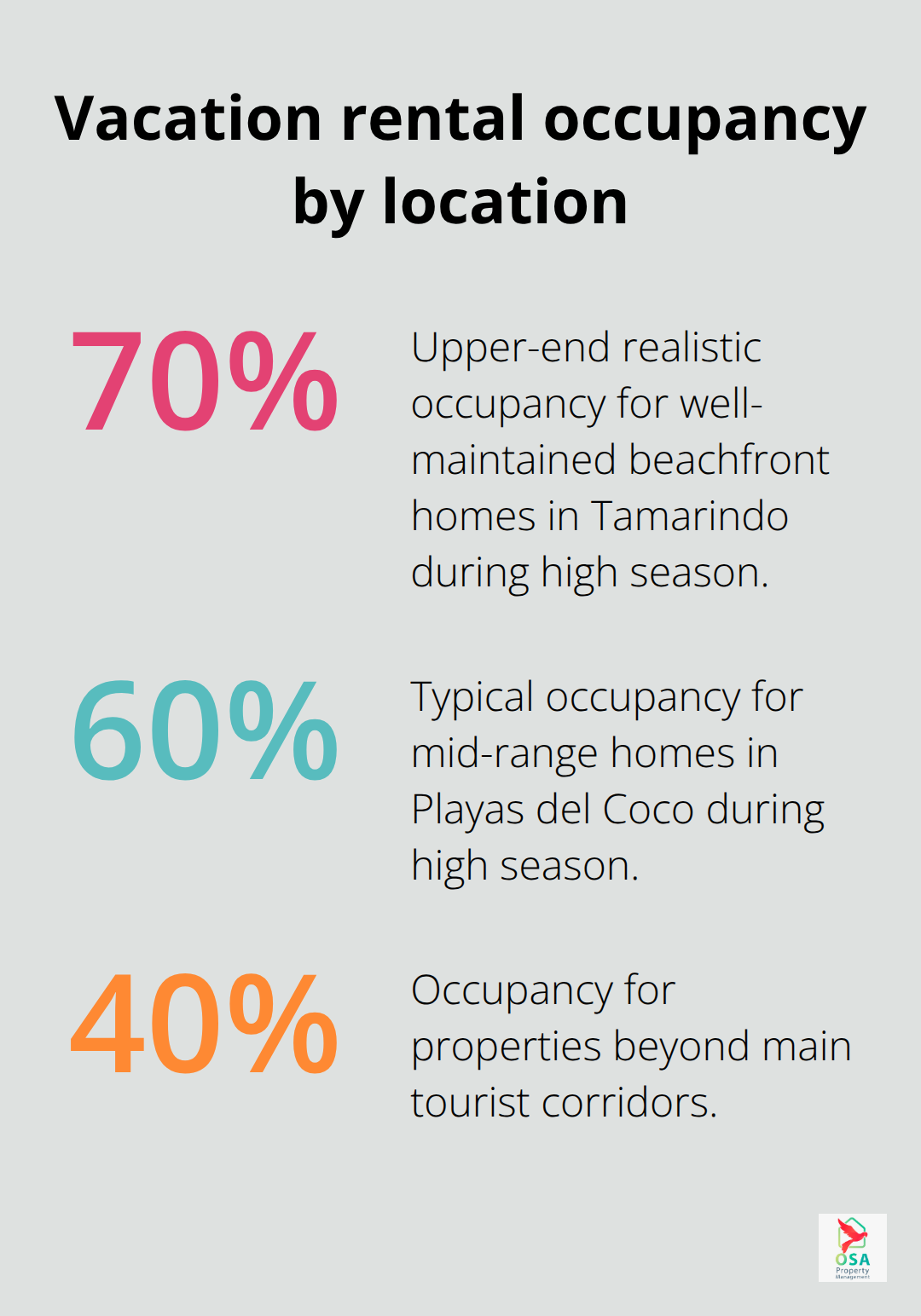
Rental income potential depends entirely on location and property type, not on optimistic assumptions. Beachfront homes in Tamarindo generate $300 to $500 per night during high season, translating to $90,000 to $150,000 annually if you achieve 60 to 70 percent occupancy, which is realistic for well-maintained properties with professional marketing. Mid-range properties in Playas del Coco earn $150 to $250 nightly, producing $30,000 to $60,000 yearly at similar occupancy. Properties beyond the main tourist corridors rent for $80 to $150 per night and struggle to maintain 40 percent occupancy, making them poor investments unless you plan personal use.
Rental income gets taxed at 15 percent on 85 percent of gross revenue, so a $100,000 annual rental income nets you roughly $72,250 after taxes. The tourism market in Costa Rica brought 3.27 million visitors in 2022, and that demand continues to drive occupancy rates higher in established areas. Properties near Arenal volcano, beaches, and national parks outperform isolated locations because guests book based on attractions, not on how quiet or remote your property feels.
Resale Value and Market Liquidity
Resale value trends show coastal properties in Tamarindo and Playas del Coco appreciate 3 to 5 percent annually when you maintain them properly and keep them in rental pools. Properties in emerging areas like Ojochal appreciate slower at 1 to 2 percent yearly because infrastructure development lags behind established towns. Market liquidity remains strong for properties priced under $800,000 in tourist zones, but luxury homes above $2 million take 6 to 12 months to sell because the buyer pool shrinks dramatically at higher price points. Selling costs run 4 to 5 percent of the sale price in closing fees, legal costs, and transfer taxes, which you must factor into your expected profit when you eventually exit the investment.
Final Thoughts
The pros and cons of buying property in Costa Rica ultimately depend on your specific situation and what you want from the investment. Strong legal protections, affordable prices, and proven rental income potential offset Maritime Zone restrictions, infrastructure challenges, and currency volatility for buyers who choose established tourist areas. You gain access to a stable political system and property rights that many emerging markets cannot match, but you sacrifice beachfront simplicity and face maintenance costs that surprise most North American buyers.
Costa Rica property investment works if you buy in proven rental markets like Tamarindo or Playas del Coco, if you budget 1 to 2 percent of your property value annually for tropical maintenance, and if you hold the property for at least five years to offset closing costs. It fails if you want uncomplicated beachfront ownership, if you need immediate cash flow from remote properties, or if you cannot afford professional management to protect your investment from deterioration. Honest self-assessment matters here-determine whether you're buying for personal use, retirement, or pure investment returns, since each goal demands different property types and locations.
Work with professionals who represent your interests, not the seller's, and hire a Real Estate Attorney to review titles and guide you through closing. Osa Property Management handles ongoing management across southern zones like Ojochal, Uvita, and Manuel Antonio, removing the burden of remote oversight and protecting your property from the deterioration that kills returns.