

Renting out property in Costa Rica comes with real financial exposure. Bad tenants can damage your home, stop paying rent, or create legal headaches that drain your resources.
At Osa Property Management, we've seen how proper renter screening in Costa Rica prevents these problems before they start. The right screening process protects your investment and keeps your cash flow stable.
Why Renter Screening in Costa Rica Protects Your Money
Property damage in Costa Rica adds up fast. A tenant who neglects maintenance can cost you thousands in repairs, from water damage to structural issues that take months to fix. The real problem isn't one incident-it's the cascade of expenses that follow when you must evict a problem tenant and restore the property. Legal eviction in Costa Rica takes 3 to 6 months minimum, and during that time your property generates zero income while you still pay property taxes, insurance, and maintenance costs. A single bad rental decision wipes out 12 months of profit.
Non-Payment Destroys Your Cash Flow
Non-payment is the fastest way to destroy your cash flow. According to data from Costa Rican property managers, approximately 15 to 20 percent of rental disputes involve payment issues. When a tenant stops paying, you lack immediate recourse-Costa Rica's tenant protection laws prevent you from simply locking them out or seizing belongings. You must go through formal legal channels, which costs money and time. A tenant who owes you 500,000 colones but disappears during eviction proceedings leaves you with nothing. Screening for employment stability and previous landlord references catches these risks before you sign a lease.
Income verification showing stable employment for at least 12 months is non-negotiable. Previous landlord references reveal whether a tenant has a history of late payments or disputes. Criminal background checks matter too, especially in rental markets where property theft occurs.
Tenant Quality Determines Neighborhood Value
Neighborhoods deteriorate when rental properties attract problem tenants. Loud parties, maintenance complaints from neighbors, and visible property neglect reduce the appeal of surrounding homes. If your rental attracts the wrong tenant, neighboring property values can drop, making your own investment less valuable when you eventually sell. Costa Rican beachfront and mountain communities rely heavily on reputation. A property known for tenant problems gets lower rental rates and fewer quality booking inquiries.
Screening protects not just your property but your neighborhood's desirability, which directly impacts resale value and future rental income. The next step involves understanding exactly how to conduct this screening process in Costa Rica's specific legal and cultural context.
How to Screen Renters in Costa Rica
Criminal Background Verification
Criminal background verification must come first because property crimes in Costa Rica's rental market are real. You need to verify whether a potential tenant has a history of theft, fraud, or violence. Criminal background verification in Costa Rica requires the tenant's consent and official legal channels. Private investigation services accelerate this timeline, which matters when you have multiple qualified applicants. The key is not just checking for convictions but understanding the severity and recency of any criminal history. A 15-year-old minor offense differs fundamentally from recent fraud charges.
Employment and Income Verification
Employment and income verification demands proof of consistent work for at least 12 months, not just a job offer letter. Request recent pay stubs, tax returns, and written confirmation from the employer showing the tenant's position and salary. In Costa Rica, many workers earn income informally, so you may need bank statements showing regular deposits from self-employment or freelance work.
Reference Checks from Previous Landlords
Previous landlord references reveal actual payment behavior and represent your most reliable screening tool. Contact at least two former landlords and ask specific questions: Did the tenant pay on time? Were there maintenance complaints? Did they vacate in good condition? How long did they stay? A tenant who moved every 6 months is a different risk than one who stayed 3 years. Landlords are far more candid in phone conversations than written responses, so call rather than email. Document everything in writing, including dates you contacted references, what they said, and your decision rationale. This documentation protects you legally if a tenant later disputes your screening decision or if you need to justify an eviction to Costa Rican authorities. Store these documents securely and keep them for at least 3 years.
Combining Multiple Verification Methods
No single screening method catches all risks. Criminal records miss financial irresponsibility, while income verification misses behavioral problems. Previous landlords may not answer honestly about minor issues. The combination of all three methods (criminal background, income verification, and landlord references) creates a comprehensive picture of tenant reliability. When one method raises red flags, the others either confirm your concerns or provide context that changes your decision. This layered approach takes more time upfront but saves you months of legal headaches and lost rental income later. The next step involves understanding how to document and organize this screening information in ways that protect your legal position and streamline your decision-making process.
How to Build a Screening System That Actually Works
Set Clear Rental Criteria Before You Meet Applicants
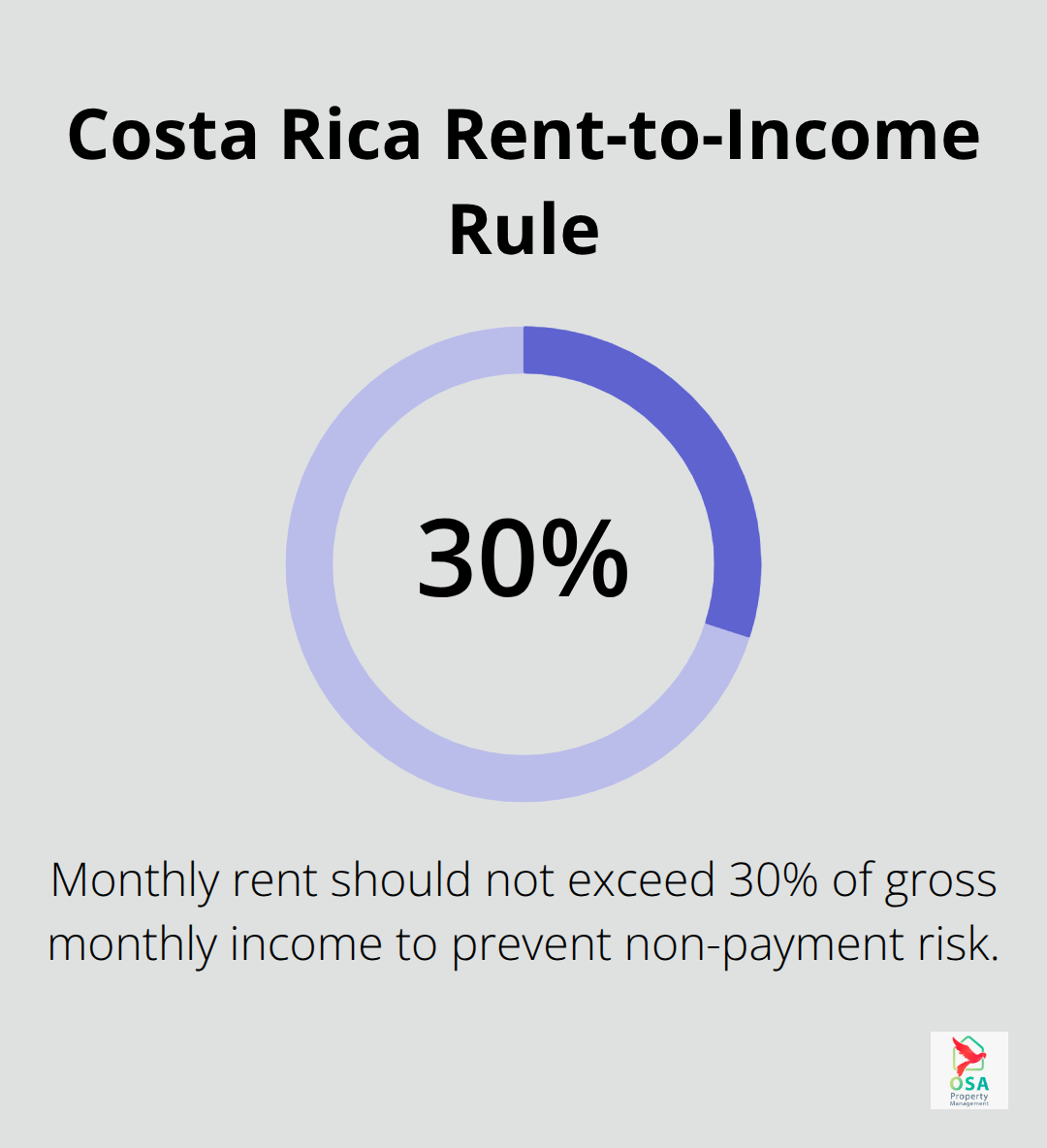
Creating effective rental criteria means establishing hard numbers before you meet any applicants. Set minimum thresholds for monthly income, employment history length, and credit score requirements upfront rather than adjusting standards for applicants you like. The 30 percent rule applies universally: if a tenant earns 1,000,000 colones monthly, maximum rent is 300,000 colones. This isn't flexible based on personality or promises. Establish how long employment must last (minimum 12 months works well), whether self-employment requires bank statements showing consistent deposits over a specific period, and what criminal history disqualifies a candidate completely versus what requires additional investigation.
Document these criteria in writing before screening starts. Consistency protects you legally in Costa Rica, where landlords face discrimination claims if screening standards shift between applicants. One investor rejected an applicant due to insufficient income history, then approved the next applicant with identical income documentation. The rejected applicant pursued a formal complaint, forcing the landlord to justify the inconsistency. Written criteria eliminate this exposure. The criteria should also specify how you weight different factors: does a criminal conviction from 20 years ago automatically disqualify someone, or does recent employment stability outweigh it? Does a gap in employment history require explanation, and how long can that gap be before you reject the application? These decisions must be predetermined and applied uniformly.
Contact Previous Landlords by Phone
Combining verification methods reveals patterns that single checks miss, and documentation creates your legal defense if disputes arise later. Contact previous landlords by phone rather than email because verbal conversations yield honest answers about behavioral problems that landlords hesitate to commit to writing. Ask specific questions: What was the move-out condition? Were there noise complaints? How quickly did rent arrive each month? A tenant who paid three days late consistently differs from one who was 15 days late.
Take notes during the call, record the landlord's name and phone number, the date of conversation, and their specific statements. Email the landlord afterward summarizing what they told you and request written confirmation. This protects against misunderstandings and creates documentation proving you conducted diligent screening.
Verify Income and Employment Thoroughly
Income verification requires two to three pay stubs that show the applicant's name, their employer's name, and year-to-date earnings plus employer confirmation in writing, not verbal assurance. Verify self-employment through bank statements showing regular deposits aligned with claimed income, tax returns from the previous year, and business registration documentation. Criminal background checks should specify the exact charges, conviction dates, and sentence outcomes. A tenant convicted of theft five years ago presents different risk than one with charges pending.
Organize and Maintain Screening Records
Store all screening documents in a secure file (physical or encrypted digital) with the applicant's name, application date, screening results, your decision, and the date of that decision. Maintain these files for at least three years. This documentation protects you if a rejected applicant claims discrimination, if an accepted tenant later causes problems and you face liability questions, or if you must defend an eviction to Costa Rican authorities who want proof you conducted proper due diligence.
The screening process takes longer than simply accepting the first applicant who has money, but the documentation and consistency transform screening from guesswork into defensible business practice.
Final Thoughts
Renter screening in Costa Rica protects your investment by catching problems before they become expensive legal battles. The three-step process of criminal background verification, income confirmation, and landlord references works because you apply the same standards to every applicant and document your decisions. Consistency matters more than perfection, and maintaining records for three years transforms screening from guesswork into defensible business practice.
We at Osa Property Management handle screening as part of our core service because we've seen firsthand what happens when property owners skip this step. Our team verifies employment, contacts previous landlords, and runs background checks using Costa Rica's official legal channels across the southern Pacific zone. We maintain detailed records and apply uniform criteria across all applicants, which protects both you and your tenants.
The investment in proper renter screening in Costa Rica pays dividends through stable cash flow, reduced legal costs, and properties that maintain their value. Bad tenants cost thousands in repairs, lost rent, and eviction expenses, while good tenants selected through thorough screening generate consistent income and keep your property in condition. Contact Osa Property Management to handle this entire process for you.
To be contacted by an Osa Property Management representative and to learn more about our services, please send an email to info@osapropertymanagement.com or send a WhatsApp message to +17633068981 or +50671001006 / Para que un representante de Osa Property Management se ponga en contacto con usted y obtener más información sobre nuestros servicios, por favor envíe un correo electrónico a info@osapropertymanagement.com o un mensaje de WhatsApp al +17633068981 o al +50671001006.
Vacation rentals: https://costaricalasvillas.com