

Property owners in Uvita often ask us the same question: what should they actually expect to pay for professional management? The answer isn't simple because costs vary based on your property type, location, and the services you need.
At Osa Property Management, we've seen owners surprised by hidden fees and unclear pricing structures. This guide breaks down Uvita property management costs so you know exactly what you're paying for and why.
What You Actually Pay for Property Management in Uvita
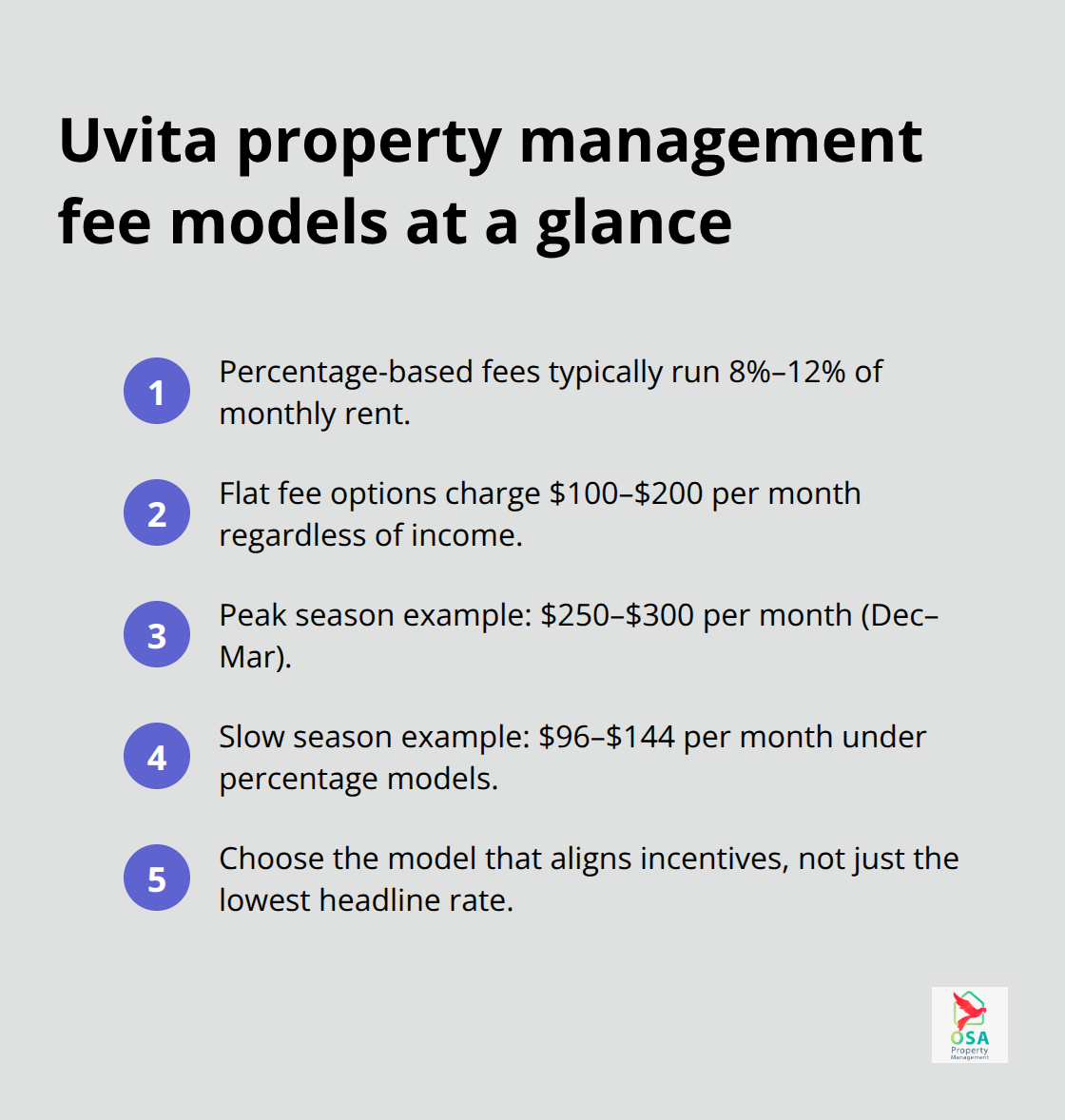
In Uvita, property management fees typically run between 8% and 12% of your monthly rental income, though the actual amount depends heavily on your property type and what services you need. A $1,500 monthly rent would cost roughly $120 to $180 in base management fees alone. Most owners hear the percentage and assume they understand the total cost. They don't. Percentage-based fees work well for vacation rentals with variable income, but they can work against you during low seasons when your rent drops but your manager's workload stays the same. Some firms offer flat-fee structures instead, charging $100 to $200 per month regardless of rental income. Flat fees sound predictable until you realize they misalign incentives: your manager has no financial motivation to maximize occupancy rates, and you pay the same amount whether your property rents for $1,200 or $2,500 per month. Owners in Uvita pay roughly $250 to $300 monthly during peak season (December through March) but only $96 to $144 during slower months under percentage-based models. The real question isn't which fee structure costs less-it's which one aligns your manager's financial interest with yours.
The Hidden Fees That Add Up Fast
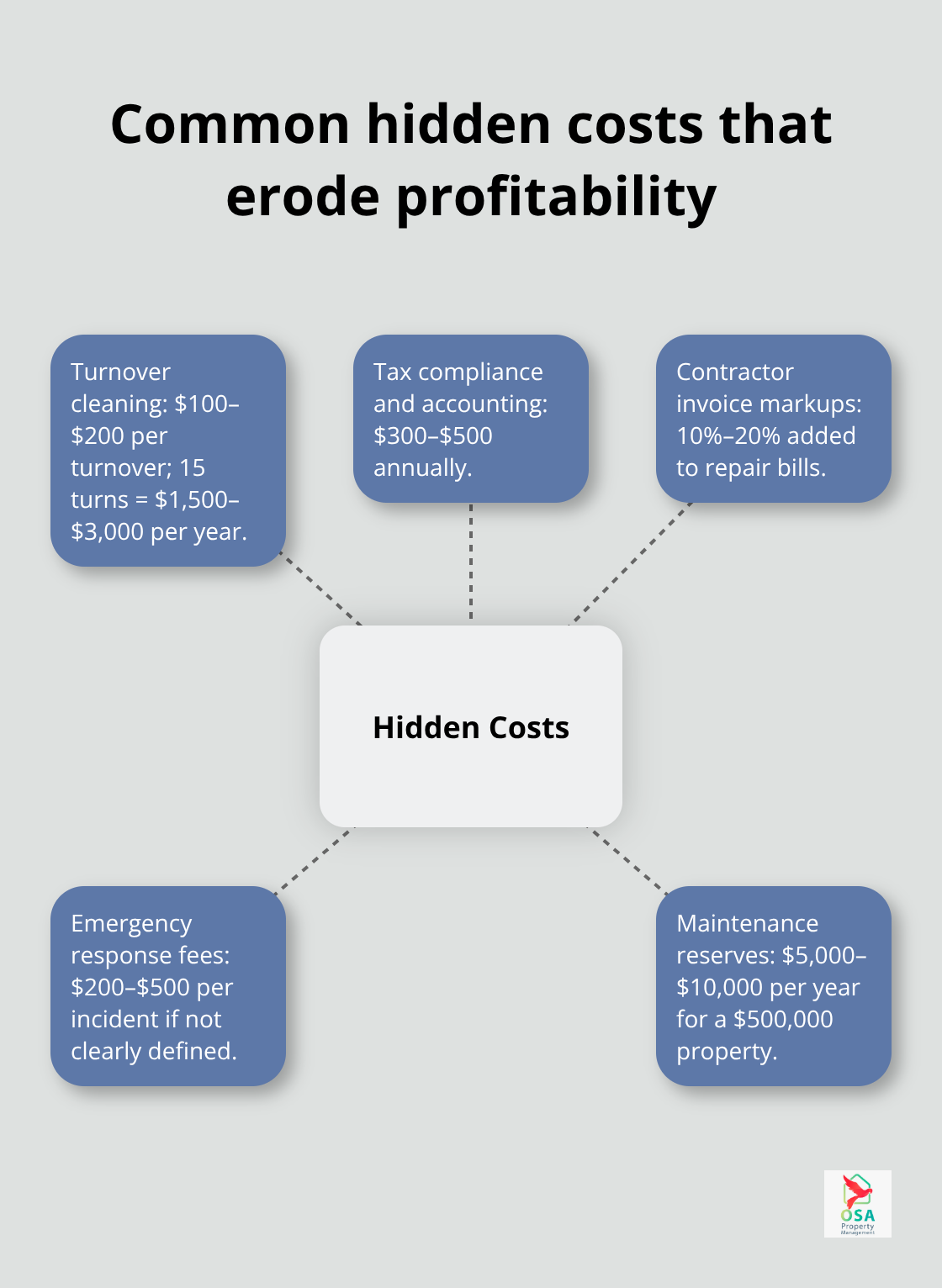
Beyond base management fees, additional charges catch most owners off guard. Turnover cleaning typically costs $100 to $200 per turnover, and if your vacation rental turns over 15 times annually, that amounts to $1,500 to $3,000 in cleaning expenses alone. Tax compliance and accounting usually run $300 to $500 per year and often don't appear in your base fee. Marketing fees, guest screening, maintenance coordination, and emergency repairs can each carry separate charges depending on your manager's structure. A $500,000 property renting at $1,500 monthly with a standard 10% management fee generates roughly $7,000 to $9,000 in annual profit after typical expenses, before taxes. That profit disappears quickly if you pay for unmarked charges throughout the year. Proactive maintenance reduces overall repair costs by up to 20%, yet many managers don't factor preventive work into their base fee. Demand a transparent fee schedule upfront that breaks down management fees, leasing fees, and all additional charges. If your manager won't provide a written breakdown, that signals a red flag-you'll likely encounter surprise invoices later.
Why Your Manager's Quality Matters More Than Fee Percentage
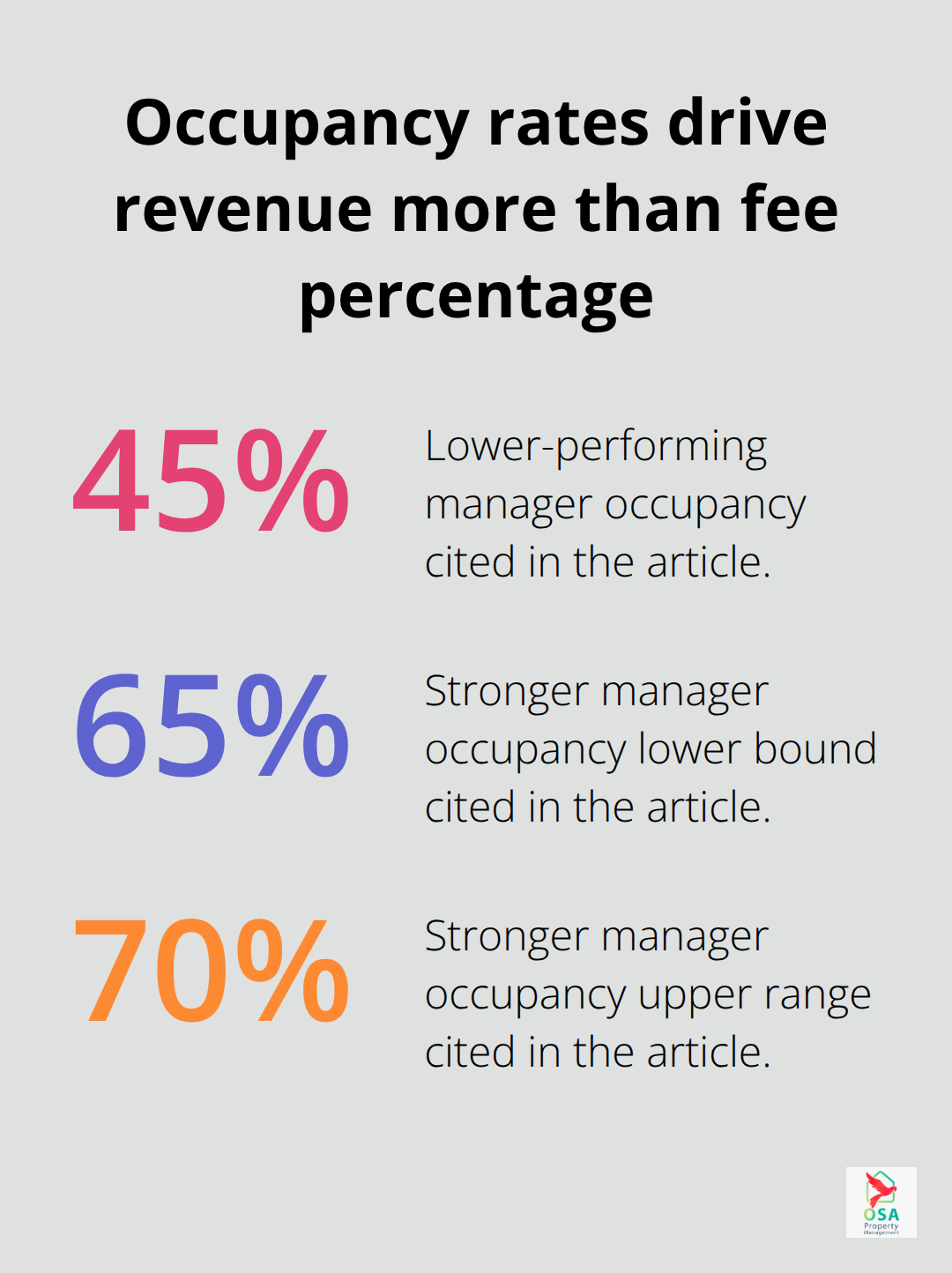
A manager charging 8% who delivers 45% to 50% occupancy generates far less revenue than one charging 10% who achieves 65% to 70% occupancy. The cheaper option costs you thousands in lost rental income. Professional managers in Uvita who understand seasonal tourism patterns-like the Whale Festival peak from December through March-use dynamic pricing to capitalize on high-demand periods and adjust rates strategically during slower months. This approach can increase annual revenue from $18,000 with static pricing to $19,500 to $20,700 for a property with a $1,500 monthly average rent.
What Sets Top Managers Apart in the Market
Osa Property Management brings over 20 years of experience and a team of more than 40 full-time employees to the Uvita market. They were the only property management company selected by Airbnb Corporate for the 2025 Airbnb Host Summit in Mexico City-an invitation-only event for the top 150 property management firms in the Caribbean, Mexico, and Central America. That recognition reflects the difference between a manager who collects rent and one who actively grows your property's revenue. The next section covers what services actually come included in your management package and which ones typically carry extra fees.
What Services Come With Your Management Package
Professional property management in Uvita covers far more ground than most owners realize when they sign a contract. Tenant screening through credit checks, employment verification, and background checks reduces eviction risk and rent defaults significantly. A problematic tenant can drain thousands in legal fees, lost rent, and damage repairs-poor screening costs money. Once tenants are placed, rent collection happens through online payment systems that cut administrative overhead and improve cash flow. Financial reporting arrives monthly with clear breakdowns of income, expenses, and maintenance costs so you can track your return on investment without guesswork. Many managers bundle accounting and tax compliance into their service, though some charge a separate fee as a line item.
Maintenance Coordination in Tropical Conditions
Maintenance coordination matters more than most owners appreciate because tropical properties in Uvita face brutal conditions. Roof repairs run $8,000 to $15,000, septic replacement costs $3,000 to $8,000, and exterior painting runs $2,000 to $5,000 every three to five years. Your manager maintains a reliable contractor network, documents all maintenance procedures, and tracks response times so emergencies don't spiral into catastrophes. A property worth $500,000 should budget $5,000 to $10,000 annually for maintenance reserves to handle large repairs without destroying cash flow. Proactive maintenance prevents small problems from becoming expensive ones-this approach protects your investment far better than reactive repairs.
Emergency Response and Property Protection
The difference between a reactive manager and a proactive one shows up immediately when something breaks. Emergency response means your property doesn't sit damaged while you wait for Monday morning callbacks. Coastal properties near Ojochal and Uvita require especially vigilant monitoring because salt air and humidity accelerate deterioration. Your manager inspects properties regularly, catches small problems before they become expensive ones, and coordinates repairs without requiring your approval on every invoice under a predetermined threshold. Property management software automates guest communications, maintenance request tracking, and digital reporting. Faster problem resolution and better guest experiences during turnover periods follow from this efficiency.
Vacation Rental Management and Guest Coordination
Vacation rental properties demand additional coordination around guest communications, cleaning between bookings, and handling guest complaints in real time. Turn-key vacation rental management handles listing optimization across platforms, guest screening for booking patterns, and coordinating cleaners so your property stays market-ready. Your manager's fee structure should reward occupancy gains and revenue growth, not just collect rent passively. The worst management mistake owners make is assuming their manager will invest in growth without clear incentive structures in place. Hidden costs emerge when managers lack motivation to maximize your property's performance, which leads directly to the question of what additional expenses you should watch for beyond your base management fee.
Hidden Costs That Drain Your Uvita Property's Profitability
Tropical properties in Uvita bleed money through maintenance channels that most owners don't anticipate until invoices arrive. Roof repairs alone run $8,000 to $15,000, septic system replacement costs $3,000 to $8,000, and exterior painting every three to five years runs $2,000 to $5,000. Coastal salt air and humidity accelerate deterioration, meaning your property requires more aggressive upkeep than inland homes. A $500,000 property should budget $5,000 to $10,000 annually for maintenance reserves, yet most owners treat maintenance as something they'll address when problems appear. That reactive approach destroys cash flow.
Turnover Expenses Compound Quickly
Turnover expenses hit vacation rental properties hard. If your property turns over 15 times yearly, turnover cleaning alone costs $1,500 to $3,000 annually at $100 to $200 per turnover. Add guest screening, marketing fees, and emergency repairs, and your true management cost easily exceeds the percentage-based fee your manager quotes. Tax compliance and accounting typically run $300 to $500 annually and often don't appear in base management fees. Request an itemized fee breakdown from any manager before signing a contract. If they won't provide one, their pricing structure contains hidden charges designed to surprise you later. The manager who quotes a higher percentage but includes turnover cleaning, tax accounting, and emergency repair transparency actually costs less than one quoting lower fees with hidden markups.
Vacancy Periods Drain Faster Than You Expect
A property sitting empty costs money immediately. During off-season months when occupancy drops, your rental income shrinks but your fixed costs don't. Seasonal patterns in Uvita mean December through March generates strong bookings while September and October produce minimal demand. A manager charging percentage-based fees makes less money during vacancy, creating perverse incentive to accept lower rates rather than hold out for quality guests. This is why manager quality matters more than fee structure. A manager with strong marketing and dynamic pricing strategies maintains higher occupancy rates than one lacking motivation to fill vacant days. Request actual occupancy benchmarks from comparable properties in your area before hiring. If a manager can't produce documented occupancy data for similar properties, they lack track record worth trusting. Vacancy loss also compounds when turnovers happen frequently. Each turnover creates days of vacancy while cleaning occurs, and longer vacancy periods mean lost income that no fee structure recovers.
Emergency Repairs and Contractor Markups Erode Profitability
Your manager's contractor network directly impacts your repair costs. Some managers mark up contractor invoices 10% to 20%, turning a $5,000 roof repair into $5,500 to $6,000. Others coordinate work transparently without markup. Tropical maintenance costs escalate during hurricane season when emergency repairs become necessary overnight.
Final Thoughts
Uvita property management costs break down into three categories: base management fees, included services, and hidden expenses that emerge throughout the year. A manager charging 8% with poor occupancy costs far more than one charging 12% who delivers strong bookings and transparent pricing. The cheapest option rarely saves money because low fees often signal low investment in marketing, guest relations, and property maintenance.
When selecting a property management package, prioritize documented occupancy benchmarks for comparable properties, a written fee breakdown that lists every charge upfront, and references from three similar property owners in your area. Ask directly whether turnover cleaning, tax accounting, emergency response, and contractor markups are included or billed separately. Vague answers indicate hidden fees waiting to surprise you later.
Your manager's quality determines your property's profitability more than any fee structure. A professional team invests in dynamic pricing, maintains a reliable contractor network, and coordinates maintenance proactively rather than reactively. Contact Osa Property Management to discuss how we align our service package with your property's needs and financial goals.