
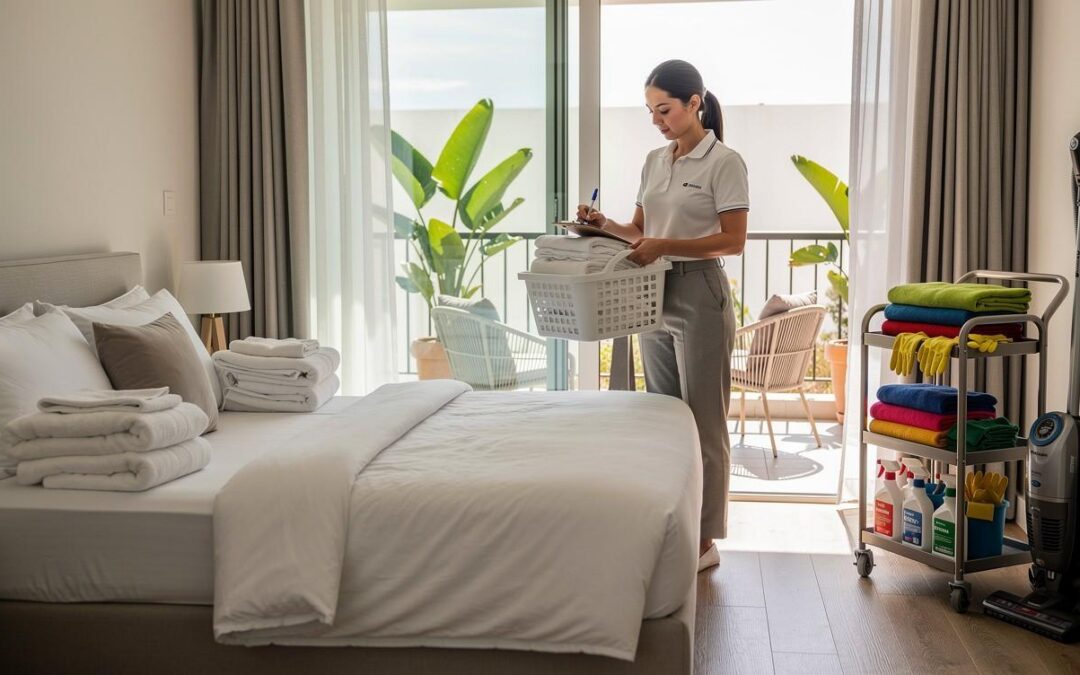
A clean vacation rental isn’t just about appearances-it directly impacts your booking rates and guest reviews. We at Osa Property Management know that vacation rental housekeeping in Costa Rica requires more than standard cleaning practices, especially with the tropical climate and high guest turnover.
The difference between a mediocre property and a consistently booked one often comes down to how well you manage the spaces between guests. This guide covers the standards, systems, and strategies that keep your Costa Rica rental competitive and profitable.
Why Housekeeping Quality Drives Bookings and Revenue
Guest Reviews Control Your Occupancy and Rates
Guest reviews on Airbnb and VRBO directly control your occupancy rate and nightly rates. Properties with an average rating of 4.8 out of 5.0 or higher attract premium bookings and command higher prices than those with ratings below 4.5. Cleanliness ranks as the top factor in guest satisfaction across vacation rental platforms, meaning a single poor turnover can trigger negative reviews that tank your booking momentum for weeks. Costa Rica sees over 2 million vacation rental visitors annually, creating intense competition for bookings. Owners managing properties on the Gold Coast, where 2–3 bedroom homes rent for $250–$500 per night in peak season and premium villas exceed $1,000 per night, cannot afford cleaning shortcuts. A spotless turnover translates directly to five-star reviews, repeat bookings, and the ability to raise rates during high-demand periods.
Tropical Climate Accelerates Property Wear
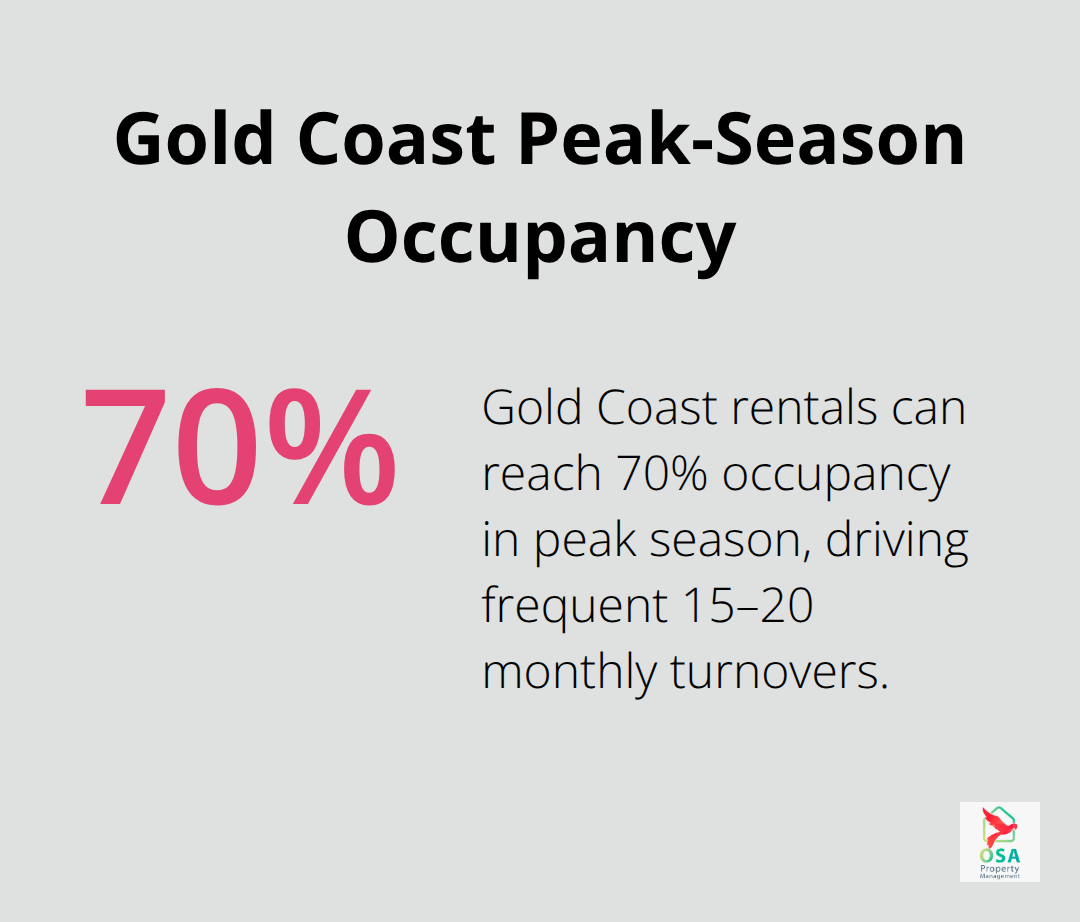
Humidity and salt air in Costa Rica damage property value faster than in temperate climates. Humidity levels in Costa Rica typically range from 40 to 85 percent, posing significant threats to homes, promoting mold growth and warping wood. Properties near the coast face particularly aggressive corrosion, requiring exterior cleaning after every turnover to prevent salt damage. The tropical environment also attracts insects and pests, making proactive cleaning and sealed storage for food and linens non-negotiable. Owners who skip proper housekeeping protocols watch maintenance costs balloon and property condition deteriorate within 12–18 months. Peak-season occupancy on the Gold Coast can reach 70 percent, meaning properties undergo 15–20 turnovers during the busiest months. Each turnover presents an opportunity to inspect for damage, address mold and moisture issues, and protect the long-term asset value of your rental.
Same-Day Turnovers Maximize Revenue Potential
Same-day turnovers maximize occupancy and rental income, but only if your cleaning team executes flawlessly. A property that takes two days to clean loses revenue on every booking that could have started the next morning. Cleaning fees commonly range from $150–$400 per booking, and these costs eat into profit if turnovers stretch beyond 8–10 hours. Properties in remote locations or those requiring deep cleaning after difficult guests experience longer turnaround times, creating booking gaps that cost thousands in lost revenue during peak season. Direct bookings with trusted local agencies save 10–15 percent on service fees compared to relying solely on OTAs, freeing that budget for faster, more reliable turnover teams. Owners who prioritize same-day turnover capabilities and maintain consistent cleaning standards position themselves to capture last-minute bookings and maximize revenue during shoulder and peak seasons.
The standards and systems that support these turnovers require careful planning and execution. Understanding the specific cleaning protocols that work in Costa Rica’s environment separates properties that thrive from those that struggle with occupancy and guest satisfaction.
Cleaning Standards That Protect Costa Rica Rentals
Room-by-Room Protocols for Tropical Conditions
Successful vacation rental housekeeping in Costa Rica demands room-by-room protocols tailored to tropical conditions, not generic cleaning checklists designed for temperate climates. High-traffic areas like kitchens and bathrooms require sanitization routines that address the specific threats posed by humidity and coastal environments. Kitchen turnovers must include sanitizing counters, cleaning appliance interiors and exteriors, vacuuming and mopping floors, emptying trash, and removing crumbs that attract ants, which thrive in Costa Rica’s warm climate.
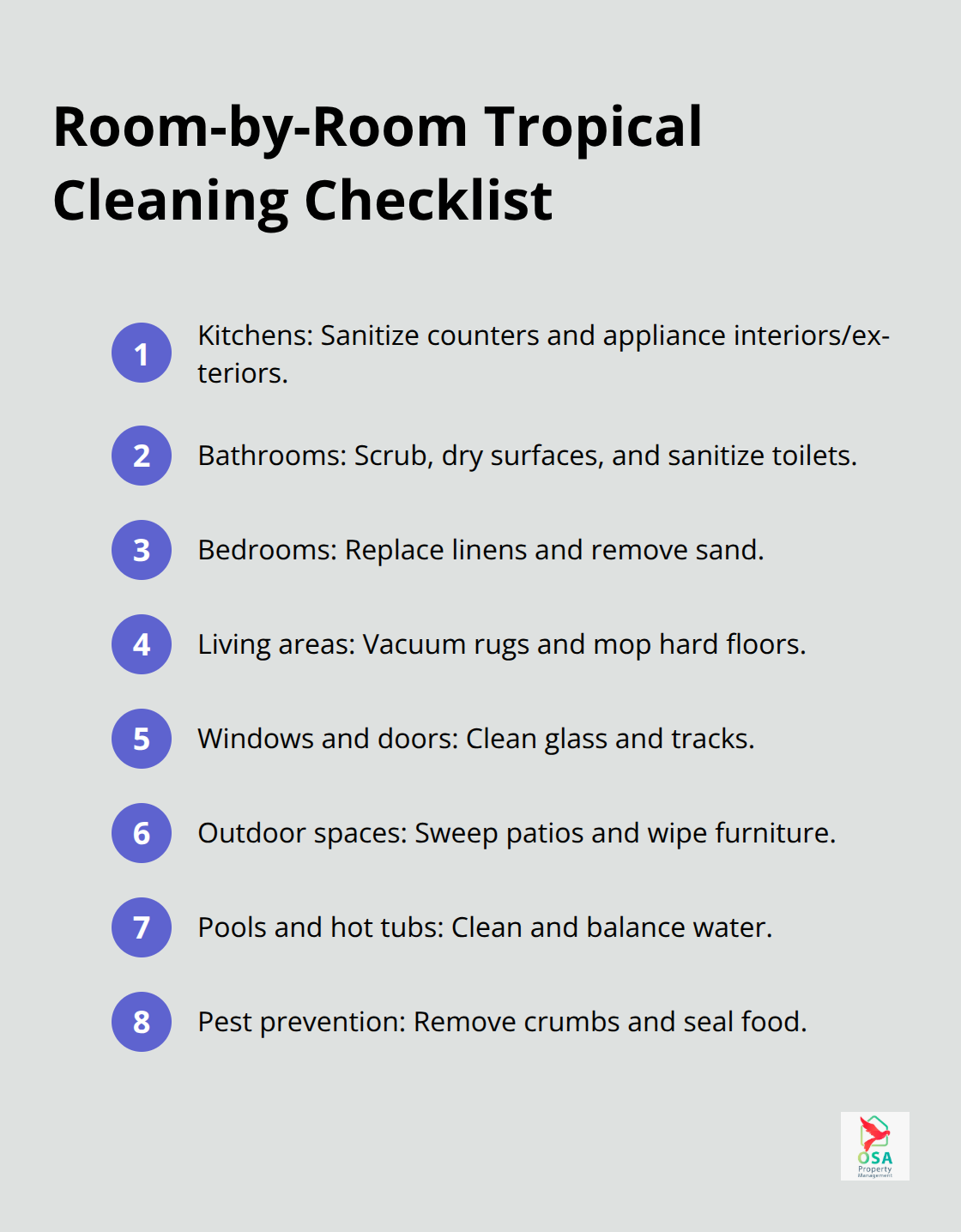
Bathroom cleaning requires scrubbing tubs and showers thoroughly, then drying all surfaces to prevent mildew growth, sanitizing toilets, wiping down walls, and replacing towels with fresh linens. Bedrooms demand sheet and pillowcase replacement, sand removal from bedding, dusting of wardrobes, and vacuuming carpets before mopping floors. Living areas need vacuuming of rugs, mopping hard floors, cleaning windows and doors, checking under furniture for sand accumulation, and dusting fixtures. Outdoor spaces require sweeping patios and decks, wiping furniture, scrubbing grills, cleaning pools and hot tubs, trimming landscaping, and removing standing water that breeds mosquitoes and causes moisture damage.
Laundry and Supply Management
Laundry handling matters enormously in tropical climates. Wet towels must be washed immediately to prevent mildew, sunscreen stains require treatment before washing, and linens should be dried and restocked promptly. Supplies need replenishment after each turnover, with foods sealed to prevent pest infestations and a welcome basket prepared for arriving guests. This attention to detail separates properties that maintain five-star standards from those that accumulate complaints about musty smells or missing amenities.
Early Detection Through Inspection Systems
Inspection systems catch damage before it escalates into expensive repairs that drain your profit margins and frustrate guests. A meticulous room-by-room inspection checklist after every turnover identifies cracked tiles, damaged appliances, broken furniture, mold spots, and pest activity that would otherwise go unnoticed until a guest complains. Peak-season properties undergoing 15–20 turnovers monthly cannot afford missed inspections, as small issues compound into guest complaints and negative reviews within weeks.
Seasonal Adjustments and Staffing Demands
Seasonal considerations shift housekeeping demands significantly. Peak season from mid-December through mid-April requires maximum staffing and speed because properties turn over every 2–4 days, making same-day turnovers non-negotiable. Green season (May–October) offers 30–50 percent discounts off peak rates, reducing occupancy and turnover frequency, which allows deeper cleaning cycles and maintenance work that peak season does not permit. Shoulder months like May, June, and November provide balanced occupancy, enabling more predictable turnover scheduling and staff allocation.
Location-Specific Challenges and Climate Risks
Remote locations in Guanacaste’s Playa Flamingo, Potrero, Las Catalinas, and Playa Coco require larger cleaning teams positioned strategically to handle transportation time and maintain rapid turnaround windows. Humidity during green season intensifies mold risk on indoor and exterior surfaces, demanding preventive cleaning protocols year-round rather than reactive deep cleans after visible growth appears. These environmental pressures mean that properties in Costa Rica cannot rely on standard cleaning schedules-they require systems designed specifically for tropical wear and guest volume. The next section addresses how to organize these cleaning operations efficiently without sacrificing quality or inflating costs.
Managing Turnover Systems That Work in Costa Rica
Strategic Positioning Eliminates Travel Delays
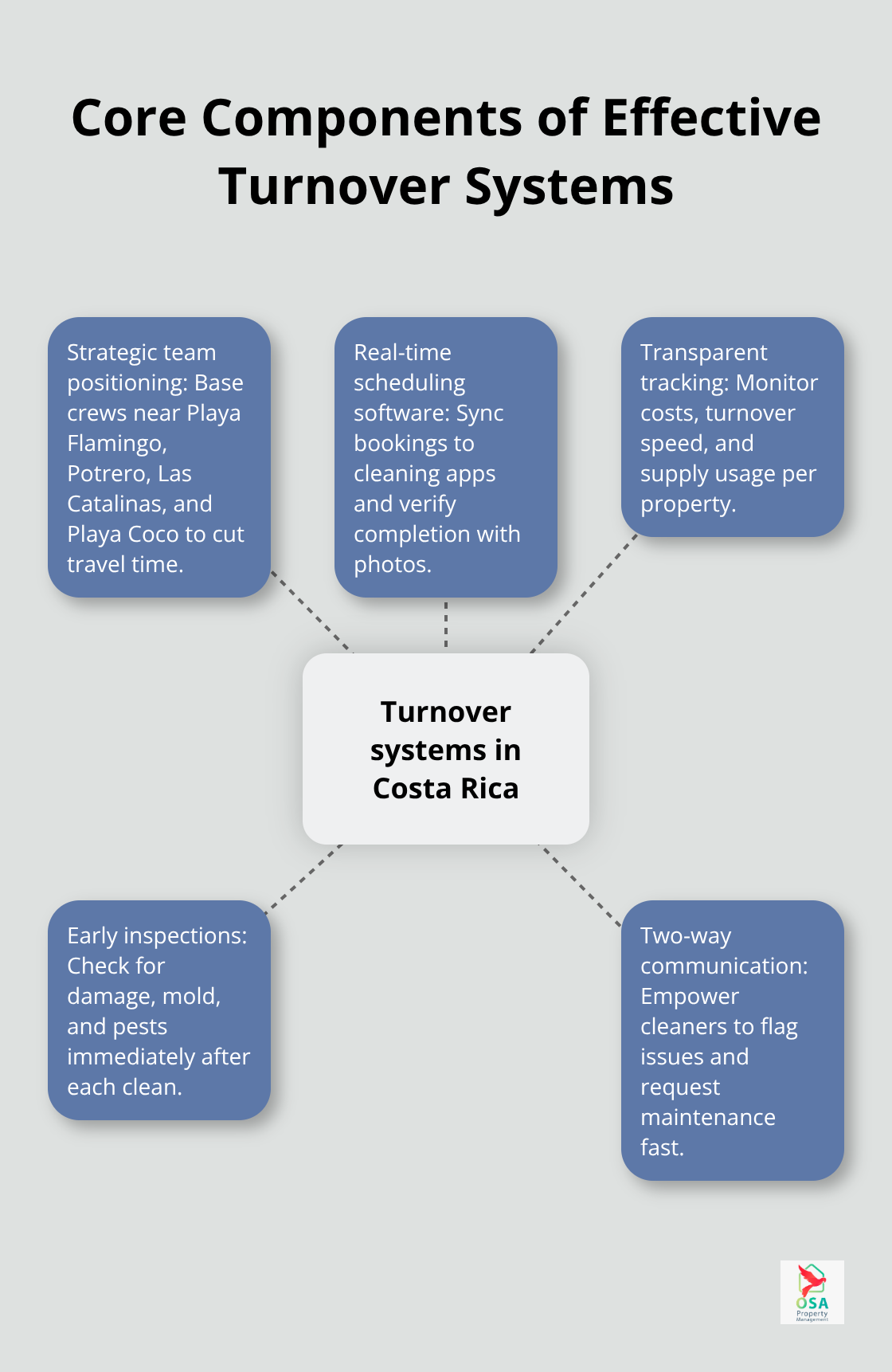
Scheduling cleaners around guest arrivals and departures in Costa Rica requires systems that account for unpredictable bookings, remote property locations, and the physical demands of same-day turnovers. Peak-season properties turning over every 2–4 days cannot rely on fixed cleaning schedules or part-time staff scattered across multiple locations. Instead, successful operators position cleaning teams strategically near high-density rental clusters in areas like Playa Flamingo, Potrero, Las Catalinas, and Playa Coco, reducing travel time between properties and enabling faster turnaround windows. This positioning directly impacts your ability to capture last-minute bookings worth $250–$1,000 per night depending on property size and season.
Real-Time Scheduling Software Prevents Miscommunication
Property management software with integrated booking calendars that sync directly to cleaning team apps eliminates miscommunication and double-bookings. Real-time scheduling software coordinates cleaning and maintenance schedules around reservations, allowing team leads to assign jobs immediately after guest checkouts and verify completion through photo documentation before guests arrive. Cleaning crews see exact checkout times, drive times to the next property, and required cleaning scope all in one place, removing the back-and-forth email exchanges that delay turnovers by hours. Peak-season occupancy reaching 70 percent on the Gold Coast means properties complete 15–20 turnovers monthly, making scheduling software non-negotiable rather than optional. Properties without automated scheduling routinely miss same-day turnover windows, losing bookings that could have started the next morning.
Transparent Tracking Reduces Costs Without Cutting Corners
Cost control without compromising quality comes down to transparent tracking and preventive maintenance rather than cutting corners on supplies or staff training. Cleaning fees typically range from $150–$400 per booking, and these costs become unsustainable if turnovers stretch beyond 8–10 hours or if deep cleaning needs spike due to guest damage or neglected maintenance. Owners should demand detailed monthly statements showing housekeeping costs broken down by property, cleaning type, and turnover speed, with one bank account per client for complete transparency. Properties with locked cleaning closets stocked with supplies at each location complete turnovers 15–20 percent faster than those requiring staff to transport supplies from a central location, directly reducing labor costs. Stocking a cleaning closet, scheduling annual deep cleans, and maintaining dryers and vents reduces laundry cycle times, speeding the linen turnaround that often becomes the bottleneck in peak season.
Early Inspections Prevent Expensive Emergency Repairs
Regular post-cleaning inspections catch damage early, preventing the expensive emergency repairs that destroy profit margins when guests discover broken appliances or mold mid-stay. A meticulous inspection after each turnover identifies cracked tiles, damaged fixtures, mold spots, and pest activity that would otherwise go unnoticed until a guest complains. Peak-season properties undergoing 15–20 turnovers monthly cannot afford missed inspections, as small issues compound into guest complaints and negative reviews within weeks.
Two-Way Communication Enables Real-Time Problem Solving
Communication between property managers and cleaning teams must flow in both directions through a single platform rather than scattered across text messages, emails, and phone calls. Team leads need authority to flag damage immediately, request maintenance support for urgent repairs, and adjust cleaning scope based on guest checkout conditions without waiting for manager approval. This real-time feedback loop prevents situations where cleaners finish a turnover, leave, and managers discover stains or pest activity hours later when the next guest is already en route. When damage occurs, maintenance teams respond quickly, and inspectors evaluate significant issues before guests arrive, protecting both your reputation and your revenue.
Final Thoughts
Vacation rental housekeeping in Costa Rica succeeds when systems prioritize speed, quality, and transparency over cost-cutting shortcuts. Properties that command premium rates and maintain high occupancy treat cleaning and inspections as revenue-generating operations, not expenses to minimize. Guest-ready standards mean same-day turnovers, spotless spaces that earn five-star reviews, and proactive damage detection that protects your asset value-properties that skip these practices watch booking rates decline and maintenance costs spike within months.
Consistent housekeeping practices compound over time, with properties maintaining 4.8 out of 5.0 ratings attracting repeat bookings and justifying higher nightly rates than competitors with lower scores. Peak-season occupancy reaching 70 percent on the Gold Coast rewards operators who execute flawless turnovers every 2–4 days, while annual deep cleans and regular inspections catch small issues before they become expensive repairs that destroy profit margins. The tropical climate demands year-round vigilance against mold, pests, and salt damage, but properties that invest in these systems maintain condition and command premium pricing for years.
Professional management transforms vacation rental housekeeping from a logistical headache into a competitive advantage through coordinated teams positioned strategically near rental clusters, real-time scheduling software that eliminates miscommunication, and transparent cost tracking. We at Osa Property Management handle these systems across the southern Pacific zone, managing properties in Dominical, Uvita, Ojochal, and Golfito with teams that execute consistent standards and deliver strong returns for owners.
To be contacted by an Osa Property Management representative and to learn more about our services, please send an email to info@osapropertymanagement.com or send a WhatsApp message to +17633068981 or +50671001006 / Para que un representante de Osa Property Management se ponga en contacto con usted y obtener más información sobre nuestros servicios, por favor envíe un correo electrónico a info@osapropertymanagement.com o un mensaje de WhatsApp al +17633068981 o al +50671001006.
Vacation rentals: https://costaricalasvillas.com