

Renting property in Costa Rica means navigating IVA, the country’s value-added tax that applies to most rental income. Many property owners and managers we work with at Osa Property Management struggle with the rules around registration, invoicing, and filing deadlines.
Getting CR IVA basics right protects you from penalties and keeps your rental business compliant. This guide walks you through what you need to know.
What IVA Actually Means for Your Rental Income
The 13% Tax on Short-Term Rentals
IVA stands for Impuesto al Valor Agregado, Costa Rica’s 13% value-added tax that applies directly to short-term rental income. The Ministry of Finance and Public Treasury oversees this tax, and it applies to all rentals under 30 days through Airbnb, VRBO, or direct bookings. Long-term rentals over 30 days remain completely exempt from IVA, which is why some owners structure their business around this threshold. The distinction matters because misclassifying your rental type can cost you thousands in penalties.
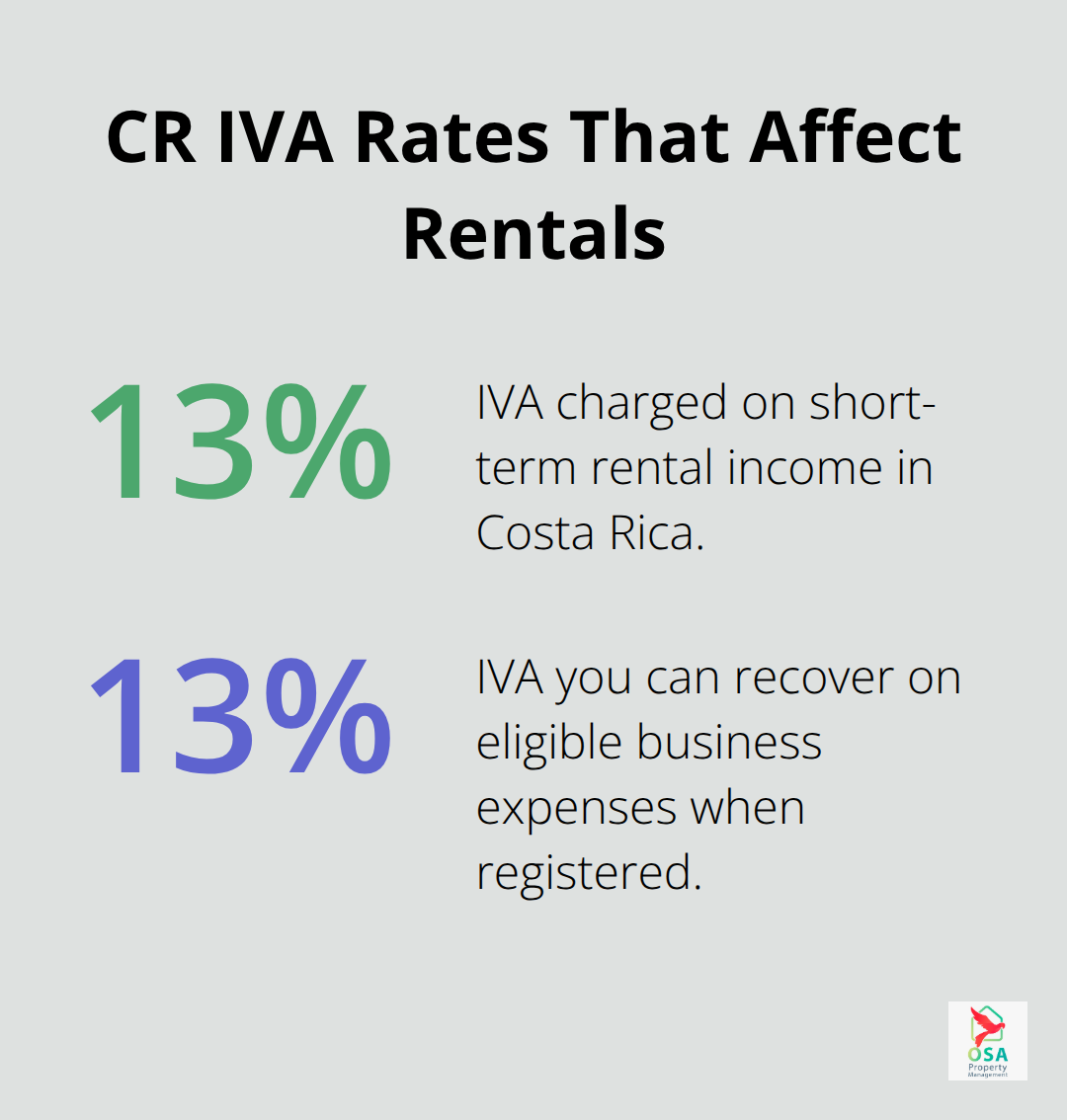
Short-term rental income generates 13% IVA on every booking, meaning a 1,000 rental actually brings in 1,130 in gross revenue, with that 130 owed to Hacienda between the 1st and 15th of the following month. Most owners assume the full amount is theirs to keep and face serious cash-flow problems when tax time arrives. The tax authority’s electronic invoicing system, called factura electrónica, now automatically flags short-term rental transactions reported by platforms like Airbnb and VRBO, making it nearly impossible to operate under the radar.
Platform Reporting and Government Oversight
As of 2026, digital platforms collect host IDs and share transaction data directly with Hacienda, so your bookings appear on the government’s radar before you file anything. This transparency means the days of underreporting rental income have ended. The tax authority cross-checks platform data against your filed returns, and discrepancies trigger audits quickly. Owners in tourist zones like Manuel Antonio and Uvita face particularly close scrutiny because rental activity concentrates in these areas.
The IVA Registration Advantage
The real advantage emerges when you register as an IVA taxpayer with the tax authority. Once registered, you recover the 13% IVA you pay on legitimate business expenses like maintenance, repairs, utilities, insurance, and contractor services. A 2,000,000 colones renovation generates about 260,000 colones in recoverable IVA when properly documented, which dramatically reduces your net tax liability. However, this only works if you maintain meticulous records with invoices bearing your IVA registration number and proof of payment via bank transfer or credit card.
Registration Thresholds and Requirements
If your annual rental income exceeds a certain threshold, you must register for IVA and file monthly returns. Staying below that threshold lets you operate without formal registration, but you cannot deduct business expenses or recover any IVA paid on purchases. Most serious rental operators in tourist zones exceed this threshold quickly and benefit significantly from registration. The monthly filing cycle requires you to reconcile platform statements, bookings, receipts, and utility invoices before the 15th of each month.
Cash Flow Planning and Penalty Prevention
Setting aside a portion of monthly rental income specifically for IVA payments prevents cash-flow crunches and penalties that range from 25% to 100% of unpaid taxes plus daily interest. Many owners underestimate the impact of monthly tax obligations and find themselves short when payment deadlines arrive. A dedicated rental bank account makes this separation automatic and keeps your personal finances separate from tax liabilities. Understanding these obligations upfront positions you to handle the registration and filing requirements that come next.
Key Obligations for Property Owners and Managers
Registration Triggers and the IVA Identification Number
Registration with Costa Rica’s tax authority activates when your annual short-term rental income exceeds approximately 1,000,000 colones. Once you cross that threshold, you cannot operate legally without filing monthly IVA returns with Hacienda, the Ministry of Finance. The registration process itself is straightforward, but the ongoing obligations demand attention to detail. You need an IVA identification number, and from that point forward, every invoice you issue and every business expense you document must reference this number.
Electronic Invoicing and Documentation Standards
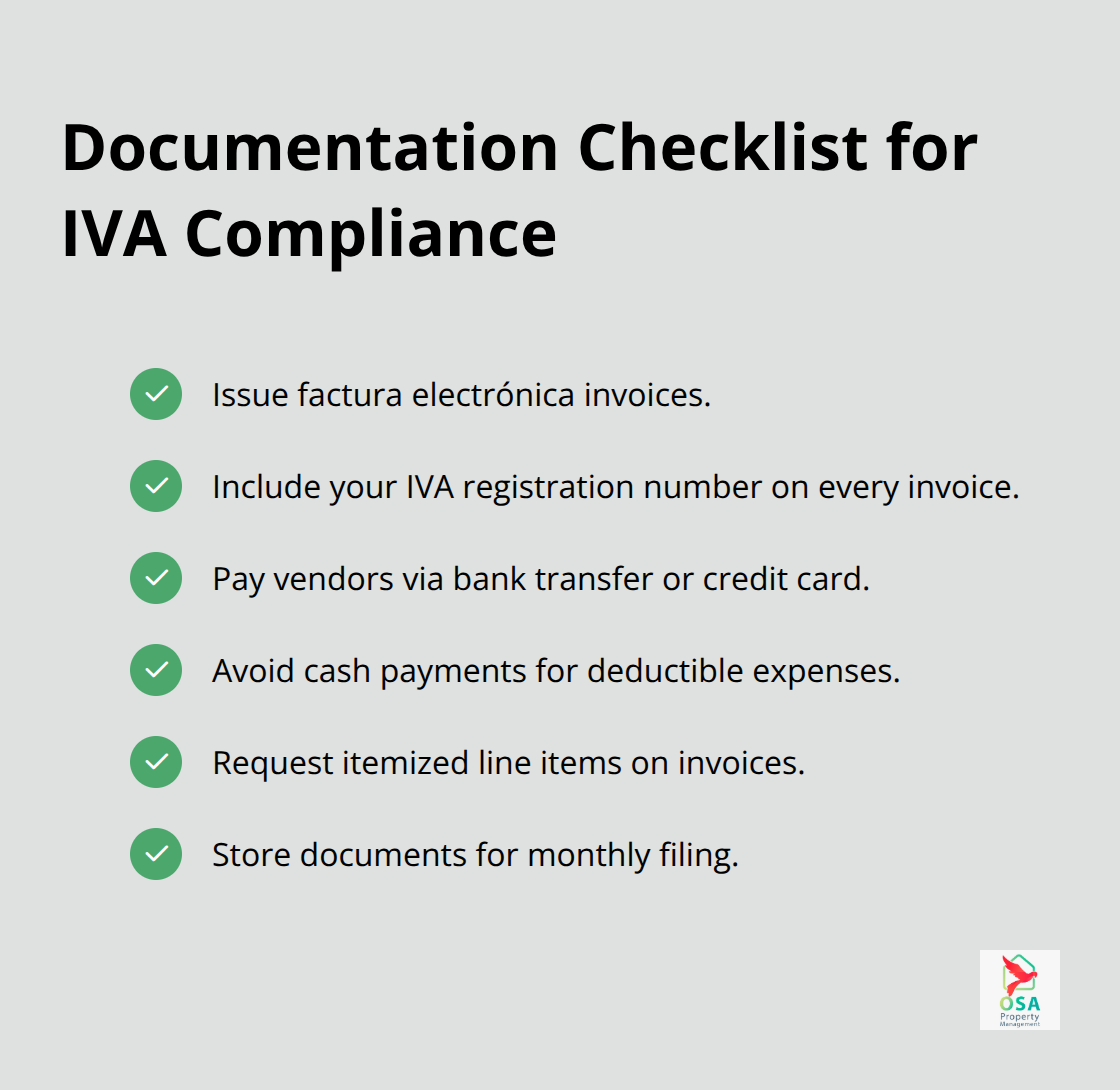
Invoices must follow the factura electrónica standard, meaning you must generate them electronically and the tax authority automatically receives copies. Paper receipts and informal documentation no longer satisfy compliance requirements. When you pay contractors, service providers, or utilities, demand invoices that include your IVA registration number and itemized line items. Bank transfers or credit card payments create traceable proof that Hacienda accepts during audits, while cash payments leave no evidence and disqualify those expenses from IVA recovery.
Organizing Your Financial Records
A dedicated rental business bank account separates property income from personal finances and makes monthly reconciliation faster. Digital accounting tools like Wave or Zoho Books cost roughly 15 to 30 USD per month and automatically categorize expenses by type, generate audit-ready reports, and calculate your monthly IVA liability in minutes. Your monthly filing window runs from the 1st to the 15th of the following month, meaning a January rental payment must be reported and paid by February 15th.
Monthly Reconciliation and Filing Deadlines
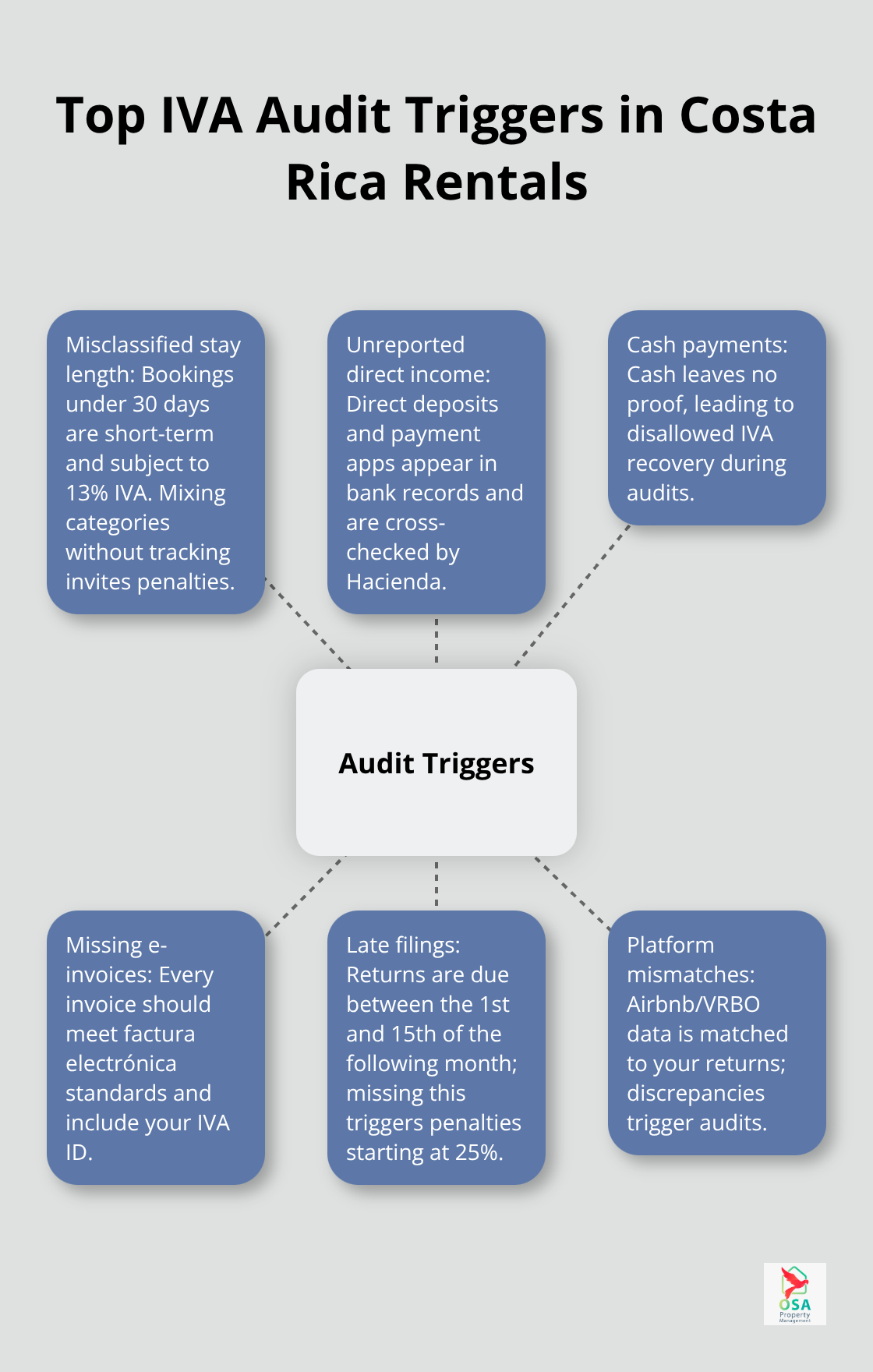
Missing this deadline triggers penalties starting at 25 percent of unpaid taxes plus daily interest that compounds quickly. Monthly reconciliation requires you to cross-check platform statements from Airbnb or VRBO against your bank deposits and expense receipts before you file. This process takes two to three hours if you maintain organized records but becomes chaotic if invoices and receipts scatter across email folders and drawers.
Professional Support and Accounting Services
Many owners find that hiring a Contador Público Autorizado, a certified Costa Rican accountant, costs 150,000 to 300,000 colones annually and pays for itself through maximized deductions and timely filings. A qualified accountant knows which expenses qualify for IVA recovery in your specific location and ensures you claim every legitimate deduction. Property management firms that handle accounting and tax compliance can streamline this process further, allowing you to focus on your rental business while professionals manage the compliance details. The next section covers the mistakes that most owners make during this process and how to sidestep them entirely.
Common Mistakes That Cost Owners Thousands
Misclassifying Rental Income by Duration
Most rental owners in Costa Rica make one critical mistake: they treat short-term and long-term rental income as interchangeable for tax purposes. The Ministry of Finance draws a hard line at 30 days, yet owners routinely blur this boundary by accepting a mix of bookings without tracking which fall into each category separately. A property rented for 25 days straight counts as short-term and triggers the full 13% IVA obligation, while a 31-day lease sits completely outside IVA. When the tax authority audits your records and finds platform data showing short-term bookings you reported as long-term, penalties start at 25% of unpaid taxes plus daily interest that compounds monthly. Platforms like Airbnb and VRBO report all transactions to Hacienda with exact dates, so the government knows your rental type before you file anything.
The solution demands brutal honesty: if you accept any bookings under 30 days, register for IVA immediately and report every short-term transaction monthly. Owners who maintain separate tracking for each rental duration avoid costly reclassifications during audits. Your platform statements already separate these transactions by date, so you can pull accurate data in minutes rather than scrambling to reconstruct bookings months later.
Hiding Revenue From Direct Bookings and Referrals
Many owners fail to report all revenue streams because they assume casual direct bookings or referrals fall outside government scrutiny. They do not. The factura electrónica system flags platform income automatically, but direct payments from guests through bank transfers or payment apps also appear in your banking records when Hacienda cross-checks them during audits. Underreporting even 10% of rental income across 12 months creates a discrepancy large enough to trigger investigation. The only safe approach treats every colone from every booking source as taxable income.
Owners who accept direct payments often rationalize that informal transactions escape detection. This logic fails because your bank deposits tell the complete story. A guest who pays 1,000 USD directly into your account leaves the same electronic trail as a platform booking. Hacienda’s cross-checking system identifies unexplained deposits and matches them against your filed returns. The tax authority has grown increasingly sophisticated at detecting hidden income, particularly in tourist zones where rental activity concentrates.
Accepting Cash Payments and Informal Documentation
Record keeping separates compliant owners from those facing audits and penalties. You need invoices bearing your IVA registration number for every business expense, proof of payment via bank transfer or credit card, and platform statements showing all bookings with dates and amounts. Many owners accept handwritten receipts from contractors or pay in cash to avoid leaving a paper trail, then face disallowed deductions during audits. Costa Rica’s tax authority explicitly rejects cash payments and informal documentation when calculating IVA recovery, meaning a 2,000,000 colones renovation paid in cash yields zero deductible IVA even though you spent the money.
Hacienda wants to see invoices with your registration details, line-item breakdowns, and bank transfer receipts proving payment occurred. A digital accounting tool like Wave or Zoho Books costs 15 to 30 USD monthly and automatically organizes expenses by category, flags missing documentation, and generates reports ready for monthly filing between the 1st and 15th of the following month. Owners who maintain meticulous records typically recover 260,000 colones or more in IVA deductions on major renovations, while disorganized owners recover nothing.
Building a Documentation System That Works
The practical reality is that proper documentation takes three to four hours monthly but prevents penalties that run into hundreds of thousands of colones. Set up a dedicated rental business bank account and pay all contractors, service providers, and utilities through this account via bank transfer or credit card. This separation creates an automatic audit trail that satisfies Hacienda’s requirements without extra effort. When you request invoices from contractors, specify that they must include your IVA registration number and itemized line items for each service or material.
Store all invoices, receipts, and platform statements in a single digital folder organized by month and expense category. This system allows you to pull complete documentation within minutes if Hacienda requests it. Owners in high-scrutiny zones face particularly close audits, making organized records your best defense against penalties and extended investigations.
Final Thoughts
CR IVA basics require three core actions: register when your annual short-term rental income exceeds approximately 1,000,000 colones, file monthly returns between the 1st and 15th of the following month, and maintain meticulous documentation with invoices bearing your IVA registration number. Compliance protects you from penalties that start at 25% of unpaid taxes plus daily interest, and it allows you to recover 13% IVA on legitimate business expenses like maintenance, repairs, and contractor services. A 2,000,000 colones renovation generates about 260,000 colones in recoverable IVA when properly documented, making registration financially advantageous for most serious rental operators in Costa Rica’s tourist zones.
Managing IVA compliance demands consistent attention to detail across invoicing, bank transfers, platform statements, and monthly reconciliation. Many owners underestimate the complexity and face unexpected penalties or scramble during audits. Costa Rica’s tax authority continues tightening enforcement, particularly in high-activity zones like Manuel Antonio and Uvita, and platform reporting to Hacienda means your bookings appear on the government’s radar automatically.
We at Osa Property Management have spent over 20 years helping property owners navigate Costa Rica’s tax framework across the southern Pacific region, from Jaco to Golfito. Our team handles accounting, tax compliance, and monthly IVA filings as part of our full-service property management packages, allowing you to focus on your rental business while we manage the compliance details. If managing CR IVA basics feels overwhelming, professional property management firms can streamline the entire process and maximize your deductions.
To be contacted by an Osa Property Management representative and to learn more about our services, please send an email to info@osapropertymanagement.com or send a WhatsApp message to +17633068981 or +50671001006 / Para que un representante de Osa Property Management se ponga en contacto con usted y obtener más información sobre nuestros servicios, por favor envíe un correo electrónico a info@osapropertymanagement.com o un mensaje de WhatsApp al +17633068981 o al +50671001006.
Vacation rentals: https://costaricalasvillas.com