
Owning rental property in Costa Rica means navigating IVA obligations that many landlords overlook. At Osa Property Management, we've seen firsthand how Costa Rica IVA filing mistakes can trigger costly penalties and compliance issues.
This guide walks you through everything you need to know about filing correctly, meeting deadlines, and avoiding the errors that trip up most property owners.
What IVA Actually Means for Your Rental Income
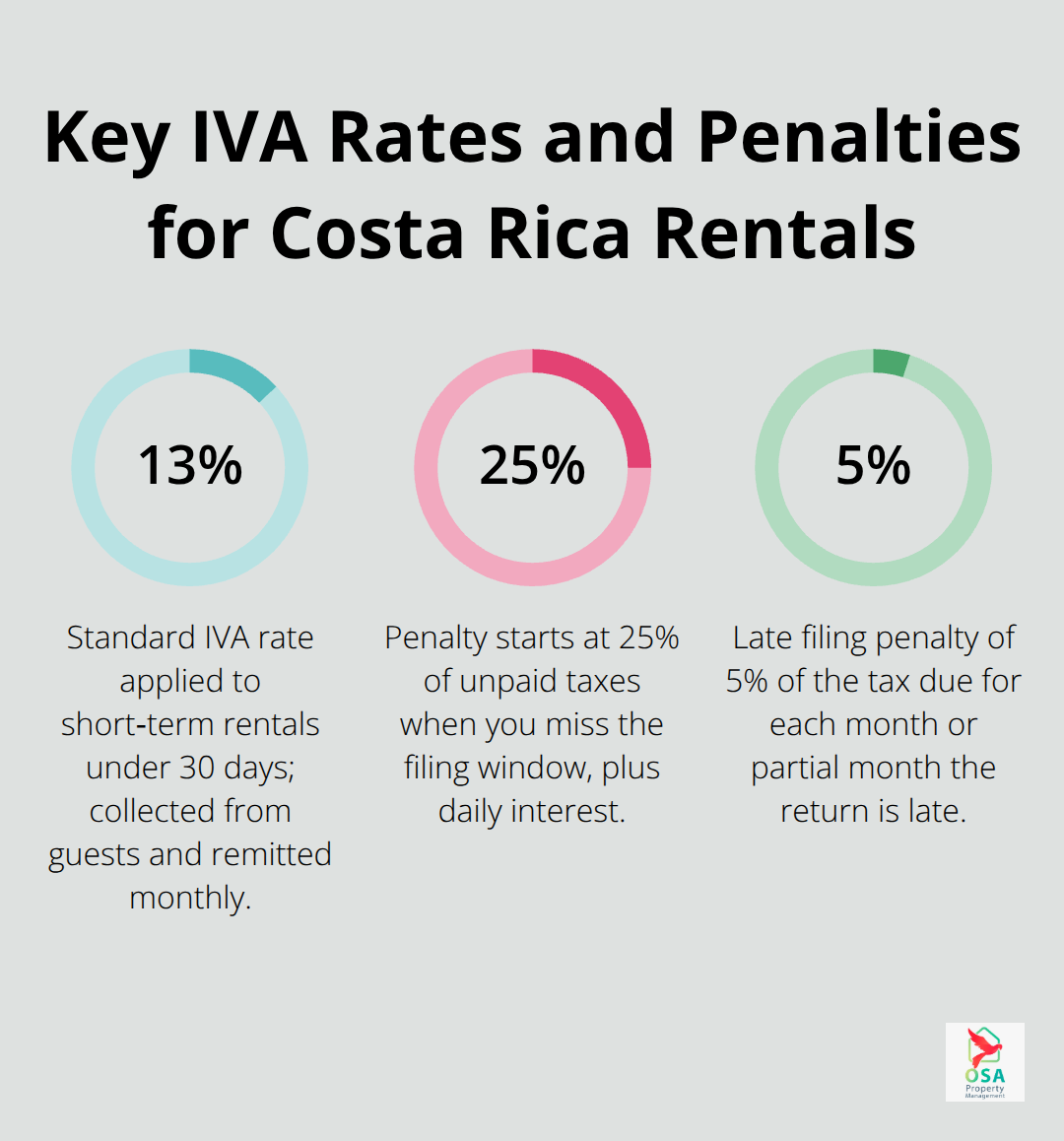
IVA, or Impuesto sobre el Valor Agregado, is a 13% consumption tax that applies to most rental income in Costa Rica. The critical distinction for landlords is this: short-term rentals under 30 days are taxed like hotel activity, meaning you collect 13% IVA from guests and remit it to Hacienda monthly. Long-term rentals over 30 days are IVA-exempt, which creates a fundamental business decision for property owners.
If your monthly rent falls below approximately 693,300 colones for residential tenants, IVA does not apply. Commercial leases always trigger the 13% IVA regardless of amount. A 1,000 dollar short-term rental generates 130 dollars in IVA that you must collect and remit between the 1st and 15th of the following month. Missing this window triggers penalties starting at 25% of unpaid taxes plus daily interest, making compliance far more expensive than the tax itself.
How Hacienda Monitors Your Income Now
Digital platforms like Airbnb and VRBO report host transaction data directly to Hacienda, the Costa Rica tax authority. Your rental income is automatically cross-checked against your tax filings. In coastal zones like Manuel Antonio and Uvita, the Ministry of Finance and the ICT actively monitor compliance. This automated reporting system means landlords cannot hide income or claim lower figures than what platforms report.
The IVA Recovery Advantage You're Missing
Landlords who operate without proper registration miss significant opportunities for IVA recovery on qualifying expenses. A 2,000,000 colones renovation yields approximately 260,000 colones in recoverable IVA if invoices include your registration number and expenses are traceable. Only invoices paid via bank transfer or credit card-never cash-count toward recovery. This difference can substantially reduce your net tax burden.
Registration Thresholds That Change Everything
If you exceed roughly 1,000,000 colones in annual rental income, you must register as an IVA taxpayer and file monthly returns with Hacienda. Below that threshold, you can operate without formal registration, but you cannot deduct IVA on purchases, meaning you absorb the cost of supplies, repairs, and services at full price. This distinction fundamentally affects your profitability and tax strategy. Understanding where your income falls determines whether registration makes financial sense and unlocks deduction opportunities that unregistered landlords cannot access.
IVA Filing Requirements and Deadlines
Costa Rica operates on a strict monthly filing cycle, not quarterly, and this distinction affects your entire tax strategy. The fiscal month runs from the 1st to the 31st, and you must file and pay your IVA return by the 15th of the following month, regardless of whether your property generated zero rental activity that month. Missing this deadline triggers penalties starting at 25% of unpaid taxes plus daily interest, which compounds rapidly. A landlord who owes 500,000 colones in IVA and files three days late faces a minimum penalty of 125,000 colones before interest accrues. Many property owners lose tens of thousands of colones to late filing penalties that far exceed the original tax liability, making the filing deadline non-negotiable.
Mark Your Calendar for the 10th
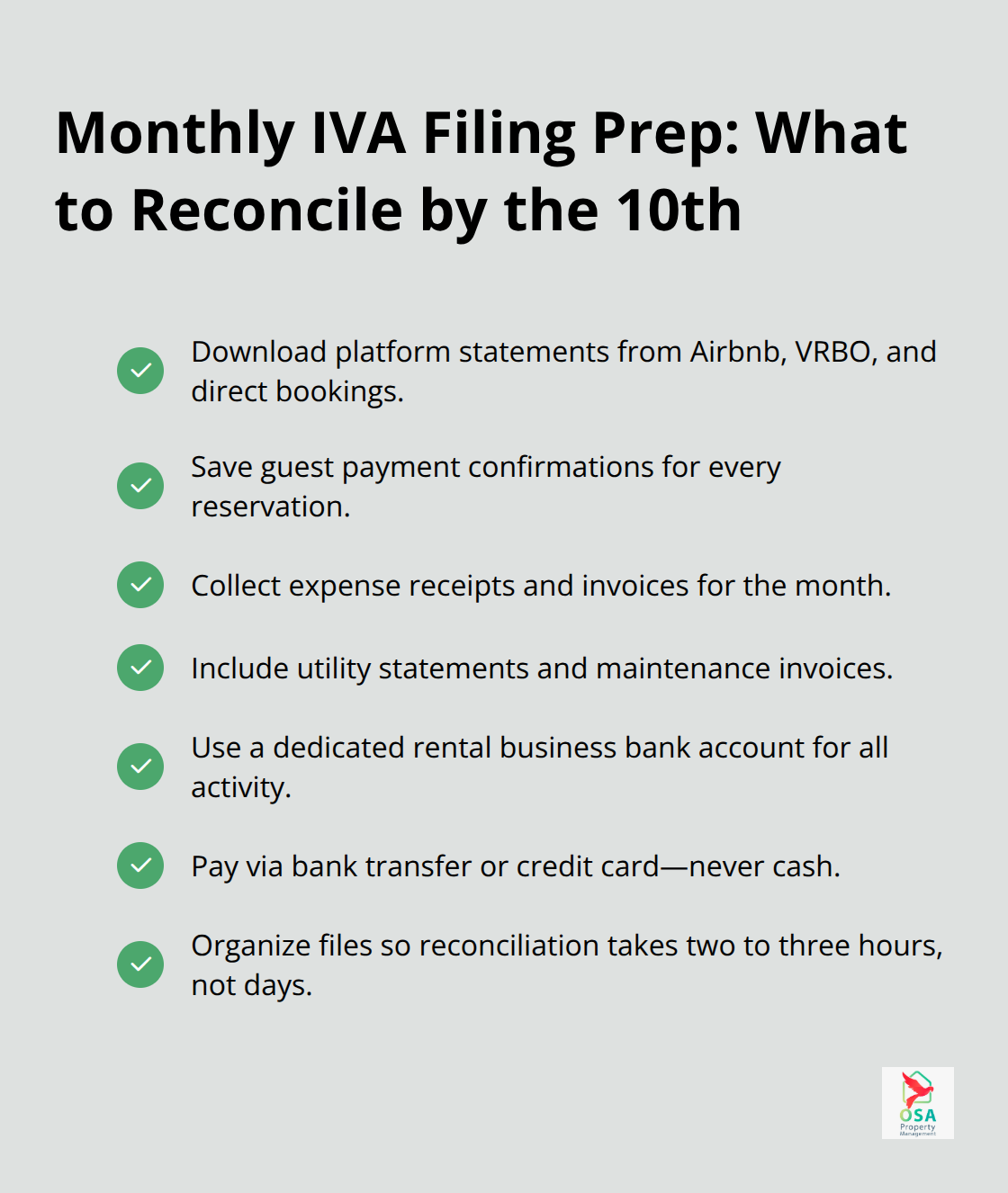
Set a recurring calendar reminder for the 10th of each month to gather and reconcile your documentation. This gives you a five-day buffer before the 15th deadline and prevents last-minute scrambling. Your reconciliation should include platform statements from Airbnb, VRBO, or direct booking records; guest payment confirmations; expense receipts and invoices; utility statements; and maintenance invoices. If you operate a dedicated rental business bank account and pay all expenses via transfer or card (never cash), this reconciliation typically takes two to three hours when organized.
Digital Tools Eliminate Filing Friction
Wave or Zoho Books cost 15 to 30 dollars per month and automatically categorize expenses, flag missing documentation, and generate reports ready for filing. These tools eliminate the excuse that filing consumes too much time. Without them, you manage multiple spreadsheets and handwritten notes, which creates errors that Hacienda auditors catch immediately. The small monthly investment pays for itself through time savings and reduced audit risk.
Documentation That Hacienda Cross-Checks
Hacienda cross-references platform reports against your filed returns, so your declared income must match what Airbnb, VRBO, or other platforms report to the tax authority. Keep platform transaction statements for every month, showing guest payments, refunds, and platform commission deductions. For expenses that reduce your taxable base if you are registered for IVA recovery, gather invoices showing your IVA registration number, payment method, and date. Contractors and suppliers must include your registration number on every invoice before work begins, or the expense cannot be recovered. A 2,000,000 colones renovation without your registration number on the invoice yields zero IVA recovery, whereas the same renovation with proper documentation yields approximately 260,000 colones in recoverable IVA. Bank statements prove all payments were made via traceable methods; cash payments do not count. Utility invoices, property tax receipts, and insurance policies document ongoing property costs. The documentation requirement is not theoretical-Hacienda's automated system flags mismatches between platform reports and your filings, triggering audits that are expensive and time-consuming to resolve.
When Professional Help Makes Financial Sense
A contador público autorizado typically costs 150,000 to 300,000 colones annually but identifies deductions and filing strategies that recover far more than their fee. They ensure invoices meet compliance standards and that your expense documentation aligns with Hacienda's requirements. This investment becomes essential once your rental income grows or your expense structure becomes complex. With proper documentation in place and a filing system established, you now face the actual mechanics of submitting your return accurately and avoiding the common errors that trigger audits and penalties.
Filing Your IVA Return Without Triggering an Audit
Accurate IVA filing starts the moment you log into the Costa Rica tax authority's online platform, but the real work happens before you click submit. Open your bank statements and platform reports side by side, then verify that every guest payment matches your records. Hacienda's system automatically cross-references what Airbnb, VRBO, and other platforms report against your filed amounts, so discrepancies trigger audits within days. A landlord who files 500,000 colones in rental income when Airbnb reported 520,000 colones receives an audit notice, forcing you to provide explanations, additional documentation, and potentially pay back taxes with interest.
Organize Your Documentation Before Filing
The filing process itself takes fifteen minutes once your documentation is organized, but the reconciliation that prevents audit risk takes two to three hours. Export your platform transaction reports for the entire month, including all guest payments, refunds, and commission deductions. Enter these figures into Wave or Zoho Books, which automatically calculates your taxable income and generates a summary ready for Form D-125, the monthly IVA declaration form. If you are registered for IVA recovery from qualifying expenses, the software flags expenses missing your registration number or paid via cash, preventing you from claiming deductions that Hacienda will reject.
Calculate Your IVA Liability Correctly
Calculate your IVA liability by taking your gross rental income, applying the 13% rate, and subtracting any recoverable IVA from qualifying expenses. A landlord with 1,000,000 colones in short-term rental income owes 130,000 colones in IVA. If that same landlord spent 500,000 colones on a renovation with proper invoices showing their registration number and traceable payment, they recover approximately 65,000 colones in IVA, reducing their net payment to 65,000 colones. This calculation is where most landlords fail-they file the full 130,000 colones in IVA without recovering the 65,000 colones they are legally entitled to claim, essentially paying double their actual obligation.
Avoid the Three Costliest Filing Mistakes
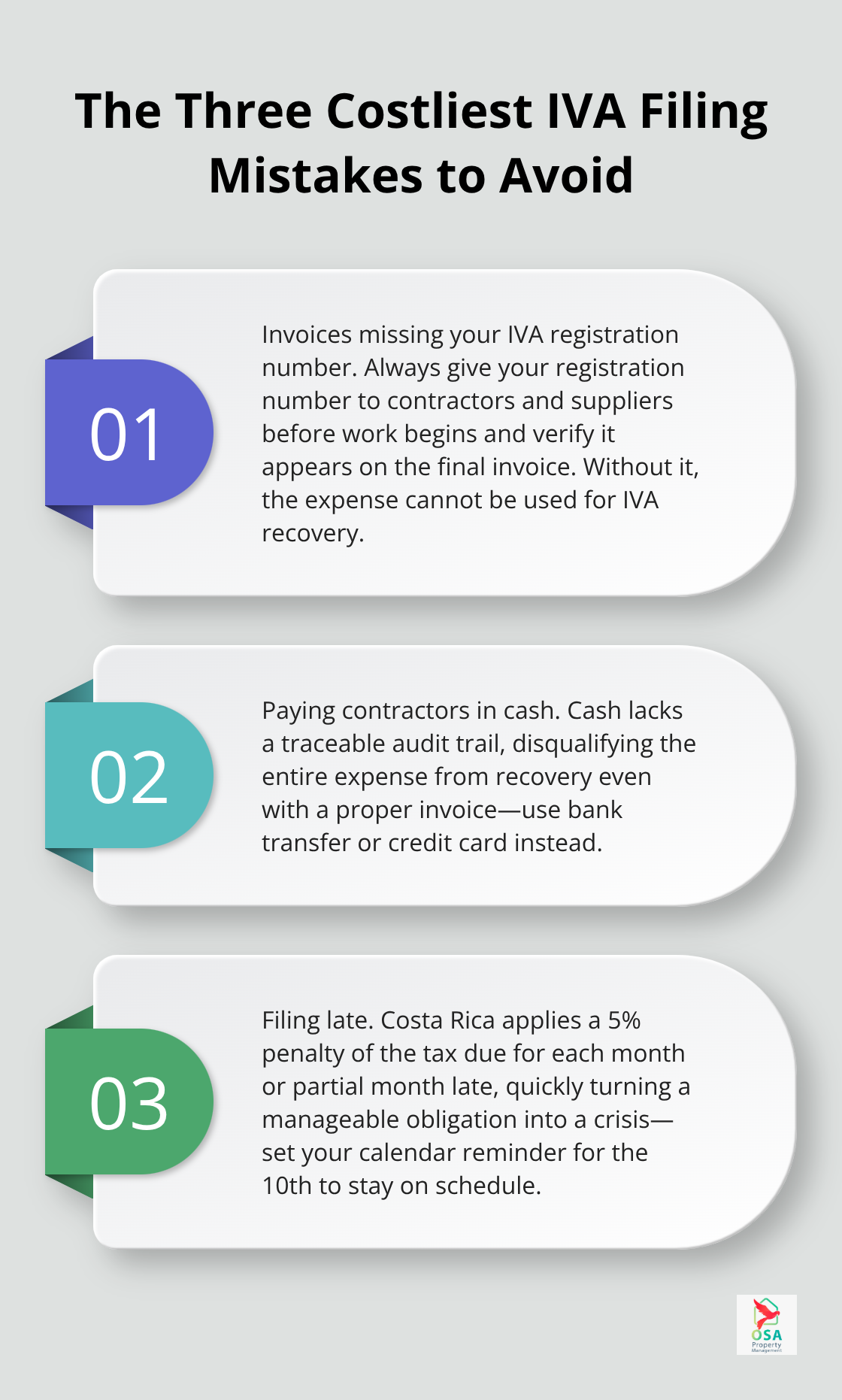
The most costly mistake landlords make is accepting invoices without their IVA registration number before work begins. A contractor who provides an invoice listing the landlord's name but not their registration number cannot be claimed for IVA recovery, regardless of the invoice's legitimacy. Provide your registration number to every contractor, supplier, and service provider before they submit an invoice or perform work. Verify the number appears on the final invoice before payment.
The second major error is paying contractors in cash, which creates no traceable record and disqualifies the entire expense from recovery, even with a proper invoice. Always pay via bank transfer or credit card, creating an auditable trail that Hacienda accepts.
The third mistake is filing late. A landlord who owes 500,000 colones in IVA and files late faces a filing late penalty in Costa Rica IVA of 5% of the tax due for each month or partial month the return is late, turning a manageable tax obligation into a financial crisis. Stay on schedule by setting your calendar reminder for the 10th, giving yourself a five-day buffer.
When to Hire Professional Help
If you manage multiple properties or your rental income exceeds 2,000,000 colones annually, hiring a contador público autorizado becomes financially sensible rather than optional. These professionals cost 150,000 to 300,000 colones per year but identify deductions, optimize your filing strategy, and manage Hacienda communication if an audit occurs. They understand regional compliance variations across Manuel Antonio, Uvita, and Dominical, ensuring your filing aligns with local tax authority expectations. For landlords filing independently, the discipline of filing by the 10th and using accounting software reduces audit risk to near zero, transforming IVA compliance from a source of stress into a routine monthly task.
Final Thoughts
Costa Rica IVA filing compliance protects your rental income and prevents penalties that far exceed the tax itself. File by the 15th of each month without exception, maintain organized documentation with your IVA registration number on every invoice, and pay all expenses via traceable methods. A single late filing or cash payment costs you tens of thousands of colones in penalties and disqualified deductions that you cannot recover.
Your rental income and property complexity determine your next step. If you manage one property with straightforward expenses and income under 1,000,000 colones annually, filing independently with accounting software like Wave or Zoho Books remains manageable and cost-effective. If your income exceeds 2,000,000 colones or you operate multiple properties, a contador público autorizado (costing 150,000 to 300,000 colones annually) pays for itself through deductions and audit prevention.
We at Osa Property Management manage accounting and tax compliance for property owners across the southern Pacific zone, handling monthly filings, IVA recovery optimization, and Hacienda communication as part of our service. Whether you file independently or hire professional support, the outcome stays the same: you remain compliant, recover every deduction you qualify for, and avoid the penalties that trap unprepared landlords. Contact us today to discuss how we can simplify your Costa Rica IVA filing obligations.