

Costa Rica's tropical climate is beautiful, but it's brutal on homes. Heavy rainfall, salt air, and intense heat create maintenance challenges that mainland properties rarely face.
At Osa Property Management, we've seen firsthand how proactive maintenance scheduling in Costa Rica prevents costly repairs and protects your investment. This guide walks you through the seasonal tasks, local contractors, and systems that keep your home in top condition.
Why Costa Rica's Climate Demands Year-Round Maintenance
Rainfall and Humidity Create Constant Threats
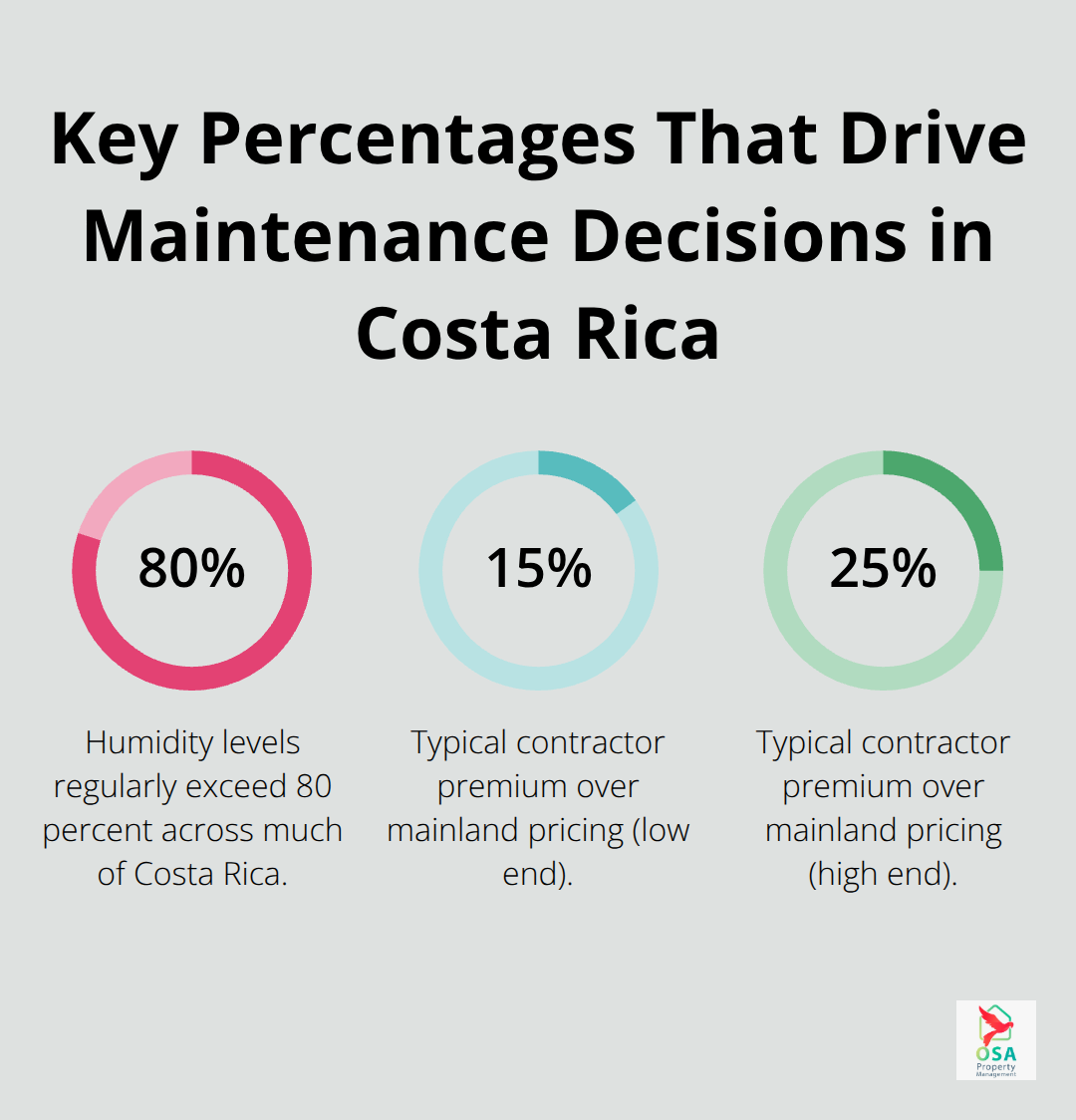
Costa Rica receives between 100 and 250 inches of rainfall annually depending on your location, with the heaviest downpours hitting during the May to November rainy season. This constant moisture creates an environment where wood rots faster, metal rusts aggressively, and mold grows within weeks of appearing. Humidity levels regularly exceed 80 percent even during the dry season, which means your home faces constant assault from moisture.
Gutters clog within two to three weeks during rainy season if left unchecked, and standing water becomes a breeding ground for mosquitoes and structural damage. Plumbing systems fail faster in acidic rainwater conditions, and electrical systems require specialized attention to prevent moisture-related short circuits that create fire hazards.
Salt Air Accelerates Coastal Deterioration
The salt air in coastal regions like Jaco and Uvita corrodes aluminum window frames, galvanized pipes, and painted surfaces at rates three to five times faster than mainland properties. This corrosion affects every metal component on your home, from gutters to air conditioning units to roofing fasteners.
Coastal properties suffer significantly higher maintenance costs due to this salt corrosion. Without quarterly inspections and protective treatments, your investment deteriorates at an accelerated pace that catches most homeowners off guard.
Heat and UV Exposure Damage Multiple Systems
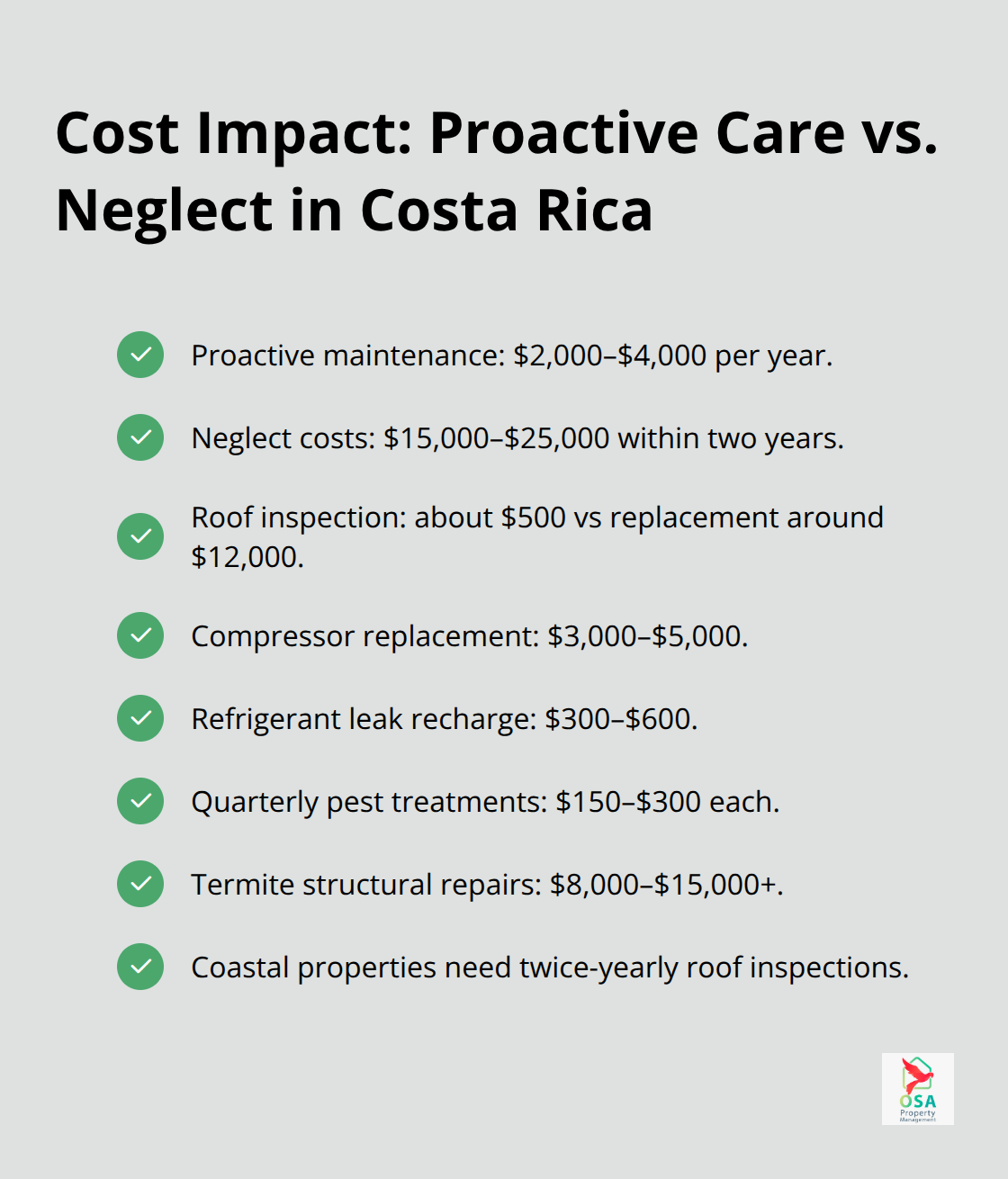
Air conditioning units work overtime in tropical heat and fail prematurely without monthly filter changes and quarterly coil cleaning. Compressor replacement alone costs $3,000 to $5,000, making preventative maintenance a financial necessity rather than an option.
Roofing materials deteriorate rapidly under intense UV exposure combined with freeze-thaw cycles during cooler months, with metal roofs losing their protective coatings within five to seven years without proper maintenance. Wood-eating insects thrive in humid conditions, with termites and wood-boring beetles causing structural damage that compounds exponentially if caught late.
The Real Cost of Neglect
Homeowners who skip seasonal maintenance face repair bills exceeding $15,000 to $25,000 within two years, compared to $2,000 to $4,000 annually for proactive scheduling. This isn't theoretical risk-it's the predictable outcome of ignoring Costa Rica's specific environmental challenges.
The financial impact extends beyond immediate repairs. Deferred maintenance compounds problems, turning minor issues into major structural failures that threaten your property's value and safety. Understanding which maintenance tasks matter most for each season allows you to prioritize spending and protect your investment strategically.
The Maintenance Tasks That Actually Prevent Disaster
Roof Inspections Protect Your Biggest Investment
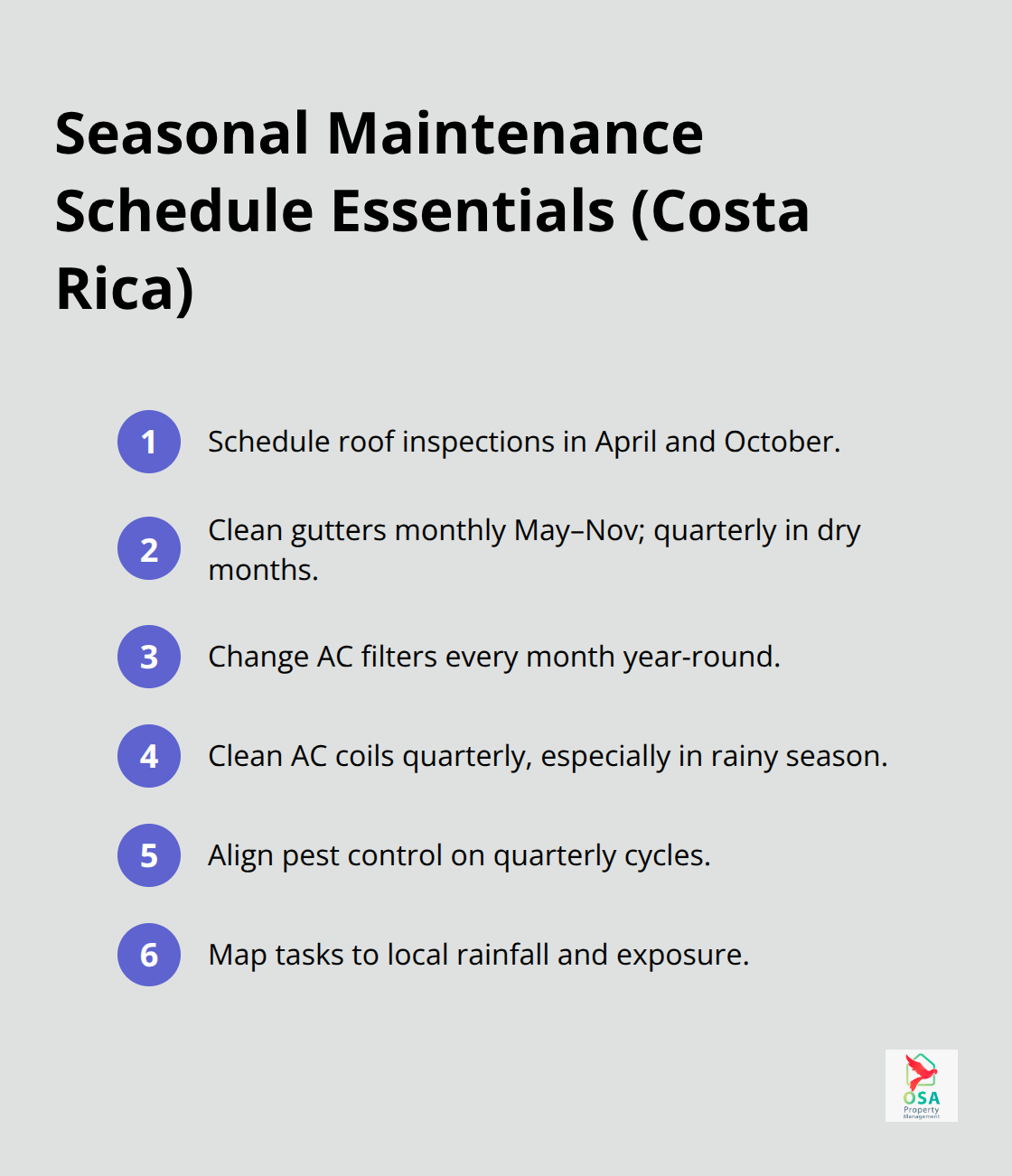
Roof inspections before Costa Rica's rainy season are non-negotiable, not optional. Your roof takes the heaviest punishment from tropical weather, and water stains inside your home signal that structural damage has already begun. Schedule inspections in April, before May rains arrive, and again in October as the rainy season peaks. Metal roofs need coating reapplication every five to seven years to maintain UV protection, while tile roofs require individual tile replacement and underlayment checks. Fasteners corrode rapidly in coastal areas, so coastal properties need inspections twice yearly instead of once. The cost difference between a $500 inspection and a $12,000 roof replacement makes this the single highest-priority maintenance task for Costa Rican homeowners.
Gutters and Drainage Systems Demand Aggressive Attention
Gutters and drainage systems fail faster than any other component on your home. Tropical vegetation grows aggressively, and gutters clog within weeks during rainy season if you don't actively manage them. Monthly gutter cleaning from May through November prevents the problems that quarterly schedules miss. Standing water in gutters causes foundation erosion, attracts mosquitoes, and creates conditions for wood rot around your roofline. Downspouts must extend at least six feet from your foundation, and drainage systems need quarterly flushing to remove sediment and debris that accumulates in Costa Rica's wet environment. Ignoring this task leads to foundation cracks, basement flooding, and pest infestations that compound exponentially.
Air Conditioning and Electrical Systems Face Constant Moisture Threats
Air conditioning units in Costa Rica need monthly filter changes and quarterly coil cleaning, not annual service like mainland properties. The combination of salt air and humidity clogs filters faster and corrodes coils more aggressively than standard tropical climates. Refrigerant leaks cost $300 to $600 per charge, and compressor replacement reaches $3,000 to $5,000, making preventative maintenance economically obvious. Electrical systems face constant moisture exposure, requiring annual inspections for corrosion, loose connections, and grounding issues. Salt air corrodes copper wiring and electrical components at accelerated rates, creating fire hazards that most homeowners never anticipate. Monthly visual checks for discoloration or corrosion around electrical outlets and switches catch problems before they become dangerous.
Pest Control and Wood Protection Stop Structural Damage
Termites and wood-boring beetles thrive in humid conditions and cause structural damage that spreads rapidly through wooden beams, joists, and support structures. Quarterly pest control treatments cost $150 to $300 per application, while structural repairs from termite damage reach $8,000 to $15,000 or more. Wood treatment applications last twelve to eighteen months in Costa Rica's humid environment, requiring more frequent reapplication than mainland properties. Inspect wooden components monthly for sawdust, soft spots, or hollow sounds that indicate active infestation. Exposed wood around your foundation, deck supports, and roof structures needs protective barriers and regular treatment schedules to prevent irreversible damage.
These maintenance tasks form the foundation of property protection, but managing them alone consumes significant time and requires specialized knowledge of Costa Rica's specific environmental challenges. The next section covers how to build a realistic maintenance schedule that accounts for seasonal variations and connects you with the local contractors who understand these systems.
How to Build a Maintenance Schedule That Actually Works
Map Your Seasonal Priorities
Costa Rica's maintenance demands shift dramatically across seasons, which means a one-size-fits-all approach fails immediately. The dry season runs from December through April and the rainy season from May through November, and coastal properties face entirely different challenges than inland homes. Start by mapping your specific location's rainfall patterns and environmental exposure, then assign maintenance tasks to the months when they matter most.
April inspections catch roof problems before May rains arrive, while October checks catch mid-season deterioration before the final rainy months hit. Gutter cleaning needs monthly attention from May through November but drops to quarterly work during dry months. Air conditioning systems need filter changes monthly year-round, but coil cleaning intensifies during rainy season when humidity spikes.
Find Contractors Who Understand Costa Rica's Specific Challenges
Trustworthy local contractors separate successful property management from expensive disasters. Coastal contractors understand salt corrosion issues that inland specialists miss, and experienced roofers know which materials withstand Costa Rica's specific UV and moisture combinations better than contractors trained elsewhere. Ask for references from other property owners and verify that contractors hold proper licensing and insurance, which protects you if work causes damage.
Expect to pay 15 to 25 percent more for quality contractors than you would on the mainland, but this premium reflects genuine expertise and material costs in Costa Rica's market. Contractors familiar with your region (whether Jaco, Dominical, Manuel Antonio, Uvita, or Ojochal) deliver better results than those learning your area's environmental patterns for the first time.
Document Everything and Track Spending Patterns
Documentation creates a maintenance history that proves your property's care level to future buyers or insurance companies. Record every maintenance task with photos, invoice dates, contractor names, and work descriptions. Track annual spending by category-roofing, plumbing, pest control, air conditioning-to identify patterns and budget realistically for future years.
Most Costa Rican homeowners spend $2,000 to $4,000 annually on preventative maintenance, but this investment prevents the $15,000 to $25,000 repair bills that catch negligent owners off guard. Detailed records also help you spot which contractors deliver consistent quality and which ones cut corners.
Consider Professional Management for Coordination
Managing maintenance scheduling, contractor vetting, documentation, and budget tracking consumes significant time and requires specialized knowledge of Costa Rica's specific environmental challenges. We at Osa Property Management handle these relationships across our service areas, so homeowners focus on enjoying their properties instead of managing endless maintenance logistics. Our team coordinates with trusted contractors, maintains detailed records, and tracks budgets to prevent surprises.
Final Thoughts
Proactive maintenance scheduling in Costa Rica transforms property ownership from a constant financial crisis into a manageable, predictable expense. Homeowners who stay ahead of seasonal challenges spend $2,000 to $4,000 annually on preventative work instead of facing $15,000 to $25,000 repair bills within two years. The difference between these outcomes isn't luck or chance-it's the direct result of understanding Costa Rica's specific environmental threats and addressing them before they compound into structural failures.
Professional management eliminates the stress of coordinating contractors, tracking maintenance records, and budgeting for seasonal needs. We at Osa Property Management handle these responsibilities across Tarcoles, Jaco, Dominical, Manuel Antonio, Ojochal, Uvita, and Golfito, so homeowners focus on enjoying their properties instead of managing endless logistics. Our team vets trusted contractors who understand salt corrosion, tropical humidity, and regional weather patterns that generic mainland specialists miss, and we maintain detailed documentation that tracks spending patterns and coordinates quarterly inspections to catch problems before they become expensive.
Assess your property's current maintenance status and identify which seasonal tasks need immediate attention. If coordination and contractor relationships feel overwhelming, Osa Property Management provides customized service packages that handle everything from maintenance scheduling to contractor oversight to budget tracking. Protecting your Costa Rican investment requires action now, not after problems develop.
To be contacted by an Osa Property Management representative and to learn more about our services, please send an email to info@osapropertymanagement.com or send a WhatsApp message to +17633068981 or +50671001006 / Para que un representante de Osa Property Management se ponga en contacto con usted y obtener más información sobre nuestros servicios, por favor envíe un correo electrónico a info@osapropertymanagement.com o un mensaje de WhatsApp al +17633068981 o al +50671001006.
Vacation rentals: https://costaricalasvillas.com