

Costa Rica's tropical climate is relentless on properties. Humidity, salt air, and heavy rainfall create conditions that accelerate damage to buildings, roofs, and foundations far faster than in temperate regions.
At Osa Property Management, we've seen firsthand how preventive maintenance in Costa Rica stops small problems from becoming expensive disasters. A cracked roof tile ignored during rainy season becomes structural damage within months.
Why Preventive Maintenance Matters
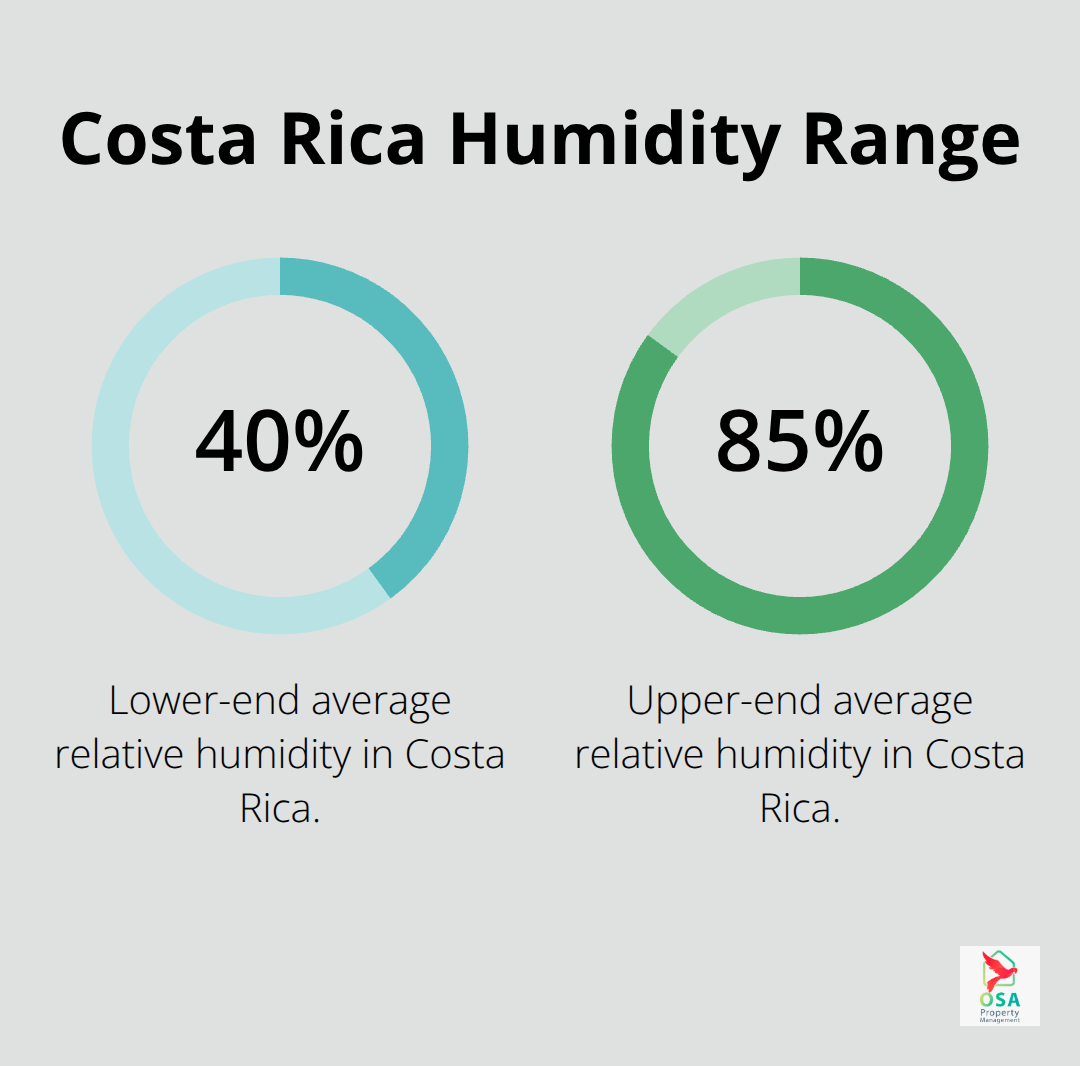
Costa Rica's humidity ranges from 40% to 85% year-round, and the rainy season stretches from May through November-eight months of relentless moisture that attacks roofs, foundations, and interior walls. Salt air on coastal properties accelerates corrosion of metal fasteners and seams at double or triple the rate of inland homes. Properties without a preventive maintenance plan face repair costs that exceed 3–5% of property value annually, while those with structured inspections and upkeep run just 1–3%. The difference is not marginal; it's the gap between reactive emergencies and controlled, budgeted care.
Small Tasks Prevent Major Expenses
Early Detection Stops Expensive Failures
Small problems detected during quarterly inspections become major headaches within months if left alone. A moisture pocket under roof tiles, invisible to the naked eye, spreads mold and rots attic framing. Rust forming on coastal metal fasteners weakens roof seals and allows water penetration. Cracks in foundation drainage allow groundwater to seep inward, triggering structural movement and foundation repair bills.
Professional inspections catch these issues while they remain manageable. Plumbing checks identify mineral buildup and corrosion before pipes fail; annual professional flushing costs $300–$500 and prevents emergency water damage. Water-leak sensors installed under sinks and in kitchens cost $50–$100 each and alert you instantly to hidden leaks before they damage subfloors and cabinetry. Properties with documented preventive maintenance histories command higher resale prices and attract quality long-term renters because the maintenance record proves reliability.
Consistent Upkeep Protects Long-Term Value
Exterior protection directly affects resale value and rental appeal. UV-resistant paint applied every 2–3 years on coastal properties ($2,000–$5,000 per application) and every 4–5 years on inland homes prevents wood and metal decay that compounds over time. Sealed decks and railings with annual reapplication of sealant cost $400–$800 per year but extend deck life by decades. Coastal properties also require marine-grade materials and stainless steel fasteners to resist salt corrosion; these upgrades cost more upfront but eliminate recurring rust repairs.
A structured maintenance calendar aligned to Costa Rica's climate-exterior work during the dry season (December–April) and drainage focus during the rainy season (May–November)-keeps systems running efficiently and prevents seasonal emergencies. Properties that follow this rhythm maintain consistent occupancy rates for rental income and command stable valuations in a market where environmental policies and tourism growth support sustained appreciation. The next step involves building a plan that fits your property's specific location and condition.
Common Maintenance Issues in Costa Rica's Climate
Rust and Corrosion from Humidity and Salt Air
Salt spray from breaking waves and onshore winds significantly accelerates the rate of corrosion of metal connectors and fasteners. Coastal properties face relentless corrosion that attacks roof seams, gutters, deck railings, and exterior hardware from the inside out, weakening structural integrity long before visible rust appears. Metal fasteners corrode beneath paint and sealants, invisible until water penetrates into framing and causes major damage.
Coastal properties require marine-grade stainless steel fasteners and rust converters applied to existing corrosion before protective coatings seal the damage. UV-resistant exterior paint must be reapplied every 2–3 years on coastal homes versus 4–5 years inland. Quarterly inspections specifically targeting fastener seals and metal connections catch early corrosion before water penetrates into framing. Ignoring this threat means watching your property deteriorate faster than you can afford to repair it.
Mold and Moisture Damage in Wet Seasons
The rainy season from May through November creates perfect conditions for mold growth in attics, under roof tiles, inside wall cavities, and around plumbing penetrations. A single moisture pocket left undetected during the dry season spreads across framing during the first heavy rains, compromising structural integrity and creating health hazards. Indoor humidity should stay below 60% to prevent mold; a 50-pint dehumidifier costs $300–$500 upfront and roughly $10 monthly to operate, yet prevents mold remediation that runs $2,000–$5,000 per room.
Ceiling fans and exhaust fans in kitchens and bathrooms must run continuously during rainy season to pull moisture out of the property. Mold-resistant paints with antimicrobial coatings provide an additional defense layer on walls and ceilings. Biannual roof inspections before and after rainy season at $200–$300 each catch moisture accumulation before it becomes structural damage.
Structural Damage from Heavy Rainfall and Flooding
Drainage systems fail when gutters clog or downspouts discharge water toward foundations instead of away from them. Gutter cleaning at $150 prevents foundation water intrusion that leads to settling, cracking, and repair costs exceeding $8,000. Hillside and elevated properties need slope stabilization and retaining walls to prevent water runoff from destabilizing foundations during intense rainfall.
Properties sitting near drainage paths or in flood zones require professional grading assessment and possibly French drains or sump systems (costing $2,000–$5,000) but protecting the foundation from seasonal saturation. Septic systems must be pumped every 2–3 years at $300–$500 per service to prevent groundwater contamination and system failure. Foundation cracks should be sealed with silicone caulk quarterly during rainy season to block water and pest entry.
These three threats compound when property owners ignore them. Moisture feeds mold, corrosion weakens seals allowing more water intrusion, and flooding accelerates structural failure. The cost of addressing all three threats through preventive maintenance runs 1–3% of property value annually, while reactive repairs from ignored damage can exceed 10–15% of value in a single season. Understanding these specific risks is the first step toward building a maintenance plan that protects your investment.
How to Build a Maintenance Calendar That Actually Works
Your property needs a schedule, not guesswork. Costa Rica's climate demands a two-season approach: the dry season from December through April is when you tackle exterior work, roof sealing, and major repairs, while May through November requires relentless focus on gutters, drainage, and mold prevention. Quarterly inspections form your baseline, but during rainy season these intensify to bimonthly visits that target roof integrity, exterior sealants for UV damage, major appliances, and seals around pipes that block pest entry. Document every inspection with photos stored in a cloud-based system so you have a verifiable history of what was checked, what was found, and what was repaired. This documentation becomes your property's maintenance resume-it proves reliability to future buyers and renters, directly supporting higher resale prices and rental rates.
Set Your Annual Budget and Track Spending
Annual maintenance budgets typically run 1%–4% of property value, meaning a $300,000 home requires $3,000–$12,000 yearly. Track spending monthly to catch overruns before they spiral into emergency repairs that cost multiples more. This approach transforms maintenance from an unpredictable expense into a controlled line item that protects your investment.
Hire Contractors You Can Trust
Verify that any contractor holds current Costa Rican licenses, carries liability insurance, and maintains workers' compensation coverage-these are non-negotiable. Obtain three written quotes for any work above $500, request references from recent clients, and start with a small job to assess punctuality, communication, and work quality before committing to major projects. Build relationships with three to four trusted contractors per trade-carpentry and structural work, plumbing and drainage, electrical and climate control-so you have backups when your primary contact is unavailable.
Prefer contractors who are CFIA-certified architects or specialists who understand Costa Rica's building codes, Uso de Suelo permits, and INVU approvals; they know how tropical climate challenges differ from temperate construction. Request itemized invoices for every job, photograph completed work, and keep records organized by property system. These practices protect you from hidden costs and create accountability.
Delegate to Professional Management
For absentee owners, delegating maintenance coordination to a professional management team eliminates the constant back-and-forth with contractors, ensures inspections happen on schedule, and removes the stress of managing repairs across time zones. Osa Property Management coordinates maintenance through a network of vetted local specialists across Tarcoles, Jaco, Dominical, Manuel Antonio, Ojochal, Uvita, and Golfito-contractors we've worked with for years and trust to execute on schedule and on budget. With over 20 years of experience in the region, we handle the coordination so you don't have to.
Final Thoughts
Preventive maintenance in Costa Rica stops small problems from becoming expensive disasters, and the numbers prove it. Properties with structured maintenance plans cost 1–3% of property value annually in upkeep, while those that ignore early warning signs face repair bills exceeding 10–15% of value when damage compounds. A $150 gutter cleaning prevents $8,000 in foundation damage, and a $300 roof inspection extends roof life by 5–10 years-these small, scheduled actions stop the tropical climate from dismantling your property piece by piece.
Absentee owners face a real challenge: managing maintenance across time zones, vetting contractors, scheduling inspections, and tracking repairs becomes a second job that pulls your attention away from enjoying your investment. You cannot catch the moisture pocket forming under roof tiles or notice the rust spreading on coastal fasteners from thousands of miles away. You cannot coordinate with multiple contractors or verify that quarterly inspections actually happen on schedule. Professional management eliminates this burden entirely.
We at Osa Property Management coordinate your maintenance calendar, oversee inspections, manage contractor relationships, and track every expense so you receive documented proof that your property stays protected. Our team handles the coordination across Tarcoles, Jaco, Dominical, Manuel Antonio, Ojochal, Uvita, and Golfito so you focus on enjoying your investment rather than managing crises from abroad. Preventive maintenance Costa Rica style works with the climate, not against it-and that's exactly what we deliver.