

Property management in Costa Rica is fundamentally different from managing rentals elsewhere. Currency swings, local regulations, and seasonal tourism patterns create complexities that most property owners underestimate.
We at Osa Property Management have seen firsthand how the right management strategy transforms rental income. This guide shows you exactly how professional managers maximize returns and protect your investment.
How Expert Pricing and Marketing Strategies Transform Rental Income
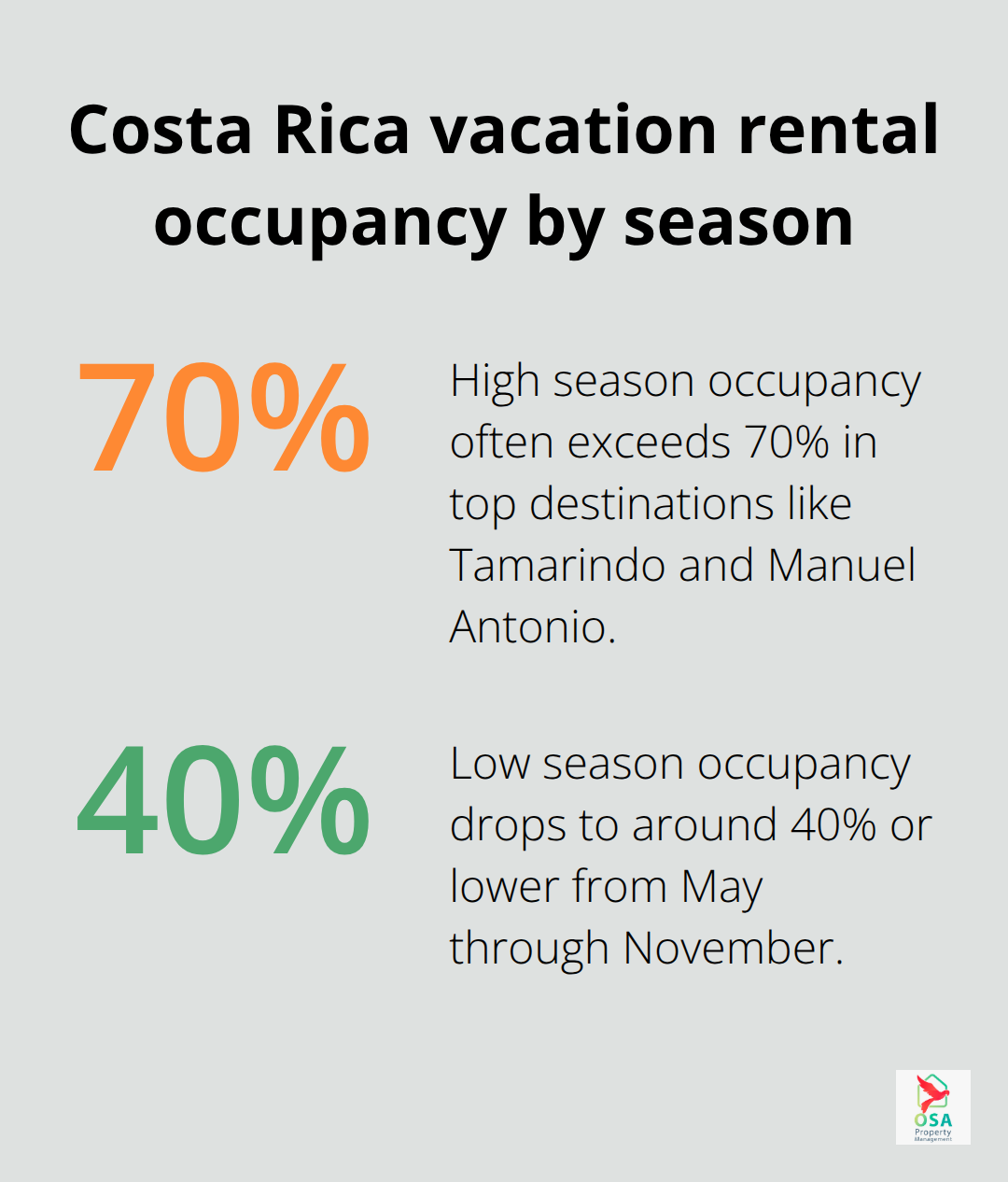
Vacation rental income in Costa Rica swings dramatically with seasons. High season in Guanacaste runs December through April, when occupancy rates exceed 70% in top destinations like Tamarindo and Manuel Antonio. Low season from May through November sees occupancy drop to 40% or lower.
Multiple Platforms Multiply Bookings and Exposure
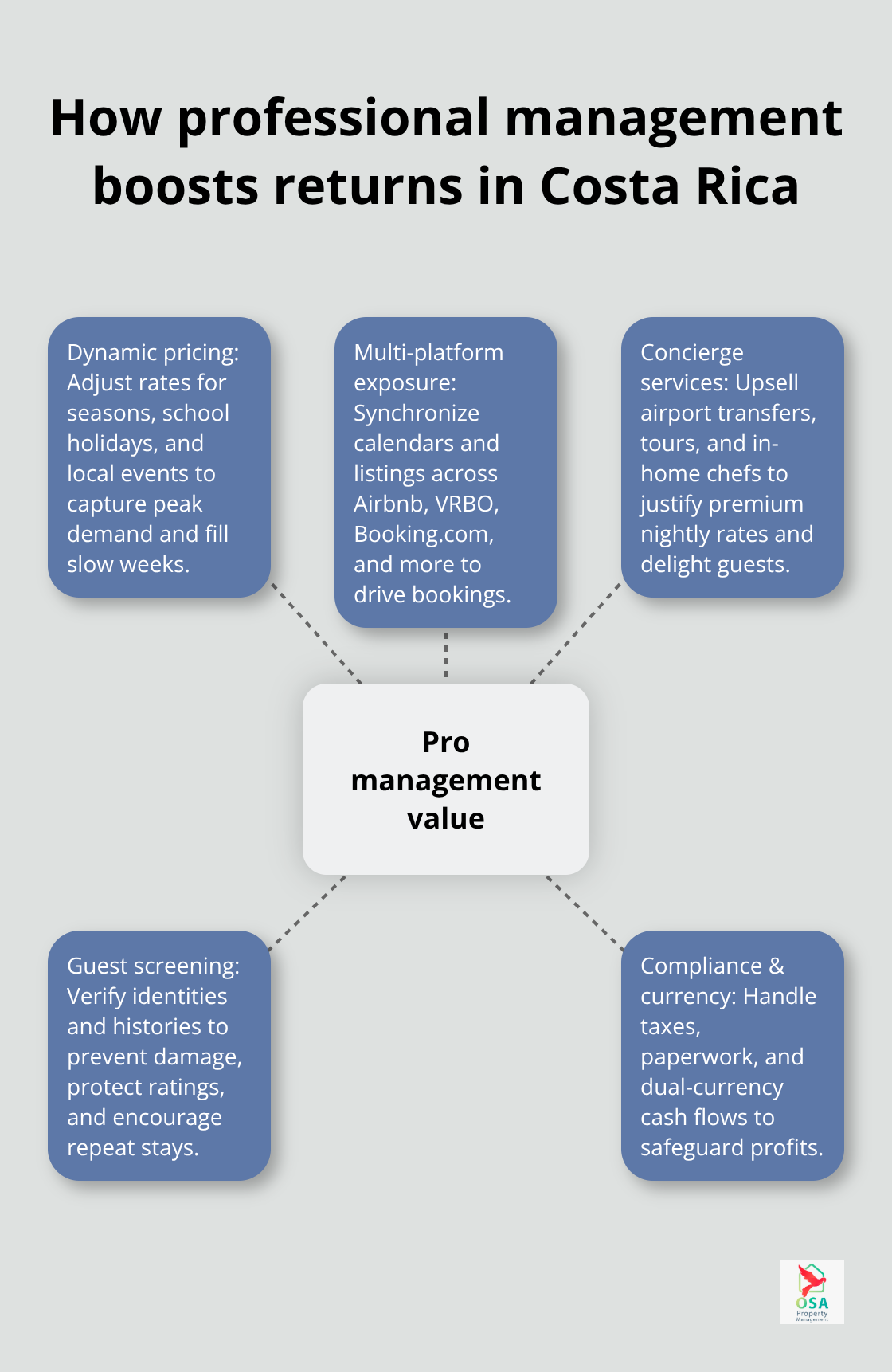
Properties listed only on Airbnb miss guests searching on VRBO, Booking.com, and Google Travel. Professional managers synchronize calendars across all platforms to prevent double-bookings and maximize exposure to 170 million potential guests through partnerships like Marriott Homes & Villas by Marriott Bonvoy. High-quality photography matters more than most owners realize; properties with professional photos generate 40% more inquiries than those with smartphone snapshots. Detailed descriptions highlighting specific amenities, proximity to beaches or national parks, and unique experiences convert browsers into bookers. Managers with established relationships on these platforms also benefit from algorithm advantages-properties with consistent five-star reviews and quick response times rank higher in search results, driving organic bookings without paid advertising.
Concierge Services Justify Premium Rates
Concierge services that offer airport transfers, day tours, and in-home chef options justify premium pricing and increase guest satisfaction scores, which directly impact visibility and future bookings. Guests who receive exceptional service leave five-star reviews that attract more bookings. These premium experiences also reduce guest complaints and property damage, protecting your investment while generating higher nightly rates than basic rental listings.
Screening Tenants Prevents Revenue-Destroying Problems
A single problematic guest can damage a property, destroy your reputation, and cost months of lost income while repairs happen and negative reviews fade. Professional managers verify guest identities, review previous rental histories, and flag red flags that self-managing owners overlook. Thorough tenant screening reduces property damage, minimizes disputes over house rules, and attracts serious renters rather than party organizers or people testing out the property before deciding. Properties with screened guests maintain higher ratings and attract repeat bookings from reliable visitors. The cost of screening-usually absorbed in management fees-pays for itself within weeks when it prevents a single bad experience that tanks your occupancy and reputation.
Why Local Expertise Matters for Costa Rica Properties
Managing vacation rentals in Costa Rica requires understanding regional demand patterns, seasonal tourism flows, and local competition. Managers who track these patterns across multiple properties and regions identify pricing opportunities and marketing strategies that generic platforms cannot. This regional knowledge directly translates to higher occupancy rates and better nightly rates, which is why the next section examines how local regulations and tax compliance further protect your rental income.
Why Professional Management Is Non-Negotiable in Costa Rica
Tax Compliance Protects Your Profits
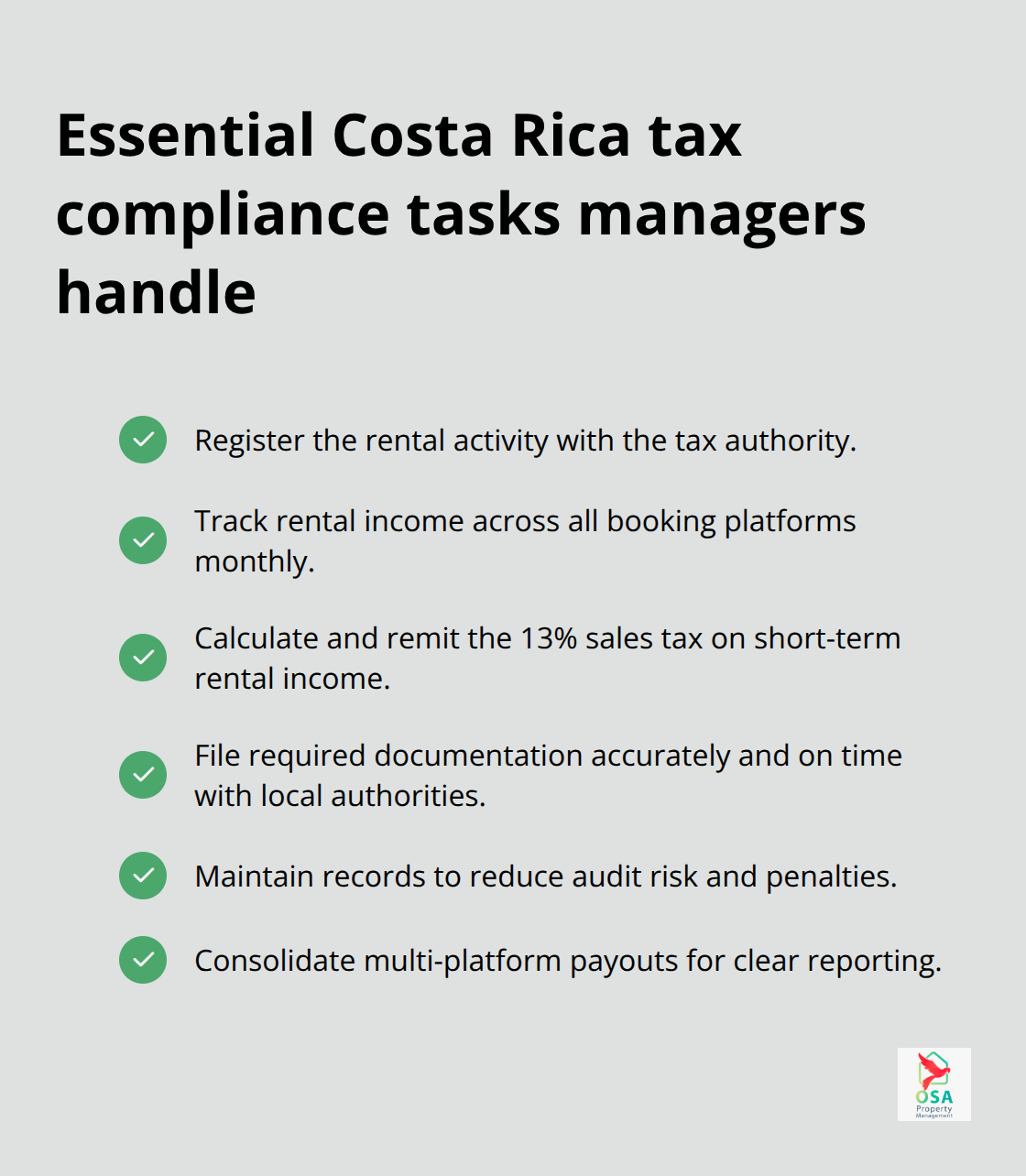
Costa Rica collects 13% sales tax on all short-term rental income, and property owners must file annual income tax returns reporting rental revenue to the Dirección General de Tributación. Many self-managing owners discover too late that they owe thousands in back taxes, penalties, and interest because they underestimated their tax obligations or failed to register their rental activity properly. Professional managers handle tax registration, track rental income across platforms, calculate tax liabilities monthly, and file required documentation with local authorities. This compliance infrastructure protects owners from audits and ensures that tax payments reduce overall liability rather than surprise owners with massive bills after the fact.
Beyond taxes, Costa Rica requires foreign property owners to understand regulations around security deposits, guest cancellation policies, and liability insurance for short-term rentals. Regulations vary between provinces and municipalities, meaning what works in Guanacaste may violate rules in the Southern Zone. Managers operating across multiple regions understand these distinctions and adjust rental agreements accordingly, preventing legal disputes that cost owners far more than management fees.
Currency Fluctuations Demand Strategic Management
Currency fluctuations add another layer of complexity that self-managing owners typically ignore until profits evaporate. The Costa Rican colón fluctuates against the US dollar, and owners earning revenue in colones while holding property mortgages in dollars face real losses during weak colón periods. Professional managers with established banking relationships and payment processing systems minimize currency losses through strategic timing of currency conversions and maintain accounts in both currencies to match income and expenses naturally. They also understand that guests from different countries expect different payment methods, and managers who accept multiple currencies and payment platforms capture bookings that others lose.
Regional Markets Require Localized Strategies
Regional differences between coastal destinations like Tamarindo and rural inland properties demand entirely different management approaches. Tamarindo's peak season demand justifies premium nightly rates and supports concierge services, while rural properties near national parks attract eco-tourists willing to pay less but staying longer during shoulder seasons. Managers with deep local knowledge in specific regions calibrate pricing, marketing channels, and service levels to match what each market actually supports, generating significantly higher occupancy and revenue than generic, one-size-fits-all approaches that treat all Costa Rica properties identically.
The Southern Zone presents its own distinct opportunities and challenges. Properties in areas like Manuel Antonio, Uvita, and Ojochal operate under different seasonal patterns and attract different guest demographics than northern coastal regions. Managers familiar with these markets understand which platforms drive bookings, what amenities guests expect, and how to price competitively without leaving revenue on the table. This regional expertise directly impacts whether your property generates consistent income or sits vacant during transition periods when pricing and positioning matter most.
The Hidden Costs of Self-Managing Costa Rica Rentals
Time Investment Adds Up Fast
Self-managing a Costa Rica vacation rental looks cheap until you calculate the actual hours involved. Most owners spend 10-15 hours monthly responding to guest messages, coordinating cleaners, handling maintenance emergencies, and managing bookings across multiple platforms. At $25 per hour, that amounts to $3,000-$4,500 annually in uncompensated labor. Software subscriptions for calendar synchronization, accounting tools, and property management systems cost $50-$200 monthly across platforms. Property inspections during low season, security system monitoring, and periodic maintenance coordination require either your presence in Costa Rica or hiring someone locally to oversee these tasks, adding another $500-$1,500 annually.
Poor Screening Destroys Profits Quickly
Poorly screened guests create the most expensive problems self-managers face. A single destructive guest causes $5,000-$15,000 in damage, tanks your property rating for months, and eliminates bookings during peak season when you'd normally earn $3,000-$5,000 monthly. The guest who cancels last-minute without proper vetting policies costs you $2,000-$4,000 in lost nightly rates. Professional managers verify guest identities, review previous rental histories, and flag red flags that self-managing owners overlook. Guest screening and damage prevention in vacation rental management prevents revenue-destroying situations that wipe out months of profit.
Legal and Tax Mistakes Cost Thousands
Self-managers who don't understand Costa Rica's rental regulations risk legal disputes over security deposits or cancellation policies that require attorney fees exceeding $2,000, plus the stress of navigating unfamiliar legal systems. Tax mistakes prove equally costly: owners who fail to register properly with Costa Rica's tax authority face penalties of 50-100% on unpaid taxes plus interest, meaning a $5,000 tax liability becomes $7,500-$10,000. Professional managers handle tax registration, track rental income across platforms, calculate tax liabilities monthly, and file required documentation with local authorities.
The Real Cost of Vacancy and Weak Pricing
Most self-managers spend 15-20% of gross rental income on hidden expenses before accounting for the biggest cost of all: lost revenue from poor pricing, inadequate marketing, and vacancy periods that professional managers eliminate. Properties managed professionally in Guanacaste consistently achieve 65-75% annual occupancy with optimized rates, while self-managed properties average 50-60% occupancy because owners lack the expertise to adjust pricing seasonally or market across multiple platforms effectively. Professional managers bundle these risks into flat-rate fees that typically range from 20-30% of gross rental income, but they recoup those costs through higher occupancy rates, better nightly pricing, and eliminated revenue-destroying mistakes.
Final Thoughts
Selecting the right property manager determines whether your Costa Rica rental generates consistent income or becomes a source of stress and financial loss. Start by asking local real estate agents for referrals to managers with proven success in your specific region, since a manager experienced in Tamarindo operates differently than one managing properties in Manuel Antonio or the Southern Zone. Request client references and ask about occupancy rates, average nightly rates, and annual revenue for properties similar to yours, then review their service packages carefully and compare fee structures across providers to calculate actual net income after all costs.
Evaluate their local connections honestly and assess whether they maintain relationships with reliable cleaners, maintenance contractors, and security companies who respond quickly to emergencies. Ask about their accounting and tax compliance processes-how they track rental income across multiple platforms and whether they file required documentation with Costa Rica's tax authority. Property management Costa Rica requires vendors who act fast and systems that protect your asset from the moment a problem surfaces.
We at Osa Property Management have spent over 20 years building these exact relationships across the Southern Pacific Zone, from Tarcoles and Jaco through Manuel Antonio, Dominical, Uvita, Ojochal, and Golfito. Our team handles marketing, guest screening, maintenance coordination, accounting, and tax compliance so owners can focus on their lives rather than managing properties remotely. Contact us to learn how we can maximize your rental income.
To be contacted by an Osa Property Management representative and to learn more about our services, please send an email to info@osapropertymanagement.com or send a WhatsApp message to +17633068981 or +50671001006 / Para que un representante de Osa Property Management se ponga en contacto con usted y obtener más información sobre nuestros servicios, por favor envíe un correo electrónico a info@osapropertymanagement.com o un mensaje de WhatsApp al +17633068981 o al +50671001006.
Vacation rentals: https://costaricalasvillas.com