
A poorly written property management contract can cost you thousands in disputes, lost rent, or legal fees. We at Osa Property Management have seen countless property owners in Costa Rica sign agreements that lack critical protections.
The right Costa Rica property management contract protects both you and your manager by setting clear expectations from day one. This guide walks you through the essential clauses, local legal requirements, and common pitfalls to avoid.
What Goes Into Your Management Contract
Your property management contract must spell out exactly what your manager will do, what they'll charge, and when either party can walk away. The contracts that prevent disputes across Costa Rica share three non-negotiable elements: a clear fee structure, a detailed scope of services, and explicit termination rules.
Fee Structure That Addresses Real Scenarios
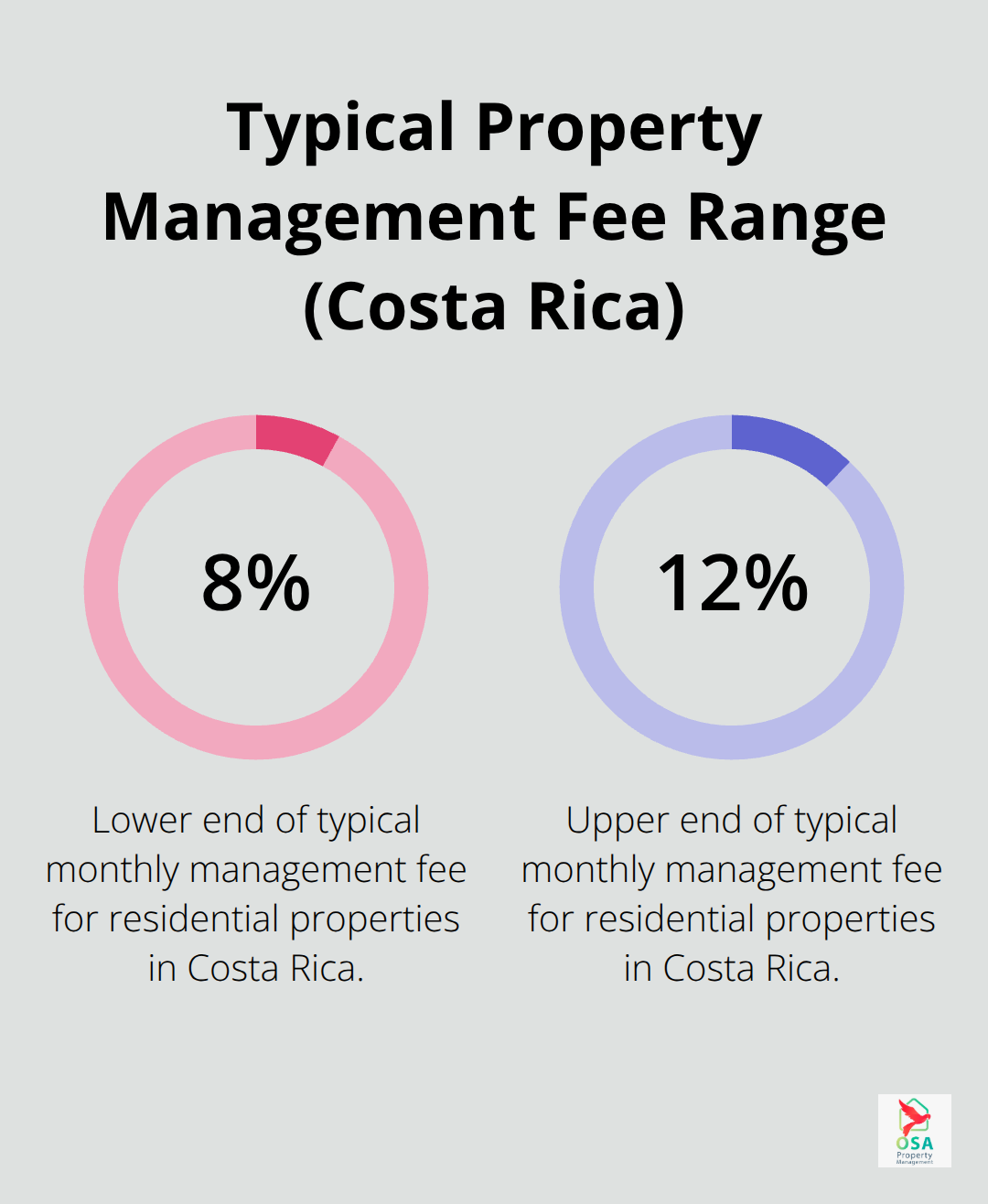
Your fee structure must specify whether the manager charges a percentage of monthly rent (typically 8 percent to 12 percent for residential properties), a flat monthly fee, or a hybrid model.
For security deposits, clarify that the manager holds deposits in a separate escrow account and that deposits remain the owner's funds, not revenue for the manager. Specify reimbursement deadlines for the owner's expenses. If a tenant causes damage requiring a 500,000 colones repair, the contract should state whether the owner reimburses the manager within 10 days or whether the manager advances the cost and deducts it from the owner's next distribution.
Insurance and Liability Protection
Include a clause requiring proof of insurance from the manager, with the owner named as additional insured. This protects you if a contractor gets injured on your property. The manager should carry general liability and property coverage, with documentation provided before work begins. Your contract should also require the manager to maintain professional liability insurance, protecting both parties from claims related to mismanagement or negligence.
Scope of Services and What's Excluded
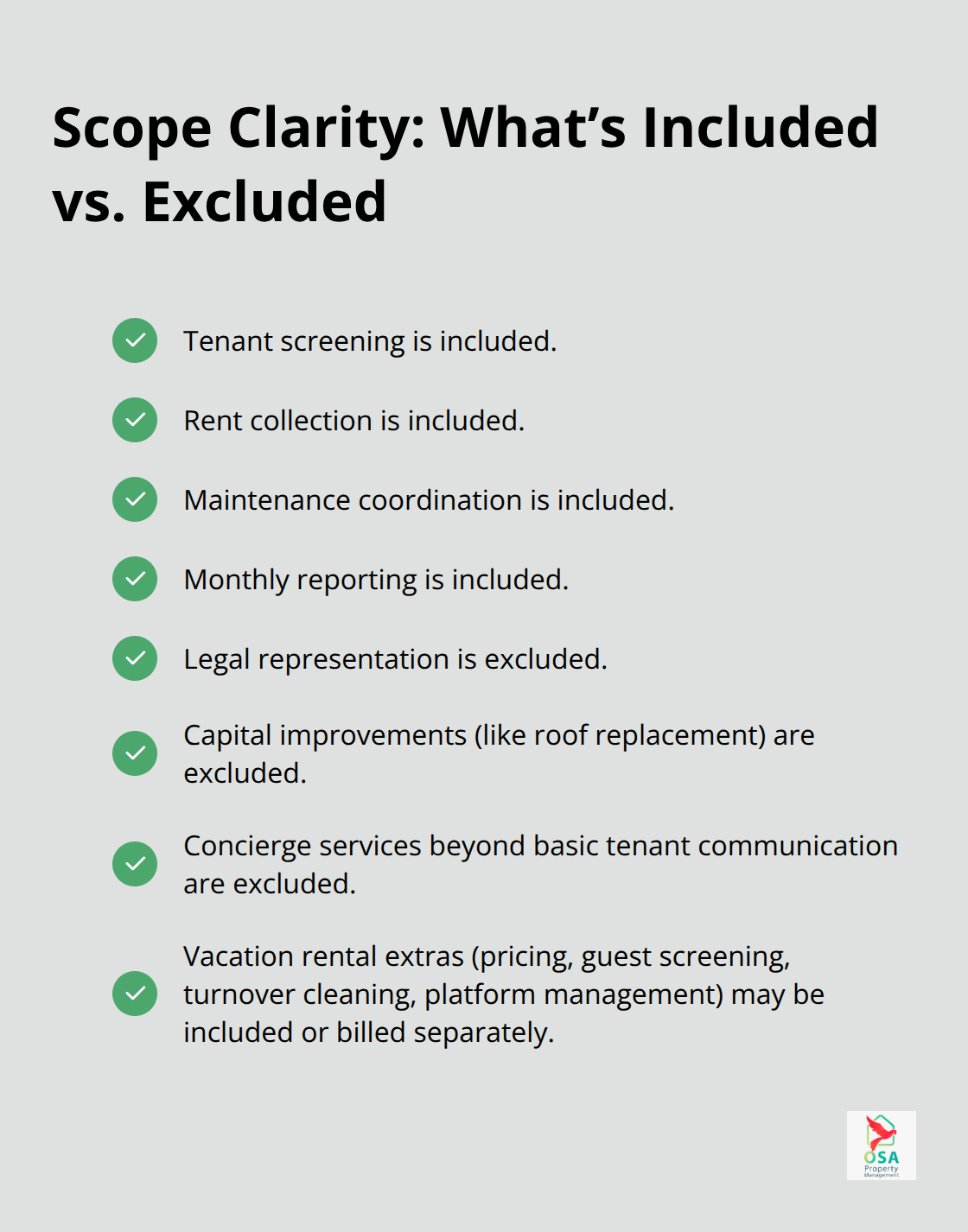
The scope section must list every service included and excluded. Included services might be tenant screening, rent collection, maintenance coordination, and monthly reporting. Excluded services might be legal representation, capital improvements (replacing a roof), or concierge services beyond basic tenant communication. For vacation rental properties, specify whether dynamic pricing, guest screening, turnover cleaning, and online platform management are included or charged separately.
Contract Duration and Termination Rights
Set contract duration for one to two years, with automatic renewal unless either party provides written notice 60 days before expiration. Include termination-for-cause language allowing immediate termination if the manager fails to maintain SUGEF registration, mishandles client funds, or breaches the contract materially. This protects you from continuing to pay a manager who stops following Costa Rican regulatory requirements. When either party terminates, the contract should specify how final payments and security deposits transfer within 30 days.
These structural elements form the foundation of your agreement, but Costa Rican law adds specific requirements that many property owners overlook entirely.
What Costa Rican Law Actually Requires in Your Management Contract
Costa Rica's regulatory framework for property management is stricter than many owners realize, and your contract must reflect these requirements or you face real financial exposure.
SUGEF Registration and Fund Segregation
The Financial Supervision Authority (SUGEF) regulates property managers as financial entities, meaning your manager must be registered with SUGEF to legally operate. Your contract should explicitly require proof of SUGEF registration before you sign and mandate that the manager maintain this registration throughout the agreement. If your manager loses SUGEF status, you have immediate termination rights-this is non-negotiable.
SUGEF requires property managers to segregate client funds into separate escrow accounts, so your contract must state that rent payments and security deposits never mix with the manager's operating funds. This protects your money from being tied up if the management company faces financial trouble. Verify the manager maintains separate bank accounts at reputable institutions like Banco Nacional or BAC San José and request quarterly statements proving fund segregation. Many property owners skip this verification step and later discover their deposits commingled with company funds, creating legal nightmares during disputes.
Labor Law Compliance and Tax Obligations
Your contract must address Costa Rica's labor laws, which strongly protect employees. If your manager employs staff, the contract should require compliance with the Labor Code, including mandatory contributions to the CAJA (Social Security Fund), paid time off, and severance requirements. These aren't optional-violations expose both you and the manager to fines and liability.
For tax compliance, Costa Rica's relatively low property taxes still require accurate reporting. The contract should specify that the manager files all required tax documentation with the Costa Rican tax authority (Dirección General de Tributación) and provides you with detailed monthly statements showing income, expenses, and tax obligations in both colones and USD to prevent currency confusion.
Insurance Requirements and Coverage
Insurance requirements are equally critical: your contract must require the manager to carry general liability insurance covering contractor injuries, professional liability insurance for mismanagement claims, and property coverage naming you as additional insured. Request proof of active insurance policies before you sign and annually thereafter. This protects you if a contractor gets injured on your property or if the manager's negligence causes financial loss.
Security Deposit Regulations
The General Law of Urban and Suburban Rentals sets security deposits at one month's rent maximum, and Costa Rican courts enforce this strictly-your contract should specify this limit and require deposits returned within 15 business days of lease termination with itemized deductions backed by receipts and photographs. Deposits accrue interest after three years, so your contract must clarify who manages this interest obligation. These legal specifics separate legitimate management agreements from risky arrangements that leave you vulnerable to regulatory action and tenant complaints.
Your contract's compliance with these regulations determines whether disputes stay manageable or spiral into costly legal battles. The next section examines the common mistakes that property owners make when they overlook these protections.
Common Mistakes Property Owners Make in Contracts
Vague Service Descriptions Create Costly Disputes
Property owners in Costa Rica consistently write scope-of-services clauses so vague that the manager and owner disagree on what was actually promised. One common conflict involves maintenance coordination: owners think it means the manager schedules and approves all repairs, while managers interpret it as simply forwarding tenant requests without quality oversight. The contract states "maintenance coordination" without defining response times, approval thresholds, or who decides whether a repair is urgent or routine. When a tenant waits three weeks for a broken water heater and the owner demands reimbursement, the dispute spirals because neither party committed to specific timelines in writing.
Your scope of services must state exactly how fast the manager responds to maintenance requests. Try 24 hours for urgent issues like plumbing failures and 5 business days for routine requests. Specify whether the manager obtains three competitive quotes before approving repairs over 500,000 colones or whether they can approve smaller repairs without your sign-off. For vacation rentals, define whether the manager controls dynamic pricing within preset ranges (minimum 40 USD per night, maximum 200 USD per night, for example) or whether you approve each price change. These specifics eliminate the most common source of conflict between owners and managers.
Emergency Protocols Prevent Crisis Management Failures
The second mistake is omitting emergency protocols, leaving you vulnerable when crises occur at night or on weekends. A pipe bursts at 2 AM on Sunday, and your manager does not answer because the contract never assigned emergency responsibilities. Your contract must name a specific emergency contact available 24/7, establish an emergency repair budget the manager can approve without your permission (typically 1 million to 2 million colones depending on property value), and define which situations qualify as emergencies versus routine maintenance.
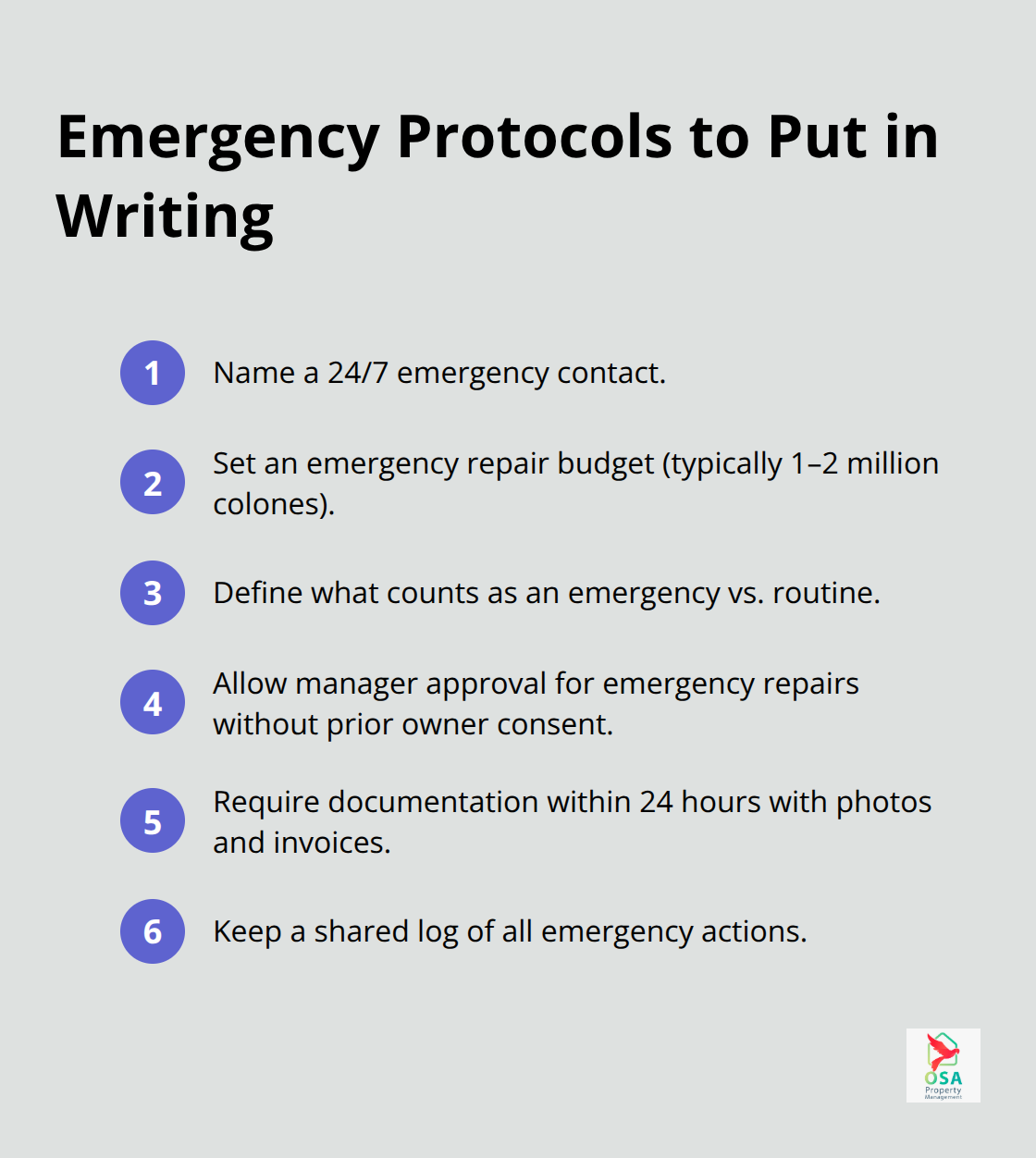
Specify that emergency repairs get documented within 24 hours with photos and contractor invoices provided to you immediately. This documentation protects both parties and creates a clear record if disputes arise later. Without these written protocols, emergency decisions happen ad-hoc, costs spiral, and you have no way to verify whether the manager acted reasonably.
Communication Protocols Protect Both Parties
The third mistake is failing to establish communication protocols that protect both parties. Owners and tenants should not communicate directly about rent, maintenance, or lease disputes-the manager acts as intermediary to prevent misunderstandings and protect you legally. Your contract must state that tenants contact the manager first, the manager responds within 24 hours, and the manager escalates issues to you only if they require your decision.
Without this written protocol, tenants call you directly, you make ad-hoc decisions that contradict the manager's approach, and disputes multiply. Document all tenant communications in a shared system the owner can access, so you see every interaction and can verify the manager's responsiveness. This transparency prevents the "he said, she said" conflicts that drain time and money from property owners across Costa Rica.
Final Thoughts
A strong Costa Rica property management contract protects your investment and prevents disputes that drain your time and money. The agreements that work across Costa Rica share three core elements: transparent fee structures that address vacancies and non-payment, detailed service descriptions with specific timelines and approval thresholds, and explicit compliance with SUGEF registration, fund segregation, and labor law requirements. Property owners who draft vague agreements or skip legal requirements consistently face the same problems-managers who interpret scope differently than expected, emergency situations that spiral into costly decisions, and tenant disputes that could have been prevented with clear communication protocols.
Working with experienced local managers matters because they understand Costa Rican rental law, SUGEF regulations, and the specific market conditions in your region. A manager with deep regional experience knows how to structure agreements that comply with local requirements and prevent the disputes that drain your resources. Osa Property Management operates across Tarcoles, Jaco, Dominical, Manuel Antonio, Ojochal, Uvita, and Golfito with a team of over 40 full-time employees who handle marketing, tax compliance, maintenance oversight, and tenant relationships.
Your next step is straightforward: review your current contract against the requirements in this guide and identify gaps that need attention. Work with a local attorney or experienced manager to strengthen your agreement before disputes occur. A solid Costa Rica property management contract creates the foundation for a productive partnership with your manager and protects your investment for years to come.