

Yes, Americans can buy property in Costa Rica. The process is straightforward, but it requires understanding local laws, financing options, and tax obligations that differ significantly from U.S. real estate transactions.
At Osa Property Management, we’ve guided countless American buyers through this journey. This guide walks you through the legal requirements, financial considerations, and practical steps you need to know before purchasing property in Costa Rica.
Legal Requirements for Foreign Property Ownership
Your Rights as an American Buyer
Americans hold the same property ownership rights as Costa Rican citizens. You can purchase land, homes, and condos outright in your own name without needing a local partner or residency status. The National Registry records all property ownership, and you can verify title status for free online, though professional interpretation remains essential to confirm clear, transferable ownership.
One critical exception exists: beachfront properties within 200 meters of the high-tide line fall under the Maritime Zone Law. In these areas, you lease the land from the government rather than own it outright. The first 50 meters from shore is public land, while the next 150 meters is concession land with strict usage conditions. Understanding this distinction before signing anything matters-many buyers discover too late that their beachfront purchase comes with significant restrictions on what they can do with the property.
The Legal Transaction Process
The legal transaction process mirrors North American real estate, but you must hire a Costa Rican attorney licensed as a Notary Public to draft and record your deed. Your lawyer verifies the title, confirms no encumbrances exist, and handles corporate formation if you choose to buy through a Costa Rican corporation (many Americans do this to optimize taxes on rental income and simplify estate planning).
Closing costs typically run around 4% of the purchase price and cover legal fees, notary charges, government transfer taxes, and recording fees. After you and the seller agree on terms, you place a 10% deposit into an escrow account regulated by SUGEF or third parties like Stewart Title Latin America. Closing happens 30 to 60 days later.
Protecting Yourself with Independent Legal Review
Do not rely solely on a real estate agent for verification-they represent the seller’s interests. Work with your own lawyer to cross-check documents and confirm everything is properly recorded at the National Registry. Many Americans make the mistake of trusting an agent’s assurances without independent legal review, which can lead to title disputes or undiscovered restrictions that cost far more to fix later.
Your attorney’s role extends beyond paperwork. They identify potential tax advantages, structure your purchase correctly, and flag any red flags in the title or property history that could affect your investment. This independent layer of protection separates successful purchases from costly mistakes.
Financing and Tax Considerations
Securing Financing for Your Purchase
Financing a Costa Rican property purchase differs sharply from U.S. mortgages, and most American buyers overlook this reality until late in the process. Local Costa Rican banks offer mortgages, but interest rates typically range from 8% to 12%, significantly higher than U.S. rates. More importantly, banks require substantial down payments-often 30% to 50%-and demand proof of Costa Rican income or residency, which most foreign buyers lack.
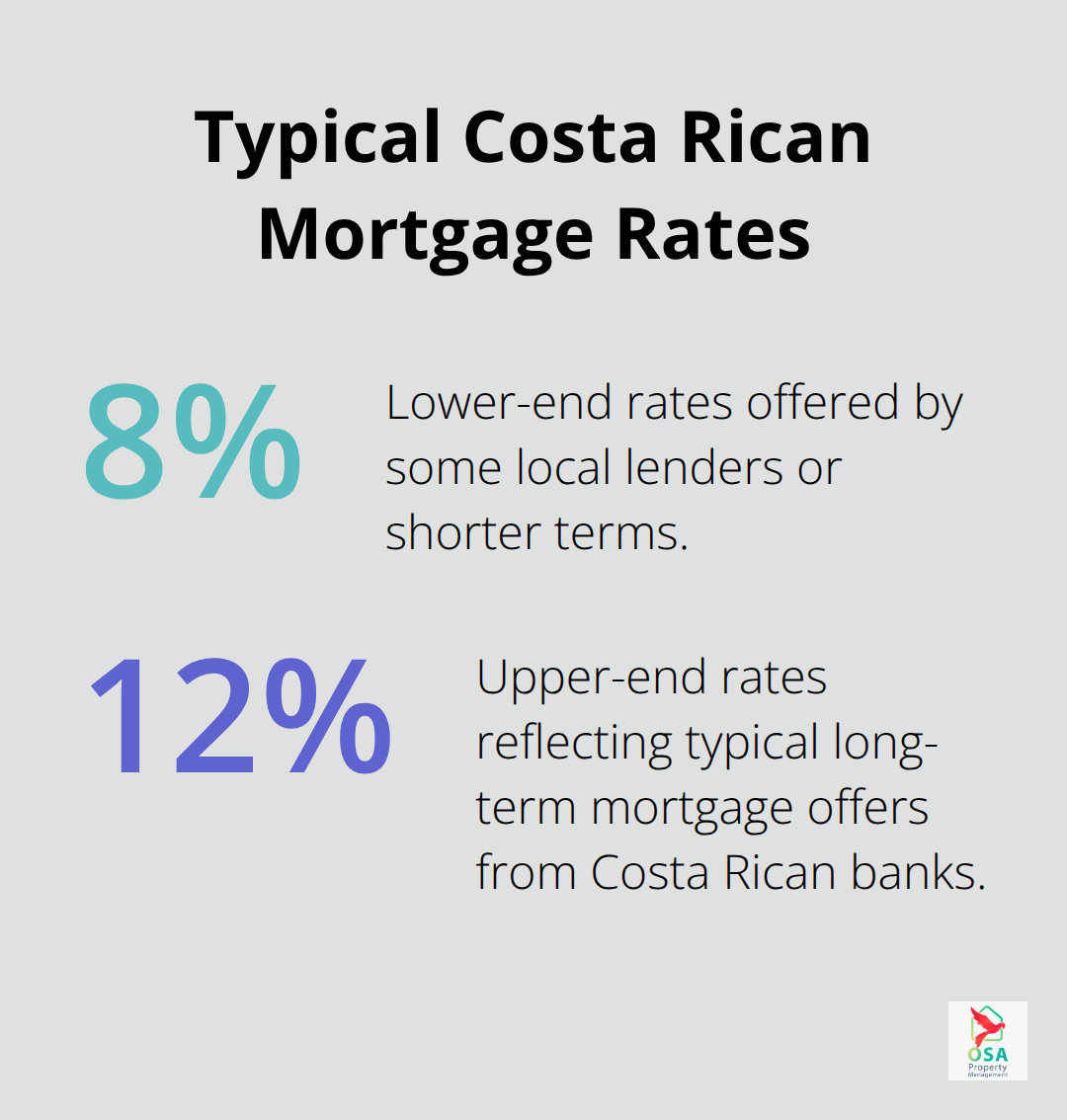
This is why most Americans finance through their home country instead. Borrowing against a U.S. home equity line or refinancing your primary residence usually delivers lower rates and simpler approval. Owner financing represents another legitimate option in Costa Rica; many sellers finance directly with legal protections for both parties, and this route often works faster than traditional lending. Secure financing before you make an offer, and explore U.S.-based options first.
Understanding Property Taxes and Ongoing Costs
Property taxes are remarkably low at 0.25% of the registered property value annually. A $300,000 home costs roughly $750 per year in property tax-a fraction of what most U.S. states charge. However, do not mistake this low rate for a complete picture.
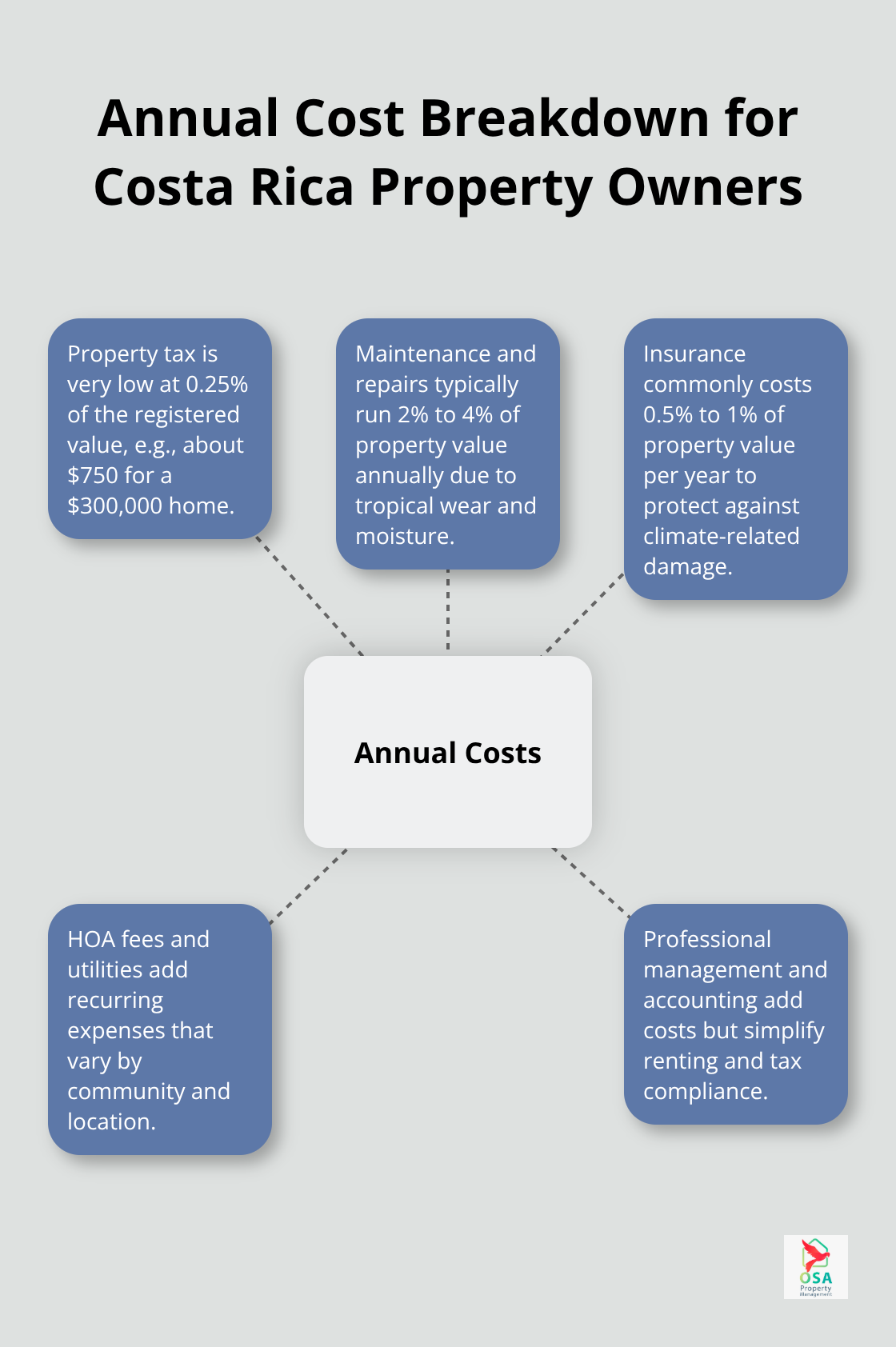
You must budget for additional costs that compound over time: HOA fees if your property sits in a managed community, annual utility bills that run higher than you expect in tropical climates, property insurance ranging from 0.5% to 1% of property value yearly, and maintenance reserves. The climate in areas like Dominical or Ojochal means moisture damage, mold, and structural wear accelerate faster than in drier regions. A realistic annual cost estimate should include property tax plus 2% to 4% of the property value for maintenance and upkeep. Many first-time buyers underestimate this and face surprise bills within two years.
Capital Gains Tax and Dual Taxation
Capital gains tax presents the biggest financial surprise for American property sellers. When you sell a Costa Rican property for profit, you owe 15% capital gains tax to Costa Rica, calculated on the difference between your purchase price and sale price. The U.S. Internal Revenue Service also taxes worldwide income, meaning you may owe additional U.S. capital gains tax depending on your filing status and holding period.
This dual taxation makes proper structuring essential before purchase. Many Americans form a Costa Rican corporation to hold the property, which can defer or reduce tax on rental income and simplifies estate planning-a strategy worth discussing with a tax professional before closing.
Rental Income and Tax Reporting
Rental income from a Costa Rican property is taxed at ordinary income rates in both countries, so if you plan to rent out your property, factor this into your financial projections. The U.S. Foreign Earned Income Exclusion does not apply to rental income, only to active employment income, so you cannot escape U.S. taxation.
Reporting obligations require filing Form 5471 with the IRS if you own a Costa Rican corporation, plus standard income tax forms for any rental revenue. Many American property owners hire a Costa Rican accountant and a U.S. tax professional to handle both jurisdictions-an added cost but essential to avoid penalties. Structure your purchase correctly from day one, understand the tax implications before signing, and budget for professional tax guidance.
Moving Forward with Confidence
The financial side of Costa Rican property ownership demands attention to detail and professional support. Once you understand your financing options, tax obligations, and true annual costs, you can move forward with realistic expectations. The next step involves taking practical action: hiring the right professionals and conducting thorough due diligence on the specific property you want to purchase.
Practical Steps to Buying Property in Costa Rica
Selecting and Vetting Your Real Estate Attorney
Hiring a Costa Rican attorney licensed as a Notary Public stands as your first and most critical decision after identifying a property you want to pursue. This is not the time to economize or rely on your real estate agent’s recommendation alone. Your attorney must specialize in real estate transactions, understand the National Registry system inside out, and have a track record closing deals in your target region.
Interview at least two attorneys before committing. Ask about their experience with foreign buyers, how many transactions they closed last year, and request references from recent American clients. A qualified attorney catches title defects, identifies tax optimization strategies, and structures your purchase to minimize future liability. Expect to pay $1,500 to $3,000 in legal fees for a standard transaction, but this investment protects you from far costlier mistakes.
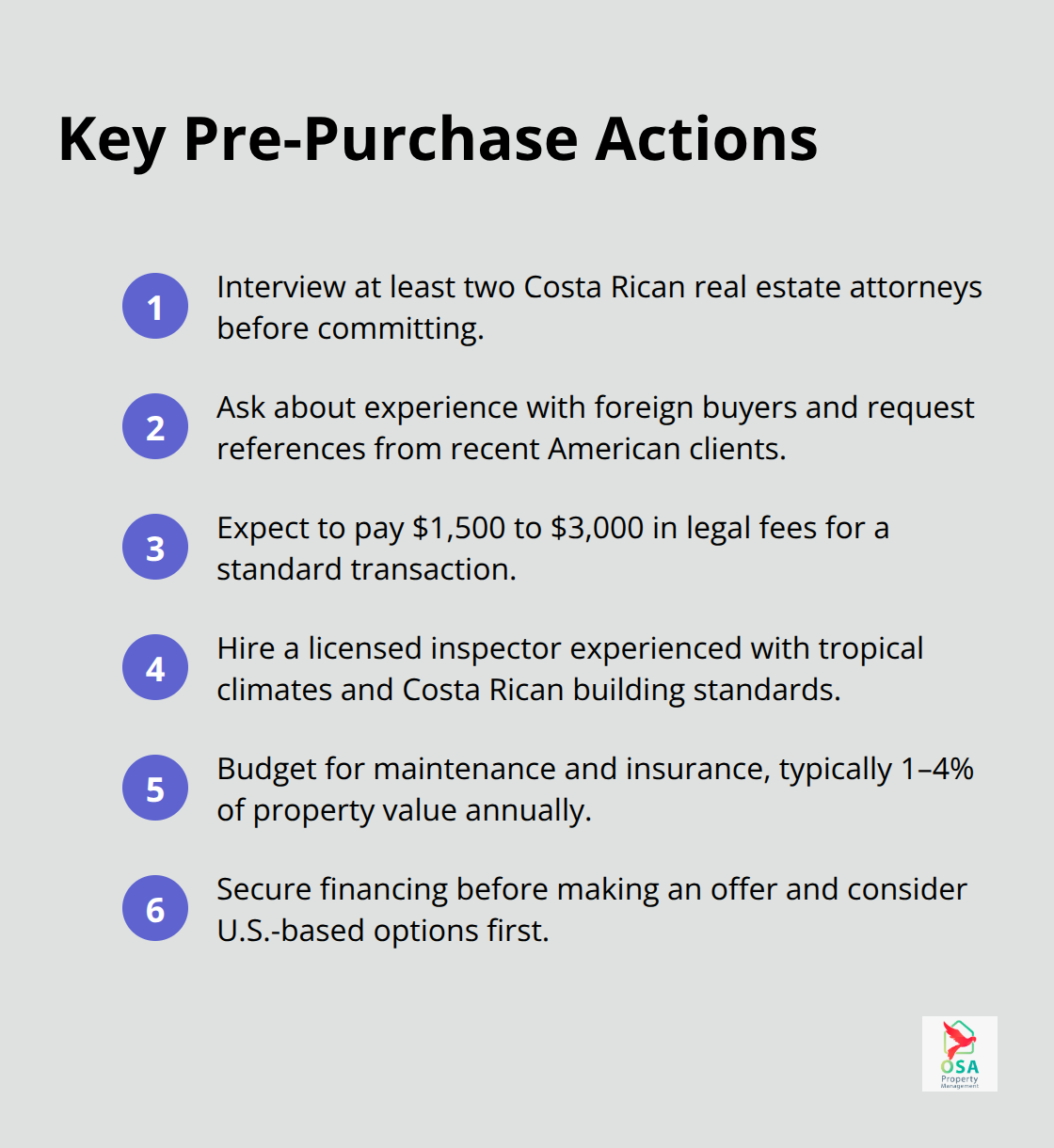
Once hired, your lawyer handles the title search, corporation formation if you choose that route, and escrow coordination. Do not sign anything until your attorney reviews every document.
Inspecting the Property Thoroughly
Property inspection demands the same rigor as your legal review, and most American buyers skip this step at their peril. Hire a licensed professional inspector familiar with tropical climates and Costa Rican building standards, not a general contractor unfamiliar with local conditions.
The inspector should assess structural integrity, check for water infiltration and mold in walls and ceilings, evaluate the septic or sewer system, test water quality and pressure, and examine the roof for damage from intense seasonal rainfall. In areas like Dominical or Ojochal where annual rainfall exceeds 200 inches, moisture damage accelerates dramatically compared to drier zones.
Budget $400 to $800 for a thorough inspection and plan to visit the property at different times of day and during the rainy season if possible. What looks pristine during dry months may reveal serious issues when water flows. After closing, you own all repair costs, so identifying problems before purchase is non-negotiable.
Understanding Maintenance Costs in Tropical Climates
Many Americans underestimate maintenance needs in tropical environments. The climate in Costa Rica means moisture damage, mold, and structural wear accelerate faster than in drier regions. Property owners should set aside approximately 1-3% of their property’s value annually for maintenance and repairs to avoid surprise bills within two years of purchase.
Visit the property multiple times and assess the neighborhood at night. Compare multiple options to verify the property fits your lifestyle and investment goals. Consider long-term sustainability: proximity to healthcare, groceries, and other essential services, plus transportation options. The property type and location influence ongoing costs significantly, as beaches, mountains, and rural areas each have different maintenance demands.
Engaging Professional Property Management Services
If you plan to rent the property, professional management becomes essential. Experienced local operators understand tenant expectations and maintenance standards that protect your investment long-term. We at Osa Property Management offer expert services across Dominical, Manuel Antonio, Ojochal, Uvita and surrounding areas, with over 19 years of experience handling marketing, renter relationships, maintenance coordination, bill payment, accounting, and tax compliance. Professional management lets you collect income without managing headaches from thousands of miles away.
Final Thoughts
The answer to whether Americans can buy property in Costa Rica is an unqualified yes, and the process works smoothly when you follow the right steps. The legal framework treats foreign buyers fairly, financing options exist beyond local banks, and tax planning prevents costly surprises down the road. What separates successful purchases from regrettable ones is preparation and professional guidance from the start.
The biggest mistake American buyers make is moving too fast-you see a beachfront property, fall in love with the view, and sign before understanding Maritime Zone restrictions or conducting a proper inspection. Hire your attorney before making an offer, not after, and verify the title independently rather than trusting an agent’s word. Budget for maintenance costs that tropical climates demand (not just the purchase price), as these steps take time but save thousands in repairs and legal disputes later.
If you have identified a specific property, hire an attorney immediately and request a title search. If you already own property and plan to rent it, professional management protects your investment and simplifies your life-we at Osa Property Management have managed properties across Dominical, Manuel Antonio, Ojochal, Uvita and surrounding areas for over 19 years, handling everything from marketing and tenant relationships to maintenance coordination and tax compliance. Contact us to discuss how we can support your Costa Rican investment.