

At Osa Property Management, we often receive inquiries about whether US citizens can buy property in Costa Rica. The answer is a resounding yes!
Costa Rica's welcoming real estate market offers equal property rights to foreigners and locals alike. This guide will walk you through the legal requirements, purchasing process, and financing options for US citizens looking to invest in Costa Rican real estate.
Legal Requirements for US Property Buyers in Costa Rica
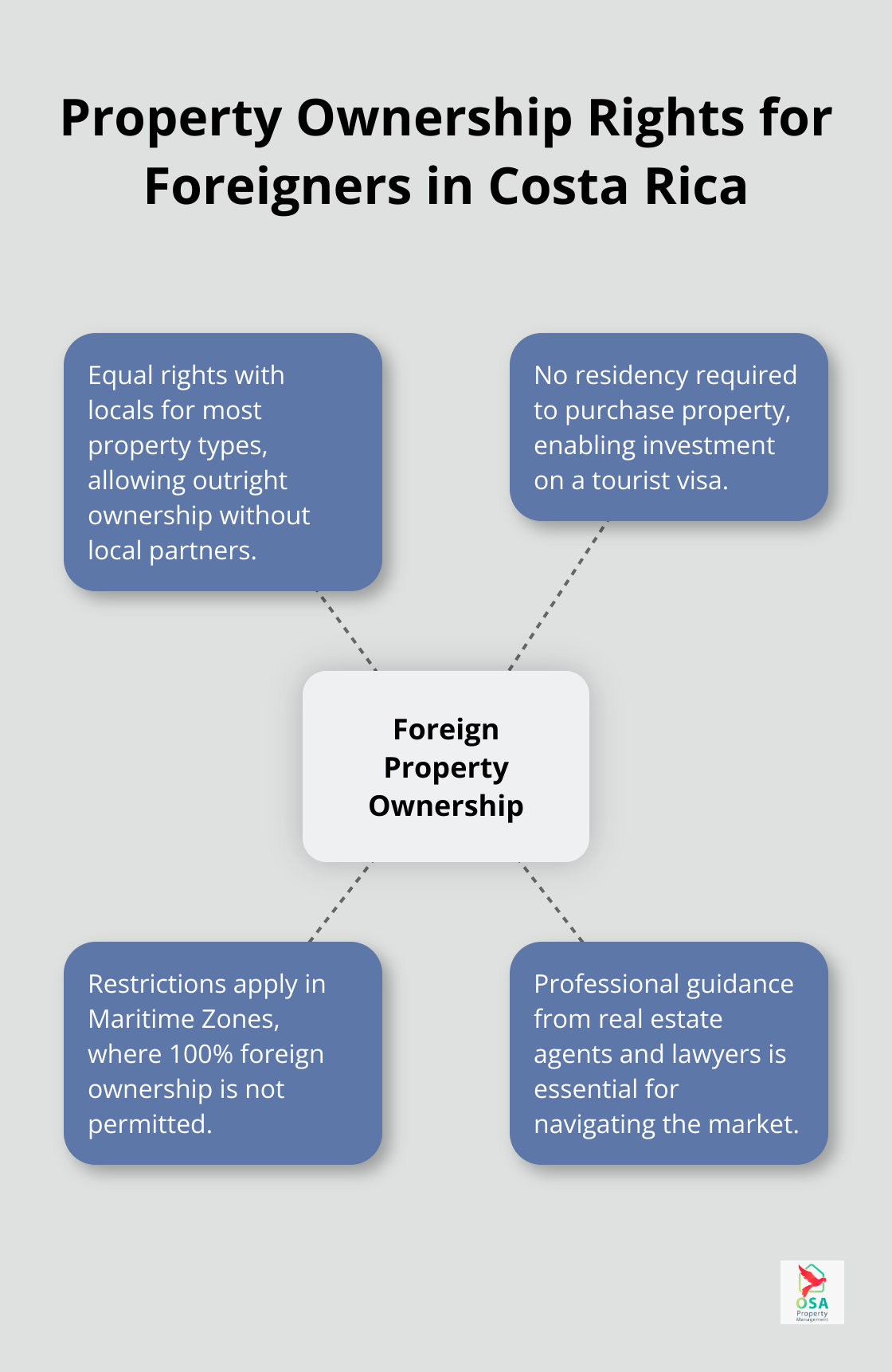
No Residency Required
At Osa Property Management, we've helped many US citizens purchase property in Costa Rica. The legal requirements are straightforward, which makes Costa Rica an attractive option for foreign investors. US citizens don't need to establish residency to buy property here. You can purchase real estate on a tourist visa, which simplifies the process significantly. This flexibility allows you to invest in Costa Rican property without a full-time residency commitment.
Equal Property Rights
Foreigners have full property ownership rights in Costa Rica, with a few exceptions. You cannot own 100% of property in a Maritime Zone, and there are some other restrictions. This means that in most cases, foreign buyers can own property outright, without the need for a local partner or complex ownership structures.
Professional Guidance: A Must-Have
While the legal framework favors foreign buyers, navigating the Costa Rican real estate market requires expert assistance. We strongly recommend working with a reputable real estate agent and a qualified lawyer. These professionals will help you avoid common pitfalls and ensure a smooth transaction.
The Role of a Real Estate Agent
A skilled real estate agent will possess in-depth knowledge of local markets and can help you find properties that match your criteria. They should be registered with SUGEF (Costa Rica's financial regulatory authority), which adds an extra layer of credibility. Your agent will guide you through the property search, negotiation, and purchase process.
The Importance of Legal Counsel
Your lawyer plays a vital role in the property buying process. They will:
- Conduct a thorough title search
- Verify that the property can be legally sold
- Handle all legal aspects of the transaction
This due diligence is essential, as Costa Rica doesn't have a system of title insurance like in the US. A qualified lawyer will protect your interests and ensure that your property purchase complies with all local laws and regulations.
The legal landscape for US citizens buying property in Costa Rica is favorable, but it's not without its complexities. As we move into the next section, we'll explore the step-by-step process of purchasing property in Costa Rica, from initial property search to final closing.
How to Buy Property in Costa Rica
Finding Your Ideal Property
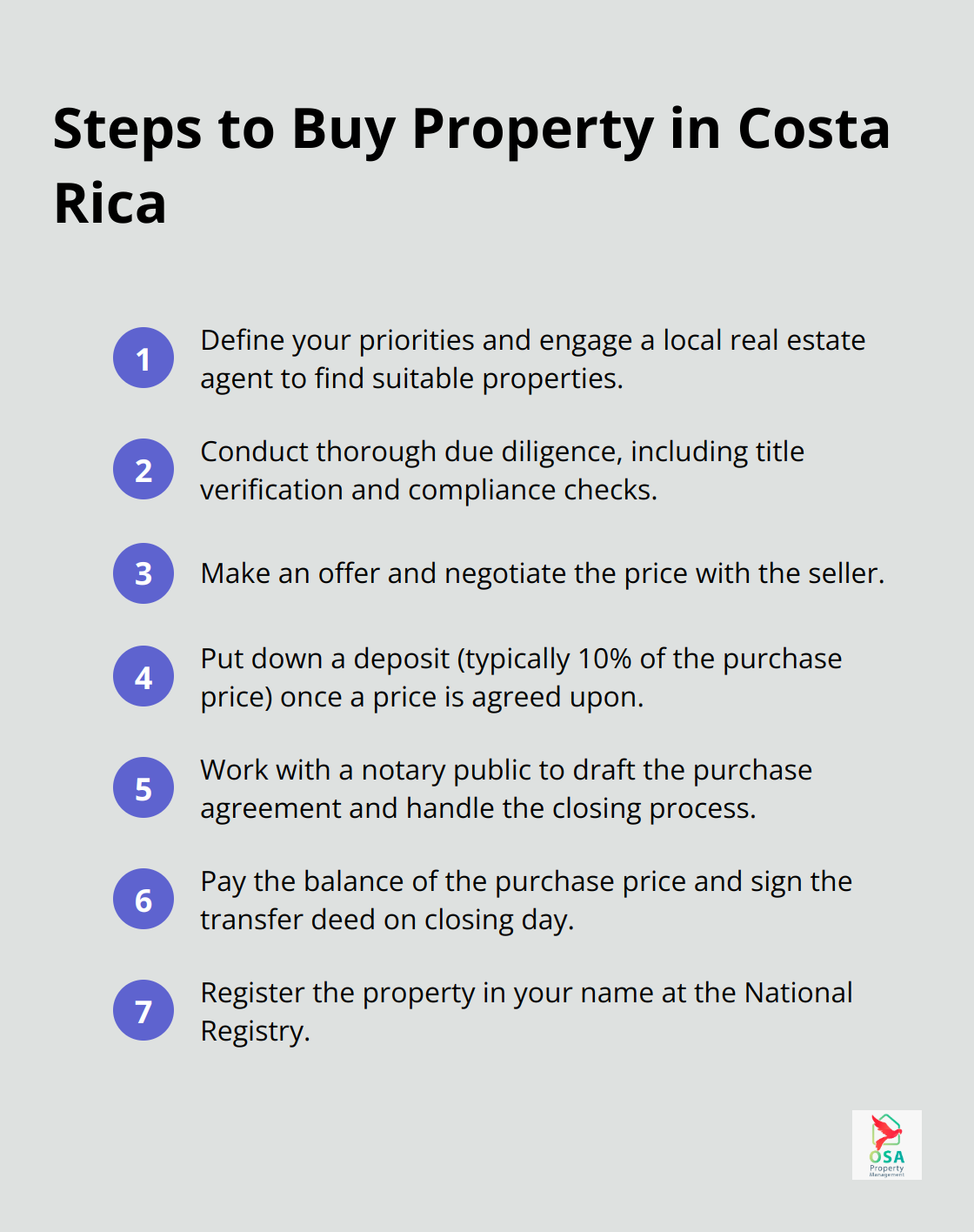
At Osa Property Management, we guide US citizens through the property buying process in Costa Rica. Start by defining your priorities. Do you want a beachfront villa, a mountain retreat, or an urban condo? Costa Rica offers diverse options. Engage a local real estate agent who will have access to exclusive listings and can arrange viewings.
When you inspect properties, focus on the condition of the roof, plumbing, and electrical systems (these can be expensive to repair in Costa Rica). Consider the surrounding area. Is it flood-prone? How's the road access? These factors can impact your property's value and your quality of life.
Conducting Due Diligence
After you find a property you like, conduct thorough due diligence. This includes engaging a reputable real estate agent and a qualified attorney who will verify the title and guide you through legal procedures. This step can prevent future problems.
Ensure the property complies with zoning laws and has all necessary permits. For coastal properties, verify it's not within the Maritime Zone, where foreign ownership faces restrictions.
Making an Offer and Negotiating
When you're ready to make an offer, your real estate agent will help draft a formal offer letter. In Costa Rica, negotiations often start at about 5-10% below the asking price, but this varies depending on the property and market conditions.
Prepare for extended negotiations. The process in Costa Rica can take longer than in the US. Once you agree on a price, you'll typically need to put down a deposit of about 10% of the purchase price.
Closing the Deal
The closing process in Costa Rica differs from the US. A notary public (who is also a lawyer) handles the entire process. They draft the purchase agreement, conduct the closing, and register the property transfer with the National Registry.
On closing day, pay the balance of the purchase price, usually via wire transfer to an escrow account. The seller will hand over the keys, and you'll sign the transfer deed. Your lawyer will then register the property in your name at the National Registry.
Property transfers in Costa Rica incur transfer taxes and fees, which typically range from 4% to 6% of the purchase price. Include these costs in your budget.
As we move forward, let's explore the various financing options available to US citizens purchasing property in Costa Rica, including both local and international alternatives.
Financing Your Costa Rican Property
At Osa Property Management, we have extensive experience in guiding US citizens through property financing in Costa Rica. While cash transactions dominate, several options exist for foreign buyers. Let's explore the various financing avenues available.
Cash Purchases: The Preferred Method
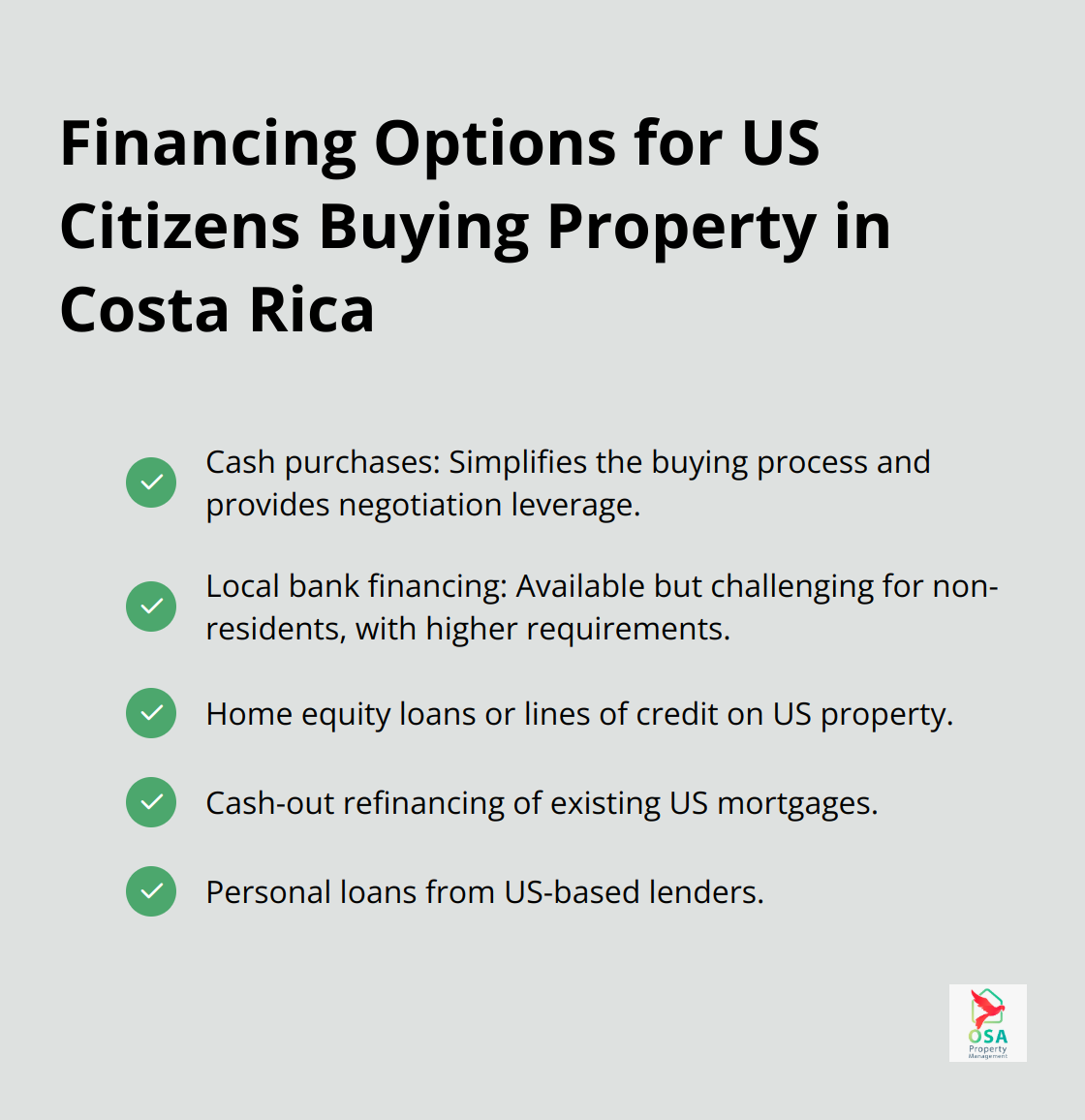
Cash transactions simplify the buying process and often provide negotiation leverage. The prevalence of cash purchases in Costa Rica is significant, although the exact percentage may vary. This high proportion stems partly from the challenges non-residents face in securing local financing.
Local Bank Financing: A Challenging Route
Non-residents can obtain mortgages from Costa Rican banks, but the process presents hurdles. Banks typically require:
- Extensive documentation (income proof, credit history, asset statements)
- Higher interest rates
- Substantial down payments (between 30% and 50% of the purchase price)
Most Costa Rican banks limit financing for non-residents. The approval process often takes considerable time, so patience becomes essential.
International Financing Alternatives: A Viable Option
Many US buyers find advantages in securing financing from their home country. Options include:
- Home equity loans or lines of credit on US property
- Cash-out refinancing of existing US mortgages
- Personal loans from US-based lenders
These alternatives frequently offer more favorable interest rates and terms compared to Costa Rican banks. However, using US-based financing may necessitate additional steps for international fund transfers.
Currency Exchange: A Critical Consideration
Currency exchange rates significantly impact overall costs when financing a Costa Rican property purchase. The Costa Rican colón has shown historical volatility against the US dollar. To minimize exchange rate risks, consider these strategies:
- Time your currency exchanges strategically
- Use specialized forex services for better rates
- Explore forward contracts to lock in exchange rates
Working with a financial advisor familiar with international real estate transactions can help develop a strategy to minimize currency risk. This approach could potentially save thousands of dollars in the long run.
Final Thoughts
US citizens can buy property in Costa Rica without residency requirements, enjoying equal rights with locals. The process involves property search, due diligence, negotiation, and closing, all of which benefit from professional guidance. Financing options include cash purchases, local bank loans, and international alternatives, each with its own considerations.
Osa Property Management has helped many US citizens purchase and manage properties in Costa Rica. We offer comprehensive services tailored to your needs, from property search to ongoing management. Our extensive experience in the local real estate market allows us to provide valuable insights and support throughout the buying process and beyond.
The journey to property ownership in Costa Rica requires careful planning and expert assistance. US citizens who understand the legal requirements and follow proper procedures can successfully turn their dream of owning property in this tropical paradise into reality. With the right support, you can navigate the Costa Rican real estate market with confidence.