

Owning a home in Costa Rica comes with unique challenges that mainland homeowners never face. The combination of intense humidity, salt air, and tropical storms can damage your property faster than you'd expect.
At Osa Property Management, we've seen firsthand how preventive Costa Rica home maintenance saves expat owners thousands of dollars in repairs. This guide covers the essential tasks you need to prioritize to keep your investment protected.
Why Costa Rica's Climate Destroys Homes Faster Than You Think
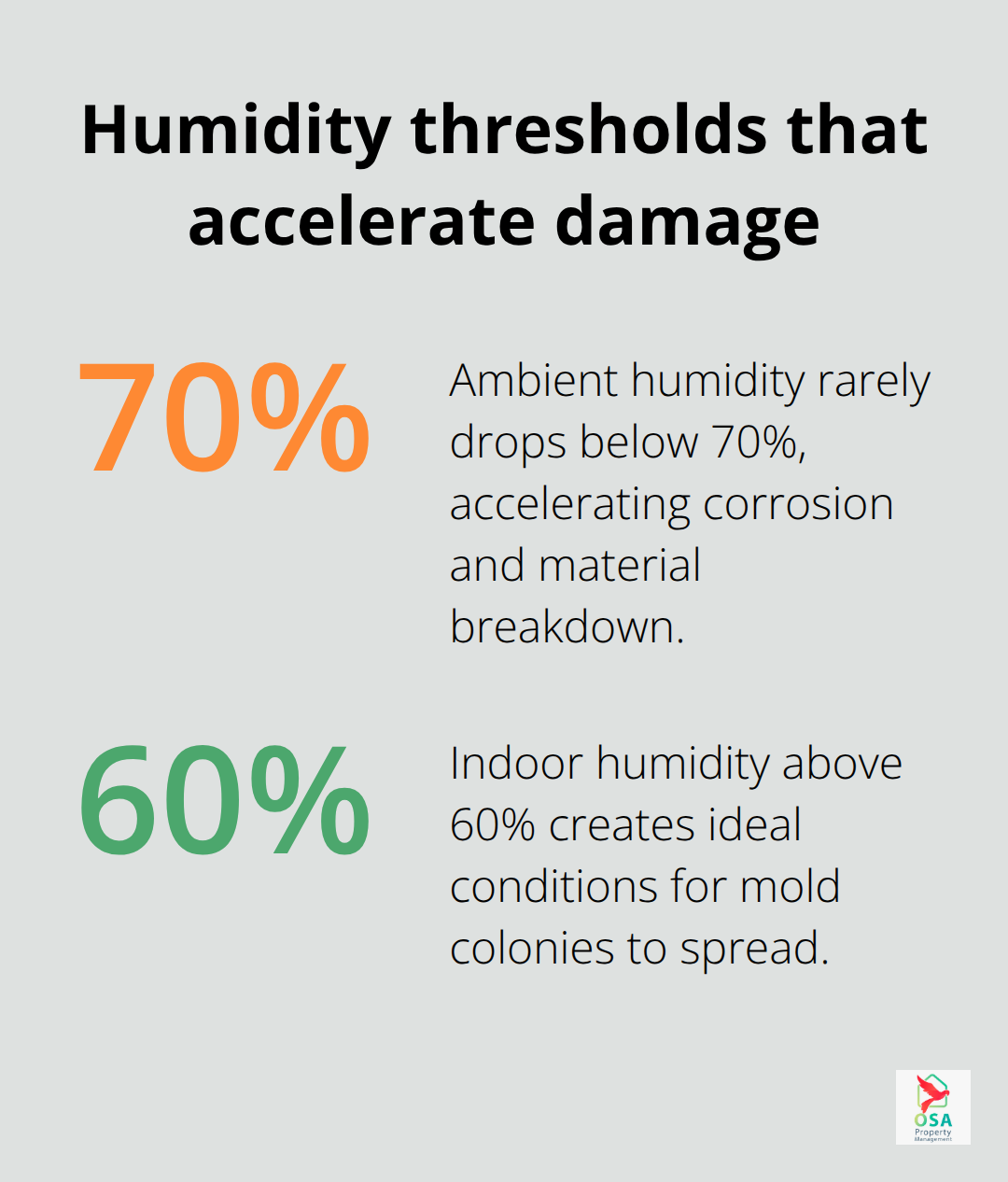
Costa Rica's tropical environment doesn't just speed up wear and tear-it accelerates deterioration at a rate that catches most expat owners completely off guard. The combination of near-equatorial intensity, humidity levels that rarely drop below 70%, and salt air creates conditions where concrete stucco finishes fade and crack within years instead of decades. Galvanized metal roofing components corrode faster than standard warranties anticipate, and rubber roofing washers deteriorate so quickly that leaks develop on maintenance cycles that would work fine in temperate climates. Homes built with materials and methods that performed perfectly in North America or Europe fail structurally within five to seven years because the tropical environment operates by entirely different rules. Coastal properties in Guanacaste face the harshest conditions-salt spray accelerates corrosion on any exposed metal, humidity penetrates materials that should be moisture-resistant, and the relentless UV exposure near the equator breaks down even premium outdoor finishes. Interior spaces aren't safe either; without proper ventilation, humidity climbs past 60% and creates ideal conditions for mold colonies that spread silently behind walls and under floors, causing structural damage you won't see until it's expensive.
Water Infiltration Causes Structural Failure
Water infiltration represents the single largest threat to Costa Rica homes, yet it often remains invisible until serious damage occurs. Foundation settlement, cracks, mold, and wood rot all trace back to inadequate site preparation, insufficient steel reinforcement, or concrete mixed with too much water or contaminated materials. During construction, freshly poured surfaces dry too rapidly under tropical sun and wind, which creates early cracking that compromises durability for the entire lifespan of the home. Inexperienced tradespeople use foreign products with proprietary installation procedures and void warranties without realizing it, and local painting practices that dilute paint or use cheap primers cut the lifespan of exterior protection to two or three years instead of five or more. Architects and engineers must specify products proven to perform in tropical, high-UV environments and require warranties that reflect local installation realities. Proper flashing, waterproofing, drainage systems, and moisture barriers protect interiors and reduce mold risk dramatically, but they only work if someone with local expertise oversees installation and ongoing maintenance.
Mold Establishes Colonies in High Humidity
Mold and pests aren't seasonal problems in Costa Rica-they're year-round realities that worsen without consistent intervention. Mold develops wherever moisture collects-under sinks, in bathroom corners, behind AC units, and in crawl spaces-and it spreads faster in humidity above 60%. Dehumidifiers, strategic air conditioning placement, and ceiling fans that keep air moving prevent mold from establishing colonies that eventually damage drywall, insulation, and structural components. Prevention costs far less than remediation, which can be substantial depending on extent.
Termites and Pests Attack Year-Round
Termites attack wood structures relentlessly, and using termite-treated wood or non-wood alternatives becomes non-negotiable if your home has any wood framing. Pest prevention starts with sealing gaps around windows, doors, and utility penetrations, storing food in airtight containers, and scheduling regular pest control visits every month or six weeks, not annually. Professional pest control costs $30–$60 per visit and prevents infestations that cost thousands to remediate. A well-maintained garden helps deter pests; keep landscaping tidy and remove standing water or overgrowth that attracts bugs.
Understanding these climate-specific threats shapes how you approach maintenance planning. The next section covers the essential maintenance tasks that protect your investment from these accelerated deterioration patterns.
The Four Systems That Fail First in Costa Rica
Roof leaks, plumbing backups, electrical fires, and peeling paint aren't just cosmetic problems in Costa Rica-they're the entry points for the structural damage we discussed in the previous section. These four systems fail faster here than anywhere else because tropical conditions attack them simultaneously. Expat owners who neglect one system watch it fail, water infiltrates, and suddenly the repair bill jumps from $500 to $5,000.
Roof Inspections Must Happen Before Rainy Season Starts
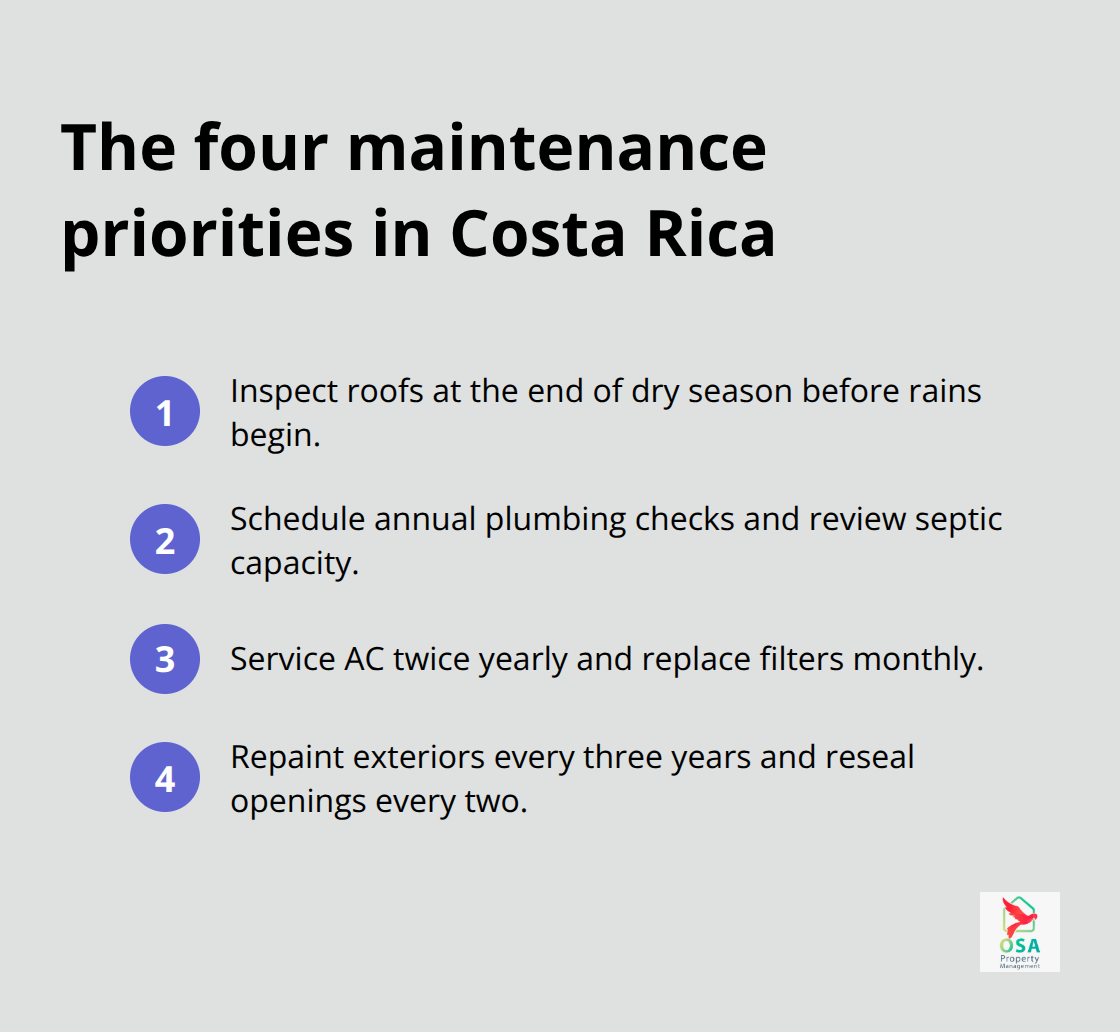
Your roof is the single most important line of defense against water infiltration, yet most expat owners inspect it only after leaks appear inside. The dry season runs December through April, making April the ideal time for roof inspections before the rainy season begins. During the inspection, a qualified local contractor should check for loose or missing tiles, deteriorated rubber washers on fastening screws, damaged flashing around chimneys and vents, and debris accumulation in gutters that blocks water flow. Replacing deteriorated rubber washers costs $400–$800 when done preventively but significantly more when water damage forces structural repairs. Galvanized metal roofing components corrode without protective coatings, so if your roof uses metal materials, apply a protective coating every three to four years-this single step adds years to your roof's lifespan. After heavy rainy seasons, schedule a follow-up inspection to catch damage before the next wet season arrives. Document every inspection with photos and written notes so you can track deterioration patterns over time and budget for repairs accordingly.
Plumbing Systems Need More Attention Than You Expect
Costa Rica's local plumbing fittings often fail sooner than imported brands because manufacturers don't account for water quality issues, pressure fluctuations, and mineral content that vary by region. Schedule annual plumbing inspections to check for slow leaks under sinks, corrosion on visible pipes, and water pressure inconsistencies that signal internal problems. Water tank cleaning should happen every two years if your home relies on a storage tank-sediment and mineral buildup reduce capacity and contaminate water quality. Septic systems must be sized correctly for your occupancy level; undersized tanks cause backups that cost $2,000–$5,000 to remediate. If you're unsure about your septic system's capacity, hire a local engineer to assess it-this costs $300–$500 and prevents catastrophic failures. Keep essential plumbing spares on hand (extra PVC fittings, shutoff valves, and hose clamps) so you can address minor issues immediately without waiting for contractor availability. Test your main water shutoff valve annually to confirm it functions; if it's stuck or corroded, have it replaced before an emergency forces you to pay premium rates for urgent service.
Air Conditioning and Electrical Systems Require Seasonal Maintenance
Air conditioning units work harder in Costa Rica's heat and humidity than in any other climate, which means filter replacement should happen monthly, not quarterly. Dirty filters reduce cooling efficiency by 15–20% and increase electricity costs substantially. Have a technician perform a full AC system inspection twice yearly-before rainy season and before the hottest months-checking refrigerant levels, cleaning condenser coils, and inspecting electrical connections for corrosion. Electrical systems in older homes often don't meet current standards, and the combination of humidity and coastal salt air accelerates corrosion of outdoor wiring and components. Outdoor electrical components should be inspected annually and protected with weatherproof covers. If your home has exposed wiring or outlets near salt spray, upgrade to marine-grade electrical components designed for corrosive environments. Test your electrical panel monthly (flip breakers on and off to confirm they move smoothly); stuck breakers indicate corrosion and require professional replacement before they fail under load.
Exterior Paint and Sealants Fade Faster Than You'd Believe
Concrete stucco finishes fade and crack within two to three years under intense equatorial UV exposure, yet many expat owners wait five or more years between painting. Paint your exterior every three years, not five. Use high-quality primers and full-strength coatings-diluted paint or cheap primers cut longevity in half. Reflective or light-colored exterior paint reduces heat absorption and lowers cooling costs by 10–15%, so the investment pays for itself through energy savings. Inspect exterior sealants around windows, doors, and trim annually; deteriorated sealants allow water infiltration that causes the interior damage we discussed earlier. Reseal these areas every two years as preventive maintenance. Wood trim, railings, and decking require protective coatings every two years in coastal areas and every three years inland; untreated wood deteriorates rapidly and becomes expensive to replace.
These four systems form the foundation of your maintenance strategy, but managing them from abroad introduces a different set of challenges that require planning, documentation, and the right support structure.
How to Manage Maintenance from Thousands of Miles Away
Finding and Vetting Local Contractors
Finding contractors in Costa Rica without local connections feels impossible, which is why most expat owners either overpay by 40–60% or hire someone who cuts corners on critical systems. The reality is that there's no Costa Rica equivalent to the Better Business Bureau, so you can't rely on online ratings or formal credentials the way you would back home. Instead, compile recommendations from multiple sources: your real estate agent, home inspector, lawyer, and local Facebook groups where expats share contractor experiences.
Conduct in-person interviews with your top three candidates before hiring anyone. Ask how many projects they currently manage, how many employees they have, and whether they work with qualified subcontractors for specialized tasks like electrical or plumbing work. Request references and contact past clients or visit completed projects to assess workmanship. Verify that any contractor you hire can obtain permits from the municipal engineering department for larger work-this matters because unpermitted work creates liability and complicates future sales.
When you've selected a contractor, have an attorney draw up a detailed contract that specifies start dates, completion timelines, total project cost, exact materials to be used, and a payment schedule. Never pay more than 10–20% upfront, and always reserve 10–20% of the final payment until you've inspected the completed work and confirmed satisfaction. Require lien releases from all subcontractors and suppliers before releasing final payment-this protects you if someone wasn't paid and files a claim against your property. Treat any scope changes as a separate stage with its own budget; this prevents the common situation where initial estimates balloon because the contractor kept adding extras without documented approval.
Creating a Documentation System That Works Remotely
Documentation and remote monitoring transform maintenance from a guessing game into a predictable system. After each inspection or repair, photograph everything and maintain a written record with dates, contractor names, work performed, and costs paid. This documentation becomes invaluable for tracking deterioration patterns, planning future repairs, and supporting warranty claims.
Create a seasonal maintenance calendar that lists specific tasks for each month. Monthly tasks focus on pest control, landscape maintenance, and deep cleaning of high-traffic areas. During the rainy season (May to November), assign these tasks to either a local caretaker or property manager, not to contractors who only appear when something breaks.
Using Technology to Monitor Your Property
Install remote monitoring technology like security cameras with cloud storage, smart thermostats that track temperature and humidity patterns, and leak detectors under sinks and near water tanks-these systems alert you to problems before they become expensive. Your property manager or caretaker should send you monthly reports with photos, maintenance completed, upcoming needs, and any issues requiring your decision.
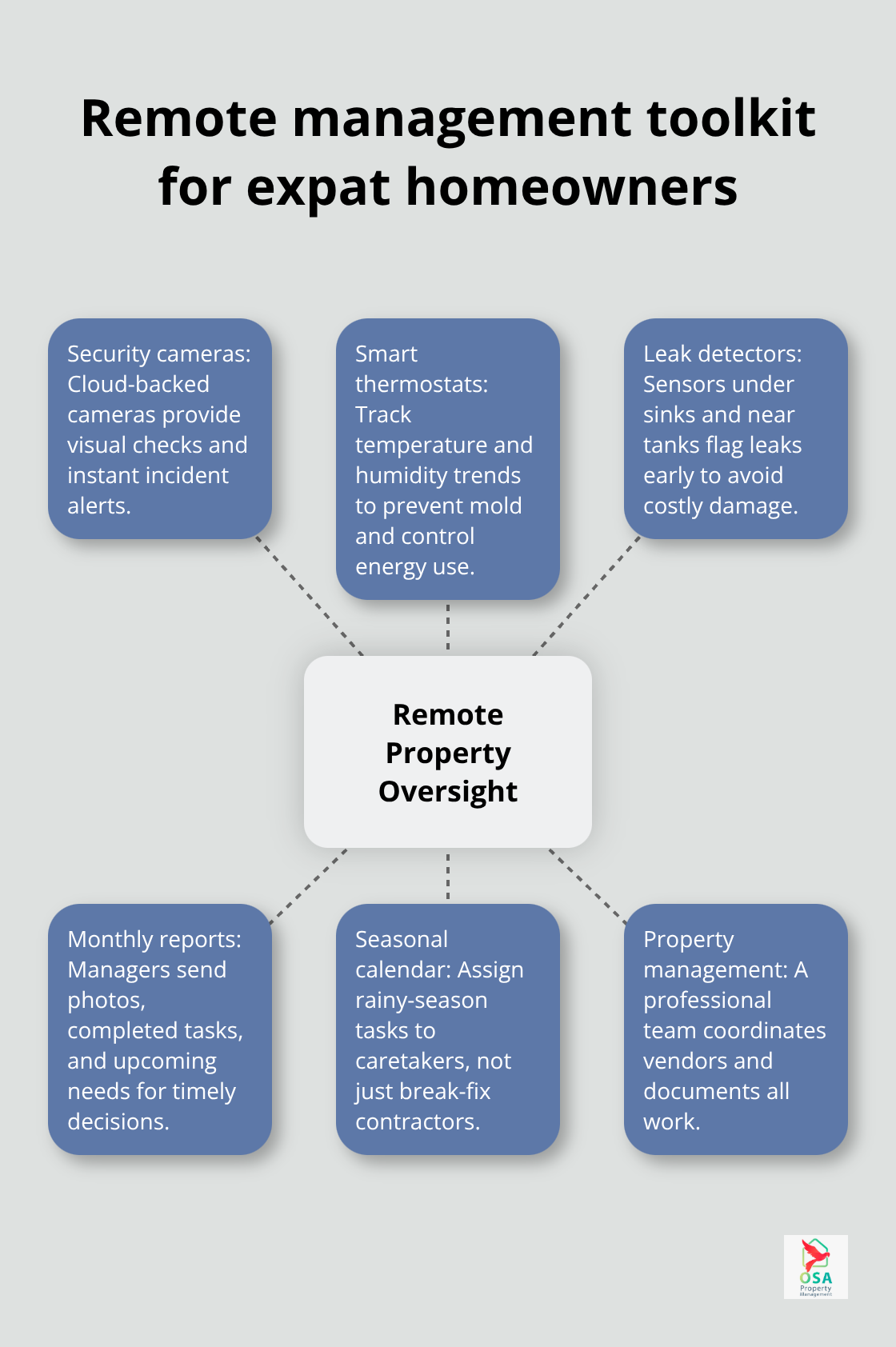
Professional property management services handle this documentation and monitoring across multiple properties, coordinating with trusted contractors and providing homeowners with transparent monthly updates so they understand exactly what's happening to their investment from thousands of miles away.
Final Thoughts
Costa Rica home maintenance demands ongoing attention rather than one-time fixes, and this commitment separates owners who protect their investment from those who watch it deteriorate. The four systems we covered-roof, plumbing, electrical, and exterior finishes-fail faster here than anywhere else because tropical conditions attack them simultaneously, and preventive inspections before rainy season, annual plumbing checks, monthly AC filter replacements, and three-year paint cycles cost far less than emergency repairs that follow neglect. A homeowner who invests $2,000 annually in preventive maintenance avoids the $15,000 foundation repairs, $8,000 roof replacements, and $5,000 septic system failures that catch unprepared owners off guard.
Real cost savings emerge over five to ten years when expat owners document maintenance, track deterioration patterns, and address problems early-these owners spend 40–60% less on repairs than those who react only after damage becomes visible. Preventive care also preserves your property's resale value because buyers in Costa Rica specifically ask about maintenance history and roof condition, understanding the climate's destructive power. Managing this system from abroad requires more than good intentions; you need a partner who understands local contractors, coordinates with trusted service providers, and sends transparent monthly updates so you know exactly what happens to your property.
We at Osa Property Management have spent over 20 years building relationships with reliable contractors across the southern Pacific zone and managing properties in Tarcoles, Jaco, Dominical, Manuel Antonio, Ojochal, Uvita, and Golfito. Our team handles maintenance coordination, documentation, and oversight so homeowners can own property in Costa Rica without the stress of managing contractors from thousands of miles away. Professional property management support transforms Costa Rica home maintenance from a burden into a predictable system that preserves value and generates peace of mind.