
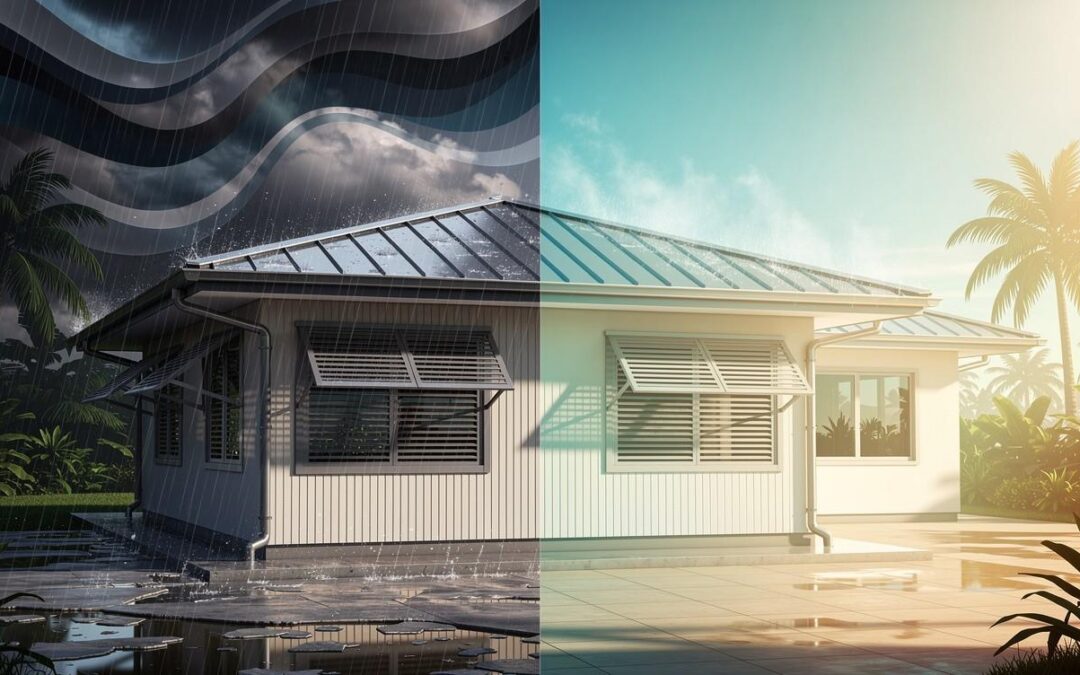
Costa Rica’s tropical climate brings relentless rain, intense heat, and salt air that wear down homes fast. Without proper weatherproofing, you’ll face water damage, structural decay, and expensive repairs that could have been prevented.
At Osa Property Management, we’ve seen firsthand how the right weatherproofing strategies protect properties and save owners thousands in long-term costs. This guide covers the essential solutions and maintenance practices that keep Costa Rica homes standing strong.
Why Your Costa Rica Home Faces Real Weatherproofing Threats
Costa Rica receives between 63 and 200 inches of rainfall annually, with the May through November rainy season delivering intense downpours that expose every structural weakness in a home. During these months, humidity ranges from 40 to 85 percent year-round, meaning mold develops within 24 to 48 hours of moisture exposure. This isn’t theoretical risk-it’s the reality that property owners face every year. A single 1/16-inch gap around a window frame allows moisture intrusion equivalent to leaving that window open about 3 inches. Gutters smaller than 6 inches in capacity cause foundation flooding and basement saturation when blockages occur. Roof leaks from loose tiles, damaged flashing, or failing seals worsen with thermal expansion and contraction as temperatures fluctuate. Water intrusion triggers foundation cracks, wood rot, electrical failures, and mold spread that can render a property uninhabitable. Emergency repairs after the rainy season regularly cost property owners tens of thousands of dollars, which is why proactive maintenance saves thousands annually compared to reactive repairs after damage occurs.
Coastal Properties Face Accelerated Deterioration
If your home sits near the coast, salt-laden winds accelerate corrosion of metal components at a rate that inland properties never experience. Coastal metal roofs need rust-resistant coatings reapplied every 2 to 3 years to prevent deterioration of fasteners and joints. The combination of salt air, moisture, and heat creates conditions where standard materials fail faster than owners anticipate. Mountainous and coastal areas also face landslides and soil erosion, adding serious risk to foundations and drainage systems.
How Weatherproofing Affects Your Bottom Line
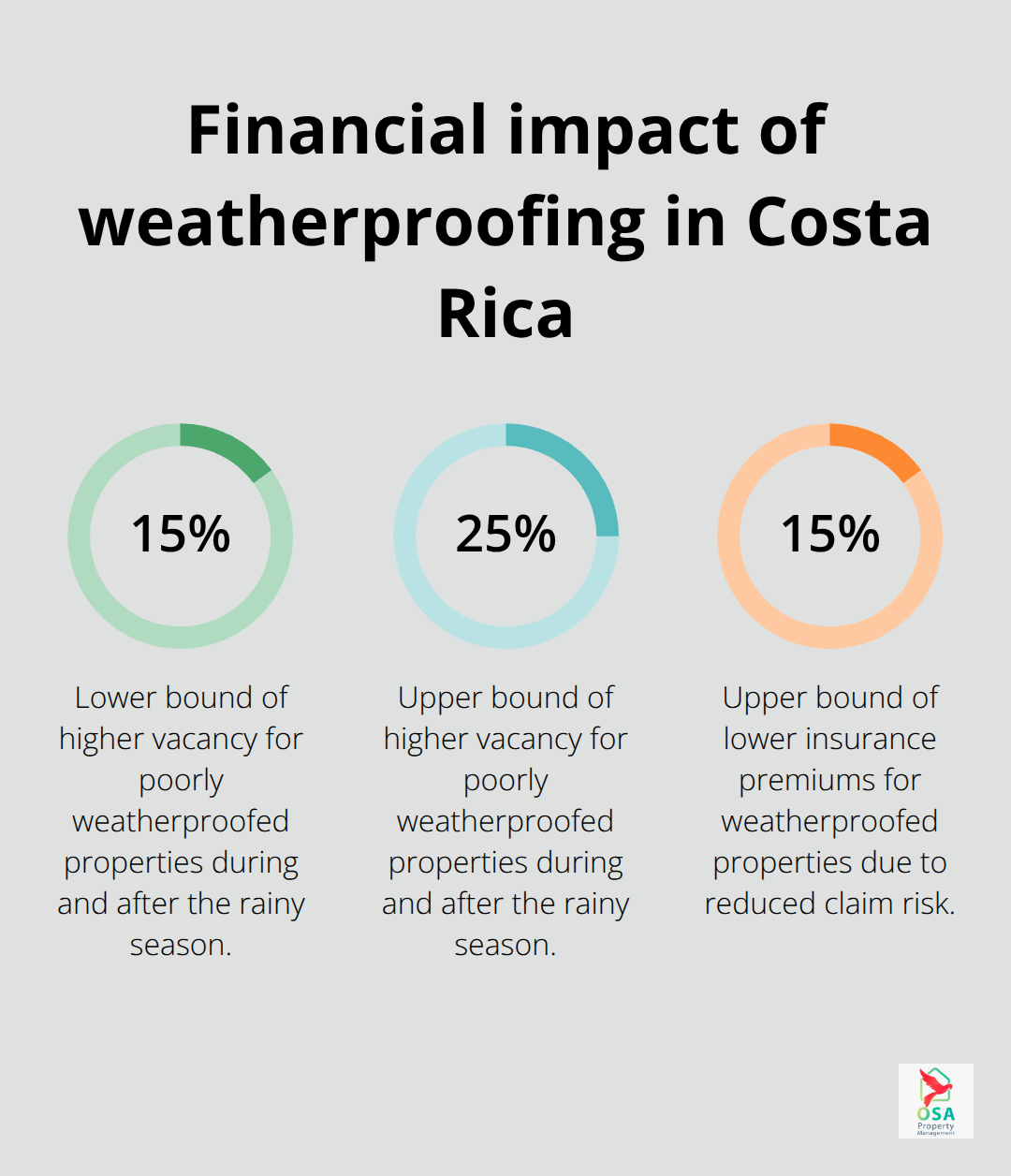
This geographic reality means that weatherproofing isn’t optional in Costa Rica-it’s the difference between a property that generates consistent rental income and one that sits vacant during the rainy season. Poorly weatherproofed properties experience 15 to 25 percent higher vacancy during and after the rainy season, while well-maintained properties command premium rates. Insurance premiums run 10 to 15 percent lower for weatherproofed properties due to lower claim risk, providing immediate financial benefit beyond avoiding repairs. Understanding these threats sets the stage for the specific solutions that protect your investment.
How to Protect Your Roof and Seal Entry Points
Address Roof Vulnerabilities Before Water Enters
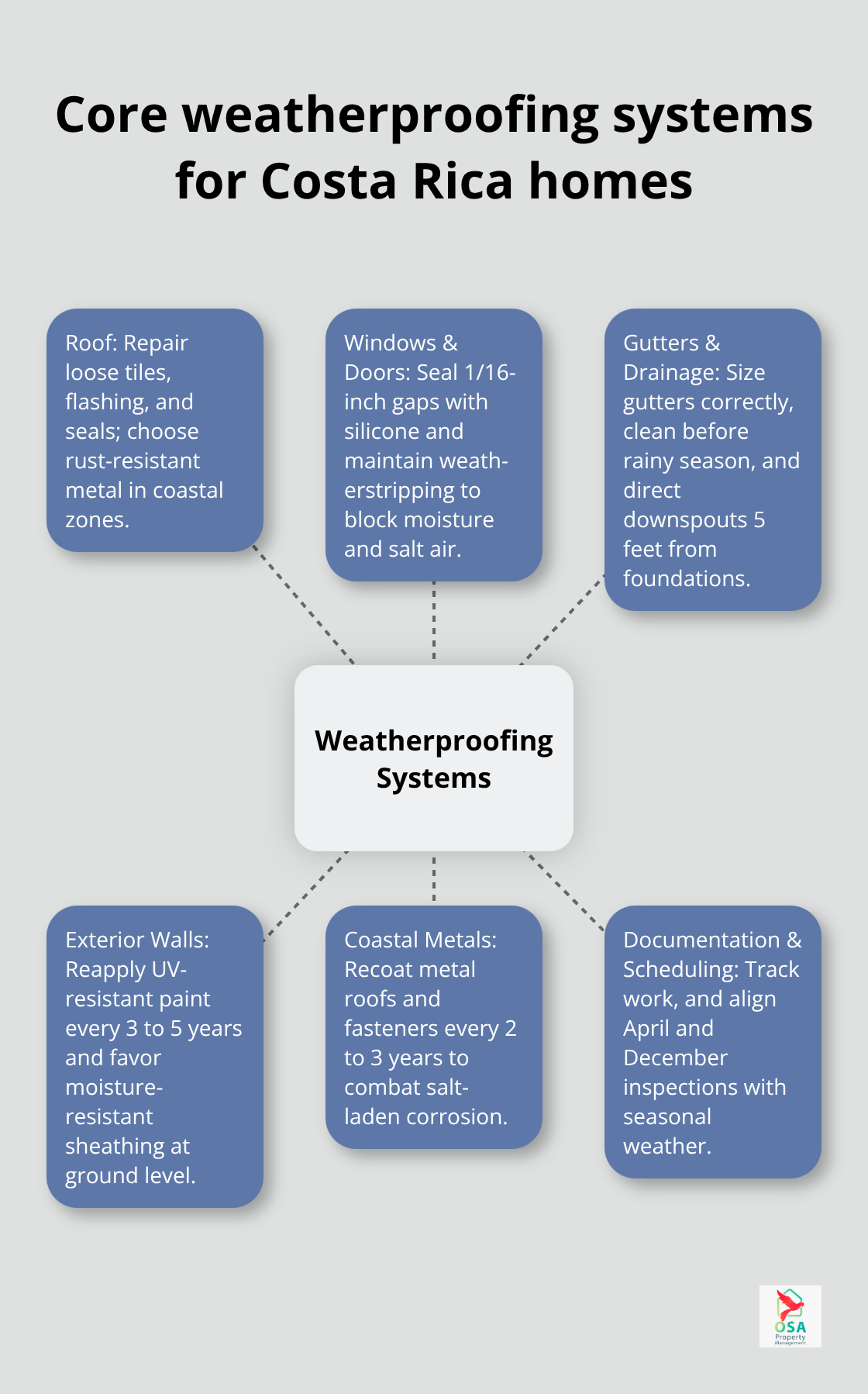
Your roof represents the first line of defense against Costa Rica’s intense rainfall and salt-laden winds. The Costa Rican National Meteorological Institute tracks rainfall patterns showing that May through November brings downpours intense enough to expose every weakness in roofing materials. Loose tiles, damaged flashing, and failing seals worsen as thermal expansion and contraction stress these areas with temperature swings. Metal roofs benefit from naturally rust-resistant materials like aluminum, stainless steel, or copper to prevent fastener and joint deterioration from coastal salt air. Tile roofs demand immediate replacement of cracked or missing tiles before they expose the substrate beneath. Hurricane straps installed on tile roofs markedly improve wind resistance during storm season.
Seal Windows and Doors to Stop Moisture Intrusion
Windows and doors leak because gaps as small as 1/16 inch allow moisture intrusion equivalent to leaving a window open 3 inches. Silicone caulk seals these gaps effectively, while weatherstripping blocks both moisture and salt air from entering your home. In coastal areas, impact-resistant windows and doors provide superior protection against salt spray and wind-driven rain. Test storm shutters monthly to verify they deploy properly when needed. These specific actions address the exact failure points where water enters homes most frequently.
Install Gutters and Foundation Drainage Systems
Gutters and drainage systems work together to direct water away from your structure, yet most property owners neglect them until damage appears. Install gutters with proper sizing and capacity, then clean them before each rainy season to prevent blockages that cause foundation flooding and basement saturation. Downspouts should direct water at least 5 feet away from the foundation perimeter. French drains, exterior waterproofing membranes, and proper grading sloped away from the building form a complete drainage strategy that prevents foundation cracks and wood rot.
Protect Exterior Walls From Sun and Salt Damage
Exterior walls need UV-resistant paint reapplied every 3 to 5 years in coastal areas to combat sun exposure and salt air damage. For ground-level protection in humid climates, moisture-resistant materials like DensGlass sheathing improve protection against coastal humidity and dampness better than standard materials. Investing about 2,000 to 3,000 dollars annually in preventive weatherproofing yields greater returns than losing two to four weeks of rental income during the rainy season, especially when coordinated with trusted local contractors who understand regional microclimates and specific vulnerabilities.
These roof, window, door, and drainage solutions form the foundation of weatherproofing, but they work best when paired with consistent maintenance schedules that catch problems before they escalate into costly repairs.
Keep Your Weatherproofing Systems Working Year-Round
Establish a Twice-Yearly Inspection Schedule
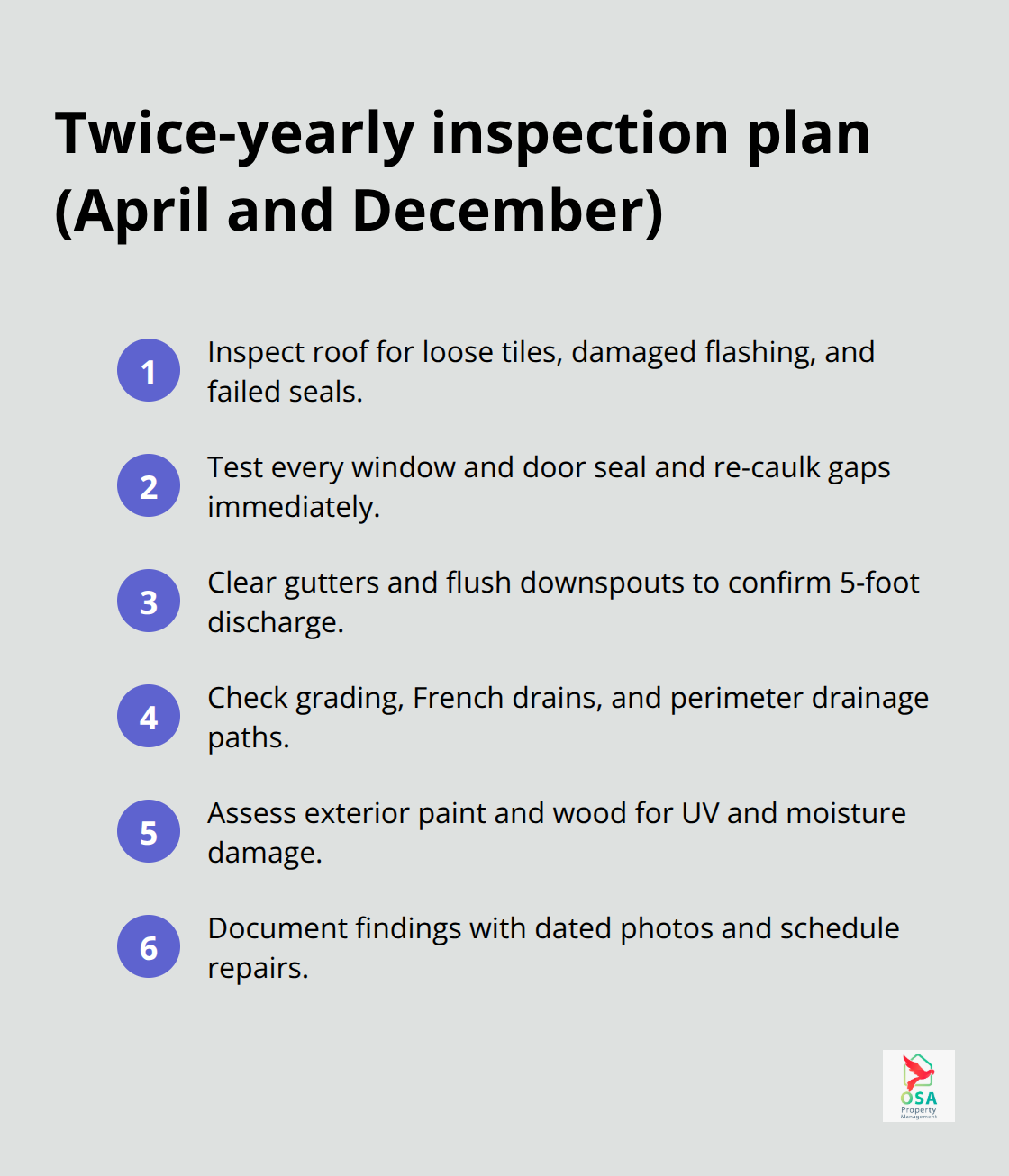
Weatherproofing only protects your property if you maintain it consistently. Owners who inspect their homes twice yearly-before and after the rainy season-catch problems before they become expensive. Schedule your first inspection in April, before May’s downpours arrive, to address roof damage, gutter blockages, and seal failures. Your second inspection happens in December, after the rainy season ends, to assess what weather stress occurred and plan repairs during the dry season when contractors respond faster and materials stay dry during installation.
Check Roofs, Windows, and Doors for Vulnerabilities
During these inspections, walk the roof perimeter and look for loose tiles, missing sections, or deteriorated flashing. Test every window and door seal by running your hand around the frame-if you feel air movement or moisture, that gap needs silicone caulk applied immediately. These specific checks address the exact failure points where water enters homes most frequently and prevent the foundation cracks and wood rot that follow moisture intrusion.
Clean Gutters and Verify Drainage Flow
Gutter cleaning before the rainy season prevents the foundation flooding and basement saturation that occurs when downpours overwhelm blocked drainage systems. Clear gutters by hand or with a pressure washer, then flush the system with water to verify downspouts direct flow at least 5 feet from your foundation. This simple task stops water from pooling near your structure and protects the drainage systems you’ve invested in.
Protect Metal and Wood Surfaces From Deterioration
Metal surfaces deteriorate fastest in Costa Rica’s salt-air environment, so coastal properties need rust-resistant coatings reapplied regularly on metal roofs, railings, and fasteners to prevent corrosion that weakens structural integrity. Wood surfaces demand equal attention-inspect exterior wood trim, fascia, and deck boards for soft spots indicating rot, then sand and repaint with UV-resistant finishes every 3 to 5 years to combat sun exposure and salt damage. For ground-level protection in humid climates, moisture-resistant materials like DensGlass sheathing should be inspected for water stains or swelling that signal moisture intrusion.
Document Maintenance for Insurance and Property Value
Document every inspection, repair, and coating application with photos and dates so you have proof of maintenance for insurance claims and property valuations. This maintenance log becomes invaluable when selling or refinancing your home, as it demonstrates the property’s protected condition and your commitment to preservation. Properties that maintain detailed records and consistent weatherproofing schedules command premium rental rates and experience significantly lower vacancy during and after rainy seasons compared to neglected properties.
Final Thoughts
Costa Rica home weatherproofing protects your investment and keeps rental income flowing year-round because it addresses the real threats your property faces: intense rainfall that damages foundations within days, salt air that corrodes metal components, and humidity that spreads mold faster than most owners anticipate. Properties that maintain weatherproofing systems experience 15 to 25 percent lower vacancy during the rainy season and command premium rental rates compared to neglected homes. Insurance premiums run 10 to 15 percent lower for weatherproofed properties, and investing 2,000 to 3,000 dollars annually in preventive maintenance yields far greater returns than losing weeks of bookings or facing emergency repairs that cost tens of thousands of dollars.
If you manage the property yourself, start with an April inspection before the rainy season arrives, then schedule your December follow-up to assess weather damage and plan dry-season repairs. If managing a Costa Rica home remotely feels overwhelming, professional property management handles these inspections, coordinates trusted local contractors, and maintains detailed records that protect your property value. We at Osa Property Management provide property management services across Tarcoles, Jaco, Dominical, Manuel Antonio, Ojochal, Uvita, and Golfito, with over 20 years of experience managing Costa Rica properties and securing quality renters.
The weatherproofing work cannot wait-start protecting your home today.