

A well-maintained property in Costa Rica isn’t just about aesthetics-it’s about protecting your investment from the elements. The tropical climate here works fast, turning minor issues into expensive problems if left unchecked.
At Osa Property Management, we’ve seen firsthand how Costa Rica property maintenance directly impacts resale value and buyer confidence. This guide covers what you need to know to keep your home market-ready.
Why Maintenance Protects Your Investment
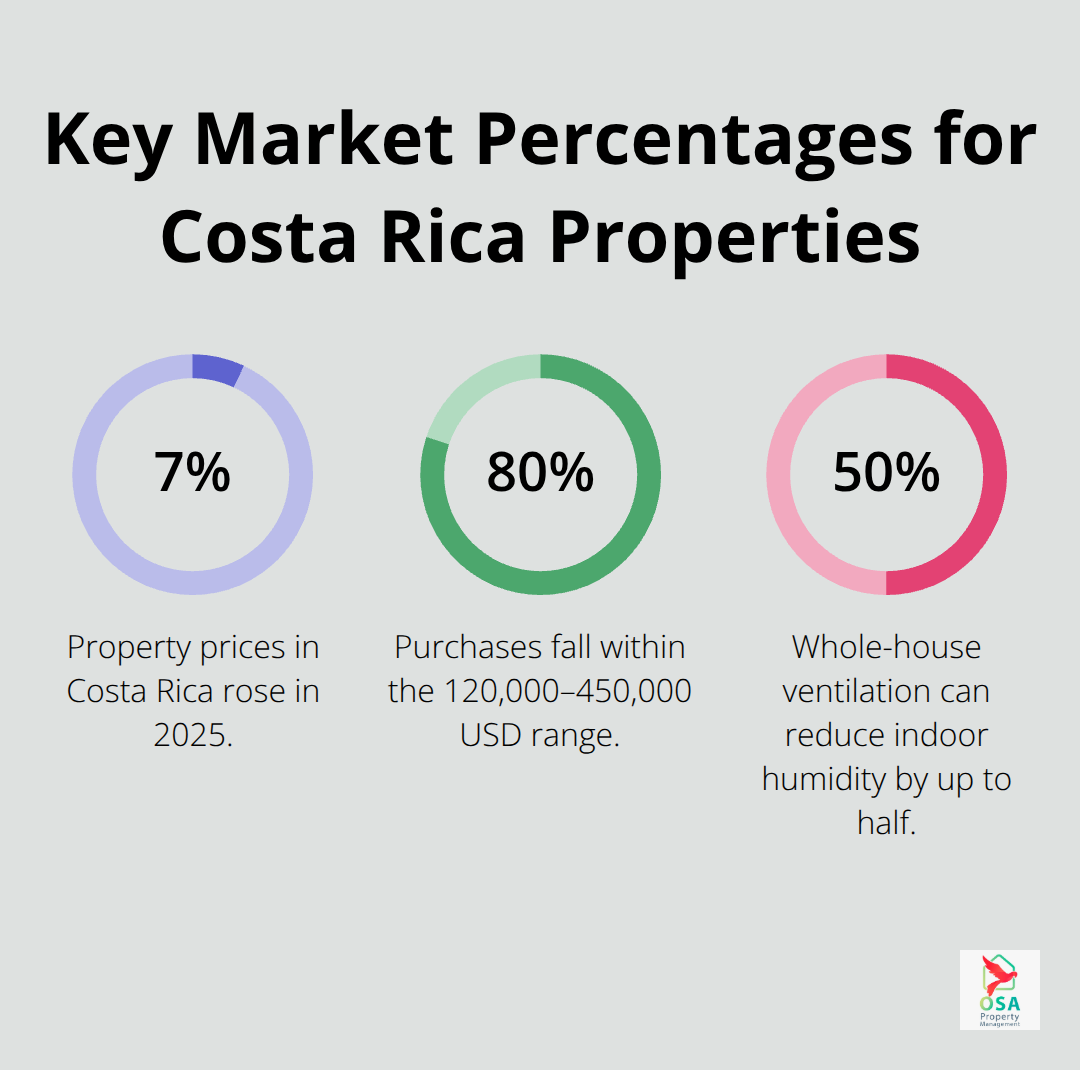
Property prices in Costa Rica rose 7% in 2025, and well-maintained homes capture this appreciation while neglected ones stagnate or lose value. Owners who delay preventative maintenance lose thousands in resale negotiations. A property that shows signs of mold, rust, or water damage triggers buyer concerns about hidden structural problems, forcing price reductions of 10–20%. Condos in Costa Rica average around 2,600 USD per square meter compared to detached houses at roughly 1,500 USD per square meter, which means condo buyers especially scrutinize common areas and building envelope condition. Prime Guanacaste beach properties reach 3,800 USD per square meter or higher, making salt spray corrosion and humidity damage expensive liabilities if left unaddressed. The math is straightforward: a 300,000 USD property losing 15% value due to neglect costs you 45,000 USD. Coastal properties in Nosara, Tamarindo, and Jaco face the harshest conditions, with humidity typically ranging from 40–85%, accelerating mold growth and metal corrosion that buyers recognize immediately.
Tropical Climate Damage Happens Fast
Neglect in Costa Rica’s climate accelerates problems at an alarming rate. The rainy season from May through November delivers daily downpours that stress gutters, drains, and foundations; if water channels toward instead of away from your home, foundation cracks and flooding become expensive repair jobs. Metal components without corrosion-resistant coatings deteriorate visibly within months in coastal zones. Mold thrives in high humidity and spreads across walls, ceilings, and wood framing where buyers spot it during inspections and immediately lower offers. A single rainy season of ignored roof maintenance leads to interior water damage that costs 8,000–15,000 USD to repair. Buyers expect properties to have robust gutter systems, waterproof sealants, and evidence of regular inspections.
Market Expectations Rise with Infrastructure Growth
Infrastructure upgrades like Circunvalacion Norte and Route 32 reprice nearby neighborhoods upward by 10–20%, but only for properties that maintain competitive standards. About 80% of Costa Rica property purchases fall between 120,000 and 450,000 USD, and in this mid-market segment, buyers are extremely price-sensitive to visible maintenance issues because they lack the capital to absorb repair costs.
Properties near completed infrastructure projects command premiums that owners lose when maintenance lags behind neighborhood improvements. Keeping your home market-ready means aligning upkeep with rising neighborhood standards, not just meeting baseline expectations.
What Makes Humidity and Water Damage So Destructive in Costa Rica
Humidity Creates Rapid Mold Growth
Humidity in Costa Rica ranges from 40% to 85% depending on location and season, and this moisture level creates conditions where mold spreads aggressively across walls, ceilings, and wood framing within weeks if ventilation fails. Coastal properties face the worst exposure because salt air accelerates corrosion on metal fixtures, gutters, and roof components simultaneously, meaning a single rainy season without maintenance compounds multiple damage types at once. Dehumidifiers extract up to 50 pints of water per day in damp areas, and whole-house ventilation systems reduce indoor humidity by up to 50%, making these investments practical rather than optional for tropical properties.
Install ceiling fans in every room and use bathroom exhaust fans with outdoor venting to maintain airflow; moisture absorbers in closets and enclosed spaces prevent hidden mold growth where buyers later discover problems during inspections. When renovating, choose mold-resistant materials and anti-microbial paints that inhibit mold growth for up to five years, and clean surfaces regularly with vinegar-and-water solutions to prevent spore spread.
Water Damage Escalates During Rainy Seasons
The rainy season from May through November delivers daily downpours that stress drainage systems; water that pools near foundations or channels toward rather than away from your home triggers foundation cracks and flooding that costs 8,000 to 15,000 USD to repair. Gutters and drains demand quarterly cleaning to prevent blockages that force water toward foundations instead of away from them; this single maintenance task prevents thousands in foundation damage. Roof inspections during the dry season examine for previous season damage, replace damaged tiles, and apply waterproof sealant to prevent water intrusion during the next rainy cycle.
Metal Components Deteriorate Quickly in Coastal Zones
Metal roofs require immediate rust treatment using a rust converter followed by protective coating to slow corrosion, and exterior repainting with high-quality UV-resistant paints should occur every 2 to 3 years depending on sun exposure. Coastal properties in Nosara, Tamarindo, and Jaco require corrosion-resistant hardware throughout and frequent inspections for salt damage to structural components because standard materials deteriorate visibly within months in these zones. Seal exterior entry points with silicone caulk around pipes and utility penetrations to create a pest-proof and moisture-resistant barrier that also reduces corrosion inside walls.
Building a Maintenance Reserve Protects Your Bottom Line
A maintenance reserve of 1% to 2% of your property value annually covers wear patterns before they escalate into buyer-visible damage that triggers price negotiations. This proactive approach prevents the costly cycle where small issues compound into major repairs that reduce your home’s market appeal. With infrastructure upgrades reshaping neighborhood values across Costa Rica, properties that maintain consistent upkeep capture appreciation premiums while those with deferred maintenance fall behind-making your next maintenance decision a financial one as much as a practical one.
How to Build a Maintenance Schedule That Actually Works
Align Inspections with Costa Rica’s Seasonal Rhythm
Seasonal inspections in Costa Rica follow a strict rhythm dictated by the rainy and dry seasons, not arbitrary calendar dates. The dry season from December through April is your inspection window for exterior damage accumulated during the previous rainy cycle; examine roofs for missing tiles, gutters for blockages, and metal components for rust that needs immediate treatment. Schedule these dry-season inspections in January or February when weather permits access to roofs and elevated areas without safety risks.

During the rainy season from May through November, conduct monthly gutter and drain checks because blockages form rapidly when daily downpours overwhelm drainage systems, and a single clogged gutter forces water toward your foundation instead of away from it. Roof inspections during the dry season replace damaged tiles and apply waterproof sealant before the next rainy cycle begins; this prevents interior water damage that costs significant expense to repair.
Establish Quarterly and Annual Inspection Cycles
Quarterly pest inspections with a licensed contractor catch termite activity before it damages structural framing, and these inspections cost roughly 150 to 300 USD per visit but prevent thousands in wood damage. Metal roofs require immediate rust treatment with a rust converter followed by protective coating, and exterior repainting with UV-resistant paints should occur every 2 to 3 years depending on sun exposure. Humidity levels between 40% to 85% mean dehumidifiers require monthly filter changes and professional HVAC service twice yearly; these systems extract substantial amounts of water daily in damp areas, making them essential rather than optional for properties in coastal zones like Nosara, Tamarindo, and Jaco where salt air accelerates corrosion on metal fixtures and gutters simultaneously.
Find Trustworthy Local Contractors
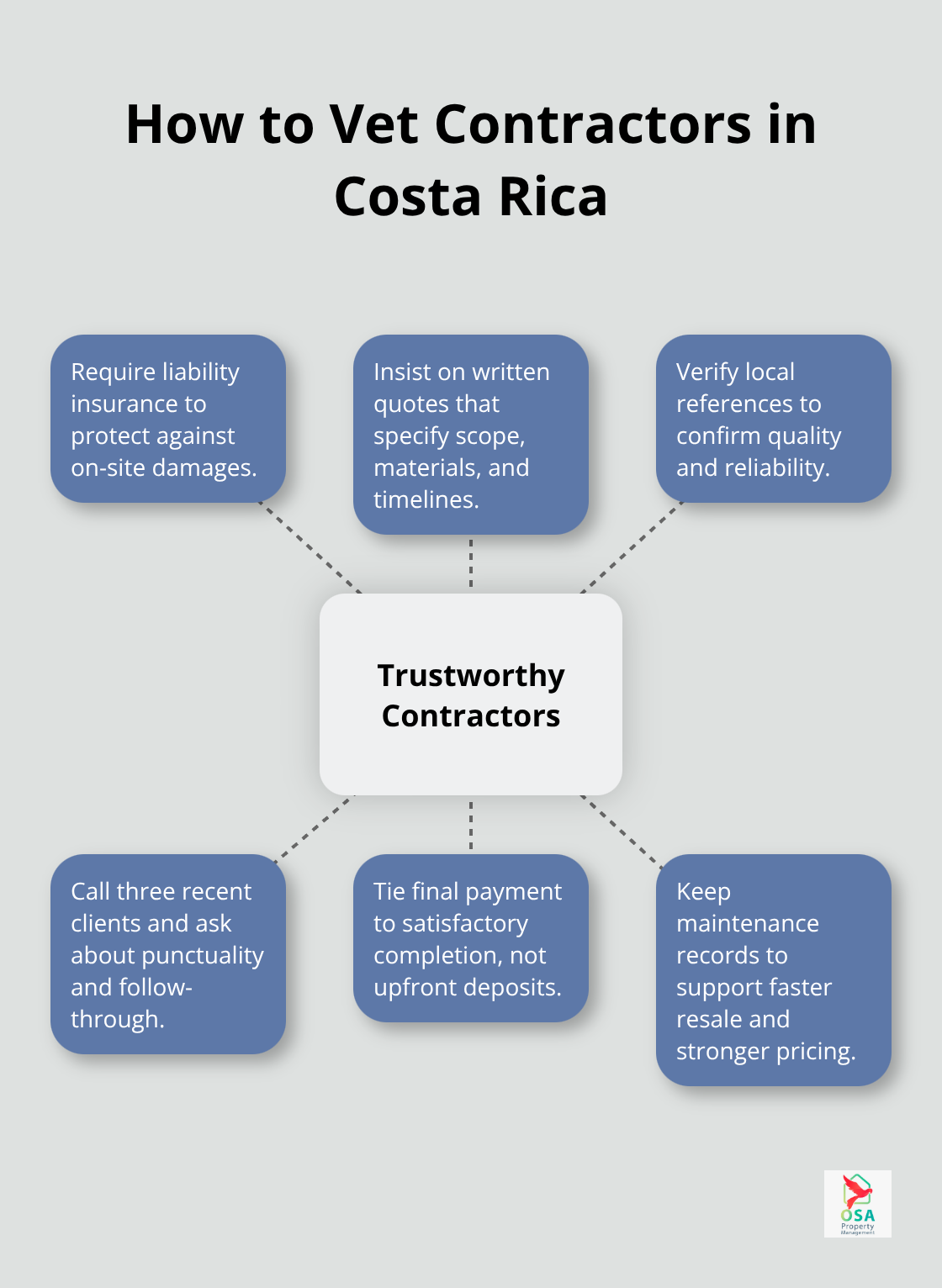
Finding trustworthy local contractors matters more in Costa Rica than anywhere else because quality varies dramatically and language barriers create misunderstandings that lead to incomplete work. Contractors who carry liability insurance, provide written quotes before starting work, and have verifiable references from other property owners in your area prove their reliability; ask contractors directly for three recent client phone numbers and call them about their experience. General labor rates in Costa Rica average around 3.50 USD per hour, meaning a house cleaner charges roughly 35 USD per visit and landscaping services run 50 to 100 USD monthly depending on yard size and complexity.
Pool maintenance and cleaning costs about 25 to 35 USD weekly including chemicals, and these recurring costs compound if you hire unreliable contractors who skip treatments and create expensive algae problems.
Structure Contracts to Protect Your Investment
Request detailed contracts that specify what work gets completed, timelines for completion, and payment schedules that tie final payment to satisfactory completion rather than upfront deposits. This approach protects you from contractors who demand full payment upfront and disappear before finishing the job. Budget reserves of 1% to 2% of your property value annually cover routine maintenance before small issues escalate into buyer-visible damage; for a 300,000 USD property, this means setting aside 3,000 to 6,000 USD yearly for maintenance. This reserve prevents the cycle where deferred maintenance forces you into emergency repairs at inflated contractor rates when problems become visible during buyer inspections. Properties with documented maintenance records sell faster and command higher prices because buyers gain confidence that structural systems are functioning properly.
Final Thoughts
Costa Rica property maintenance requires consistency, not heroic efforts, and owners who treat upkeep as an investment rather than an expense command premium prices and attract serious buyers. A 1% to 2% annual maintenance reserve prevents the costly cycle where small issues become structural problems that trigger 10–20% price reductions during negotiations. Properties near infrastructure upgrades like Circunvalacion Norte and Route 32 capture appreciation premiums only when upkeep matches rising neighborhood standards, and documented maintenance records prove to buyers that your home’s systems function properly, accelerating sales and supporting higher offers.
Professional property management transforms Costa Rica property maintenance from a burden into a predictable system that keeps properties market-ready year-round. We at Osa Property Management coordinate seasonal inspections, manage contractor relationships, and maintain records that support faster sales and stronger pricing through systematic oversight of quarterly pest inspections, roof evaluations during dry seasons, gutter cleaning before rainy cycles, and HVAC service schedules that prevent the humidity and mold problems that destroy buyer confidence. Our team works with trusted local contractors across the southern Pacific zone to handle the technical details that most owners cannot replicate alone.
Your situation determines your next step: remote owners or those lacking time for seasonal inspections benefit from professional property management that eliminates guesswork and protects investments through systematic upkeep, while direct managers should establish a maintenance calendar aligned with Costa Rica’s rainy and dry seasons, set aside annual reserves, and build relationships with licensed contractors who provide written quotes and carry liability insurance. Either approach protects your investment, and Osa Property Management stands ready to discuss how professional oversight maximizes your return.