

Costa Rica’s tropical climate is beautiful but brutal on properties. Salt air, intense rainfall, and humidity create maintenance challenges that most owners underestimate.
At Osa Property Management, we’ve seen firsthand how preventive care separates properties that appreciate from those that deteriorate. This guide covers the practical steps that protect your investment.
Regular Maintenance Prevents Costly Repairs
Schedule Roof Inspections Twice Yearly
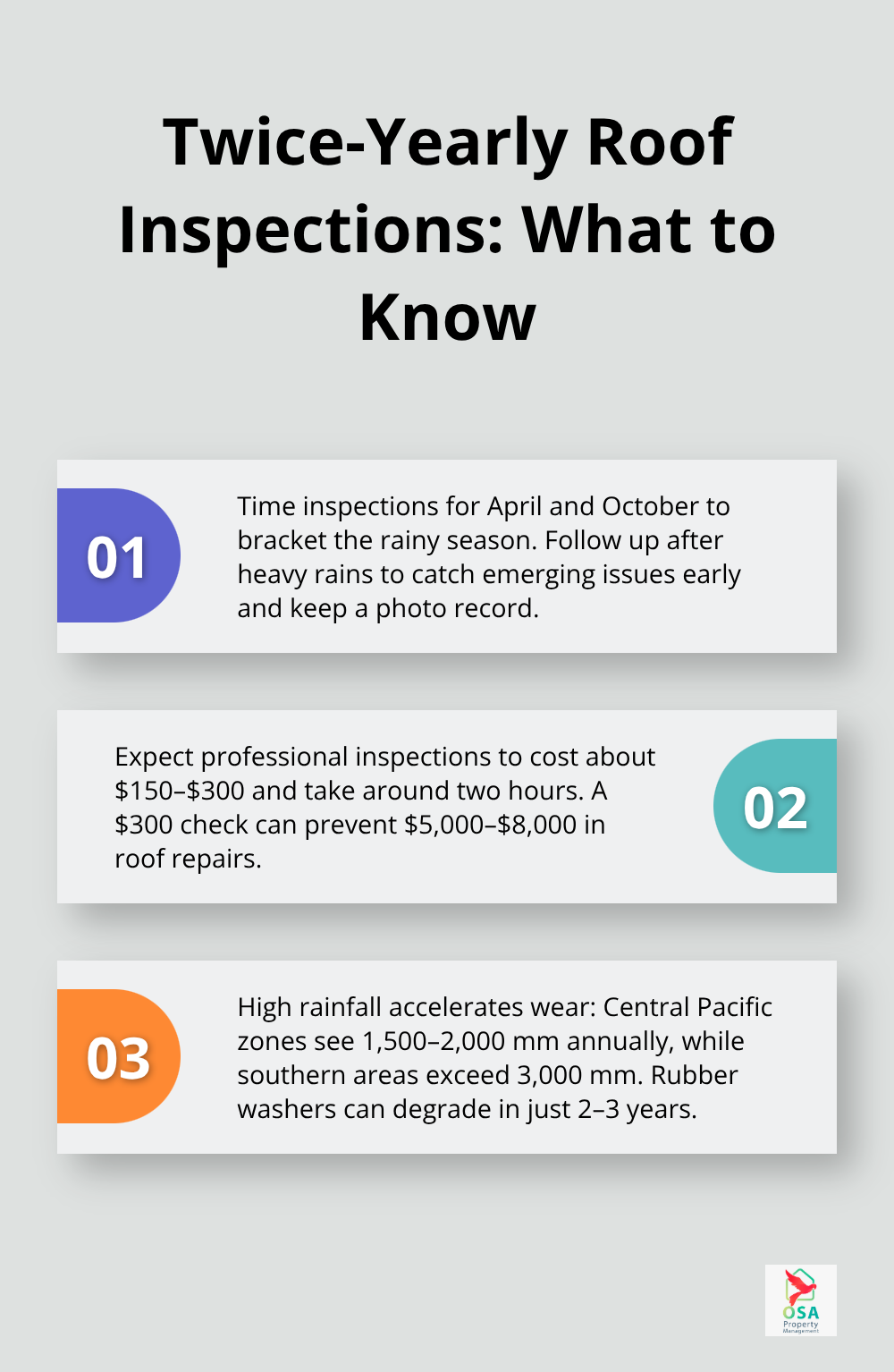
Roof inspections form the foundation of smart property upkeep in Costa Rica, and you must conduct them twice yearly. Schedule your first inspection in April, before the rainy season hits, and another in October during mid-season to catch damage early. Professional inspections cost about $150–$300 and take two hours, but a $300 investment prevents repairs that cost $5,000–$8,000. Central Pacific zones receive 1,500–2,000 mm of annual rainfall, while southern areas near Quepos and Manuel Antonio exceed 3,000 mm, accelerating wear on rubber washers that degrade in just 2–3 years. After heavy rains, perform a follow-up inspection and document findings with photos to track damage and budget repairs accurately.
Galvanized metal roof components corrode under salt spray, so apply protective coatings every 3–4 years. Uncoated metal fails in 5–7 years, while coated systems last significantly longer. Quarterly gutter cleaning maintains water flow during tropical downpours and prevents water pooling that leads to structural rot.
Address Plumbing Failures Before They Escalate
Plumbing failures rank among the three fastest-dragging maintenance costs in Costa Rica properties. Mineral-rich water clogs pipes and corrodes fittings, so hire a licensed plumber to inspect annually and flush mineral buildup. Septic tanks must match actual occupancy; undersized tanks cause backups with remediation costs of $2,000–$5,000. Have a local engineer assess septic capacity before issues start ($300–$500), then pump tanks every 2–3 years for $300–$500 per service.
Install water leak sensors in kitchens, bathrooms, and under sinks ($50–$100 each) to detect hidden leaks before they cause thousands in damage. Coastal properties face electrical hazards from salt spray corrosion affecting breakers and panels; test breakers monthly and replace failing units before emergencies occur. Damaged breakers during storms lead to power outages or fires, so preventive replacement is non-negotiable.
Protect Foundations and Drainage in High-Moisture Zones
Costa Rica’s humidity averages about 80% year-round, accelerating moisture penetration and structural deterioration. Drainage systems your first line of defense can make your home more energy-efficient, less costly to heat and cool, more comfortable, and prevent mold growth. Monitor foundation areas for water pooling after rain, direct downspouts at least 6 feet from the structure, and clear debris from drainage channels monthly. Exterior sealants around windows, doors, and trim degrade under tropical UV within 2 years, so inspect annually and reseal every two years to prevent water infiltration that compromises structural integrity.
These preventive steps form the backbone of property protection, but they work best when coordinated with professional oversight and trusted local contractors who understand Costa Rica’s specific climate challenges.
Battling Humidity, Salt Air, and Pests
Control Indoor Humidity to Stop Mold Before It Starts
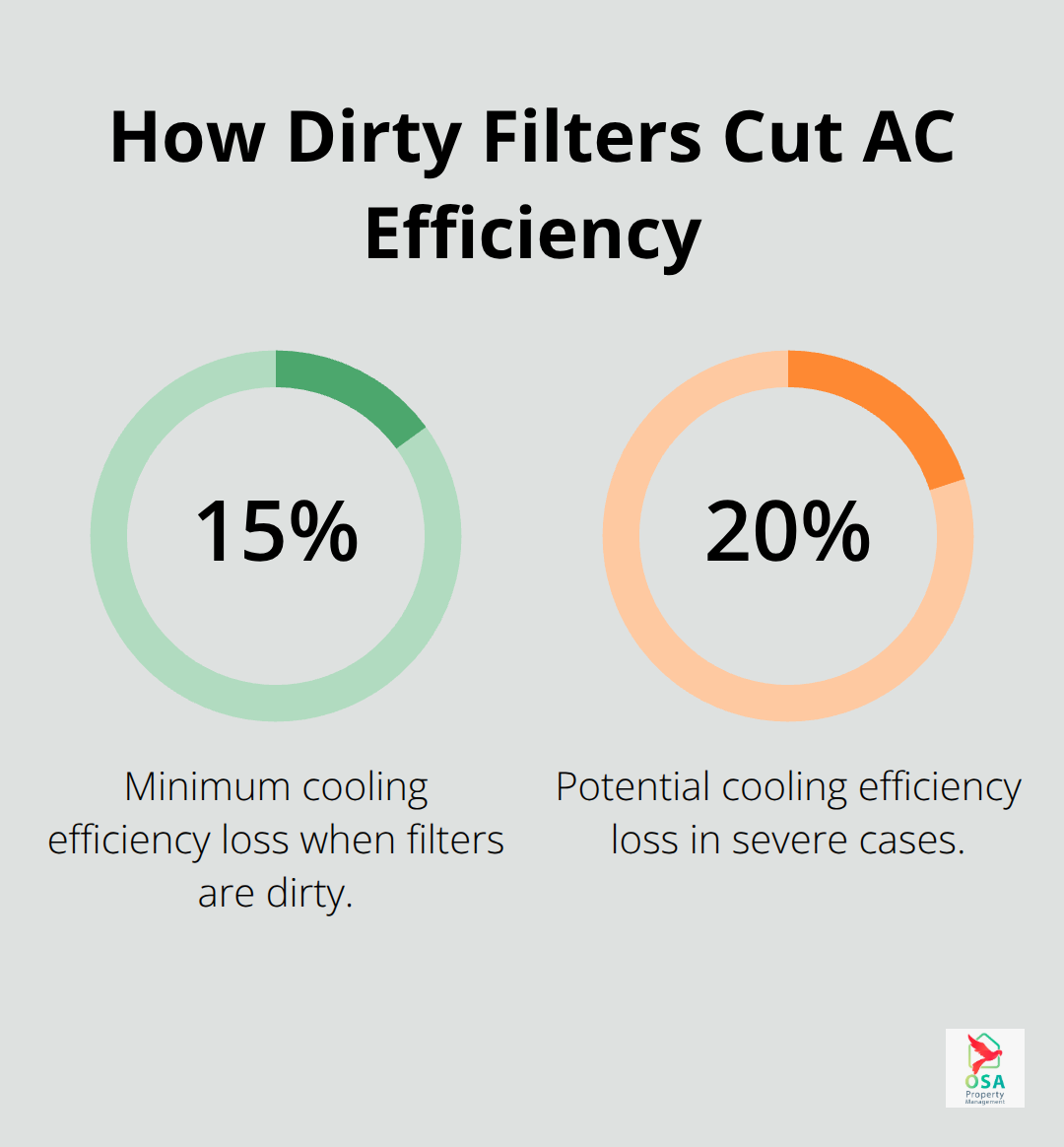
Humidity in Costa Rica averages 80% year-round, and mold begins growing within 24 to 48 hours of moisture exposure. This isn’t theoretical-it’s the reality of tropical property ownership. AC maintenance directly controls indoor humidity, so replace air filters monthly at about $30 each. Dirty filters reduce cooling efficiency by 15–20%, raising indoor humidity and accelerating mold risk. Schedule full AC inspections twice yearly (before the rainy season and before the hottest months) to check refrigerant levels and condenser coils.
Regular dehumidification and proper ventilation maintain indoor Relative Humidity between 40-60% to prevent mold. Monthly filter changes cost $360 annually but prevent thousands in remediation costs when mold infestations take hold.
Defend Coastal Properties Against Salt Air Corrosion
Coastal properties face accelerated corrosion from salt air that attacks metal fasteners, exterior paint, and structural components. Exterior repaint is recommended every 2–3 years for coastal homes at roughly $2,000–$5,000, while inland properties can extend intervals to 4–5 years. Use stainless steel fasteners and marine-grade materials rated for salt exposure to prevent rust that compromises structural integrity. Metal roofing in coastal areas demands inspection every six months because salt air accelerates corrosion of fasteners and seams faster than inland properties experience. Coastal properties should receive exterior repaint touch-ups every 18 months to counter faster degradation.
Eliminate Termites and Wood-Boring Insects Year-Round
Termites and wood-boring insects pose a major threat year-round, making monthly licensed pest-control inspections essential at $50–$100 per month. Untreated termite infestations can cause significant damage, making prevention far cheaper than cure. Termite-resistant materials like teak or melina reduce vulnerability significantly, and proper wood treatment minimizes reinfestation risk. Monthly pest control prevents rapid infestations that escalate quickly in tropical conditions.
These three environmental defenses-humidity control through AC maintenance, salt-air protection through coatings and materials, and pest suppression through regular inspections-work together to protect your property. The next section shows how professional property management coordinates these efforts across your entire portfolio.
Working with Professional Property Management Services
Local Expertise Prevents Costly Mistakes
Property managers in Costa Rica operate as your on-site decision-makers, catching problems before they escalate into emergencies. Without professional oversight, owners miss critical maintenance windows, forget to schedule AC servicing before the rainy season, or hire contractors who cut corners on coastal salt-air protection. Osa Property Management manages properties across Tarcoles, Jaco, Dominical, Manuel Antonio, Ojochal, Uvita, and Golfito-regions where climate-specific knowledge separates successful owners from those facing constant crises. Local expertise prevents costly mistakes by catching issues like roof damage, paint degradation, or mold growth before they become emergencies, allowing property managers to address problems early and prevent escalation into costly repairs.
Vendor Networks and Quality Control
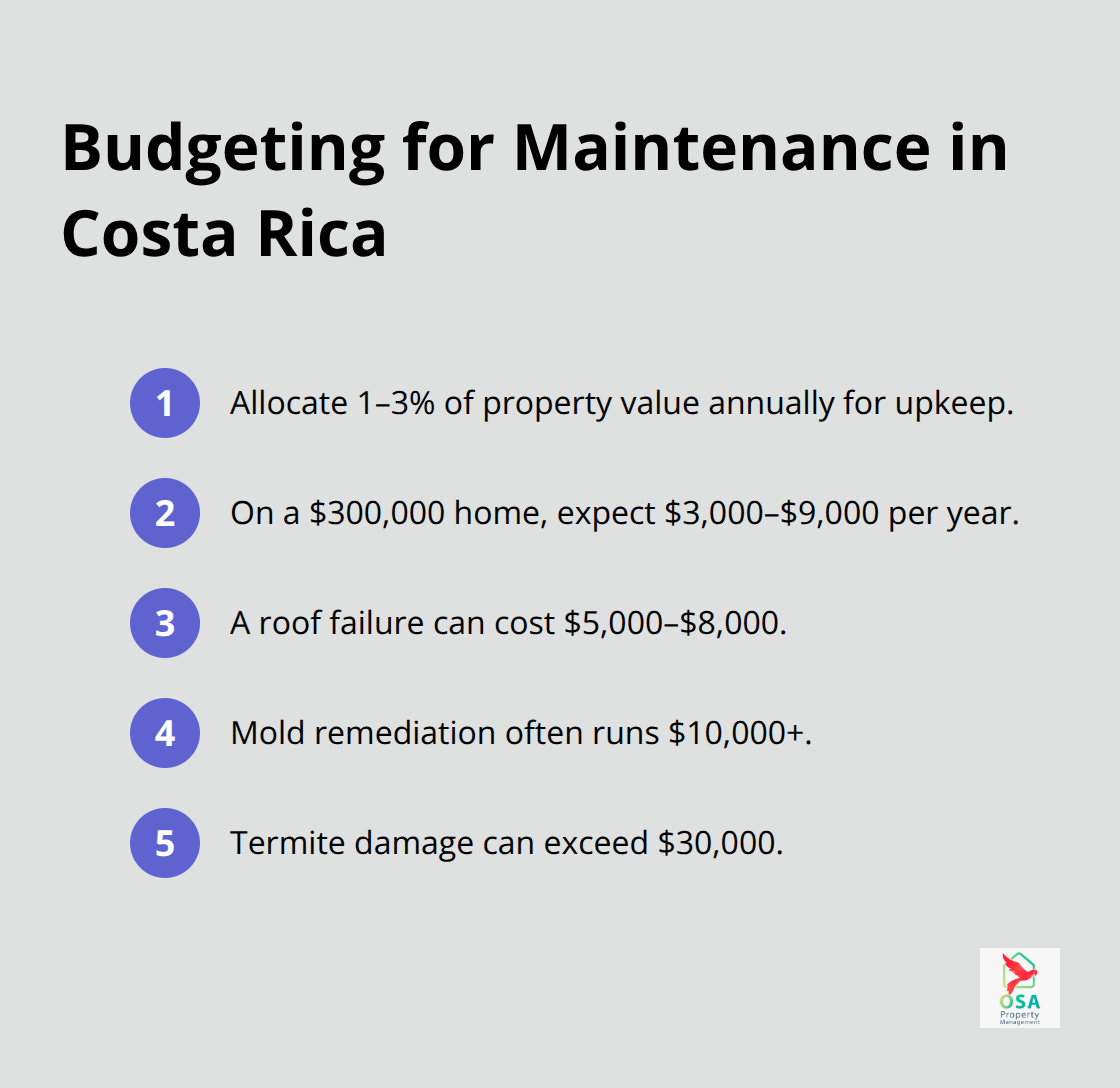
A property manager coordinates trusted companies that understand Costa Rica’s specific challenges and handles vendor vetting, scheduling, and quality control so you don’t waste time managing contractors across time zones. Professional management maintains complete maintenance records of every repair, contractor contact, material cost, warranty, and inspection date. This documentation protects your investment by showing future buyers that the property received consistent, documented care rather than haphazard fixes. Tracking maintenance spending against a realistic annual budget prevents surprises and reveals cost trends before they become problems. For a $300,000 property, plan 1–3% annually ($3,000–$9,000) for preventive upkeep, which sounds expensive until you calculate the alternative: a single roof failure costs $5,000–$8,000, a mold remediation runs $10,000+, and termite damage can exceed $30,000.
Protecting Rental Income and Property Value
Professional management coordinates inspections during off-season windows, schedules contractor work to avoid guest disruptions, and maintains the property at the standard that luxury rental guests expect. This consistency directly impacts your rental income, guest reviews, and resale value. Owners who delay a $300 roof inspection lose thousands in rental income during peak season when properties sit unavailable for repairs. When a potential buyer sees a property with documented maintenance records, professional photos from inspections, and evidence of preventive care, they pay more and negotiate less aggressively than buyers purchasing a property with gaps in upkeep history.
Final Thoughts
Costa Rica property upkeep demands consistency, not heroic last-minute fixes. A $300 roof inspection prevents $8,000 in repairs, and monthly AC filter changes at $30 stop mold infestations costing $10,000 or more. These numbers reflect what we at Osa Property Management observe repeatedly across properties in Tarcoles, Jaco, Dominical, Manuel Antonio, Ojochal, Uvita, and Golfito.
Professional property management removes the guesswork and time zone complications that plague absentee owners. Your property manager coordinates inspections before the rainy season, vets contractors who understand salt-air corrosion, maintains documentation that future buyers value, and prevents the rental income losses that occur when properties sit unavailable for emergency repairs. This coordination costs far less than recovering from deferred maintenance.
Buyers pay premiums for properties with documented maintenance records, professional photos from inspections, and evidence of preventive care. A property showing consistent upkeep commands higher offers and faster sales than one with maintenance gaps. Contact Osa Property Management to discuss how professional oversight protects your investment and positions your property for long-term success in Costa Rica’s demanding tropical environment.