
What's Driving Demand in Costa Rica's Rental Market Right Now
Costa Rica's vacation rental market expanded dramatically, with 34,360 Airbnb listings as of May 2024, up 24% year-over-year and 173% since 2018. This growth reflects sustained tourism momentum, not a temporary spike.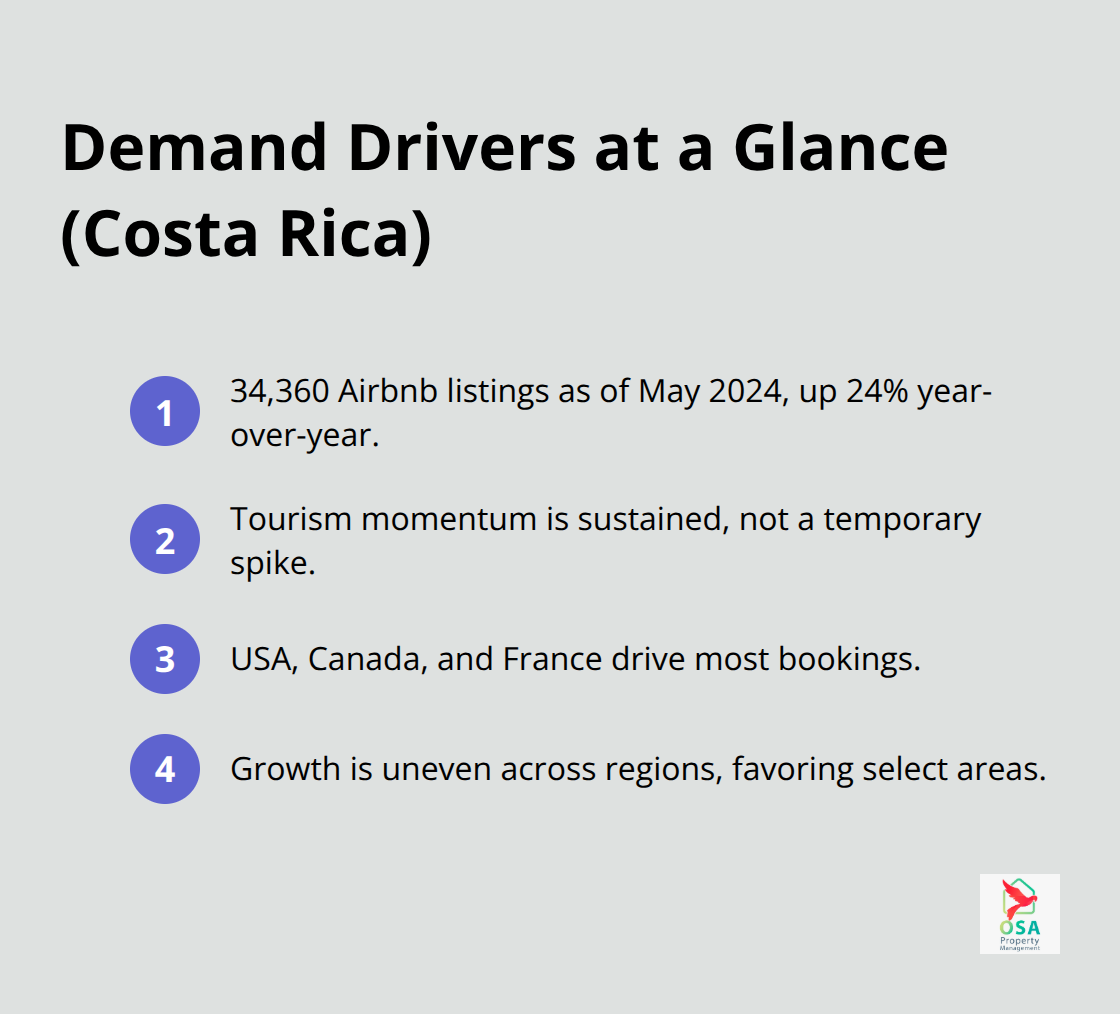
Geographic Shifts Create New Opportunities
Guanacaste's share of visitors has risen significantly, with Liberia airport now handling 35.82% of arrivals compared to 27.31% in 2018, signaling a geographic shift toward coastal regions. Meanwhile, the Southern Pacific Zone continues attracting investors who seek emerging opportunities beyond the saturated northern markets. Tourism demand translates directly into occupancy rates and revenue potential, but only if your property sits in the right location.Seasonal Pricing Gaps Are Massive and Predictable
Occupancy and rates swing wildly between seasons, and smart owners capitalize on these patterns rather than fight them. The dry season from December to April commands 30 to 50% higher rates than the green season, but that's just the baseline. October ranks as the peak performance month across Costa Rica, with some markets like Talamanca achieving approximately 3,420 dollars per month in revenue per available room, compared to roughly 784 dollars in shoulder seasons. January runs close behind October. Conversely, May drops about 25% below baseline pricing, yet still attracts budget-conscious travelers. Markets like Tamarindo average 418 dollars nightly with 55.3% occupancy year-round, while La Fortuna sits at only 124 dollars despite solid 51.7% occupancy, revealing significant untapped premium potential. The mistake most owners make is setting static prices and hoping for the best. Dynamic pricing tools that adjust rates weekly rather than monthly increased RevPAR by 25.1% and occupancy by 28.6%. Real-time monitoring of competitor gaps during high-demand windows matters more than seasonal templates alone.Airbnb Dominance Requires Strategic Channel Decisions
Airbnb accounts for approximately 72.6% of international guest bookings in Costa Rica, making it impossible to ignore. However, that concentration creates both opportunity and risk. Airbnb's commission structure takes 3% from hosts plus guest fees, while VRBO charges 5%, eating into margins substantially. Direct bookings offer roughly 25% higher margins because you avoid platform commissions entirely. One successful Costa Rica campaign built an SEO-focused direct-booking website and generated approximately 150,000 dollars in annual additional revenue. Multi-platform distribution across Airbnb, VRBO, and your own booking channel reduces dependency on any single platform's algorithm changes or policy shifts. Properties with strong reviews above 4.7 stars command higher nightly rates and attract repeat bookings, making guest experience management essential. Quick response times to inquiries and proactive review responses matter measurably-addressing guest feedback promptly improves rebooking by about 25%. The owners winning in this market treat channel management as a strategic decision, not an afterthought.
Osa Property Management has a successful multi-channel approach and currently has over 2600 Airbnb reviews (as of March 31, 2026)
How to Price Your Rental and Keep Occupancy High
Dynamic Pricing Separates Winners from Struggling Owners
Setting your nightly rate once and leaving it static guarantees you'll leave money on the table during peak demand and struggle to fill rooms during slower months. October generates roughly 40% above baseline rates across most markets, while May drops about 25% below. That's not a suggestion to adjust your pricing-it's a mathematical fact that separates profitable owners from those barely breaking even.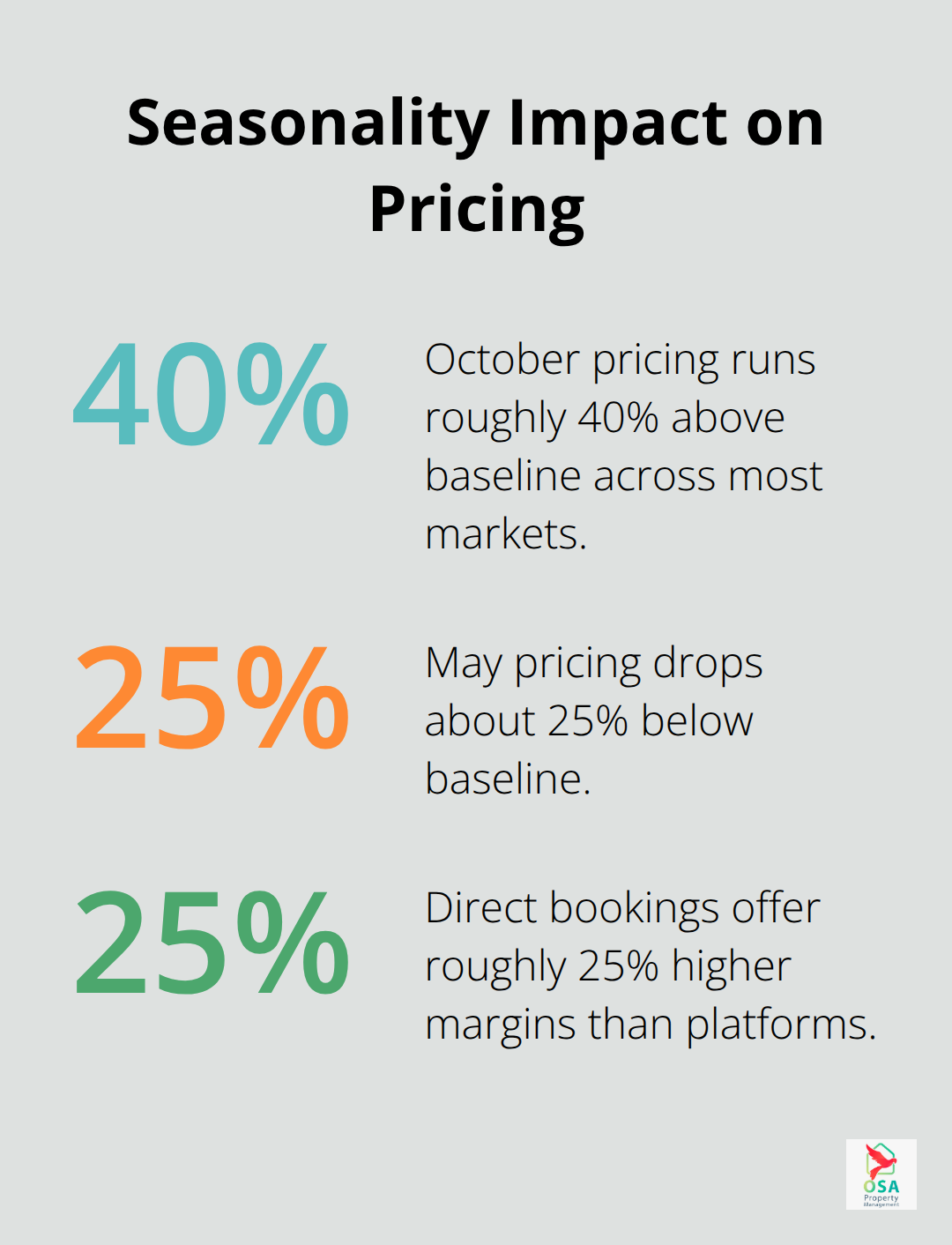
Channel Strategy Determines Your Profit Margins
Your channel strategy determines whether you keep 72% of revenue or lose it to platform commissions. Airbnb captures 72.6% of international bookings in Costa Rica, making it essential, but relying solely on Airbnb costs you roughly 25% in margins compared to direct bookings. One successful campaign built an SEO-focused direct-booking website and generated approximately 150,000 dollars in additional annual revenue. This doesn't mean abandoning Airbnb-it means treating it as one channel among several. Distribute your inventory across Airbnb, VRBO, and a direct-booking option on your own website. Properties with ratings above 4.7 stars command higher nightly rates, so guest experience management directly impacts your pricing power. The owners winning in this market treat channel management as a revenue driver, not an administrative burden.
https://costaricalasvillas.com Direct booking sites provide more value to Renters and can increase occupancy for Owners.
Guest Experience Management Drives Repeat Bookings and Higher Rates
Respond to inquiries within hours, not days-automated messaging systems save roughly five hours weekly while maintaining personalized communication. Successful Airbnb hosts responding within one hour achieve 25% more instant bookings. Quick response times to inquiries and proactive review responses matter measurably because guests reward reliability with bookings and positive ratings. Professional property management companies handle these operational details, which matters more than most owners realize. Marketing, guest communications, maintenance coordination, and financial reporting require consistent attention to maintain high occupancy and capture premium rates year-round. The difference between a property that generates 784 dollars monthly and one that generates 3,420 dollars monthly often comes down to how systematically you manage guest relationships and operational execution. As of the date of this posting, Osa Property Management has over 2,600 Airbnb reviews and continues to be an Airbnb Superhost.Professional Management Unlocks Your Property's Full Revenue Potential
Managing pricing, channels, and guest experience simultaneously demands expertise and attention that most remote owners cannot provide. Properties managed professionally maintain higher occupancy rates and command premium pricing because they deliver consistent guest satisfaction. This operational excellence translates directly into your bottom line-the gap between mediocre and exceptional management often exceeds 35% in annual revenue. The next section examines how location selection and regional performance metrics determine whether your property sits in a market with genuine growth potential or faces structural headwinds that no amount of optimization can overcome.Where Should You Invest in Costa Rica
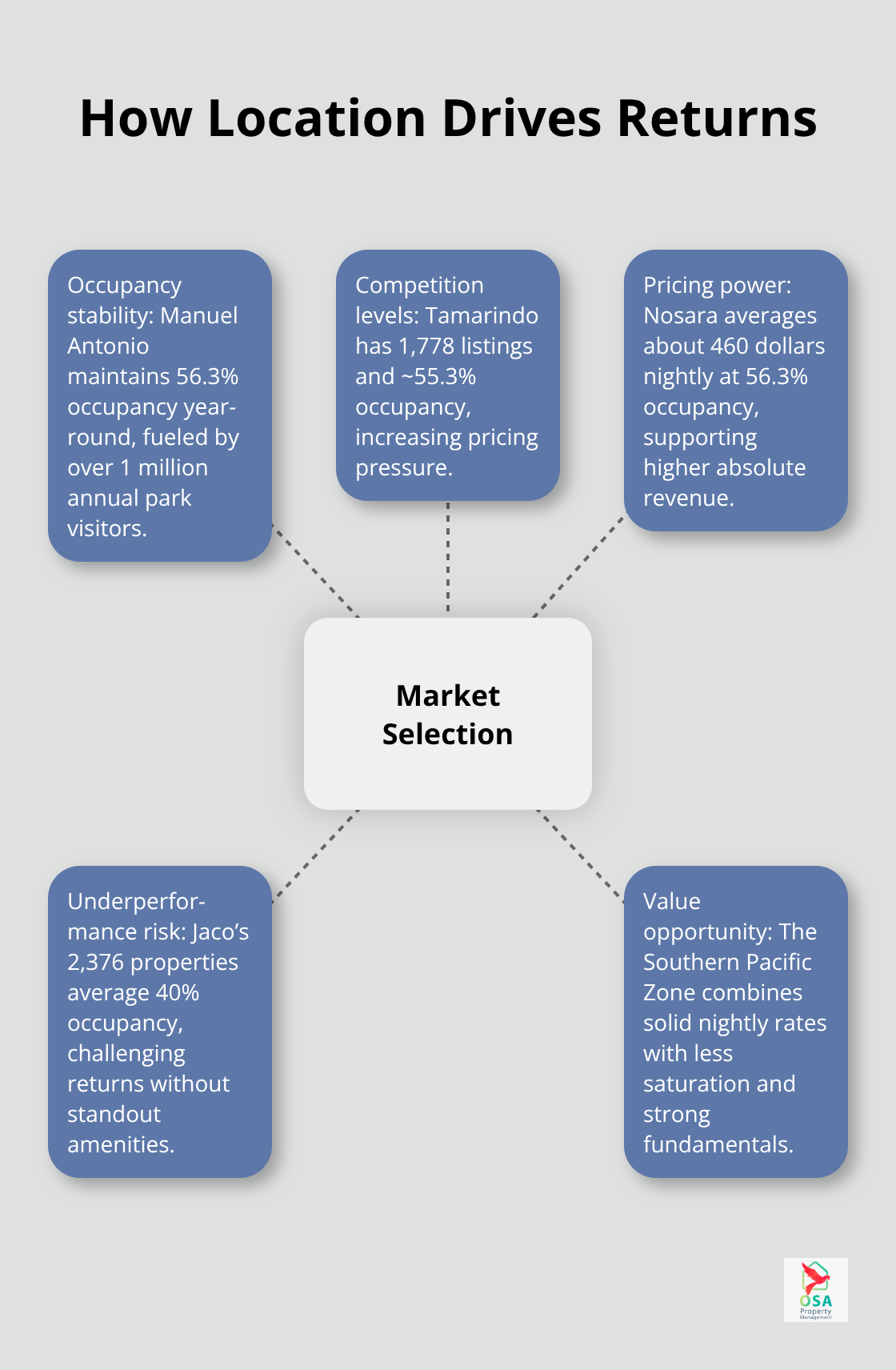
Location determines whether your property generates 784 dollars monthly or 3,420 dollars monthly. The Southern Pacific Zone, spanning from Manuel Antonio south through Dominical, Uvita, and Ojochal, offers the most compelling opportunity for investors who seek both occupancy stability and pricing power. Manuel Antonio maintains 56.3% occupancy year-round, boosted by proximity to the country's most visited national park that attracts over 1 million visitors annually. This isn't theoretical demand-it's measurable foot traffic that translates into bookings. Properties in this zone command solid nightly rates while avoiding the oversaturation that plagues northern markets. Tamarindo, despite its reputation, faces intensifying competition with 1,778 listings fighting for market share, which drives average occupancy to 55.3% and creates pricing pressure. Manuel Antonio's occupancy advantage stems from geographic isolation and tourism infrastructure that channels visitors directly to rental properties. RevPAR revenue per available room data shows Manuel Antonio properties achieve consistent performance that rivals premium markets while maintaining lower entry prices than Tamarindo or Nosara. For investors who prioritize cash flow over speculation, Manuel Antonio represents genuine opportunity.Premium Markets Command Higher Absolute Returns
Nosara and Tamarindo occupy opposite ends of the investment spectrum, and your choice between them depends on your capital and risk tolerance. Nosara commands the highest property prices among major markets, with three-bedroom homes averaging 1,275,250 dollars, which reflects luxury positioning and strong international demand. This market attracts affluent travelers who seek premium experiences, supporting average nightly rates around 460 dollars with 56.3% occupancy. The premium pricing supports higher absolute revenue despite similar occupancy percentages to Manuel Antonio. Tamarindo offers more affordable entry points, with three-bedroom properties averaging 960,000 dollars, but you inherit higher competition and thinner margins.Avoid Markets with Structural Headwinds
Jaco presents a different problem entirely-it's the largest market by listings with 2,376 properties, yet occupancy averages 40%, significantly below southern zone performance. The presence of resort properties like Los Sueños creates pricing inflation that doesn't reflect actual market demand. Luxury properties in Los Sueños achieve exceptional returns (five-bedroom homes like Puesta del Sol generate approximately 520,000 dollars annually at 61.5% occupancy), but these results depend on premium amenities and professional management that most individual owners cannot replicate. La Fortuna offers solid occupancy at 51.7% but severely depressed pricing at 124 dollars nightly, which creates a mismatch between demand and revenue potential. Upgrading La Fortuna properties to higher-end offerings represents a genuine opportunity, but it requires capital investment that most investors lack.Geographic Shifts Signal Long-Term Demand Patterns
The geographic shift toward Guanacaste, with Liberia airport now handling 35.82% of arrivals compared to 27.31% in 2018, suggests continued growth in beach markets, but saturation is already evident in pricing data. The Southern Pacific Zone remains undervalued relative to its tourism fundamentals and occupancy performance. Houses in popular tourist locations draw in thousands of visitors, have great amenities, and easy access, making this region attractive for investors who want to maximize returns without overpaying for saturated markets.