

Property owners often treat maintenance as an afterthought until something breaks. We at Osa Property Management have seen how this approach drains budgets and frustrates tenants.
A solid property maintenance schedule prevents expensive emergencies and keeps your investment healthy. This guide shows you exactly how to build one that works.
Why a Structured Maintenance Schedule Matters
Emergency repairs cost up to 6 times more than preventative maintenance. A burst pipe discovered during winter, a collapsed roof section after a storm, or an HVAC system failure in peak season forces you into reactive mode where contractors charge premium rates and your property sits in limbo. Property owners spend $15,000 fixing what preventative inspections costing $500 would have stopped. The math is brutal: skipping routine checks today means paying catastrophic bills tomorrow. Properties with formal maintenance schedules avoid these financial ambushes entirely. Instead of scrambling for emergency contractors at inflated rates, you address small issues systematically before they compound into major failures.
The Long Game Protects Your Asset Value
A property maintained on schedule holds its value. Real estate markets reward well-maintained buildings with higher resale prices and faster sales. Neglected properties deteriorate visibly-peeling paint, water stains, mechanical failures-and buyers recognize these red flags immediately. Water damage alone reduces property value by 10 to 20 percent if left untreated. HVAC filters replaced every 90 days prevent system breakdowns that cost $5,000 to $10,000 to repair or replace. Gutter cleaning before winter stops ice dams that cause roof and foundation damage. Roof inspections catch minor leaks before they penetrate insulation and create mold. Each preventative task extends your building's lifespan by years and protects the equity you've invested. Tenants notice this care too. Properties in excellent condition command higher rents and attract quality renters who stay longer, reducing turnover costs that typically run $1,500 to $3,000 per tenant.
Tenants Stay When Properties Function Reliably
Maintenance requests answered promptly and repairs completed on schedule separate professional properties from neglected ones. Tenants in well-maintained buildings report significantly higher satisfaction and renew leases at much higher rates. A property where the heating works in winter, plumbing drains properly, and appliances function reliably becomes home. Conversely, properties with delayed repairs and ignored maintenance requests breed tenant frustration that leads to vacancies, negative reviews, and turnover. Consistent maintenance demonstrates that ownership cares about habitability, not just collecting rent. This reputation translates into stable occupancy, predictable cash flow, and reduced marketing costs for finding replacement tenants.
How Maintenance Schedules Create Competitive Advantage
Properties managed with formal schedules experience measurable improvements in tenant retention and satisfaction. The difference between a property that maintains systems proactively and one that waits for failures shows up immediately in occupancy rates, rent collection, and tenant complaints. A structured approach eliminates the chaos of reactive repairs and positions your property as the reliable choice in a competitive rental market. Tenants compare properties, and they choose buildings where things work. Your maintenance schedule becomes the foundation that separates your property from others competing for the same renters.
The next step involves building the actual calendar that makes this protection possible. Seasonal tasks, monthly checks, and annual assessments work together to create a system that catches problems before they become emergencies.
Building Your Maintenance Calendar
A maintenance calendar transforms good intentions into executed tasks. Seasonal changes demand different work: spring brings gutter and roof inspection before heavy rains, summer requires exterior power-washing and fence repairs, fall means clearing gutters again and winterizing outdoor systems, and winter involves checking heating efficiency and preventing ice dam damage. Assign specific months to specific tasks rather than setting vague annual goals. Schedule gutter cleaning in late August and again in November. Plan HVAC filter replacements every 90 days on a fixed calendar-January, April, July, October-so you never skip them. Roof inspections happen in spring before the rainy season and in fall before winter weather arrives. Water heater checks occur annually in September. This seasonal rhythm prevents the trap of reactive maintenance where you discover problems only after they cause damage.
Monthly Inspections Catch Small Issues Before They Multiply
Monthly walks through the property identify problems early. Check for water stains on ceilings and walls, test that all plumbing drains properly, verify HVAC systems run without strange noises, inspect exterior walls for cracks or deterioration, and walk parking areas for potholes or drainage problems. These 30-minute monthly inspections cost nothing but catch a slow leak before it damages insulation, spot a cracked foundation before it spreads, or identify electrical issues before they become hazards. Document findings with photos and notes so you build a maintenance history showing patterns. If a particular plumbing line backs up monthly, that signals it needs professional cleaning. If the same electrical outlet sparks occasionally, that represents a fire risk demanding immediate attention. Monthly data prevents you from dismissing recurring problems as one-time events.
Annual Professional Assessments Provide Expert Eyes
Once yearly, hire licensed professionals to inspect critical systems comprehensively. HVAC technicians perform detailed furnace and air conditioning evaluations but identify compressor wear, refrigerant leaks, and efficiency losses that monthly checks miss. Plumbers inspect water lines for corrosion and pressure issues. Electricians test panel capacity and ground integrity. Roofers examine shingles, flashing, and structural integrity. These annual assessments generate written reports with specific recommendations and timelines for repairs. Many property owners skip this step to save money, then face a $15,000 roof replacement that a $250 inspection would have flagged two years earlier. The annual assessment creates a documented maintenance history valuable when selling the property or defending against tenant claims about pre-existing conditions.
Seasonal Tasks Keep Weather Damage at Bay
Seasonal maintenance tasks keep weather damage at bay. Spring work prevents water intrusion during rainy months. Clear gutters and downspouts so water flows away from foundations rather than pooling near walls. Inspect roof shingles and flashing for gaps or deterioration. Power-wash siding and decks to remove mold and algae that accelerate material breakdown. Caulk window frames and weatherstrip doors to improve cooling and heating performance. Check for rotted exterior wood and repair or replace it before moisture penetrates deeper into the structure.
Summer maintenance protects exterior surfaces. Power-wash decks, siding, and play structures to prevent mold growth. Paint or repair fences and gates as needed. Monitor for standing water around downspouts and in yards to reduce mosquito breeding areas. Reverse ceiling fans to rotate counter-clockwise for more effective indoor cooling and energy savings.
Fall preparation prevents winter damage. Clean gutters again before heavy leaf fall and winter weather arrive. Disconnect outdoor hoses to prevent freezing damage. Blow out irrigation lines and drain irrigation systems. Inspect windows and doors for drafts to cut energy loss. Wash windows and install storm windows if applicable. Organize the garage for easier winter access.
Winter work maintains heating efficiency and prevents ice damage. Switch ceiling fans to clockwise low speed to push warm air downward and enhance heat efficiency. Drain outdoor faucets and safely store outdoor power equipment. Schedule a chimney inspection before first fireplace use. Consider installing a programmable thermostat to reduce energy bills. Upgrade insulation and check attic insulation to improve energy efficiency.
Documentation Builds Your Maintenance Record
Track every inspection, repair, and professional assessment in a centralized system. Record dates, findings, contractor names, costs, and completion status. This documentation protects you when selling the property by demonstrating consistent care and investment. It also helps you identify which systems require attention most frequently, allowing you to budget more accurately and plan replacements before failures occur. Over time, this record becomes invaluable for understanding your property's true maintenance patterns and costs.
The next step involves recognizing the mistakes that derail even well-intentioned maintenance plans and how to avoid them.
Common Maintenance Mistakes Property Owners Make
The Delay Trap Inverts Financial Reality
Most property owners postpone repairs because the immediate cost stings. A $400 plumbing inspection feels expensive when the toilet works fine today. A $200 HVAC filter replacement seems wasteful when the system still runs. This logic inverts reality. That toilet will back up at 2 AM on a Sunday, forcing an emergency service call at triple rates. That HVAC system will fail during peak season when contractors book weeks out and charge premium fees. Property owners who postpone routine repairs discover the hard way that a $400 inspection prevents a $6,000 emergency replacement.
The delay trap catches experienced owners too. Life gets busy, maintenance falls off the calendar, and suddenly six months pass without basic checks. A slow roof leak ignored for one season penetrates insulation and creates mold that costs $8,000 to $15,000 to remediate. Water damage compounds exponentially-what starts as a stain becomes structural rot, which becomes foundation failure. Property owners treat maintenance as optional spending rather than investment protection. They skip quarterly inspections to save $300, then face $12,000 in repairs that inspection would have prevented. The financial reality is brutal: deferred maintenance costs $3–7 in future repairs for every dollar spent on preventative work.
Seasonal Neglect Creates Expensive Surprises
Property owners understand winter needs preparation, but they skip it because fall feels distant during summer. Gutters don't get cleaned in October because the weather looks nice. Outdoor faucets don't get drained in November because the first freeze seems far away. Then November arrives with unexpected cold, pipes burst, and water damage spreads through walls. Gutter cleaning costs $150 to $300 and takes two hours. Emergency water damage restoration costs $5,000 to $20,000 and disrupts tenants for weeks.
The seasonal rhythm works only if you execute it. A maintenance calendar sitting on a shelf accomplishes nothing. Set specific dates in your calendar now-August 15 for fall gutter cleaning, September 1 for HVAC inspection, October 1 for winterization checks. Assign these tasks to contractors in advance so they're booked and scheduled, not scrambled at the last moment.
Reactive Maintenance Costs Far More Than Planned Work
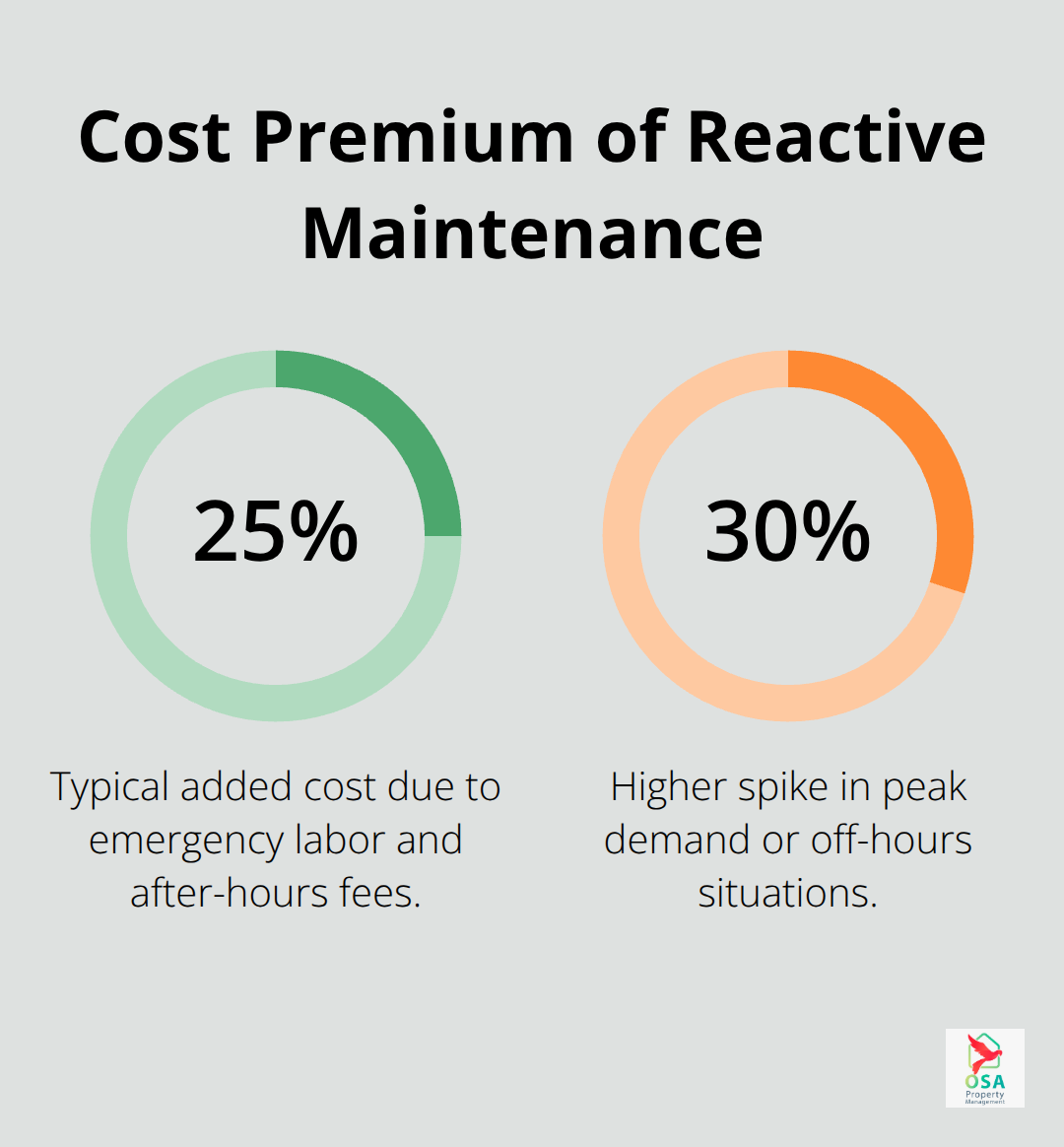
Property owners who skip seasonal scheduling consistently underestimate costs because they face emergency rates, contractor unavailability, and compound damage. Reactive maintenance costs 25–30% more due to emergency labor and after-hours fees. The difference between $3,000 in planned maintenance and $10,000 in emergency repairs comes down to whether you execute the calendar or treat it as a nice-to-have document.
Final Thoughts
A property maintenance schedule protects your investment far more effectively than any insurance policy or legal contract. Consistent preventative care compounds into significant financial gains over time, and properties maintained on schedule retain value, command higher rents, and attract tenants who stay longer. The alternative-reactive repairs triggered by emergencies-drains cash flow and accelerates property deterioration, costing you $15,000 in emergency repairs instead of $500 in quarterly inspections.
Professional help keeps your maintenance plan on track when life gets busy, and contractors who understand your property's specific needs become extensions of your management team. They catch problems you'd miss, provide expert recommendations, and execute work to professional standards. We at Osa Property Management have managed properties across Costa Rica for over 20 years, and we've learned that owners who succeed treat maintenance as non-negotiable investment, not optional spending.
Your property maintenance schedule separates successful ownership from constant crisis management. Contact Osa Property Management to discuss how professional oversight transforms maintenance into a system that protects everything you've invested.