
Costa Rica's tropical climate is relentless on homes. Constant humidity, heavy rains, and salt air work together to damage roofs, corrode plumbing, and breed mold faster than most property owners expect.
Neglecting home maintenance in Costa Rica doesn't just mean a leaky roof today-it means thousands in repairs tomorrow. We at Osa Property Management have seen properties lose significant value because owners waited too long to address preventive care.
This guide walks you through the maintenance tasks that actually matter and how to stay ahead of Costa Rica's toughest environmental challenges.
Why Humidity and Rain Destroy Costa Rican Homes Faster Than You Think
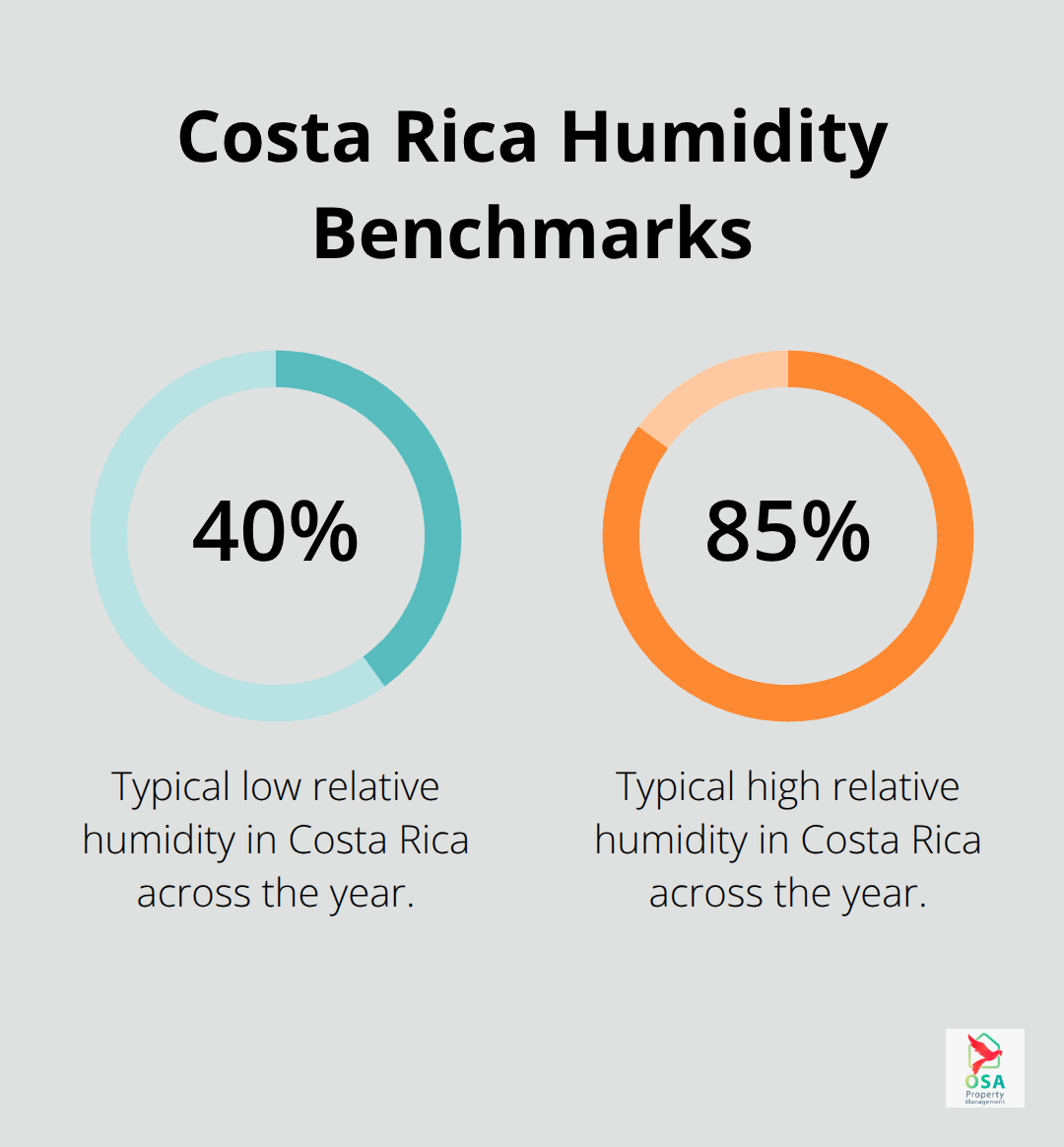
Costa Rica's humidity sits between 40% and 85% year-round, and the rainy season from May through November dumps consistent daily downpours that stress every structural system. This combination accelerates corrosion in plumbing and electrical fixtures, warps wood framing, and creates the perfect environment for mold to colonize within weeks rather than months. Coastal properties face the additional burden of salt air, which corrodes metal hardware and exterior finishes at rates that inland homes never experience. A property owner who ignores these conditions learns quickly that a small roof leak in June becomes a ceiling collapse by August, and a minor plumbing issue transforms into foundation damage by the next rainy season.
Moisture Damage Compounds Faster Than Most Owners Realize
Proper whole-house ventilation reduces indoor humidity, yet most Costa Rican homes lack adequate airflow strategies. Without intervention, mold spreads aggressively in closets, bathrooms, and dark corners, and severe mold remediation costs exceed $3,000. Termites thrive in this moisture-rich environment and cause billions in property damage annually worldwide, with subterranean termites posing the primary threat in Costa Rica. Quarterly licensed pest inspections catch infestations before they compromise structural integrity, yet many owners skip this basic preventive step until damage becomes irreversible. High mineral content in local water clogs pipes and corrodes fixtures from the inside out, making regular plumbing checks essential rather than optional. Electrical systems corrode faster in humidity, increasing fire risk and system failures that demand immediate professional attention.
Investment Value Erodes Without Consistent Preventive Action
Property owners who budget 1.5% to 3% of their home's value annually for maintenance typically preserve and grow equity, while those who defer repairs watch values decline sharply. A $300,000 home requires roughly $3,000 to $9,000 yearly in preventive upkeep, yet many owners spend nothing until emergencies force expensive reactive repairs. Coastal properties need exterior repainting every 2 to 3 years at $2,000 to $5,000 per cycle, while inland homes stretch intervals to 4 to 5 years. Neglecting this schedule allows salt air and UV damage to penetrate protective coatings, multiplying future costs. A rigorous preventive maintenance plan can reduce costs by 12–18% and generate a remarkable 400% return on investment through early detection, sealing problems before they spread, and extending the life of roofs, plumbing, and electrical systems well beyond quick-fix timelines. Properties with documented maintenance histories command higher resale prices and attract serious buyers faster than neglected homes, making preventive care a direct investment in liquidity and market appeal.
What Separates Successful Property Owners from Those Who Struggle
The difference between a thriving Costa Rican property and one that deteriorates rapidly comes down to action, not luck. Owners who establish a maintenance calendar and stick to it avoid the cascade of problems that plague reactive property management. Coastal properties demand more attention than inland homes, and vacation rentals require more frequent inspections than owner-occupied residences. The specific demands of your location and property type determine which tasks matter most, which is why a one-size-fits-all approach fails in Costa Rica's varied microclimates. Understanding these distinctions allows you to allocate resources where they actually prevent damage rather than waste money on unnecessary services.
Essential Monthly and Seasonal Maintenance Tasks
Roof and Gutter Care Prevents Water Damage Before It Spreads
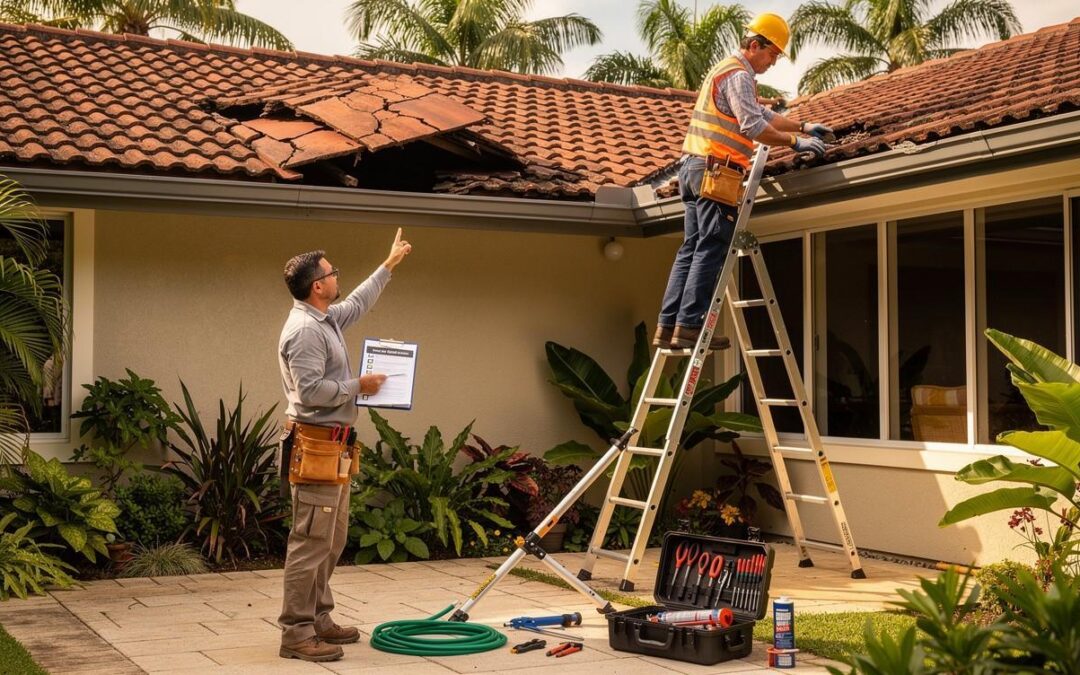
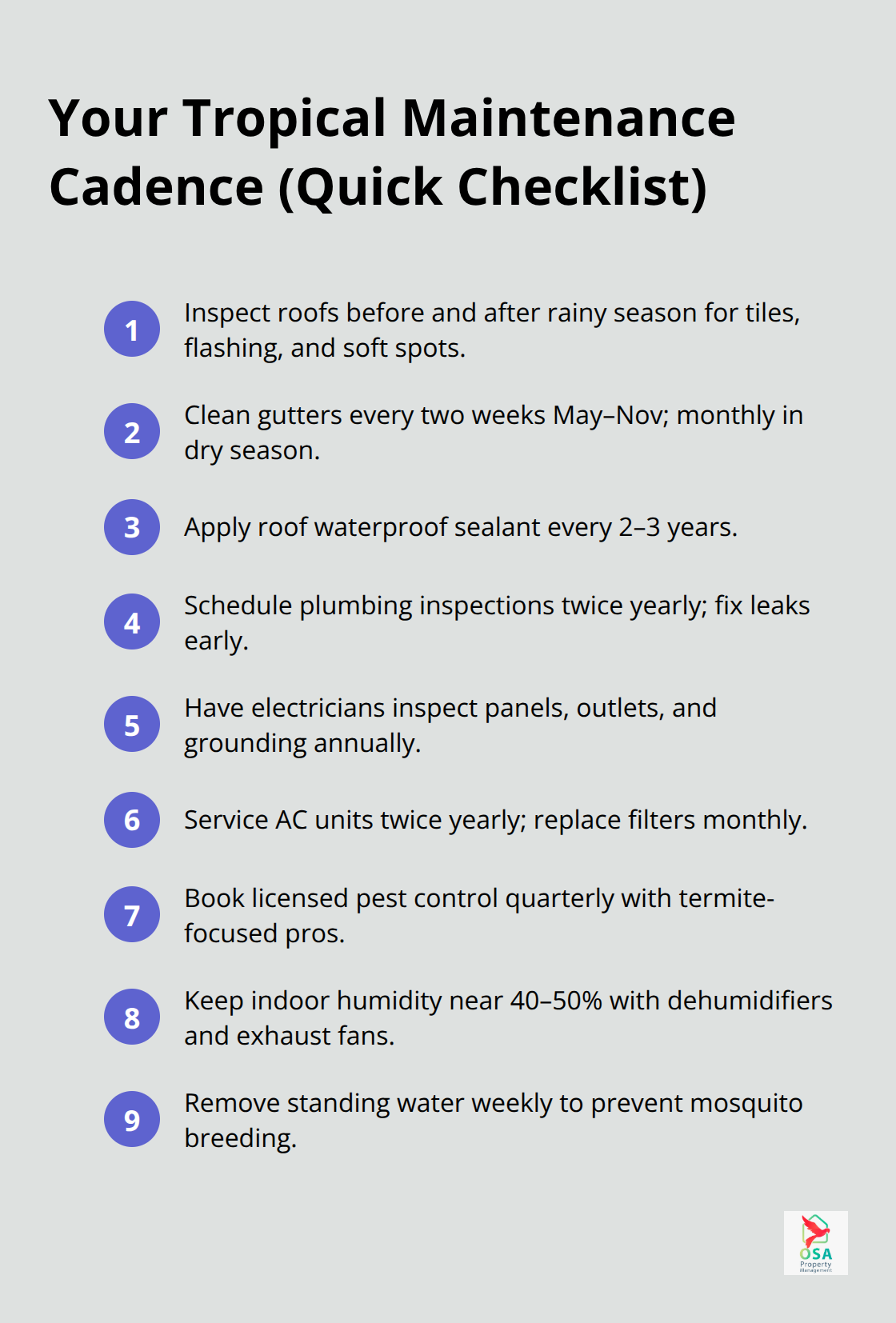
Inspect your roof before and after the rainy season for missing or cracked tiles, damaged flashing around chimneys and vents, and soft spots in wood framing that signal water intrusion. Gutters clogged with tropical debris fail within weeks during heavy rain, so clear them every two weeks from May through November and monthly during the dry season. Mineral buildup from Costa Rica's water supply narrows gutters further, reducing flow capacity by up to 30% if left untreated. Apply waterproof sealant to roofs every two to three years; this single task costs $3,000 to $10,000 but prevents water damage repairs exceeding $20,000.
Plumbing and Electrical Systems Require Professional Attention Twice Yearly
Plumbing systems corrode from the inside due to high mineral content in local water, so schedule professional inspections twice yearly to catch leaks, pressure issues, and pipe deterioration before they compromise foundations. Electrical systems degrade faster in humidity, increasing fire risk, so hire qualified electricians to inspect panels, outlets, and grounding systems annually. AC units accumulate mold in their cooling coils within months of humid coastal exposure, reducing efficiency and spreading contaminated air indoors; have technicians service units at minimum twice yearly, replacing filters monthly.
Pest Control and Mold Prevention Stop Damage at the Source
Pest control must happen quarterly with licensed professionals who understand Costa Rican termite behavior; subterranean termites account for approximately USD 40 billion in annual economic losses globally, and early detection through inspections prevents structural failure that costs far more than prevention. Mold thrives in bathrooms, closets, and dark corners where humidity exceeds 60%, so use dehumidifiers targeting 40–50% indoor humidity, install exhaust fans vented outside, and inspect dark areas monthly for early growth. Mold-resistant paints with antimicrobial additives provide up to five years of protection compared to standard finishes. Remove standing water from plant saucers, gutters, and containers weekly to prevent mosquito breeding, especially since Aedes aegypti transmits dengue and other diseases year-round in Costa Rica.
Coastal Properties Demand More Frequent Exterior Maintenance
Coastal properties demand additional exterior maintenance every two to three years due to salt air corrosion; high-quality UV-resistant paints and marine-grade stainless steel fixtures cost more upfront but extend intervals between repainting and replacement by years. Inland properties extend repaint cycles to four to five years, making location-specific maintenance planning essential rather than applying blanket schedules across all properties. Your property's microclimate determines which tasks demand the most attention and resources, which is why a one-size-fits-all approach fails in Costa Rica's varied environmental zones.
How Professional Management Prevents the Costly Mistakes Most Owners Make
Systematic Scheduling Stops Problems Before They Escalate
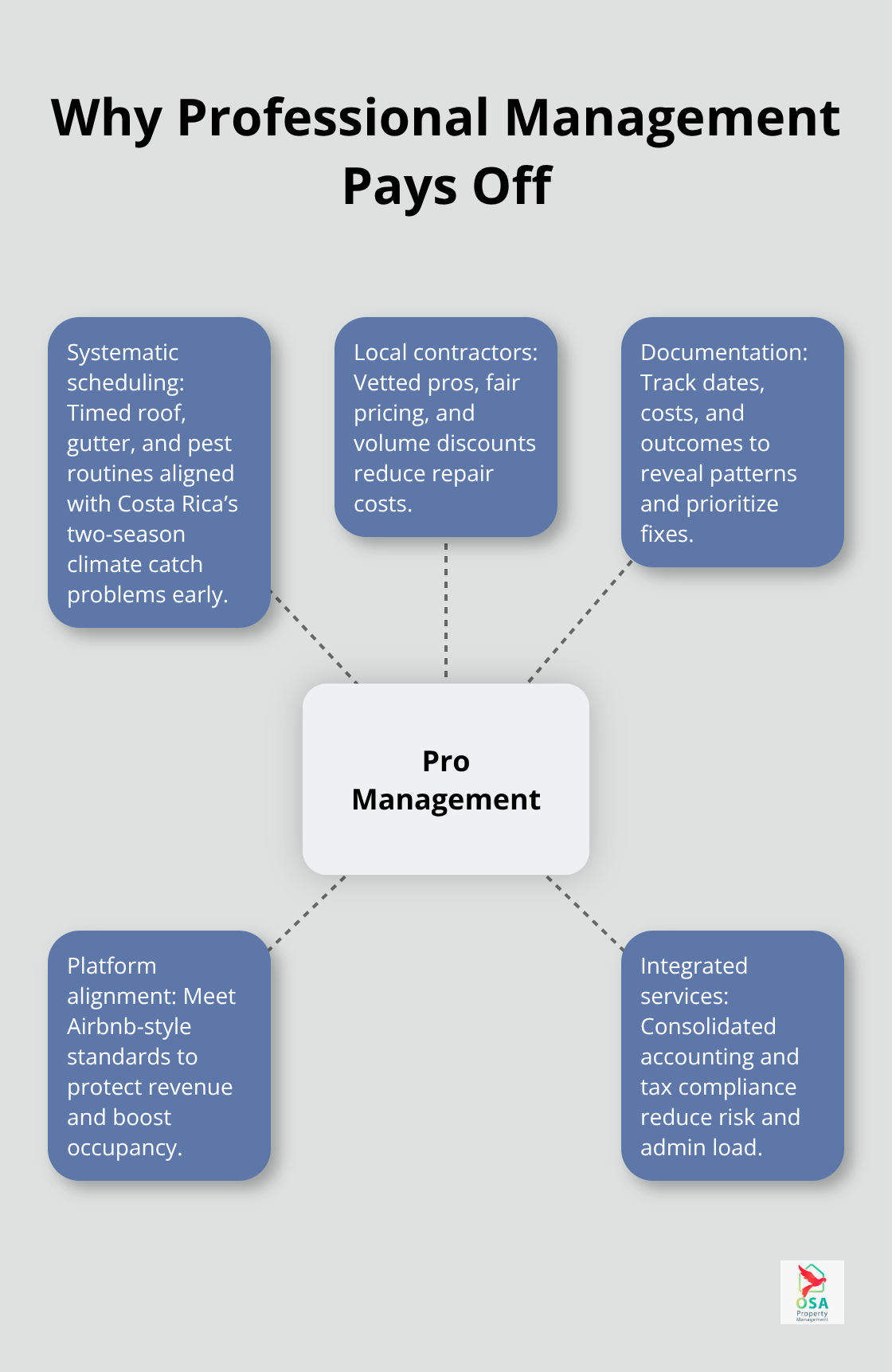
Managing maintenance across time zones and climate zones is where most Costa Rican property owners fail. Property management companies coordinate inspections on schedules that match Costa Rica's two-season climate rather than relying on owner memory or reactive crisis response. Professional teams schedule roof inspections before and after the rainy season, quarterly pest control visits timed to catch termite activity early, and monthly gutter cleaning during May through November when debris accumulates fastest. This systematic approach catches the $500 roof leak before it becomes a $25,000 water intrusion. Owners managing properties remotely cannot monitor humidity levels in bathrooms or check for early mold growth in closets, but professional teams conduct monthly inspections specifically targeting moisture hotspots where mold colonizes within weeks.
Local Contractor Networks Save Thousands on Repair Costs
Most owners lack the local knowledge to distinguish between necessary repairs and contractor overcharging. Professional managers maintain relationships with trusted local contractors who understand Costa Rican building standards, material availability, and realistic pricing. Electrical work that costs $800 from a random contractor might cost $400 from a vetted professional who works with property management companies regularly and benefits from volume discounts. Plumbing repairs, pest control treatments, and roof work all carry regional pricing variations that only emerge through years of local experience. These savings compound across dozens of repairs annually, often covering the entire management fee within a single year.
Documentation Creates Accountability and Reveals Patterns
Documented inspection records create accountability and reveal patterns that guide future spending. A property that shows consistent gutter clogs in the same location every rainy season needs upgraded gutters or better debris management, not just repeated cleaning. Property management companies track every repair date, cost, contractor, and outcome, creating a maintenance history that reveals which systems demand attention next. A home with three plumbing repairs in eighteen months signals a systemic issue requiring pipe replacement rather than patch jobs that drain money without solving the root problem. Insurance companies and future buyers trust properties with documented maintenance histories far more than homes with no records.
Professional Management Aligns Properties with Rental Platform Standards
Vacation rental platforms like Airbnb reward properties with consistent maintenance and high guest satisfaction ratings, directly affecting booking rates and nightly rates. Professional management coordinates with Airbnb's expectations for property condition and guest communication, ensuring compliance with platform standards that individual owners often miss. This alignment protects your rental income and maintains the competitive positioning that drives occupancy rates higher than neglected properties.
Integrated Services Consolidate Expenses and Tax Compliance
Property management companies handle accounting and tax compliance alongside maintenance oversight, consolidating property expenses and creating the documentation that tax authorities and lenders require. This integrated approach prevents the scenario where owners pay contractors cash under the table, avoid documenting expenses, and then struggle to prove maintenance spending when selling or refinancing. The management fee that professional companies charge typically saves owners far more through contractor discounts, prevented emergency repairs, and maintained property values than they spend on management services.
Final Thoughts
Home maintenance in Costa Rica demands consistency, not heroic effort. The properties that hold value and generate reliable rental income share one trait: owners who act before problems escalate. Humidity and rain don't forgive neglect, and the cost difference between preventing a $500 leak and repairing a $25,000 water intrusion is stark. Staying ahead of maintenance issues protects your investment, maintains guest satisfaction for rental platforms, and keeps your property competitive in a market where condition directly determines value and occupancy rates.
The practical reality is that managing a Costa Rican property remotely while juggling time zones, contractor relationships, and seasonal schedules overwhelms most owners. Quarterly pest inspections, monthly gutter cleaning during rainy season, twice-yearly plumbing checks, and documented repair tracking require systems that individual owners rarely maintain consistently. We at Osa Property Management transform home maintenance in Costa Rica from a burden into a streamlined operation that actually saves money through our established contractor networks and climate-appropriate scheduling.
We coordinate inspections on timelines matched to Costa Rica's two-season climate, maintain relationships with trusted local contractors who charge fair rates, and document every repair to reveal patterns that guide future spending. With over 16 years of experience across coastal and southern Costa Rica regions, our insured staff manages the complexity that overwhelms individual owners and protects your property value while maximizing rental income. Professional property management eliminates the stress of managing maintenance across distance and climate zones.