

Owning a home in Costa Rica comes with unique challenges that mainland properties never face. The combination of humidity, salt air, tropical rains, and aggressive pests demands a maintenance approach built specifically for this climate.
At Osa Property Management, we’ve helped countless homeowners protect their investments through smart CR home maintenance strategies. This guide walks you through the essential tasks, local expertise, and preventative steps that keep Costa Rica homes standing strong.
What Makes Costa Rica’s Climate So Harsh on Homes
Costa Rica’s tropical environment destroys homes faster than almost anywhere else. Humidity regularly exceeds 70 percent, salt spray corrodes metal within months on coastal properties, and rainfall can exceed 3,000 millimeters annually in southern zones like Uvita and Manuel Antonio. These three forces attack your roof, plumbing, electrical systems, and exterior finishes simultaneously. Water infiltration stands as the single largest threat to Costa Rica homes and often remains invisible until serious damage occurs-driving foundation settlement, mold growth, and wood rot that costs thousands to repair.
Humidity Creates Mold Within Days
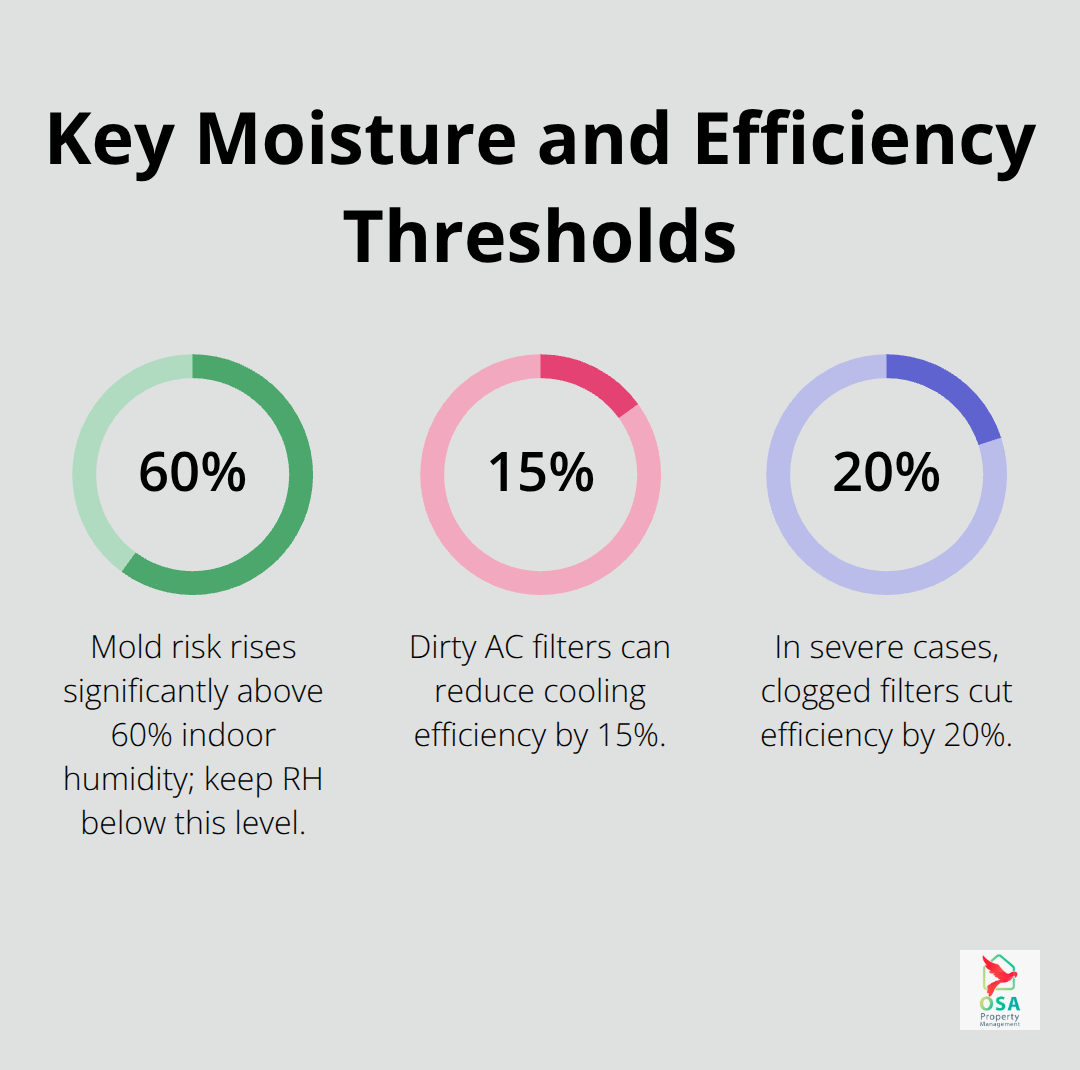
Mold begins growing within 24 to 48 hours of moisture intrusion, according to EPA guidance. During Costa Rica’s rainy season from May through November, indoor humidity commonly rises above 60 percent, the exact threshold where mold thrives behind walls and under floors. Keeping relative humidity under 60 percent through dehumidifiers and proper ventilation prevents mold formation. Monthly HVAC filter replacement matters because dirty filters cut cooling efficiency by 15 to 20 percent, allowing humidity to climb. Many homeowners skip this task and face mold remediation costs that reach thousands of dollars. Small mold areas up to about 10 square feet respond to detergent and water cleaning, but larger infestations require professional remediation.
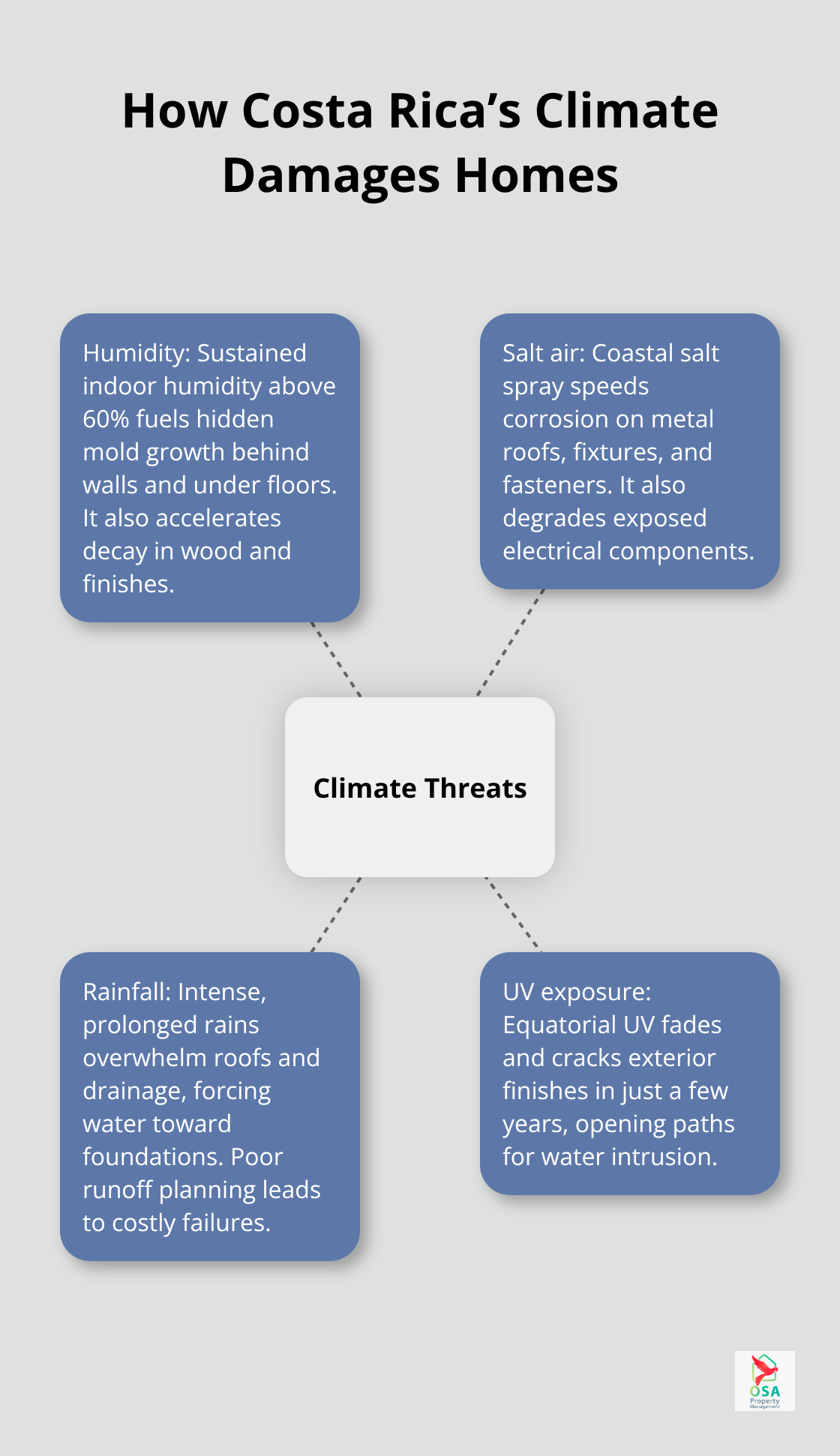
Exterior stucco finishes fade and crack within 2 to 3 years under equatorial UV, and when cracks appear, water penetrates behind the surface where mold develops invisibly.
Salt Air and Coastal Corrosion Accelerate Deterioration
Guanacaste coastal properties face the harshest conditions due to salt spray that accelerates metal corrosion and moisture penetration along with relentless equatorial UV. Galvanized components on roofs, gutters, and fixtures need protective coatings every 3 to 4 years or they corrode completely. UV-stable gutters and exterior drainage materials designed for tropical exposure outperform PVC gutters, which UV degradation turns brittle within 5 years. Outdoor electrical components require annual inspection and upgrades to marine-grade components if exposed to salt spray. The combination of humidity around 70 percent, salt air, and strong UV shortens material lifespans to 5 to 7 years in some cases, compared to 15 to 20 years in mainland climates.
Rainfall and Drainage Demand Professional Planning
The Central Pacific coast typically receives 1,500 to 2,000 millimeters of rain annually around Jacó, with 3,000 millimeters or more farther south toward Quepos and Manuel Antonio. This constant moisture tests every seal, drain, and roof detail relentlessly. A formal runoff analysis proves essential before construction or major renovation because without it, drainage decisions become guesswork and lead to costly failures. A detailed topographic survey maps contour lines and drainage pathways, informing water runoff analysis and site design. Foundation drainage must direct water away from the home, and landscaping should grade to divert runoff. Before the heavy rains arrive in April, inspect roofs and gutters for damage and clear debris to maintain drainage away from the foundation. Neglecting this 4 to 6 week window before the rainy season costs money; investing around 500 dollars in May averts roughly 5,000 dollars in water damage repairs by October.
Moving Forward With Your Maintenance Strategy
Understanding these climate forces shapes how you approach every maintenance decision ahead. The next section covers the specific inspection routines and preventative tasks that stop these threats before they damage your property.
Essential Maintenance Tasks for Costa Rica Homeowners
Roof Inspections Stop Water Damage Before It Starts
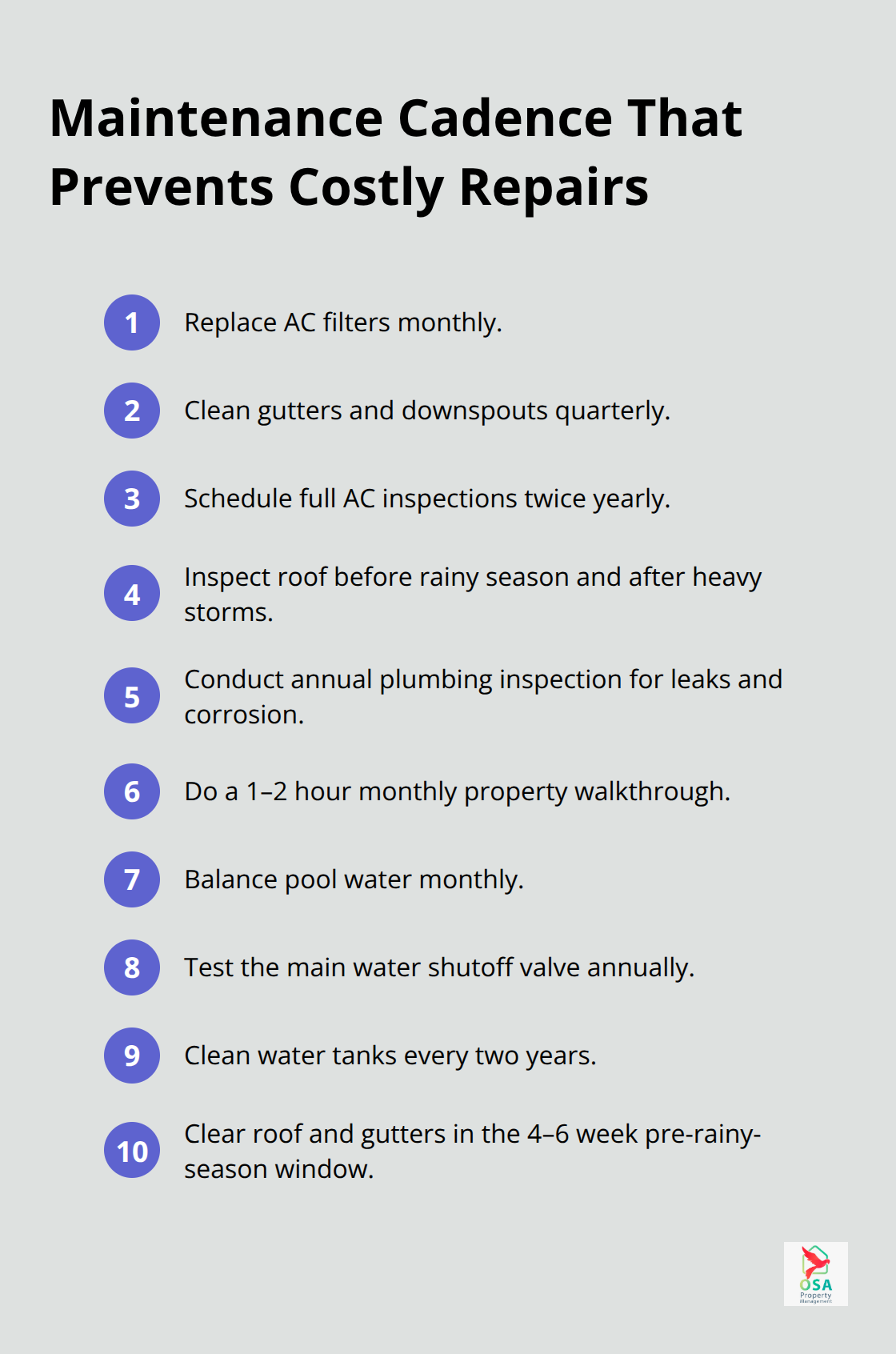
Your roof fails first in Costa Rica’s climate, and waiting until you see water stains inside means foundation damage has already started. Inspect your roof before the rainy season hits in April and again after heavy rains, checking tiles, rubber washers, flashing, and gutter debris each time. Preventive washer replacements cost 400 to 800 dollars but prevent 5,000 to 8,000 dollars in water intrusion repairs. A professional roof inspection runs 100 to 200 dollars and takes two hours, while repairs range from 500 to 2,000 dollars depending on scope.
The 4 to 6 week window before May’s rainy season is your only real maintenance window for exterior work. Skipping this inspection window costs more than any other maintenance mistake homeowners make. Roof replacement costs 8,000 to 15,000 dollars and lasts 15 to 20 years in mainland climates, but tropical exposure shortens this to 10 to 12 years, making early damage detection non-negotiable.
Gutters and Drainage Protect Your Foundation
Gutters clogged with leaves and debris redirect water toward your foundation instead of away from it. Clean them quarterly and inspect downspouts to confirm water deposits far enough from the foundation. Foundation cracks wider than one-eighth inch indicate water infiltration or settlement; have a structural engineer assess these immediately because foundation repair costs 15,000 to 25,000 dollars and accelerates if water continues penetrating.
Termites Demand Year-Round Vigilance
Termites attack year-round in Costa Rica and damage wood framing that supports your entire home, yet many owners ignore pest control until visible damage appears. Schedule termite inspections annually with a licensed professional and use termite-resistant materials for any new wood installation or repairs. Prevention through annual inspections costs far less than structural repairs that can reach tens of thousands of dollars.
Plumbing Systems Require Regular Assessment
Plumbing failures cost 2,000 to 5,000 dollars to remediate when septic tanks are undersized or waste lines clog, so hire a local engineer for capacity assessment at 300 to 500 dollars before problems develop. Schedule annual plumbing inspections for leaks, corrosion, and pressure issues; water tanks need cleaning every two years to remove sediment that clogs fixtures. Keep essential spares on hand (PVC fittings, shutoff valves, and hose clamps), then test your main shutoff valve annually to confirm it operates smoothly.
Air Conditioning and Monthly Maintenance Tasks
AC filters require monthly replacement, not quarterly, because dirty filters cut cooling efficiency by 15 to 20 percent and allow humidity to climb above the 60 percent mold threshold. Full AC inspections twice yearly, before the rainy season and during the hottest months, check refrigerant levels, coils, and electrical connections; this preventive service costs 150 to 300 dollars per visit but prevents compressor failure repairs that exceed 2,000 dollars. Monthly maintenance tasks including pool water balancing, leak detection, and a 1 to 2 hour property walkthrough cost 50 to 100 dollars per visit and catch small problems before they escalate into expensive repairs.
These inspection routines and preventative tasks form the foundation of smart Costa Rica home ownership. The next section covers how to find and vet the local contractors and property management partners who execute this maintenance strategy reliably.
Building a Maintenance Team That Actually Shows Up
Finding Contractors You Can Trust
Finding reliable contractors in Costa Rica feels like searching for a needle in a haystack, but the difference between a caretaker who texts weekly photos and one who vanishes for months determines whether your home survives the rainy season intact. Start by creating a robust network of dependable contractors through multiple sources: your real estate agent, neighbors who own similar properties, and local expat groups that maintain active forums. Interview your top three candidates in person, assess their language skills and transportation reliability, and verify references by calling previous clients directly.
People who are hard to reach, provide vague photo reports, or frequently blame family or car problems for missed appointments will cost you thousands in deferred maintenance. A detailed contract protects both parties and must specify start dates, materials, costs, and payment schedules. Never pay more than 10 to 20 percent upfront, reserve 10 to 20 percent until completion, and require lien releases from all subcontractors before final payment. Larger projects demand permit verification because unpermitted work creates liability and resale complications. Treat scope changes as separate budgeted stages rather than surprises that inflate costs mid-project.
Managing Caretakers From Abroad
Whether you hire a part-time caretaker at 400 to 700 dollars monthly, full-time support at 800 to 1,500 dollars, or live-in help at 600 to 1,200 dollars plus housing, managing from abroad requires systems that prevent communication breakdowns. Define written responsibilities clearly, use a weekly photo checklist to document tasks completed, and schedule regular video check-ins every two weeks. Employ remote monitoring through security cameras with cloud storage, smart thermostats for temperature and humidity tracking, and leak detectors under sinks and near water tanks.
A full smart home installation with locks, cameras, sensors, and thermostats typically costs 500 to 1,000 dollars in labor plus device costs, but reliable internet connection proves essential and backup cellular connectivity protects against outages. Document everything after each inspection or repair: photograph conditions, record contractor names and dates, log work performed and costs, and build a seasonal maintenance calendar that assigns specific rainy-season tasks to your caretaker. This documentation prevents disputes, protects warranty claims, and demonstrates maintenance history to future buyers.
When Professional Property Management Makes Sense
Professional property management coordinates with trusted contractors, maintains warranty records, and delivers transparent monthly updates that enable you to manage from anywhere with genuine peace of mind rather than constant worry about whether work actually happened. Osa Property Management handles marketing, concierge services, renter relationships, bill payment, accounting, tax compliance, and oversees maintenance by trusted companies across the southern Pacific region (Tarcoles, Jaco, Dominical, Manuel Antonio, Ojochal, Uvita, and Golfito). Their team of over 40 full-time employees provides customized service packages that ensure cost efficiency while protecting your investment through professional oversight and reliable execution.
Final Thoughts
Costa Rica home maintenance demands consistent action, not occasional attention. The tropical climate attacks your roof, plumbing, electrical systems, and exterior finishes relentlessly through humidity, salt spray, and rainfall that exceeds 3,000 millimeters annually in southern zones. Monthly AC filter changes, quarterly gutter cleaning, annual plumbing inspections, and pre-rainy-season roof checks protect your investment far more effectively than emergency repairs that cost thousands after damage occurs.
Building a reliable maintenance team separates owners who preserve their properties from those who watch them deteriorate. Contractors who communicate clearly, provide photo documentation, and show up on schedule protect your home far better than those who vanish between visits, while remote monitoring systems with cameras and leak detectors give you visibility into your property’s condition from anywhere. A detailed maintenance calendar and documented repair history demonstrate to future buyers that your property received proper care, directly supporting resale value and preventing the costly depreciation that neglect causes.
Many owners eventually discover that managing CR home maintenance remotely while coordinating contractors, overseeing caretakers, and planning seasonal work becomes overwhelming. Osa Property Management handles the entire operation across the southern Pacific region, coordinating trusted contractors, maintaining warranty records, and delivering transparent monthly updates that protect your investment through professional oversight. Whether you manage your home yourself with a reliable caretaker or partner with professionals who handle everything, the choice remains the same: invest in prevention now or pay for emergency repairs later.