

Property owners in Costa Rica often underestimate what professional management actually costs. Between visible fees and hidden expenses, the true investment in property management costs CR can surprise you.
At Osa Property Management, we break down exactly where your money goes and why it matters for your bottom line.
What You Actually Pay For
Marketing and Guest Acquisition
At Osa Property Management, marketing and guest acquisition typically consume 8–12% of your management fee for long-term residential rentals and 20–30% for vacation properties because reaching quality renters requires constant effort. Professional photography, property listings across multiple platforms, screening inquiries, and coordinating viewings all add up quickly. Vacation rental properties in Costa Rica command higher acquisition costs since turnover happens frequently and competition for bookings intensifies. A vacant property generates zero revenue, so getting the right tenant quickly matters far more than saving a few hundred colones on marketing.
Maintenance and Repairs Oversight
Maintenance and repairs oversight accounts for another significant portion of your investment. Costa Rica homeowners spend about 1.5% to 3% of their property’s value yearly on upkeep, averaging $10,000–$25,000. Coastal properties in areas like Ojochal and Uvita require more frequent attention due to salt air and humidity, which pushes costs higher. A property manager with construction knowledge can save you hundreds to thousands yearly by distinguishing between work that needs an expensive specialist contractor and repairs a handyman can handle. This expertise prevents unnecessary spending on overpriced or redundant work.
Accounting, Tax Compliance, and Financial Management
Accounting, tax compliance, and financial management round out the core fees. We handle monthly statements, rent collection processing, tax reporting, and year-end reconciliation. In Costa Rica, this work carries more complexity than it appears because of local rental law requirements, including the mandatory 3-year minimum lease duration for residential properties, plus currency considerations and reporting obligations. These financial services protect your property and optimize your income, but understanding exactly what each costs helps you evaluate whether the investment makes sense for your situation.
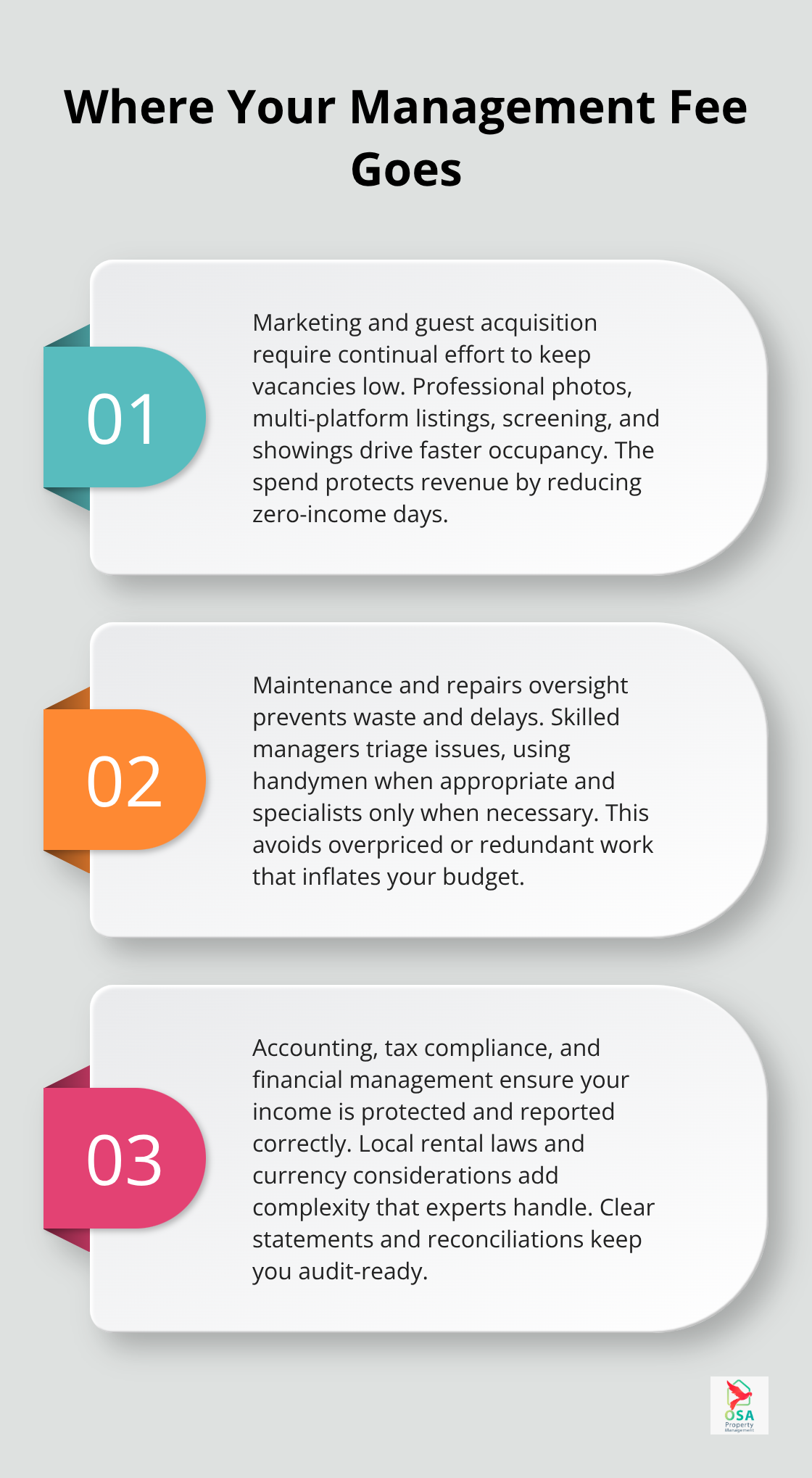
The breakdown of these three components reveals where your money flows, yet many property owners still overlook what happens when unexpected expenses arise-which brings us to the hidden costs that catch owners off guard.
Hidden Costs Property Owners Often Miss
Seasonal Maintenance Spikes in Costa Rica’s Climate
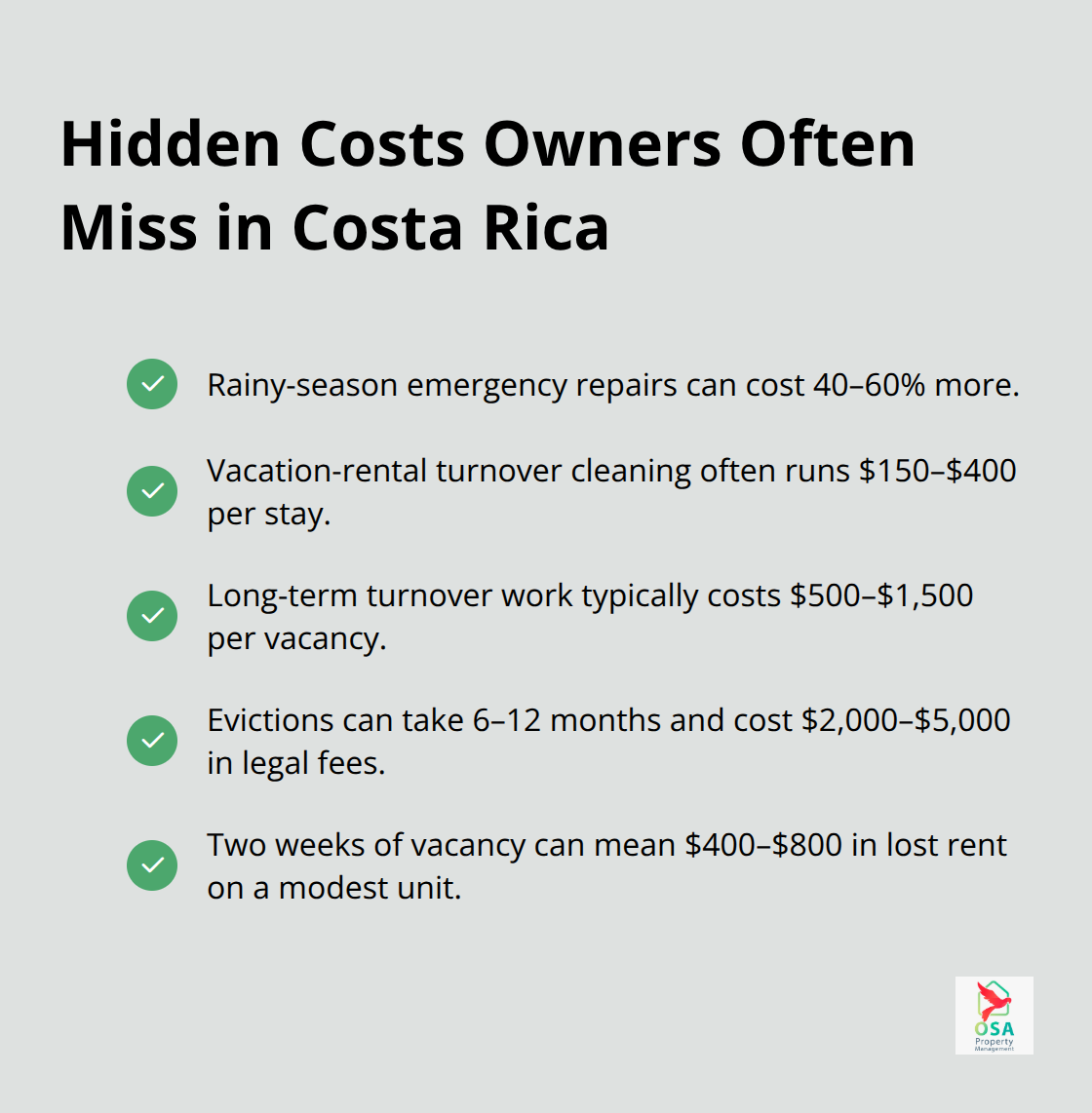
Seasonal maintenance in Costa Rica’s climate hits differently than in temperate climates. The rainy season from May to November accelerates wood rot, mold growth, and roof deterioration, meaning your property needs attention exactly when fewer tourists visit and revenue drops. Emergency repairs during this period cost 40–60% more because contractors face higher demand and material scarcity. A roof leak discovered mid-rainy season isn’t a minor fix; it becomes a race against time before structural damage spreads to the interior and foundation.
Turnover Expenses Between Guests and Tenants
Turnover expenses between guests or tenants represent another major blind spot for property owners. Cleaning between vacation rentals costs $150–$400 per turnover depending on property size, and if a guest damages something, repair costs escalate fast. Long-term rentals require deeper turnover work: repainting, deep cleaning, carpet treatment, and minor repairs typically consume $500–$1,500 per vacancy. If your property sits empty for two weeks while being prepared, you lose $400–$800 in potential rental income on a modest property.
Legal Compliance and Regulatory Complexity
Legal compliance and regulatory complexity in Costa Rica rental laws adds complexity most owners underestimate. Costa Rican law mandates a minimum three-year term for residential leases, meaning you cannot simply evict a problematic tenant quickly, and eviction proceedings stretch 6–12 months and cost $2,000–$5,000 in legal fees. Fair housing compliance, lead paint disclosures if applicable, and local safety regulations all require documentation and sometimes professional inspection. A property manager who knows Costa Rica’s rental laws prevents costly mistakes, but this expertise demands constant attention to regulatory changes.
The True Cost Picture
Most property owners budget for their management fee and assume maintenance costs stay flat. Reality proves different. A professional manager factors in seasonal spikes, plans for turnover between occupants, and maintains legal compliance before problems emerge. These hidden costs often exceed the visible management fee itself, which is why comparing only the stated percentage rate misses the full picture. Understanding what actually drives your expenses in Costa Rica sets the stage for calculating your true property management investment and measuring whether professional management delivers real value for your situation.
How to Calculate Your True Property Management Investment
Breaking Down Fixed and Variable Costs
Your true property management investment requires separating fixed costs from variable expenses and tracking both monthly and annual figures side by side. Start with your management fee, which typically runs 8–12% of monthly rent for long-term residential properties in Costa Rica. Add your leasing fee, commonly 50–100% of one month’s rent when a new tenant moves in, plus tenant placement costs that recur whenever occupancy changes. Then layer in maintenance and repairs, which average 5–10% of annual rent depending on property age and coastal exposure.
Vacation Rentals Command Different Economics
For vacation rentals, the math shifts dramatically: management fees jump to 20–30% of rental income because turnover happens constantly and marketing demands never stop. Many property owners forget to budget for seasonal spikes during Costa Rica’s rainy season, when emergency repairs cost 40–60% more due to contractor demand. Turnover cleaning and repairs between guests add $500–$1,500 per vacancy for long-term rentals, plus two weeks of lost income if your property sits empty during preparation.
Accounting and Compliance Add Hidden Layers
Accounting, tax compliance, and legal compliance in Costa Rica carry extra weight because of the mandatory three-year minimum lease requirement and regulatory complexity that creates ongoing documentation needs. Build in a buffer of 5–10% of annual rent as a capital expenditure reserve for major repairs or replacements that inevitably arise. The total picture matters more than any single line item: a property generating $2,000 monthly rent might cost $240–$360 in management fees, $1,000–$2,000 annually in maintenance, $500–$1,000 in seasonal spikes, and $1,000–$1,500 per turnover cycle (roughly $4,000–$7,000 yearly in direct costs before accounting for vacancy periods or emergency repairs).
Comparing Packages and Measuring ROI
Compare package options by requesting itemized fee schedules from multiple firms and calculating the total annual cost, not just the percentage rate. Customized service packages let you select which services align with your situation rather than paying for unnecessary add-ons. Measuring return on investment means comparing your net rental income under professional management against the total costs you pay, then asking whether you could achieve the same income with self-management while investing 20 hours monthly per unit yourself.
Professional management typically generates higher rental income compared to self-management because of better tenant screening, optimized pricing strategies, and faster turnover that minimizes vacancy days. If your property earns $24,000 annually and professional management costs $5,000 but generates additional revenue through higher occupancy and rent optimization, your real cost drops significantly. The investment pays for itself when professional expertise prevents even one problematic tenant who costs over $3,500 in damages and legal fees, or when expert repair decisions save hundreds to thousands annually by avoiding unnecessary specialist contractor work.
Final Thoughts
Quality tenant screening eliminates problematic renters before they move in, preventing the $3,500+ in damages and legal fees that a single bad tenant can cost. We at Osa Property Management verify income, conduct background checks, and assess rental history thoroughly because one eviction proceeding lasting 6–12 months and costing $2,000–$5,000 in legal fees wipes out years of management savings. Reduced vacancy rates follow naturally when your property receives professional marketing across multiple platforms and reaches qualified prospects quickly, meaning fewer weeks of zero rental income eating into your annual returns.
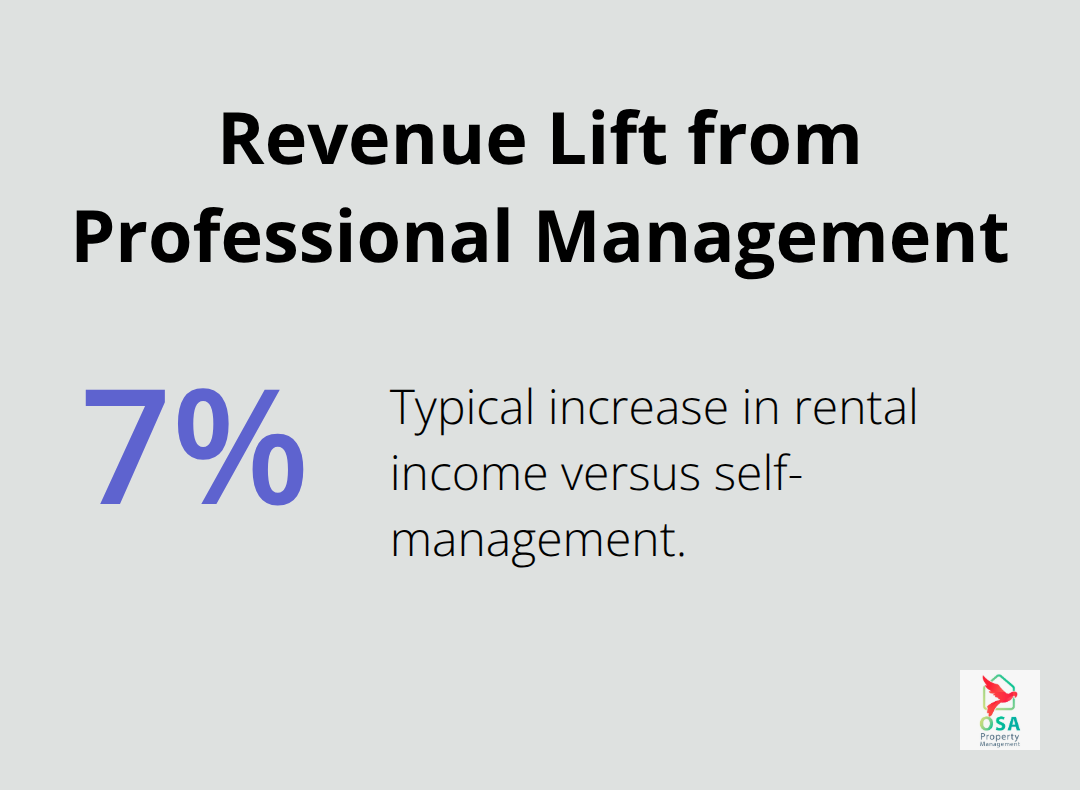
A professional manager knows what the market will bear in your specific location-whether Ojochal, Uvita, or Manuel Antonio-and adjusts rates seasonally to maximize occupancy without leaving money on the table. Self-managing owners often underprice their properties or miss opportunities to raise rents during peak seasons, costing thousands annually in foregone revenue. Professional management typically generates around 7% higher rental income compared to self-management, which alone justifies the investment for most property owners.
Self-managing a property demands roughly 20 hours monthly per unit handling tenant inquiries, maintenance coordination, accounting, and compliance work. That time investment carries real cost when you calculate what your own hours are worth, plus the stress of emergency repairs at midnight or tenant disputes that disrupt your life. We at Osa Property Management handle marketing, accounting, tax compliance, and maintenance oversight across the southern Pacific zone, allowing you to own property in Costa Rica without managing it yourself-visit Osa Property Management to discuss your specific situation and calculate your real return on investment.