

Costa Rica's real estate market offers something for every budget, from affordable rural properties to luxury beachfront homes. The cost of property in Costa Rica varies dramatically depending on location, property type, and current market conditions.
We at Osa Property Management help buyers and investors understand what they're actually paying for. This guide breaks down regional prices, the factors that drive them, and the hidden expenses you need to budget for.
What You'll Actually Pay in Different Costa Rican Markets
Beachfront Properties Command Premium Pricing
Beachfront property in Guanacaste costs between $966 and $6,302 per square meter depending on location, making it one of the most expensive segments in Costa Rica. A modest beachfront home of 150 square meters would run you $375,000 to $525,000 before closing costs. Tamarindo and Peninsula Papagayo command the highest prices within this region, often exceeding $2 million for quality homes. The Central Pacific around Jacó and Manuel Antonio sits in the mid-to-upper range at $1,500 to $2,000 per square meter for houses, with condos averaging $1,800 to $2,500 per square meter. A typical 150-square-meter condo in Jacó carries a median price near $230,000.
The Southern Zone Offers Emerging Value
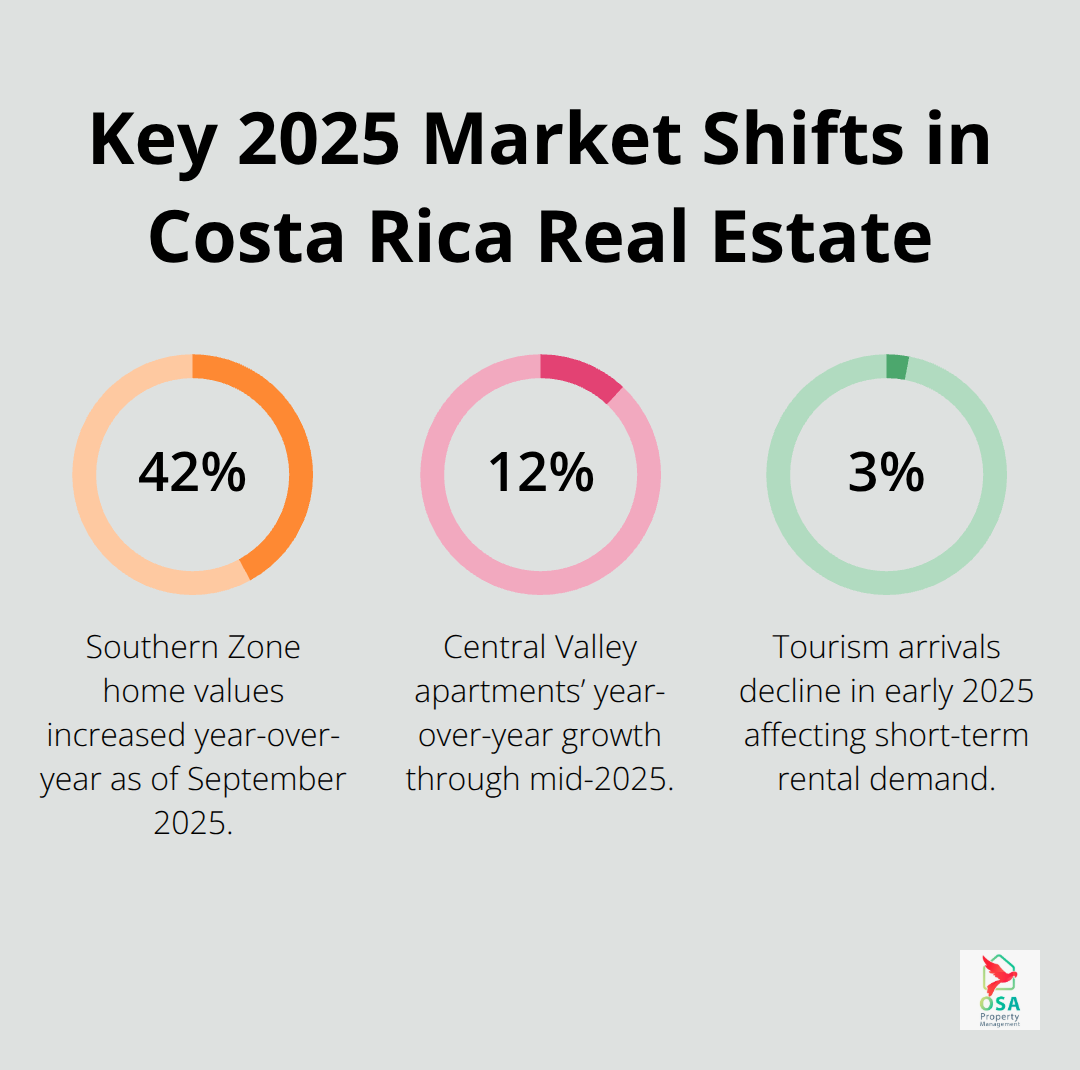
The Southern Zone including Uvita and Ojochal has emerged as the stronger value play, with average home prices around $893,841 and beachfront properties at $2,000 to $3,000 per square meter. These emerging coastal areas appreciate faster than established luxury markets, with Southern Zone values up 42% year-over-year as of September 2025. Development-ready lots in Ojochal and the Southern Zone frequently cost under $100,000, enabling lower per-square-meter costs if you plan custom construction.
Central Valley Properties Attract Income Investors
San José, Escazú, and Santa Ana in the Central Valley average $1,110 to $1,180 per square meter for houses and $1,724 to $2,343 per square meter for condos. Premium neighborhoods like Escazú reach $1,200 to $2,000 per square meter. A four-bedroom family home in these areas typically costs $300,000 to $800,000. This region shows the strongest rental yields at 8.35 percent in San José and 8.37 percent in Heredia, making it the logical choice for income-focused investors. Central Valley apartments grew about 12 percent year-over-year through mid-2025, indicating steady appreciation.
Budget-Friendly Coastal and Rural Options
The Caribbean Coast around Limón and Puerto Viejo remains the most budget-friendly option, with houses around $971 per square meter and condos around $1,133 per square meter. Rural and mountain properties offer entry-level opportunities below $800 per square meter, with raw land often priced under $100,000 in developing areas. National median prices sit around $533,647 for single-family homes, though beachfront properties regularly exceed $2 million.
Understanding these regional price variations sets the foundation for your next decision: identifying which factors actually drive these costs and how market conditions shift them over time.
What Actually Drives Property Prices in Costa Rica
Beachfront Location Commands the Highest Premiums
Beachfront location dominates pricing more than any other single factor, with beachfront homes in Costa Rica selling for up to three times the price of similar inland properties. This premium exists because foreign demand concentrates heavily on coastal access-North American retirees and digital nomads prioritize beach lifestyle over other amenities. Within established coastal markets, proximity to restaurants, shops, and services adds 15 to 25 percent to property values compared to identical homes in quieter areas. A four-bedroom home in Escazú with easy access to international schools and healthcare facilities sells faster and at higher per-square-meter rates than the same home 10 kilometers away in a less-connected neighborhood.
Infrastructure Quality Determines Resale Speed
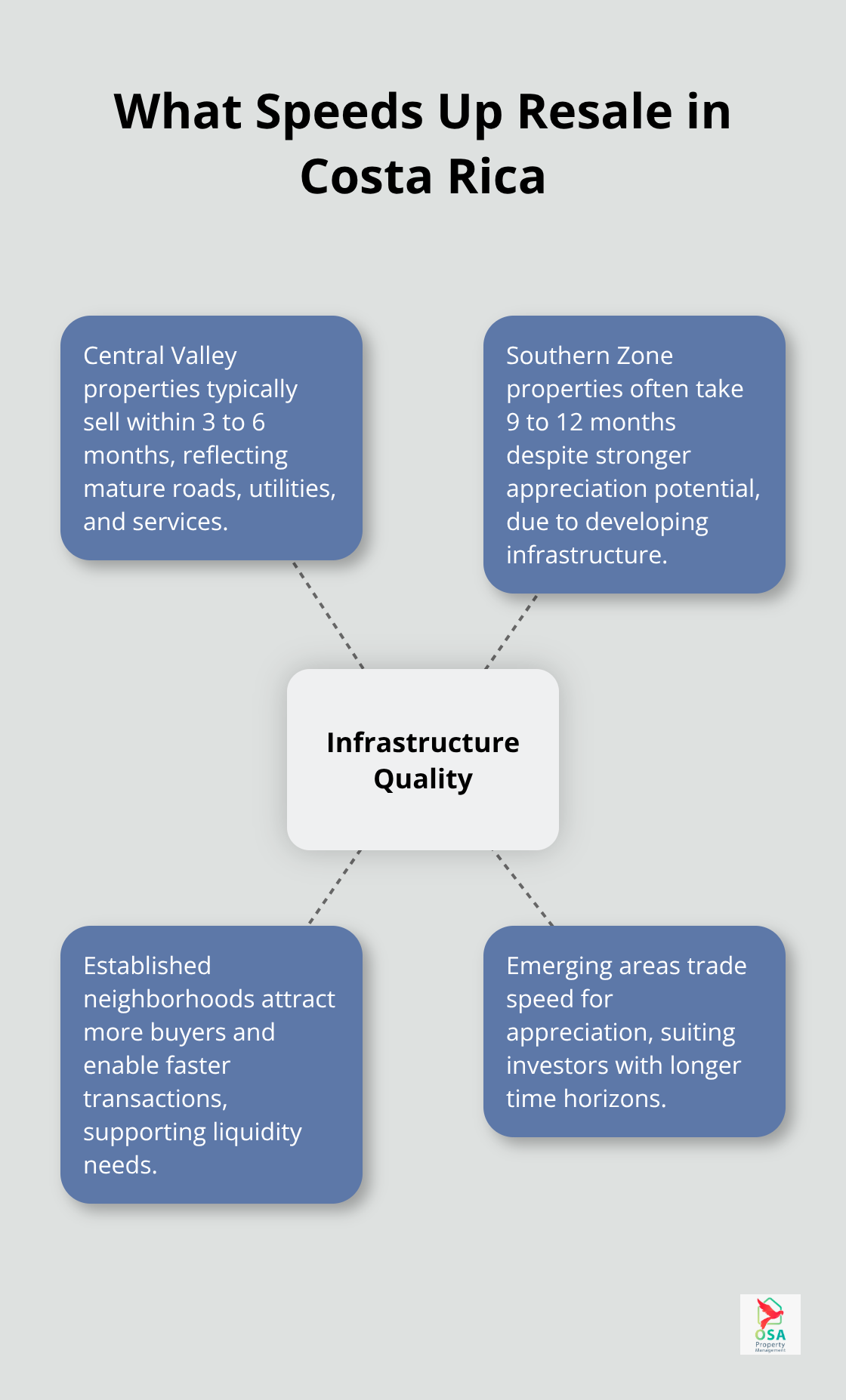
Infrastructure quality directly translates to resale speed and investor returns. Central Valley properties sell within 3 to 6 months on average, while Southern Zone properties often take 9 to 12 months despite stronger appreciation potential. This difference matters significantly if you need liquidity-established neighborhoods with developed roads, utilities, and services attract more buyers and command faster transactions. Emerging areas sacrifice speed for appreciation, making them suitable only for investors with longer time horizons.
Property Type and Condition Create Value Opportunities
Raw land in emerging areas like Ojochal costs under $100,000 and appreciates roughly 30 percent over five years if infrastructure develops nearby, making it the highest-return entry point for patient investors. Older condos in established tourist areas often sell 20 to 30 percent below newer construction despite identical locations, creating value for buyers willing to handle minor renovations. These discrepancies reward investors who can identify quality properties overlooked by the broader market.
Economic Conditions and Currency Movements Shift Affordability
Market demand shifts rapidly based on economic conditions. When mortgage rates dropped to 7.66 percent in mid-2025 according to the Central Bank of Costa Rica, Central Valley properties saw immediate price increases because local buyers suddenly qualified for larger loans.
Investment Timeline Determines Your Best Strategy
Beachfront vacation rental properties appreciate slower in down tourism cycles, while Central Valley long-term rentals maintain steady 8+ percent yields regardless of tourism trends. Your investment timeline matters-if you need liquidity within two years, try established Central Valley neighborhoods where demand remains constant. If you can hold five to ten years, emerging coastal areas like Uvita and Ojochal offer 40 to 60 percent appreciation potential as infrastructure and expat communities mature. These different paths require different property selections, which means understanding your specific financial goals before you evaluate individual listings.
What Costs Hide Behind the Purchase Price
Most foreign buyers focus entirely on the purchase price and overlook the recurring expenses that drain investment returns year after year. Property taxes in Costa Rica run approximately 0.25 percent of the registered property value annually, which sounds low until you calculate it on a $500,000 home-that's $1,250 per year. However, this baseline figure masks significant regional variation. The Central Valley's higher property valuations push annual taxes higher in absolute terms, while rural properties in developing areas often carry inflated assessed values relative to market prices, creating a tax burden that exceeds comparable properties in established markets.
Utilities and Fees Vary Dramatically by Location
Beyond property taxes, you'll face annual utility costs that vary dramatically by location and property type. A beachfront home in Guanacaste typically costs $150 to $300 monthly for electricity due to air conditioning demands, while a Central Valley apartment might run $60 to $100. Water costs add another $30 to $80 monthly depending on consumption. Homeowners associations in gated communities and condo buildings charge monthly fees ranging from $200 to $500, and these fees increase annually to cover infrastructure maintenance.
Major Repairs Hit Hard in Tropical Climates
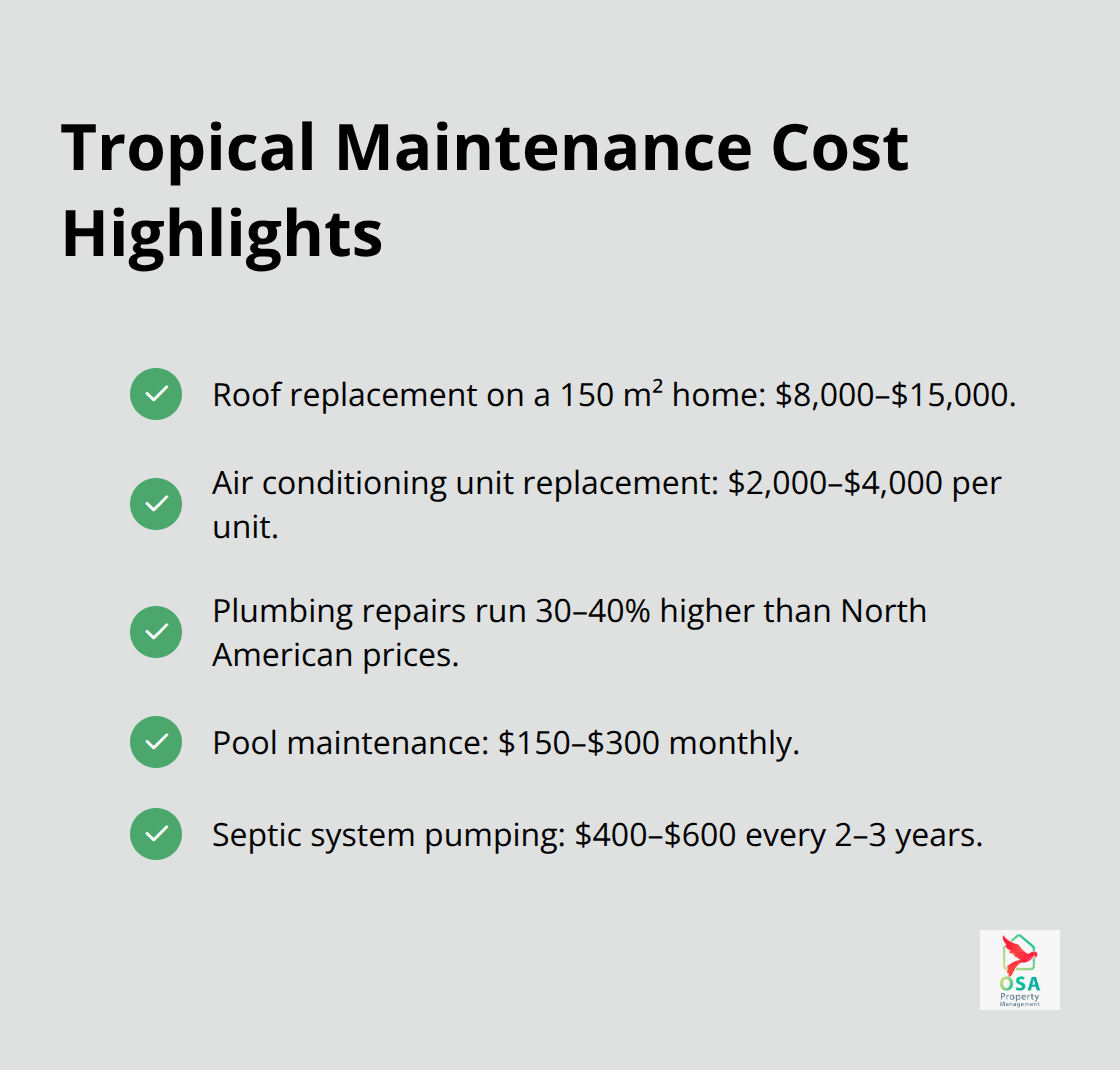
The real expense shock arrives when major maintenance hits. Roofing replacement on a 150-square-meter home costs $8,000 to $15,000 in Costa Rica. Air conditioning units fail in the tropical climate and cost $2,000 to $4,000 to replace.
Insurance Costs Protect Your Investment
Insurance requirements also surprise unprepared investors-property insurance costs 0.5 to 1 percent of the property value annually for standard coverage, translating to $2,500 to $5,000 yearly on a $500,000 home. Liability coverage becomes essential if you rent the property, adding another $500 to $1,500 annually. These costs compound over ownership duration, reducing net returns by 2 to 4 percentage points annually compared to the gross rental yield figures you see advertised.
Calculate Total Cost of Ownership Before Committing
Add property tax, utilities, insurance, HOA fees, and a maintenance reserve of 1 to 2 percent of property value annually to determine your true operating costs. For a $500,000 beachfront property generating $40,000 in annual rental income, these expenses typically consume $8,000 to $12,000 yearly, reducing your effective yield from 8 percent to roughly 6.4 percent. Central Valley long-term rentals perform better because utilities run lower and maintenance costs decrease with smaller properties. A $350,000 condo in Escazú generating $3,500 monthly in rent faces roughly $4,000 to $5,500 in annual operating costs, preserving 6.5 to 7 percent net yield. Properties in emerging areas like Ojochal often lack established utility infrastructure and trash collection services, pushing operational costs 20 to 30 percent higher than comparable established neighborhoods. This reality matters when comparing the 42 percent appreciation mentioned earlier against the actual cash returns you'll collect annually. Create a detailed expense projection for any property you consider, accounting for your specific location and property type rather than relying on national averages that mask local realities.
Final Thoughts
Costa Rica's property market rewards buyers who understand regional pricing and the true cost of ownership. Beachfront properties in Guanacaste and the Central Pacific command premium prices between $1,500 and $6,302 per square meter, while the Central Valley offers stronger rental yields at 8.35 percent in San José. The Southern Zone delivers emerging value with 42 percent year-over-year appreciation, and the Caribbean Coast remains budget-friendly for investors with longer time horizons.
The cost of property in Costa Rica extends far beyond the initial purchase price. Property taxes, utilities, insurance, and maintenance consume 2 to 4 percentage points of gross rental yields annually, so a $500,000 beachfront property generating $40,000 yearly in rental income faces $8,000 to $12,000 in operating expenses that reduce your effective return to roughly 6.4 percent. Central Valley condos perform better because utilities run lower and maintenance costs decrease with smaller properties.
Your next step depends on your timeline and capital availability. If you need liquidity within two years, focus on established Central Valley neighborhoods where demand remains constant, but if you can hold five to ten years, emerging coastal areas offer stronger appreciation potential as infrastructure matures. We at Osa Property Management help investors navigate these decisions with professional property management across Tarcoles, Jacó, Dominical, Manuel Antonio, Ojochal, and Uvita-contact us to discuss how professional management protects your investment and maximizes your returns in Costa Rica's competitive real estate market.