

At Osa Property Management, we understand the importance of maximizing tax benefits for rental property owners. Many landlords ask, "Can I deduct property taxes on rental property?" The answer is yes, and it's a valuable strategy to reduce your tax burden.
In this guide, we'll walk you through the process of deducting property taxes on your rental investments, helping you save money and improve your bottom line.
What Are Property Taxes on Rental Properties?
Definition and Basics
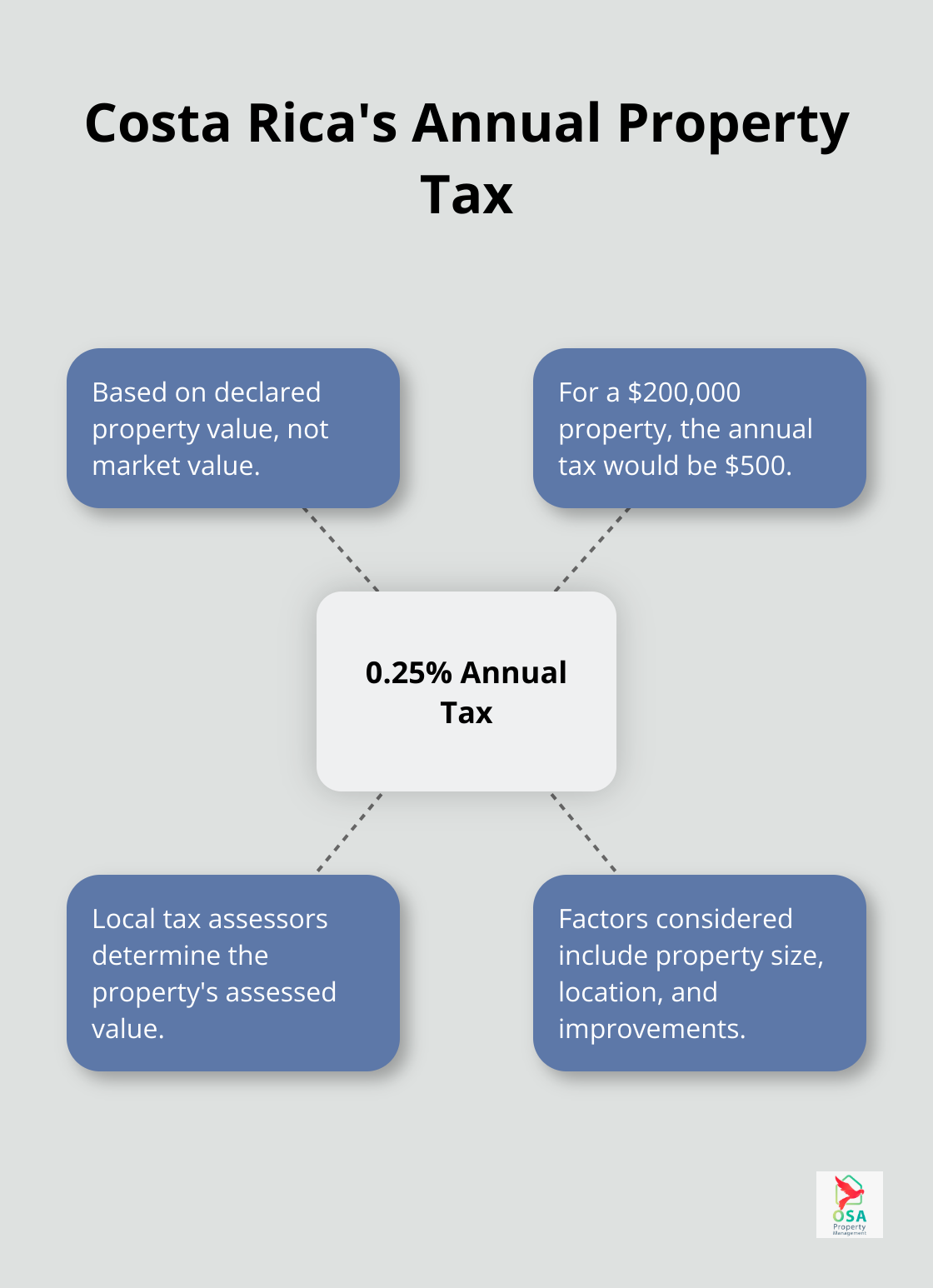
Property taxes on rental properties are annual fees that local governments impose on real estate investments. In Costa Rica, property owners pay an annual property tax of 0.25% of the declared value. These taxes directly impact a landlord's bottom line and form a significant part of ongoing expenses for rental property owners.
Calculation Method
Local tax assessors determine property taxes based on the assessed value of your rental property. This value often differs from the market value. Assessors consider factors such as:
- Property size
- Location
- Improvements
The tax rate, set by local authorities, is then applied to this assessed value. For instance, if your rental property in Jaco is assessed at $200,000, your annual property tax would be $500 (0.25% of the declared value).
Impact on Real Estate Investing
Property taxes significantly influence the profitability of your rental investment. As an ongoing expense, they affect your cash flow and overall returns. Higher property taxes can reduce your net income, but they may also indicate a desirable location with better amenities (potentially attracting higher-paying tenants).
Staying Informed and Proactive
As a property owner, you must stay informed about local tax laws and assessment practices. We recommend regular reviews of your property tax assessments. If you believe your property has been overvalued, you have the right to appeal the assessment. This proactive approach can lead to substantial savings over time.
The Role of Property Management
Professional property management companies can help navigate the complexities of property taxes. They often have in-depth knowledge of local tax regulations and can assist with assessment appeals if necessary. Landlords in Costa Rica must follow certain rules for rental property taxes and file and pay taxes on time to avoid financial issues.
Understanding property taxes lays the foundation for effective financial management of your rental property. The next section will explore how you can effectively deduct these taxes to optimize your investment's financial performance.
What Property Taxes Can You Deduct on Rental Properties?
Types of Deductible Property Taxes
In Costa Rica, property owners can deduct the annual property tax of 0.25% on the declared value for rental properties. For a property valued at $200,000, this translates to a $500 deduction from your rental income. Special assessments levied by local governments for improvements (such as sidewalks or sewers) also qualify for deductions in the year of payment.
Limitations and Special Considerations
While property taxes offer valuable deductions, certain limitations apply. For properties with mixed personal and rental use, you must prorate the deduction. For instance, if you rent your Jaco beach house for 9 months and use it personally for 3 months, only 75% of the property taxes become deductible.
Costa Rica imposes a luxury home tax (impuesto solidario) on properties valued over approximately $230,000. This tax, separate from regular property taxes, is calculated based on construction value and land value, with a progressive tax rate applied.
Essential Documentation
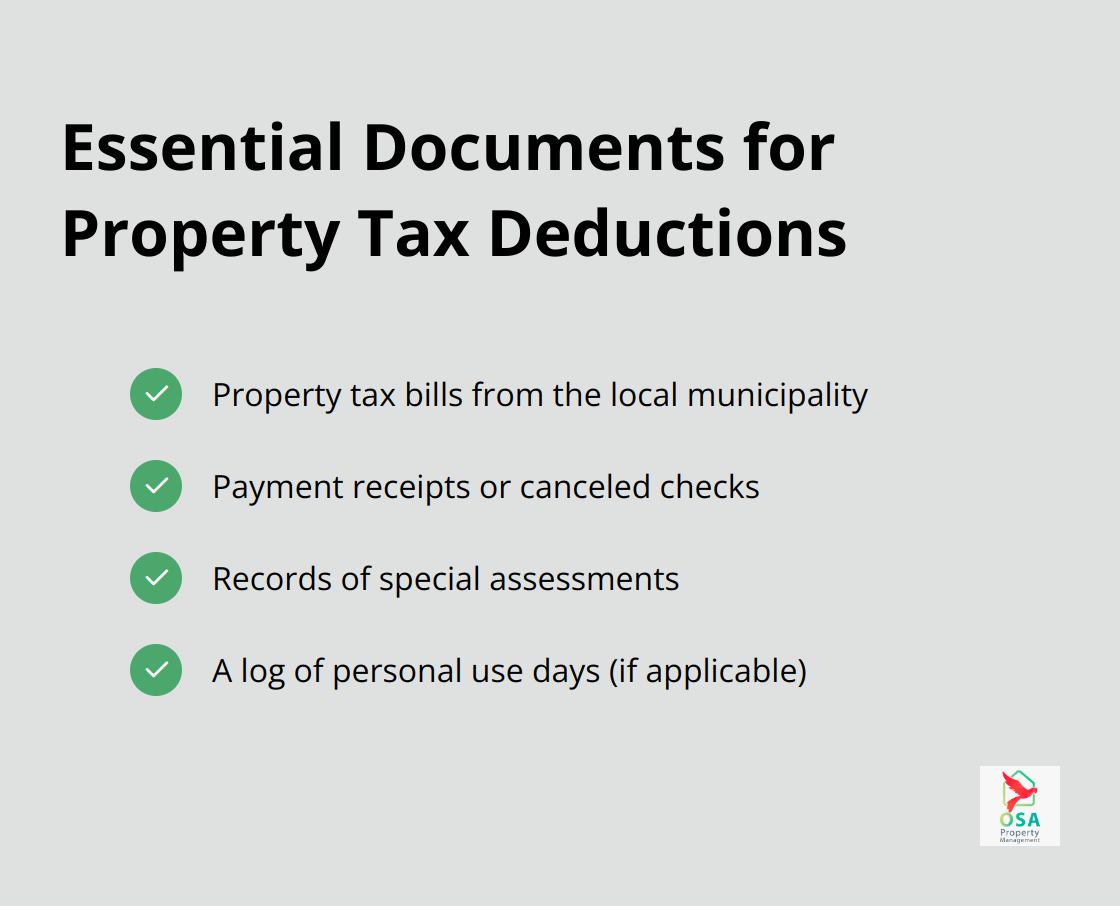
Successful property tax deductions require proper documentation. Property owners should maintain:
- Property tax bills from the local municipality
- Payment receipts or canceled checks
- Records of special assessments
- A log of personal use days (if applicable)
Organizing these documents throughout the year will streamline your tax preparation process.
Navigating Complex Scenarios
Some situations complicate property tax deductions. Recent property purchases may allow deductions for taxes owed from the purchase date. Significant property improvements might increase tax assessments, potentially leading to larger deductions but higher ongoing costs.
In these complex cases, consultation with a tax professional familiar with Costa Rican tax law proves beneficial. They can provide tailored advice to maximize deductions while ensuring compliance with local regulations.
As we move forward, let's explore the step-by-step process of deducting property taxes on your rental property, ensuring you capitalize on every available tax benefit.
How to Deduct Property Taxes on Your Rental Property
Gather Essential Documentation
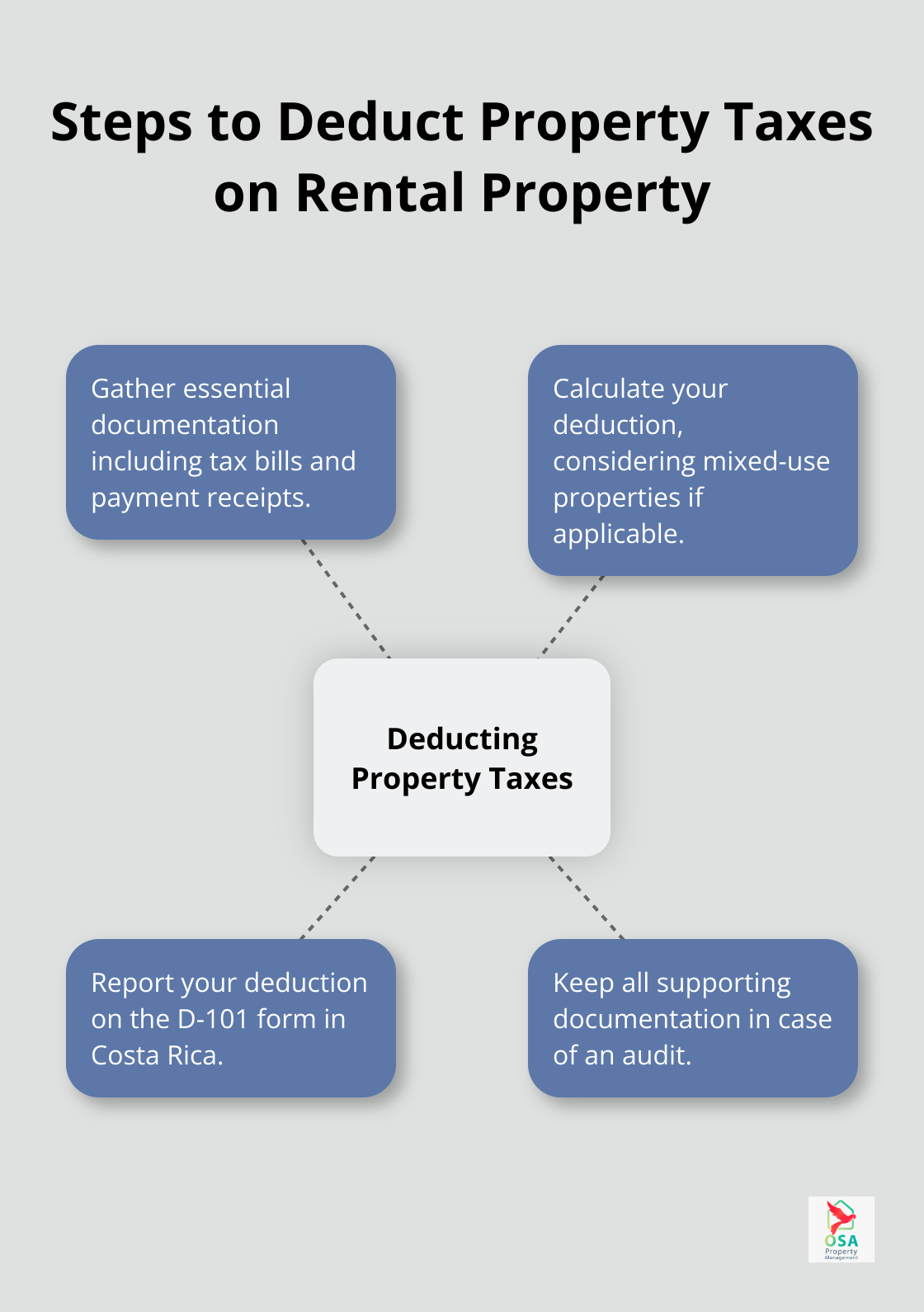
The first step to deduct property taxes involves collecting all necessary paperwork. This includes your annual property tax bills from the local Costa Rican municipality, proof of payment (bank statements or receipts), and any documentation related to special assessments. Keep records of significant improvements to your property, as they may affect your property's assessed value.
For properties with mixed personal and rental use, maintain a detailed log of personal use days. This information is essential for accurate tax deduction proration. In Costa Rica, track the 0.25% annual property tax on the declared value, as well as any luxury home tax if your property value exceeds approximately $230,000.
Calculate Your Deduction
After collecting all documents, calculate your deductible amount. For a straightforward rental property, this equals the total property tax paid for the year. However, for mixed-use property, calculate the percentage of time the property was rented and apply that to your total property tax.
Example: If you paid $1,000 in property taxes for a vacation home in Jaco that was rented for 9 months of the year, your deductible amount would be $750 (75% of $1,000). Accuracy in these calculations helps avoid potential issues with tax authorities.
Report Your Deduction
In Costa Rica, report rental income and expenses on the D-101 form. Include your property tax deduction in the expenses section of this form. Keep all supporting documentation in case of an audit.
U.S. citizens with rental properties in Costa Rica must report this information on Schedule E of their U.S. tax return. Include the property tax deduction in the "Taxes" line of this form.
A common oversight is failing to report rental income and expenses separately for each property. If you own multiple rental properties, track and report the taxes for each one individually.
Avoid Common Mistakes
One frequent error involves deducting property taxes that were charged but not paid during the tax year. In Costa Rica, you can only deduct taxes actually paid within the year you're filing for.
Another mistake is failing to separate and properly categorize special assessments. While regular property taxes are fully deductible, special assessments for local benefits (like new sidewalks) may need to be capitalized and depreciated over time. It's important to note that the first 3.8 million colones (approximately $7,600 USD) of annual rental income remains tax-exempt in Costa Rica. Beyond this threshold, rates range from 10%.
Don't forget to consider exchange rates if you're reporting in a currency different from Costa Rican colones. Use the appropriate exchange rate for the date each payment was made to ensure accuracy in your reporting.
Tax laws can be complex and change frequently. Costa Rica has introduced several important changes to rental tax laws, including a Digital Reporting System where all property owners now must submit rental information. When in doubt, consult with a tax professional familiar with both Costa Rican and your home country's tax laws. This approach will help you maximize your property tax deductions and optimize your rental property's financial performance.
Final Thoughts
Property tax deductions on rental properties in Costa Rica offer a powerful strategy to optimize investment performance. The 0.25% annual property tax on declared value, along with potential luxury home taxes for properties over $230,000, requires careful consideration and accurate calculations. Meticulous record-keeping and understanding of local tax laws will help you reduce your tax burden and improve overall returns.
Costa Rica's tax landscape has evolved, introducing changes like the Digital Reporting System for rental information. These complexities underscore the importance of professional guidance to navigate tax regulations effectively. A tax expert familiar with both Costa Rican and international laws can ensure compliance while maximizing your deductions (and potentially appealing overvaluations).
Osa Property Management provides expert assistance in managing property tax deductions and overall tax compliance for rental properties in Costa Rica. Their comprehensive services can help answer the question, "Can I deduct property taxes on rental property?" and guide you through the process. With their support, you can turn property tax deductions into a valuable tool for enhancing your Costa Rican rental property investment's profitability.