

Investing in an investment property in Costa Rica offers real potential, but only if you manage it right. Without professional oversight, most investors watch their returns shrink through poor tenant selection, underpriced rentals, and deferred maintenance costs.
At Osa Property Management, we've seen firsthand how the right management strategy transforms a property from a money drain into a consistent income source. This guide walks you through the strategies that actually work.
Why Professional Management Changes Everything
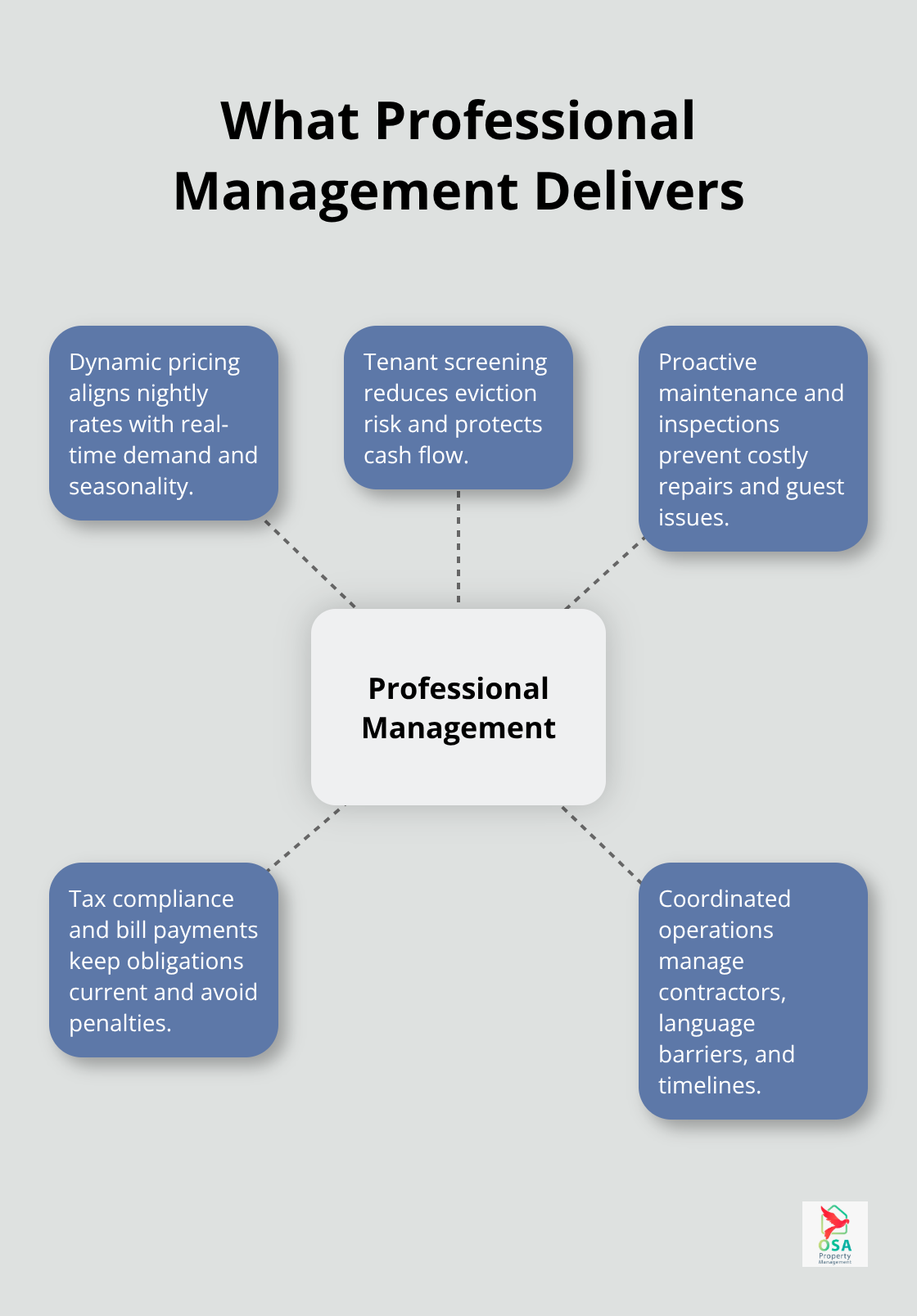
Costa Rica's property regulations shift faster than most investors expect, and getting them wrong costs real money. The country requires rental properties to be registered with municipal authorities, and rental income faces progressive taxation climbing to 20-25% at higher brackets. Property tax sits at 0.25% of registered value annually, but luxury properties over 121 million colones face a steeper 0.55% rate. Without someone tracking these obligations, you risk penalties that dwarf any savings from skipping professional management.
Tenant Screening Protects Your Bottom Line
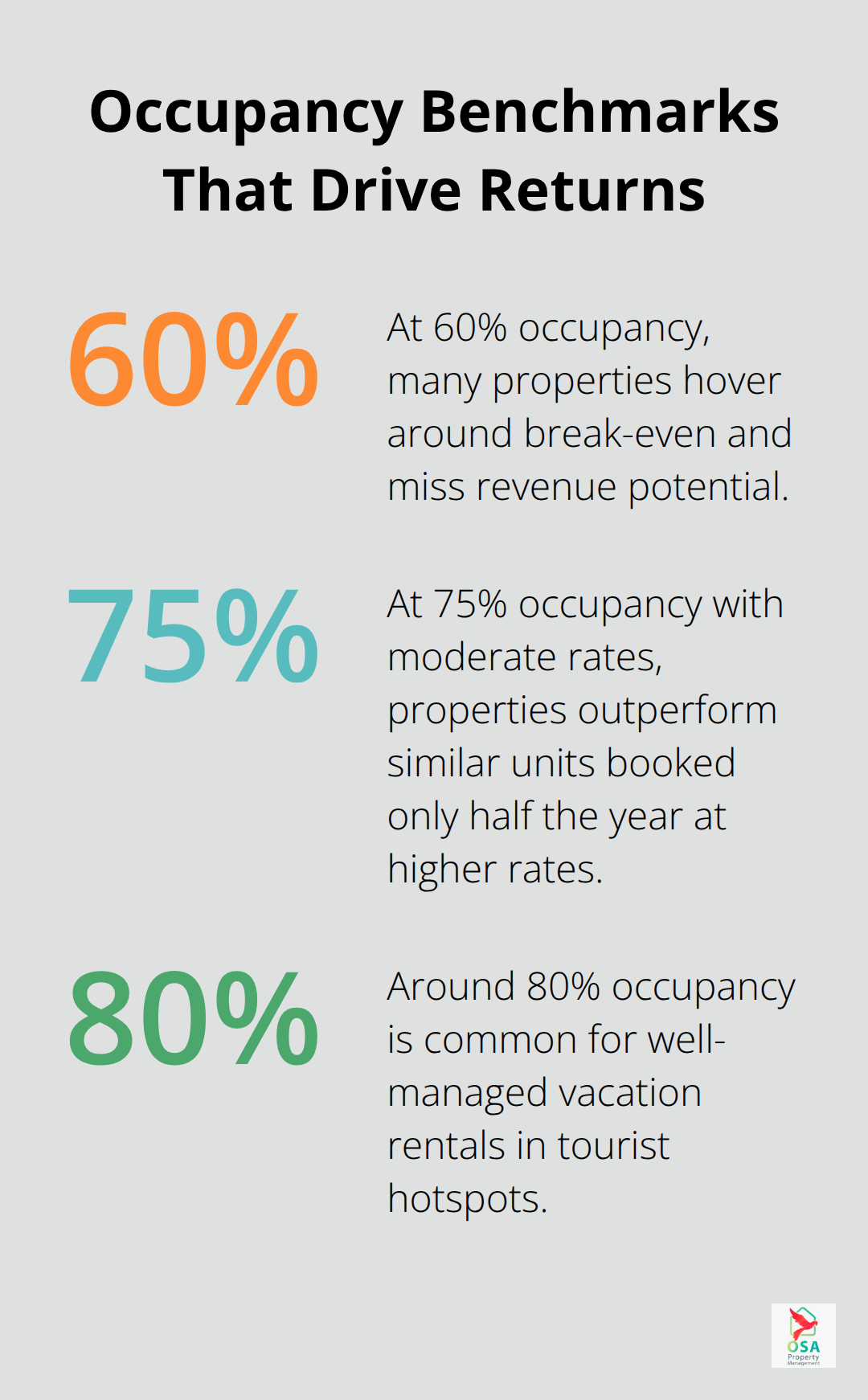
Tenant screening separates investors who pocket steady income from those stuck with eviction costs. A thorough background check catches problem renters before they damage your property or skip rent, and Costa Rica's eviction process can stretch months and drain thousands in legal fees. Well-managed vacation rentals in tourist hotspots achieve occupancy rates around 80%, generating net returns of 4-6% after expenses. The difference between a 60% occupancy rate and an 80% rate isn't marginal-it's the difference between breaking even and building real wealth.
Dynamic Pricing Maximizes Revenue
Professional managers use dynamic pricing software that adjusts nightly rates based on real-time demand, season, and local events. During peak season from December through April, rates command premium prices; during off-season, strategic pricing keeps units booked rather than dark. This approach transforms seasonal fluctuations from a liability into a revenue advantage.
The Hidden Cost of Deferred Maintenance
Skipping maintenance inspections turns small fixes into expensive disasters. A leaking roof caught early costs a few hundred dollars; ignored for a year, it destroys ceilings, creates mold, and tanks your property's value. Professional management schedules regular inspections, coordinates with trusted local contractors, and handles repairs before guests notice problems. Insurance costs typically run 0.25-0.35% of property value yearly, but that protection evaporates if maintenance lapses cause preventable damage.
Marketing and Operational Excellence
Marketing matters more than most owners realize-properties listed on Airbnb and VRBO without professional optimization sit vacant while comparable units nearby stay booked. Professional management handles the full operation: tenant screening, bill payments, tax compliance, and coordinated maintenance. Their teams navigate language barriers, track multiple contractors, and meet tax deadlines so owners don't have to. The math is straightforward-professional management typically costs 25-35% of rental revenue, but that investment returns multiples through higher occupancy, optimized pricing, and avoided costly mistakes that drain far more than management fees ever would.
How to Price Rentals and Fill Vacancies Year-Round
Getting rental rates wrong destroys returns faster than any other mistake. Costa Rica's vacation rental market rewards owners who understand their specific location's demand curve, not those who guess based on what competitors charge. Properties in Samara achieve 70-80% annual occupancy when professionally managed, but that occupancy depends entirely on pricing strategy. Set rates too high and units sit empty during shoulder seasons; set them too low and you leave thousands on the table during peak demand. The gap between a 60% occupancy rate at premium prices and an 80% occupancy rate at moderate prices determines whether your property generates 4-6% net returns or barely covers expenses.
Dynamic Pricing Converts Seasonal Patterns Into Revenue
Professional managers use dynamic pricing software that adjusts nightly rates in real time based on demand patterns, local events, and seasonality. During December through April, when Costa Rica sees peak tourist arrivals, rates climb significantly. The software also recognizes micro-opportunities like school holidays or sporting events that spike bookings in shoulder months. Off-season pricing strategy matters more than most investors realize. Rather than dropping rates to desperation levels, sophisticated managers price strategically to maintain steady bookings at reasonable rates. A property booked 75% of the year at moderate rates outperforms one booked 50% of the year at higher rates.
Professional Listing Optimization Drives Occupancy
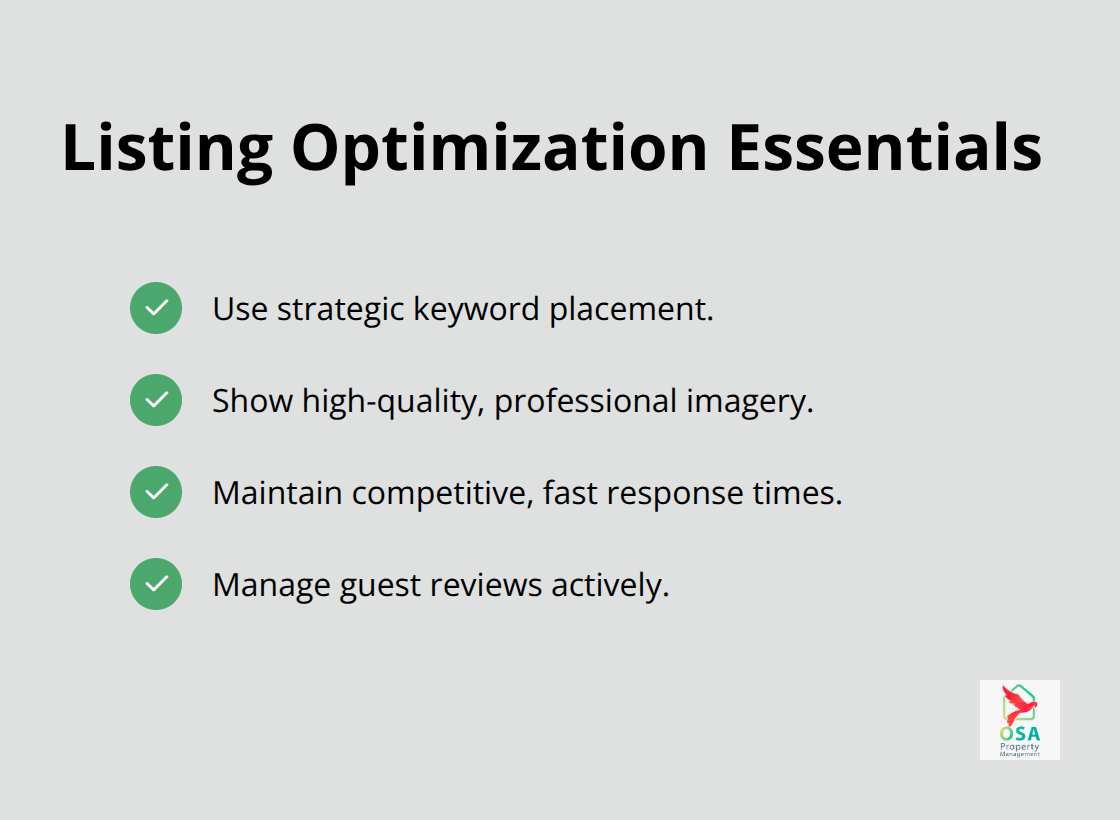
Marketing through Airbnb and VRBO requires professional optimization beyond uploading photos. Listings need strategic keyword placement, high-quality imagery, competitive response times, and guest reviews managed actively. Properties without professional listing management typically underperform comparable units nearby by 20-30% in occupancy. We at Osa Property Management understand that this optimization separates properties that generate consistent income from those that sit vacant during critical booking windows.
Location Strategy Shapes Pricing and Marketing Approach
Geographic location amplifies pricing dynamics significantly. Beachfront properties and those near town centers command premium nightly rates and higher occupancy because guests prioritize convenience and views. Properties in emerging areas like Nosara appreciate faster than established tourist towns, but they require more aggressive marketing to achieve comparable occupancy rates. Long-term rental strategies provide income stability for properties in less touristy locations, particularly in digital nomad hubs where demand from remote workers sustains steady bookings year-round.
Data-Driven Pricing Unlocks Competitive Advantage
Professional management applies data to pricing and marketing, converting seasonal fluctuations into revenue advantages while reducing vacancy periods that drain profitability. This approach transforms how owners think about their properties-not as static assets with fixed rates, but as dynamic revenue generators that respond to real-time market conditions. Understanding these mechanics positions you to make informed decisions about which management partner can actually deliver results. The next section examines the mistakes that cost investors thousands when they attempt to manage properties without professional guidance.
Three Costly Mistakes That Tank Returns
Most investors who manage properties without professional help make the same errors repeatedly, and each one directly reduces profitability. Understanding these mistakes positions you to avoid them and protect your investment returns.
Underpricing Rentals Leaves Thousands on the Table
Setting rental rates based on what feels reasonable rather than what market data demands destroys profitability faster than almost any other mistake. Owners frequently underprice properties compared to comparable units nearby, thinking lower rates guarantee bookings. The math proves otherwise. A property priced at $120 per night with 70% occupancy generates $30,660 annually; the same property at $100 per night needs 84% occupancy to match that income. Tourist hotspots like Samara achieve 70-80% occupancy when professionally managed, but that occupancy comes from strategic pricing, not desperation discounting.
Owners who set rates without analyzing local demand curves, seasonal patterns, and competitive positioning consistently leave thousands on the table. Dynamic pricing software adjusts rates in real time based on demand, but most independent owners never implement it because they lack access to the market data that drives those adjustments. Professional managers track competitor pricing, monitor booking patterns, and adjust rates to maximize revenue rather than simply fill vacancies at any price.
Poor Tenant Screening Creates Financial Disasters
Inadequate tenant screening creates financial damage far exceeding any savings from skipping background checks. Costa Rica's eviction process takes four to six months and costs between $2,000 and $5,000 in legal fees, plus lost rental income during the proceedings. A single problem tenant can cost more than a year of professional management fees.
Thorough screening catches red flags before they become disasters: inconsistent employment history, previous evictions, poor references, or inability to provide proof of income. Property managers access tenant databases and run credit checks that individual owners cannot access independently. Beyond financial screening, professional managers verify that tenants can legally occupy the property and understand rental obligations in writing. The cost of one eviction often exceeds five years of professional screening services. Investors who attempt to save money by accepting tenants without proper vetting almost always regret it when damage or non-payment occurs.
Deferred Maintenance Multiplies Repair Costs
Deferring maintenance until emergencies force expensive repairs transforms small problems into major financial losses. A property inspection that costs $300 catches a leaking roof, worn plumbing, or electrical issues before they escalate. Ignoring that same roof leak for six months results in ceiling damage, mold, structural deterioration, and repair costs exceeding $3,000. Insurance covers sudden damage but not neglect, so deferred maintenance voids coverage when claims occur.
Professional property managers schedule regular inspections, coordinate with trusted local contractors, and address issues when they are small and affordable. The maintenance culture matters significantly. Properties managed professionally show 20-30% higher guest satisfaction scores because issues are addressed immediately rather than accumulating into guest complaints. Higher satisfaction translates to better reviews, more bookings, and higher nightly rates that compound over time. Investors managing properties alone typically wait until guests report problems, which means damage has already occurred and guest experience has already suffered.
Final Thoughts
Professional management transforms investment property Costa Rica from a source of stress into a reliable income stream. The three mistakes examined earlier-underpricing, poor tenant screening, and deferred maintenance-cost investors thousands annually, yet they're entirely preventable with the right partner handling operations. When you outsource management to experienced professionals, you gain access to market data, tenant databases, contractor networks, and tax expertise that individual owners cannot replicate alone.
Professional managers adjust pricing in real time based on demand patterns, screen tenants thoroughly to avoid costly evictions, and maintain properties before small issues become expensive disasters. The 25-35% management fee represents genuine value because it protects your investment from the mistakes that drain far more than management costs ever would. We at Osa Property Management understand that finding the right partner matters enormously, and we handle everything from marketing and guest relations to tax compliance and maintenance coordination across Costa Rica's most profitable regions.
Evaluate potential management partners based on their local market knowledge, transparency in financial reporting, and track record with properties similar to yours. Ask about their pricing strategy approach, tenant screening process, and maintenance protocols, then request references from current clients. Contact Osa Property Management to discuss how professional management can maximize your property's performance and protect your investment.