
Many property owners in Costa Rica struggle to choose between short-term and long-term rental strategies. Long term rental management offers a fundamentally different approach-one built on stability rather than constant turnover.
We at Osa Property Management have seen firsthand how this model transforms property income. This guide walks you through the advantages, setup, and day-to-day management of long-term rentals in Costa Rica.
Why Long-Term Rentals Win in Costa Rica
Long-term rentals deliver income stability that short-term rentals simply cannot match. In Costa Rica’s long-term market, you lock in monthly rent between $600 to $1,600 depending on location and property type according to Global Property Guide data.
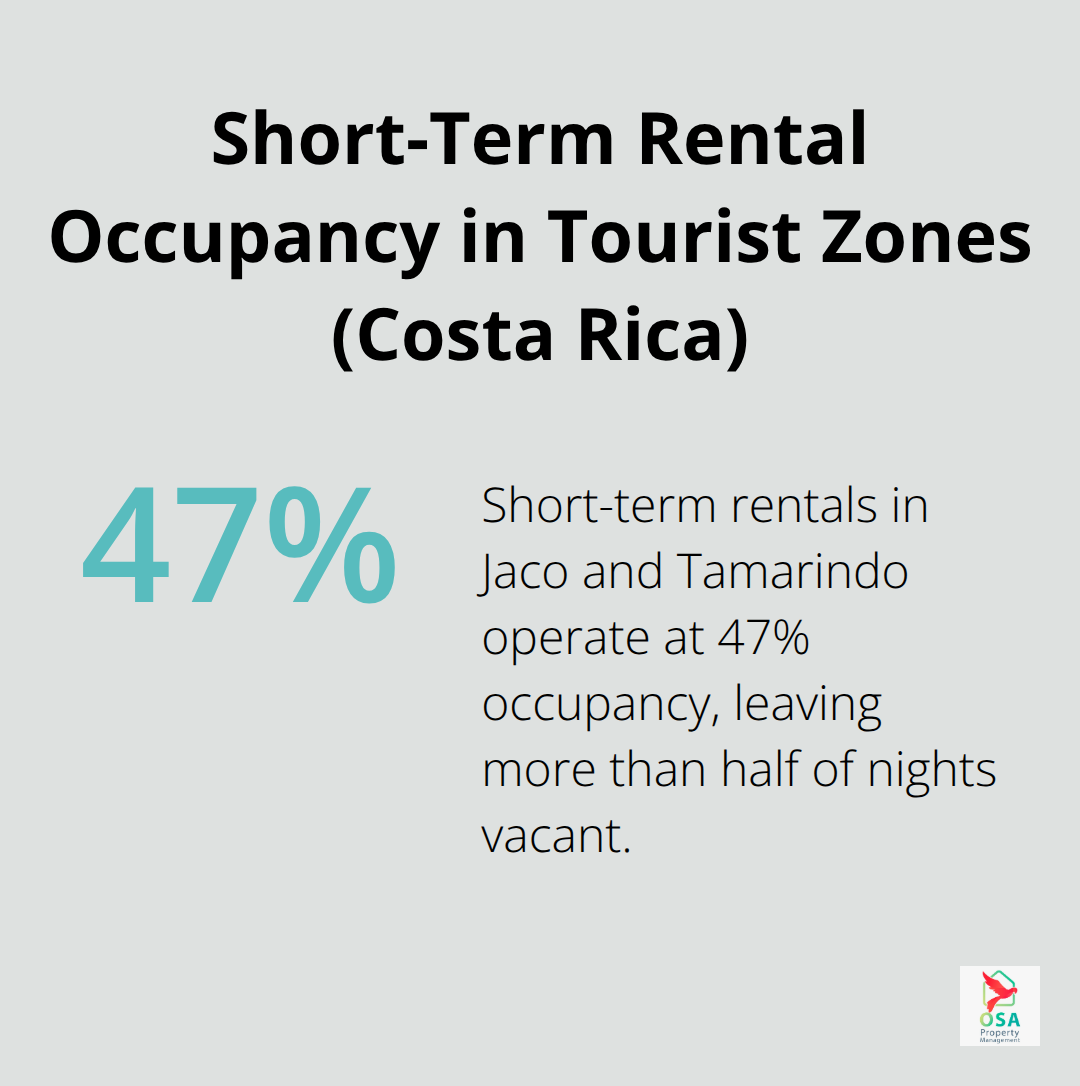
That predictability allows you to plan cash flow, cover your HOA fees (which typically run $100–$250 monthly), and budget maintenance without guessing whether next month’s occupancy will drop. Short-term rentals in tourist zones like Jaco and Tamarindo operate at 47% occupancy, meaning more than half your nights sit empty. Long-term rentals eliminate that feast-or-famine cycle entirely.
Stable Income Replaces Seasonal Uncertainty
You sign a lease, collect rent consistently, and focus on one tenant relationship instead of managing dozens of guests per year. The math favors long-term when you factor in reduced turnover costs. Each short-term guest transition requires deep cleaning, linen changes, platform updates, and marketing spend to fill the gap. Long-term tenants stay 1–3 years under Costa Rican law, so your marketing costs drop dramatically. You spend money once to find a quality tenant, then collect rent for years. Short-term rental managers spend continuously on listings, photos, promotional pricing, and guest acquisition campaigns just to maintain mediocre occupancy rates.
Vacancy Risk Narrows with Long-Term Positioning
Urban areas like San Jose experience long-term rental vacancy rates that remain stable year-round, while short-term markets fluctuate significantly with tourism patterns. The difference matters enormously for your bottom line. Long-term tenants remain put during slow seasons. Short-term markets crater September through October when tourism dips, forcing managers to slash nightly rates or accept empty nights. Long-term tenants have signed agreements and remain regardless of season. Your income becomes genuinely predictable.
Operations Simplify When You Focus on One Tenant
This stability also reduces the operational headaches that drain time and energy. Short-term management requires 24/7 guest support, constant cleaning coordination, rapid-turnaround maintenance, and intensive marketing. Long-term rental management focuses on tenant screening, lease enforcement, and preventive maintenance on a reasonable schedule. You handle fewer emergency repairs because tenants take ownership of the space. They report issues promptly rather than ignoring problems during a brief stay. Your property ages more slowly when someone calls it home instead of treating it as a temporary accommodation.
The foundation for this success starts with how you set up your property and select your tenant. The next section covers the critical steps to prepare your long-term rental for occupancy and establish the right tenant relationship from day one.
How to Find and Prepare the Right Long-Term Tenant
Tenant selection makes or breaks long-term rental success. A poor choice locks you into a 1–3 year relationship with someone who damages your property, skips rent, or creates legal headaches. We at Osa Property Management have seen owners lose tens of thousands in damages and vacancy costs because they rushed tenant screening to fill a property quickly. The fix is simple: slow down and follow a systematic process.
Verify Income and Check References
Start with income verification. Costa Rican law permits landlords to require proof that a tenant earns at least three times the rent. If you charge $1,200 monthly, confirm they earn at least $3,600 monthly through payslips, bank statements, or employment letters. This single step eliminates most payment risk.
Next, contact previous landlords directly. Do not rely on written references that tenants provide.
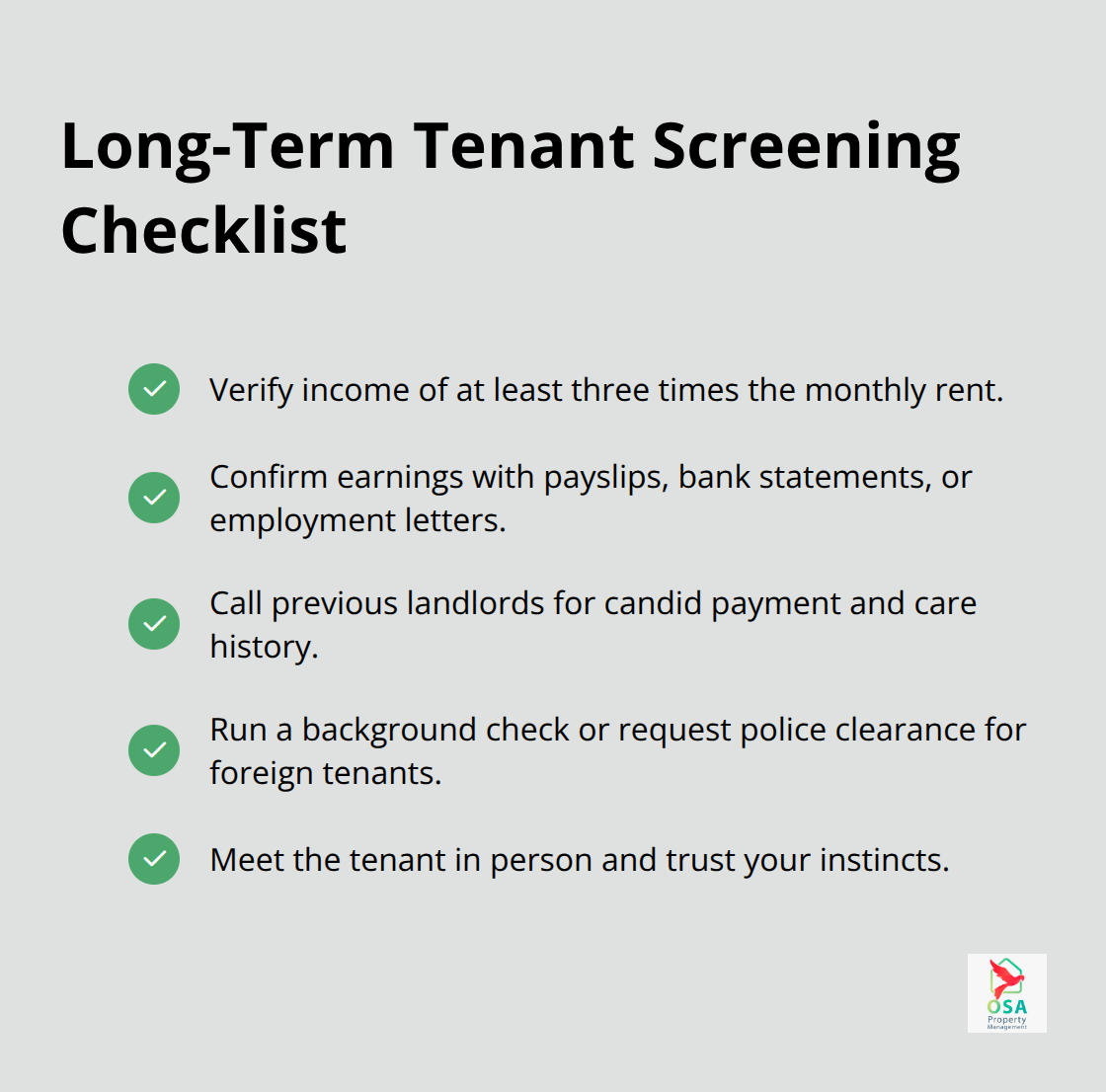
Call prior landlords and ask specific questions: Did they pay on time? Did they maintain the property? Would you rent to them again? A reluctant yes or a deflection signals trouble.
Run a background check through local authorities if the tenant is Costa Rican, or request police clearance documents if they are foreign. Many expats have no Costa Rican rental history, so prior international references become critical. Meet the tenant in person and trust your instinct. Tenants who are evasive about employment, vague about lease duration, or unwilling to provide references often become problem tenants later. A thorough screening process protects your investment and ensures a stable rental relationship.
Draft a Lease Agreement That Complies with Local Law
Your lease agreement is your legal shield in Costa Rica. Under Law 7527, tenants receive strong legal protections, so your agreement must be precise and comply with local law or a court will void problematic clauses. Work with a local attorney to draft a lease agreement in Spanish and English that specifies the monthly rent amount, payment due date, security deposit amount (typically one month’s rent), lease duration, maintenance responsibilities, late payment penalties, and grounds for eviction.
Include a clause requiring tenants to report maintenance issues within 48 hours and prohibiting alterations to the property without written consent. Specify that rent increases follow CPI adjustments as required by law, not arbitrary jumps. Many owners attempt to impose steep increases mid-tenancy and face legal challenges that waste time and money.
Require tenants to maintain renter’s insurance and provide proof annually. This protects your furnishings and reduces liability claims. Establish a rent payment method that works for you-many owners use bank transfers to simplify tracking and reduce cash handling. Collect the security deposit before move-in and document its receipt in writing. Costa Rican law requires landlords to return security deposits within 30 days of lease termination, so maintain records showing the deposit amount and condition of the property at move-in.
Install Amenities That Long-Term Tenants Expect
Short-term rental properties fail as long-term rentals because they lack durability. Furnished rentals command a 15%–30% premium, but they wear down quickly under daily living conditions. Long-term tenants need functional, well-maintained spaces that feel like home.
Invest in quality appliances that withstand daily use, not budget models designed for occasional guests. Air conditioning in bedrooms adds 10%–20% to rent in coastal areas and is non-negotiable in hot regions. Install reliable high-speed internet-expats and remote workers consider this essential and will pay premium rent for it. Secure covered parking with 24/7 security appeals strongly to long-term tenants and justifies higher rent.
Paint the interior in neutral colors, repair all plumbing and electrical issues before move-in, and ensure the property is spotlessly clean. Do a final walk-through with the tenant, document the property condition with photos and video, and have both parties sign off on the initial condition report. This prevents disputes about damage claims at lease end. Stock basic items like lightbulbs, toilet paper holders, and shower curtain rods so tenants can move in and live immediately rather than scrambling to buy essentials.
These details signal professionalism and reduce early tenant complaints that strain the relationship. Once your property is ready and your tenant is screened, the real work begins-maintaining the property and the tenant relationship over months and years.
Managing Long-Term Rentals Effectively
Successful long-term rental management rests on three interconnected practices: maintaining consistent communication with your tenant, addressing maintenance issues before they become emergencies, and understanding Costa Rican rental law well enough to protect yourself legally. The difference between a profitable long-term rental and a financial drain often comes down to how actively you manage these three areas from day one. Tenants who feel heard and respected pay rent on time and care for your property. Properties that receive preventive maintenance hold their value and command higher rent. Owners who understand their legal obligations avoid costly disputes and eviction processes that can drag on for months.
Establish a Communication Rhythm with Your Tenant
Contact your tenant monthly to ask about maintenance needs, respond to concerns, and confirm rent payment. This monthly touchpoint takes 15 minutes but prevents small issues from festering into major complaints. Respond to maintenance requests within 48 hours, even if the response is just an acknowledgment that you received the request and will schedule a contractor. Tenants who feel ignored become tenants who withhold rent or pursue legal claims.
Set a clear rent payment method and enforce it consistently. Bank transfers eliminate excuses about cash getting lost and create a documented payment trail that protects you legally. If rent arrives late, send a written notice within three days. Costa Rican law allows landlords to charge late fees, so document every late payment. After two late payments in a six-month period, you have grounds to begin eviction proceedings if necessary.
Schedule Preventive Maintenance Before Problems Escalate
Preventive maintenance focuses on identifying and fixing small issues early before they become costly, disruptive problems. Hire a local property manager to conduct quarterly inspections and document findings with photos. Check plumbing fixtures, test air conditioning units, inspect for water damage or pest issues, and verify that appliances function properly. A $50 quarterly inspection catches a $500 problem before it becomes a $2,000 disaster.
When maintenance is needed, hire contractors promptly rather than delaying repairs. Tenants lose trust when landlords ignore requests, and deteriorating conditions justify rent withholding under Costa Rican law. Keep detailed records of every repair, contractor invoice, and maintenance expense. These records protect you in disputes and help you plan capital improvements.
Comply with Costa Rican Rental Law to Avoid Legal Disputes
Costa Rican rental law under Law 7527 imposes specific obligations on landlords that differ significantly from rental law in other countries. You are responsible for maintaining the property in habitable condition, which means functioning plumbing, electricity, heating or cooling where necessary, and structural soundness. Tenants can legally withhold rent if you fail to maintain these basic conditions.
Rent increases during a tenancy must follow the CPI adjustment set by the government, not arbitrary increases you decide. Many owners attempt steep mid-lease increases and face court challenges that waste thousands in legal fees. If a tenant stops paying rent, you must follow a formal eviction process through the courts. Self-help eviction-changing locks, removing belongings, or cutting utilities-is illegal and exposes you to criminal liability.
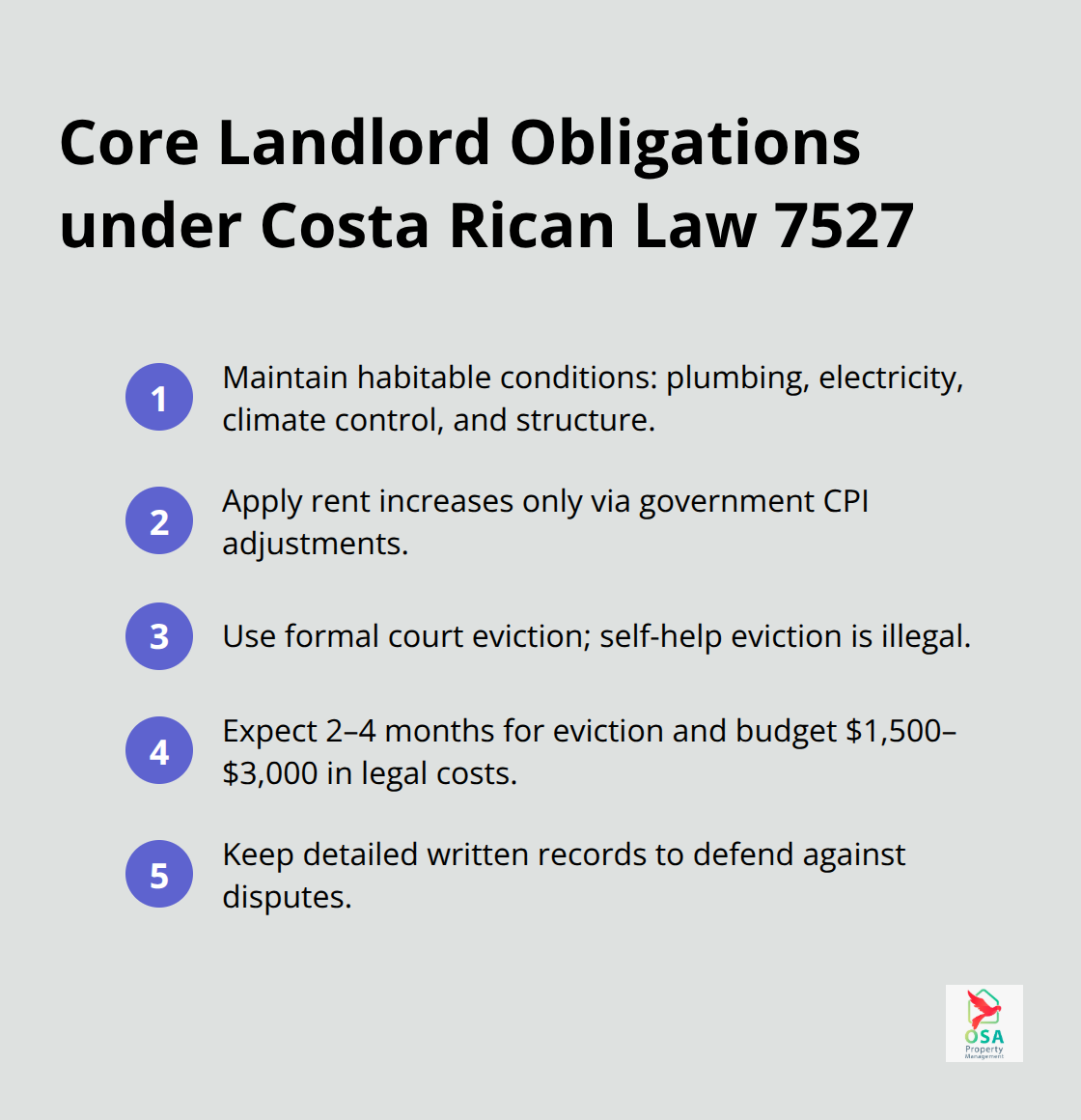
The eviction process typically takes 2–4 months and requires a lawyer, so budget $1,500–$3,000 in legal costs. This is why thorough tenant screening prevents far more problems than eviction law ever solves.
Document Everything in Writing to Protect Your Interests
Lease amendments, maintenance requests, rent payment agreements, and tenant communications should all be recorded in writing. If a dispute reaches court, the judge reviews written evidence, not your word against the tenant’s word. Keep copies of lease agreements, security deposit receipts, initial condition reports, and all maintenance invoices in an organized file. Consider using property management software to track these records digitally so you can access them from anywhere and never lose critical documents to water damage or misplacement.
Final Thoughts
Long-term rental management in Costa Rica delivers the income stability that short-term rentals cannot match. You lock in monthly rent, eliminate seasonal vacancy swings, and build predictable cash flow that covers your HOA fees and maintenance costs year-round. Tenants who stay 1–3 years take ownership of your property, report issues promptly, and reduce the operational chaos that drains time and energy from absentee owners.
Setting up your property correctly and screening tenants thoroughly prevents costly mistakes that lock you into bad relationships for years. A systematic approach to income verification, reference checks, and legal lease agreements protects your investment and establishes clear expectations from day one. Installing the amenities that long-term tenants expect-reliable internet, air conditioning, secure parking, and quality appliances-justifies higher rent and attracts reliable occupants who stay longer.
Long-term rental management demands attention to detail and local expertise that most absentee owners lack. Hiring a professional property management company eliminates the burden of tenant screening, maintenance coordination, legal compliance, and rent collection. Osa Property Management brings experience managing properties across Tarcoles, Jaco, Dominical, Manuel Antonio, Ojochal, Uvita, and Golfito, handling marketing, tenant relationships, bill payment, accounting, tax compliance, and maintenance oversight so you collect rent without the headaches.