
Finding the right maintenance vendors in Costa Rica can make or break your property investment. A bad vendor choice leads to costly delays, poor workmanship, and frustrated tenants.
At Osa Property Management, we've seen firsthand how the right partner transforms property operations. This guide walks you through exactly what to look for and what to avoid.
What to Look for in a Reliable Maintenance Vendor
Local experience shapes better decisions
A vendor with experience managing properties in Costa Rica understands the tropical climate, knows which contractors deliver quality work, and has navigated the seasonal rental patterns that affect maintenance timing. They know which roofing materials withstand the rainy season, how to prevent mold in high-humidity areas, and which plumbing systems fail first in older homes. Vendors without this depth make expensive mistakes-hiring contractors unfamiliar with Costa Rica's seismic building code or using materials that corrode quickly in salt-air regions. When evaluating a vendor, ask specifically about their experience in your property's zone. Guanacaste differs from Manuel Antonio, and Ojochal has different challenges than Uvita. Request references from property owners in your exact region, not vague testimonials from anywhere in the country.
Verify licensing and insurance before signing anything
A legitimate maintenance vendor must hold registration with SUGEF, Costa Rica's financial regulator, and current business registration with the National Registry. Check their SUGEF profile directly-do not take their word for it. Confirm that on-site staff carry CCSS coverage, Costa Rica's social security insurance, which protects you from liability if someone gets injured on your property. Ask the vendor to provide proof of their own insurance policy and verify it covers the work they will perform. Vendors operating without proper licensing expose you to legal fines and leave you responsible if something goes wrong during a repair.
Demand transparency in pricing and contractor relationships
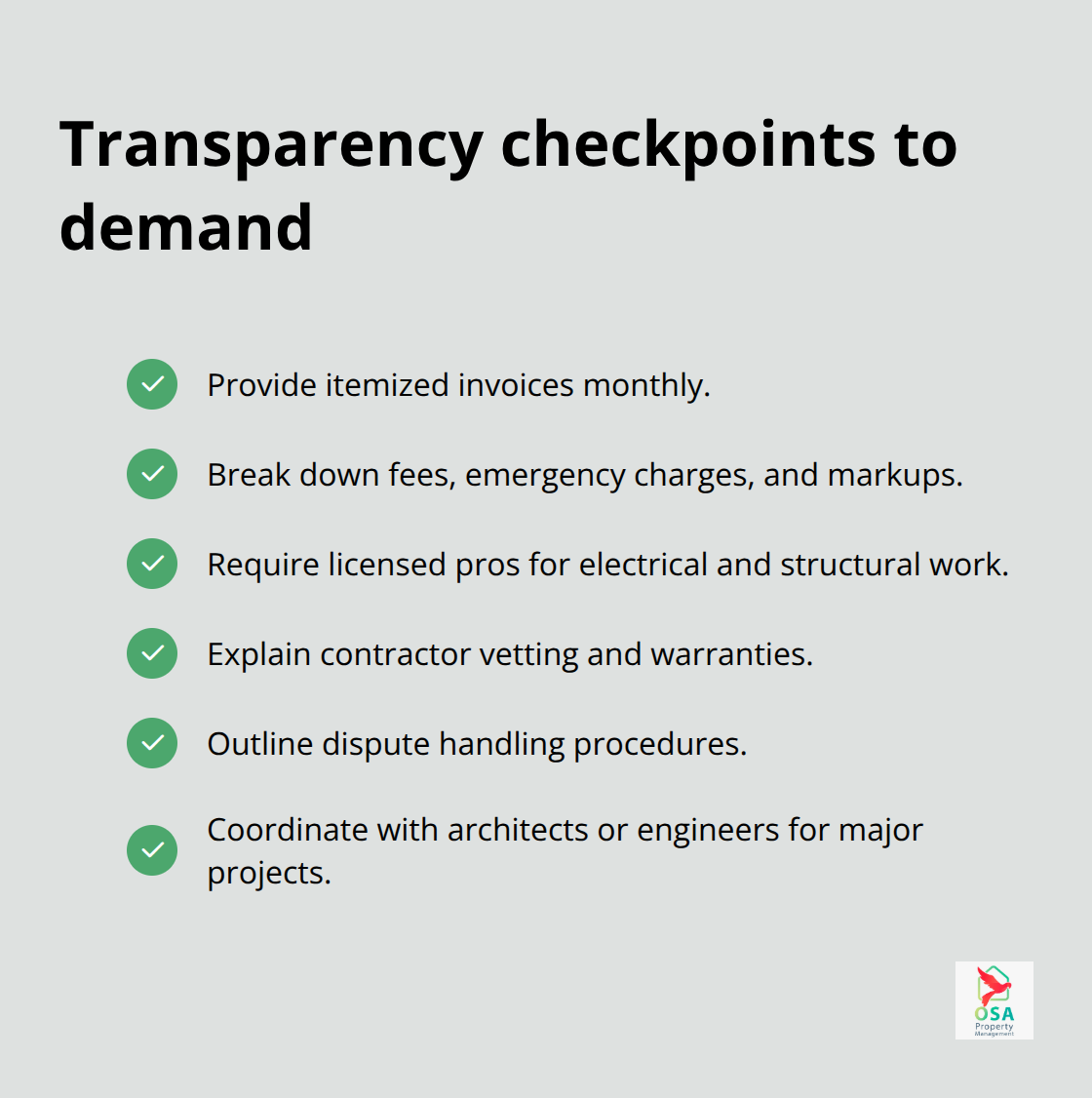
Flat-rate quotes below about $150 per month should raise questions-they often indicate corners cut on insurance, quality control, or emergency response. Request a detailed breakdown showing monthly maintenance fees, emergency charges, and contractor markups separately. A transparent vendor explains how they vet local contractors, whether they require licensed professionals for electrical and structural work, and what warranties cover completed repairs. They provide itemized invoices monthly, not vague summaries.
Check emergency response capabilities
A single-person operation cannot provide reliable 24/7 coverage. The best vendors maintain a network of pre-approved contractors and staff who respond to emergencies outside business hours. Ask the vendor directly: what happens if your roof leaks at midnight on a Sunday? Can they reach someone within two hours? Do they have backup contractors if their primary electrician is unavailable? Vendors with larger teams reduce service gaps and handle multiple properties simultaneously without sacrificing response time. Request the vendor's emergency contact protocol in writing and confirm they have documented procedures for common issues like roof leaks, pool equipment failures, and electrical problems.
Evaluate contractor vetting and project oversight
The vendor's relationship with local contractors determines repair quality. Ask whether they require licensed professionals for electrical and structural work, or if they hire unlicensed labor to cut costs. Licensed contractors in Costa Rica carry professional registrations and understand local building codes. Vendors that coordinate with licensed architects or engineers for major projects reduce risk and ensure compliance with seismic standards. Request examples of how they oversee contractor work-do they conduct inspections before payment, or do they simply trust the contractor's word? A vendor that demands itemized invoices from contractors and verifies work quality before approving payment protects your property better than one that rubber-stamps contractor bills. This scrutiny separates vendors that truly manage your property from those that simply pass contractor names along.
Red Flags That Signal a Bad Maintenance Vendor
Spotting a problematic vendor early saves you thousands in repairs and prevents months of frustration. Many property owners in Costa Rica ignore warning signs until damage spreads or emergencies go unresolved.
Vague pricing structures hide real costs
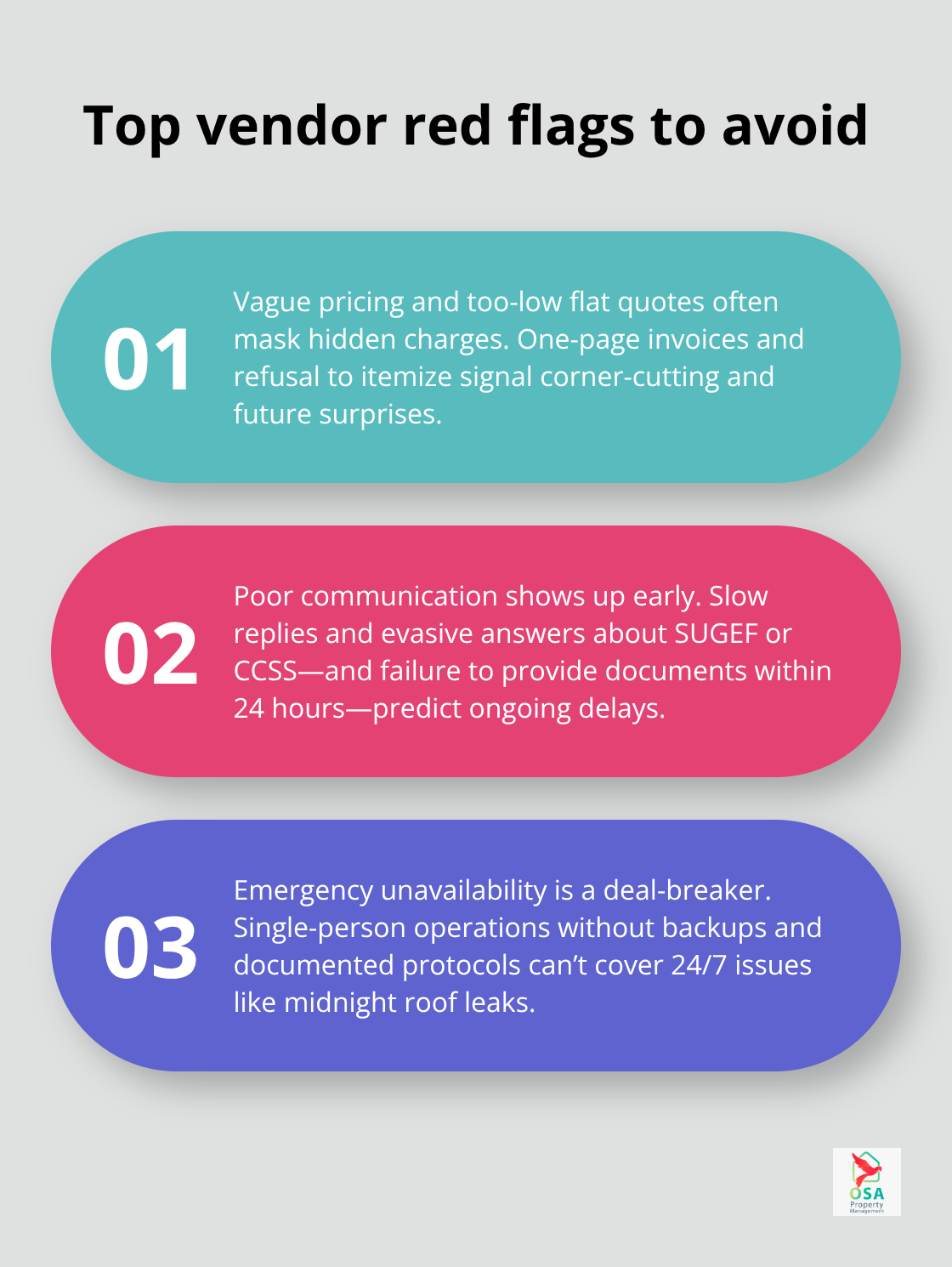
Vague pricing structures hide the real cost of operations. A vendor quoting $120 per month for full maintenance across a three-bedroom home with a pool is either cutting corners on insurance, skipping licensed contractor oversight, or planning to charge surprise emergency fees later. Request itemized breakdowns showing monthly fees, emergency rates, and contractor markups separately. If a vendor refuses this level of detail or provides a one-page invoice each month without specifics, they're hiding something.
Poor communication reveals future problems
Poor communication patterns emerge quickly during initial conversations. A vendor who takes hours to respond to WhatsApp messages, doesn't answer direct questions about their SUGEF registration or CCSS coverage for staff, or provides vague answers about contractor relationships signals that responsiveness won't improve once you've signed a contract. Real vendors answer these questions directly and provide documentation within 24 hours.
Online reviews expose operational reality
Online reviews and client feedback reveal operational reality faster than any sales pitch. Search Facebook groups for Costa Rica expats and property owners-look for concrete complaints about response times, quality issues, or unexpected charges rather than generic praise. Vendors with consistently delayed emergency responses or poor workmanship generate specific, detailed complaints from frustrated owners. A single negative review might be an outlier, but multiple owners reporting the same problem indicates a systemic issue.
Unavailability for emergencies is the worst red flag
The worst red flag is unavailability for emergencies. Ask every vendor candidate directly: what happens when your roof leaks at 2 AM on a Saturday? If they hesitate, mention a single point of contact, or admit they rely on contractors to handle emergencies independently, they cannot provide reliable coverage. Single-person operations cannot maintain 24/7 emergency availability across multiple properties. Vendors with larger teams and documented emergency protocols-with multiple staff members trained on common issues and pre-approved contractors on standby-actually show up when problems occur.
These warning signs matter because they directly affect your property's condition and your rental income. The next section covers how to build a partnership with a vendor that actually delivers on their promises.
How to Structure Agreements That Actually Work
Write agreements that protect your property
A written service agreement with your maintenance vendor is not optional-it's your legal protection. The agreement must specify exactly which services are included in the monthly fee, which issues trigger emergency charges, and what response times the vendor commits to.
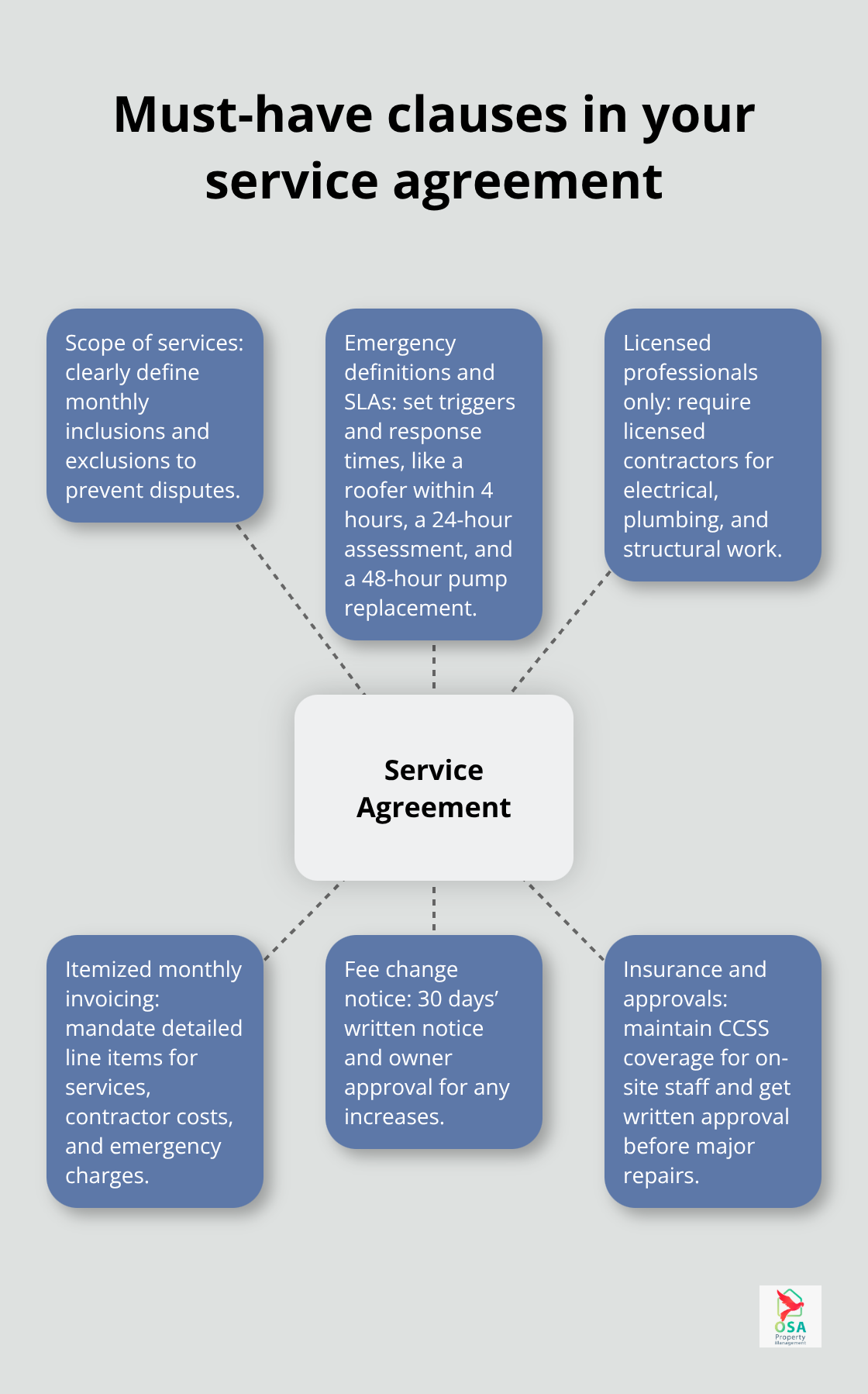
State clearly that the vendor must use licensed professionals for electrical, plumbing, and structural work-no exceptions. Require monthly itemized invoices showing each service performed, contractor costs, and any emergency charges separately. Specify that the vendor cannot increase fees without 30 days written notice and your approval. Include a clause requiring the vendor to maintain CCSS insurance for all on-site staff and provide proof quarterly. Request that major repairs require your written approval before work starts. These details eliminate vague handshake arrangements that collapse when problems arise.
Schedule regular performance reviews with your vendor
Communication rhythms matter more than most property owners realize. Schedule a formal monthly review call with your vendor to discuss maintenance performed, upcoming seasonal needs, and any emerging issues before they become expensive. Ask the vendor to provide a maintenance forecast for the next three months-this shows they're thinking ahead about rainy season roof inspections, pool equipment servicing, or electrical system checks in high-humidity months. Request quarterly performance reports showing response times to maintenance requests, contractor reliability ratings, and cost trends compared to previous quarters.
Address slipping response times immediately in writing rather than allowing patterns to develop. A vendor responding to maintenance requests within 24 hours deserves recognition; one taking five days to acknowledge a problem needs a direct conversation about expectations. These conversations prevent small issues from becoming relationship-ending conflicts.
Evaluate pricing against actual service value
Fair pricing reflects the vendor's actual costs plus reasonable profit, not artificially low rates that force them to cut corners. Vendors charging between $200 and $400 monthly for comprehensive maintenance on a three-bedroom home typically maintain quality oversight, proper insurance, and reliable contractor networks. Rates significantly below this range often indicate inadequate staffing, minimal emergency coverage, or unlicensed contractor relationships. Higher rates may be justified if the vendor includes specialized services like advanced moisture monitoring or construction project management.
The key is comparing what's actually included: one vendor at $300 monthly might cover routine repairs and emergency response, while another at the same price covers only routine work and charges separately for emergencies. Track your vendor's actual costs over time-if contractor markups climb unexpectedly or emergency charges appear frequently without explanation, the relationship needs adjustment or replacement.
Final Thoughts
Selecting a trustworthy maintenance vendor in Costa Rica requires you to verify five concrete criteria: local experience in your specific region, confirmed SUGEF registration and CCSS insurance coverage, transparent pricing with itemized invoices, documented emergency response protocols, and relationships with licensed professionals. These standards separate vendors that genuinely protect your property from those cutting corners to compete on price alone. Established maintenance vendors in Costa Rica deliver measurable benefits beyond basic repairs-they prevent costly damage through proactive seasonal inspections, reduce emergency response times from days to hours, and maintain contractor networks that understand local building codes and seismic standards.
Start your vendor search by interviewing at least three candidates using the criteria outlined in this guide. Request written emergency protocols, verify SUGEF registration directly, and ask for references from property owners in your exact location. Contact those references and ask specific questions about response times and contractor quality.
Once you've selected a vendor, formalize expectations in a written agreement and schedule monthly performance reviews. This structured approach eliminates guesswork and builds a partnership that protects your investment for years. We at Osa Property Management serve Tarcoles, Jaco, Dominical, Manuel Antonio, Ojochal, Uvita, and Golfito with customized maintenance packages and professional oversight-discover how we manage properties across the southern Pacific zone with the professionalism your property deserves.