

Manuel Antonio attracts over 1 million visitors annually, making it one of Costa Rica’s top destinations. Property owners here have a real opportunity to generate strong rental income year-round.
We at Osa Property Management have seen firsthand how the right Manuel Antonio property management approach transforms properties from underperforming assets into consistent income generators. The difference between profitable properties and struggling ones comes down to strategy, pricing, and execution.
Why Manuel Antonio Properties Outperform Other Costa Rica Markets
Year-Round Tourism Creates Occupancy Rates That Secondary Markets Cannot Match
Manuel Antonio attracts over 1 million visitors annually, and that traffic translates directly into occupancy rates that far exceed long-term rental markets. Costa Rica’s vacation rental market recorded 2.47 million air tourists in 2023, and Manuel Antonio captures a significant share of that demand. Short-term vacation rentals in this area operate at occupancy rates between 70% and 85% during peak season (December through April), compared to 60% to 70% in secondary markets like Ojochal or Uvita. The reason is straightforward: Manuel Antonio has the beaches, the national park access, and the infrastructure that international travelers actively search for on booking platforms. Long-term rentals in the same area sit empty far more often because the expat rental pool is smaller and tenant turnover creates gaps. Owners who switched from long-term to short-term models increase revenue by 40% to 60% within the first year, even after accounting for higher management costs and maintenance demands.
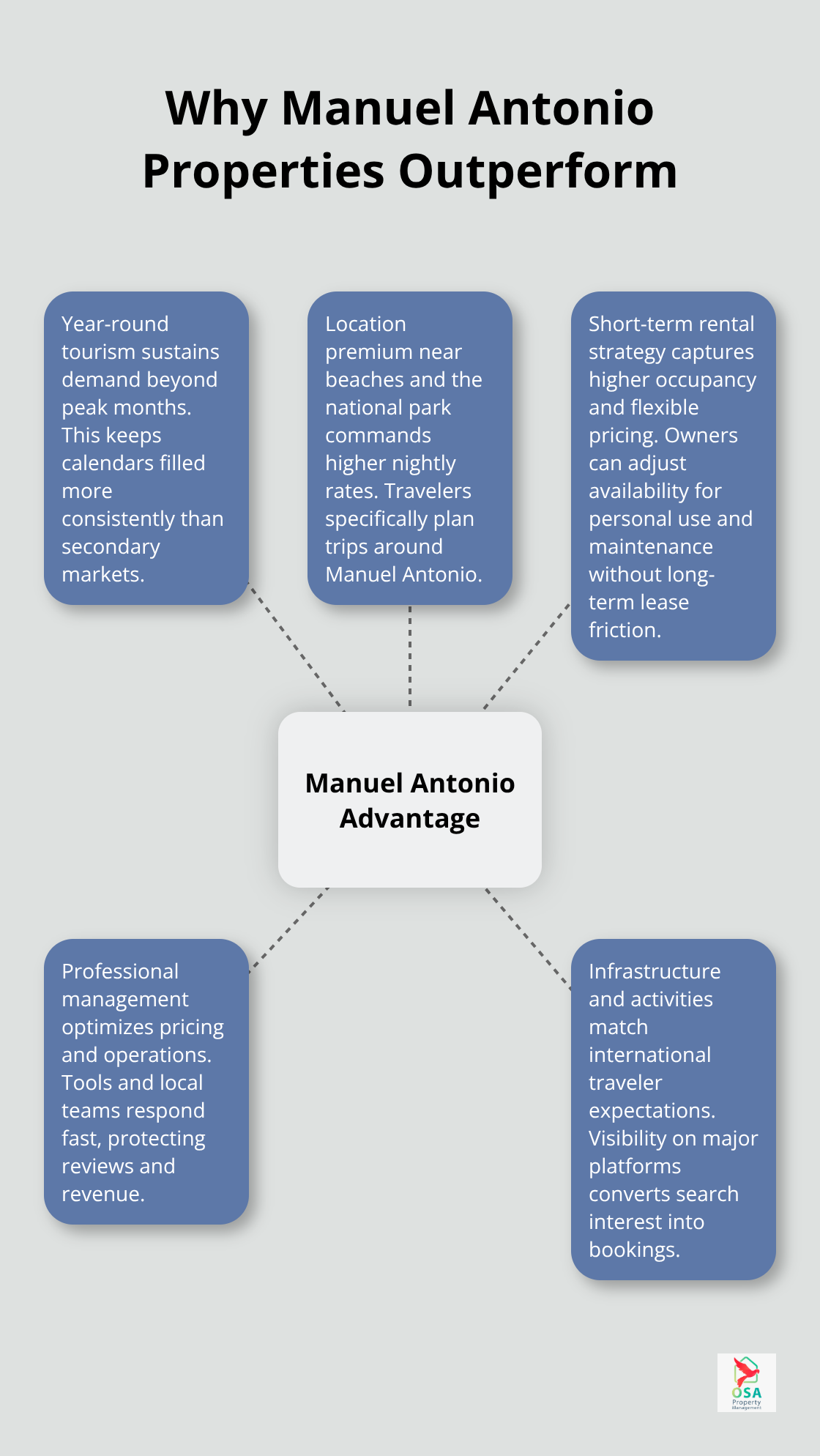
Location Premium Commands Nightly Rates That Secondary Markets Cannot Match
Properties within walking distance of Manuel Antonio National Park or beachfront estates rent at $300 to $600 per night for three-bedroom homes, while identical properties in Dominical or Uvita command $150 to $250 per night. That gap exists because Manuel Antonio has brand recognition; travelers plan vacations around it specifically. Jungle-view properties on the hillside still perform well at $200 to $400 per night because the views are dramatic and the location proximity to activities justifies the price. Strategic pricing matters enormously here. Owners who underprice to fill calendars leave thousands on the table each month. Dynamic pricing software that adjusts rates based on demand, local events, and competitor pricing is not optional in Manuel Antonio; it is the difference between average and exceptional returns. Professional managers use tools that track occupancy patterns across platforms and adjust rates weekly, not monthly, to capture demand spikes around holidays and school breaks.
Short-Term Bookings Attract Higher-Quality Guests and Stronger Cash Flow
Short-term rental guests in Manuel Antonio tend to be higher-income travelers with flexible budgets who book weeks or months in advance. They pay deposits upfront, accept house rules, and leave after their stay. Long-term tenants require credit checks, background verification, and legal eviction processes if problems arise, and in Costa Rica that process moves slowly. Short-term bookings also allow owners to block dates for personal use or maintenance without losing a tenant relationship. The turnover does mean more frequent cleaning, linen changes, and guest communication, which is why professional management becomes essential. Owners trying to manage short-term bookings themselves while living abroad face constant messaging across platforms, scheduling conflicts, and the inability to respond quickly to guest issues that damage reviews. Platforms like Airbnb and VRBO use review scores to rank listings in search results; a single poor review can drop a property’s visibility significantly and reduce bookings for months. Professional managers handle guest screening to avoid problematic bookings, coordinate 24/7 support, and maintain properties proactively so they stay in top condition and reviews remain strong.
These occupancy advantages and pricing premiums explain why Manuel Antonio properties outperform other markets-but only when owners avoid the management mistakes that erode those gains.
Common Property Management Mistakes That Cost Owners Money
Underpricing Properties Leaves Tens of Thousands on the Table Annually
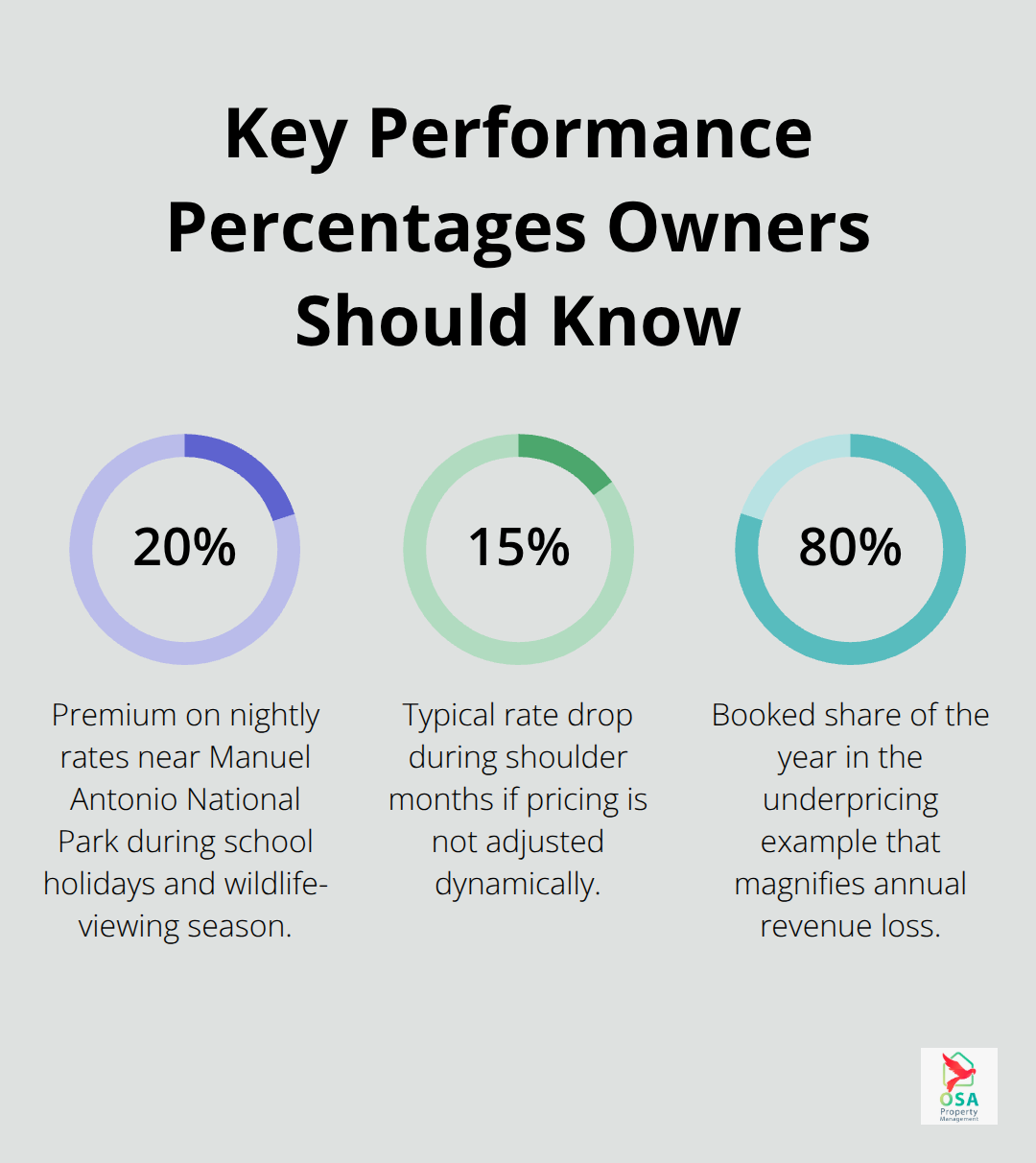
Owners often set rates based on what they paid for the property or what they think guests will accept, rather than what the market actually pays. A three-bedroom beachfront villa that commands $400 to $500 per night gets listed at $300 because the owner fears vacancy. That decision costs $30,000 to $60,000 annually on a property booked 80% of the year. Dynamic pricing software exists precisely to solve this problem, yet owners who refuse to invest $50 to $100 monthly in tools like Hostfully or Airbnb’s built-in pricing intelligence leave massive revenue on the table.
Professional managers adjust rates based on demand patterns, competitor pricing, and local events-not guesswork. A manager analyzing booking data notices that properties near Manuel Antonio National Park command 20% premiums during school holidays and wildlife-viewing season but drop 15% during shoulder months; static pricing misses both opportunities. Pricing mistakes cost DIY managers 15-25% of potential revenue annually through missed peak season opportunities and poor rate adjustments.
Poor Maintenance Triggers One-Star Reviews That Tank Occupancy Rates
A guest discovers a leaking roof, mold in a bathroom, or a broken air conditioning unit mid-stay and posts a one-star review. That single review tanks the property’s ranking on Airbnb and VRBO for months, reducing bookings by 30% to 40% and costing far more than the $500 repair would have. Tropical climates demand aggressive preventive maintenance: quarterly inspections, regular pool servicing, pest control before infestations start, and immediate response to weather damage.
Owners managing properties remotely cannot catch problems until guests complain, which is too late. Professional managers coordinate trusted local contractors who inspect every three months and address issues before guests arrive, protecting both the property and its earning potential. Repeat repairs on identical issues signal contractor incompetence and wasted money, making preventive maintenance and contractor accountability essential.
Slow Guest Communication Destroys Search Rankings and Bookings
Booking platforms prioritize response time heavily in their algorithms; a manager who replies to inquiries within two hours gets higher search visibility than one who responds in twelve hours. Guests also expect clear pre-arrival information about check-in procedures, wifi passwords, parking, and house rules. Owners juggling time zones, language barriers, and multiple platforms cannot maintain that consistency.
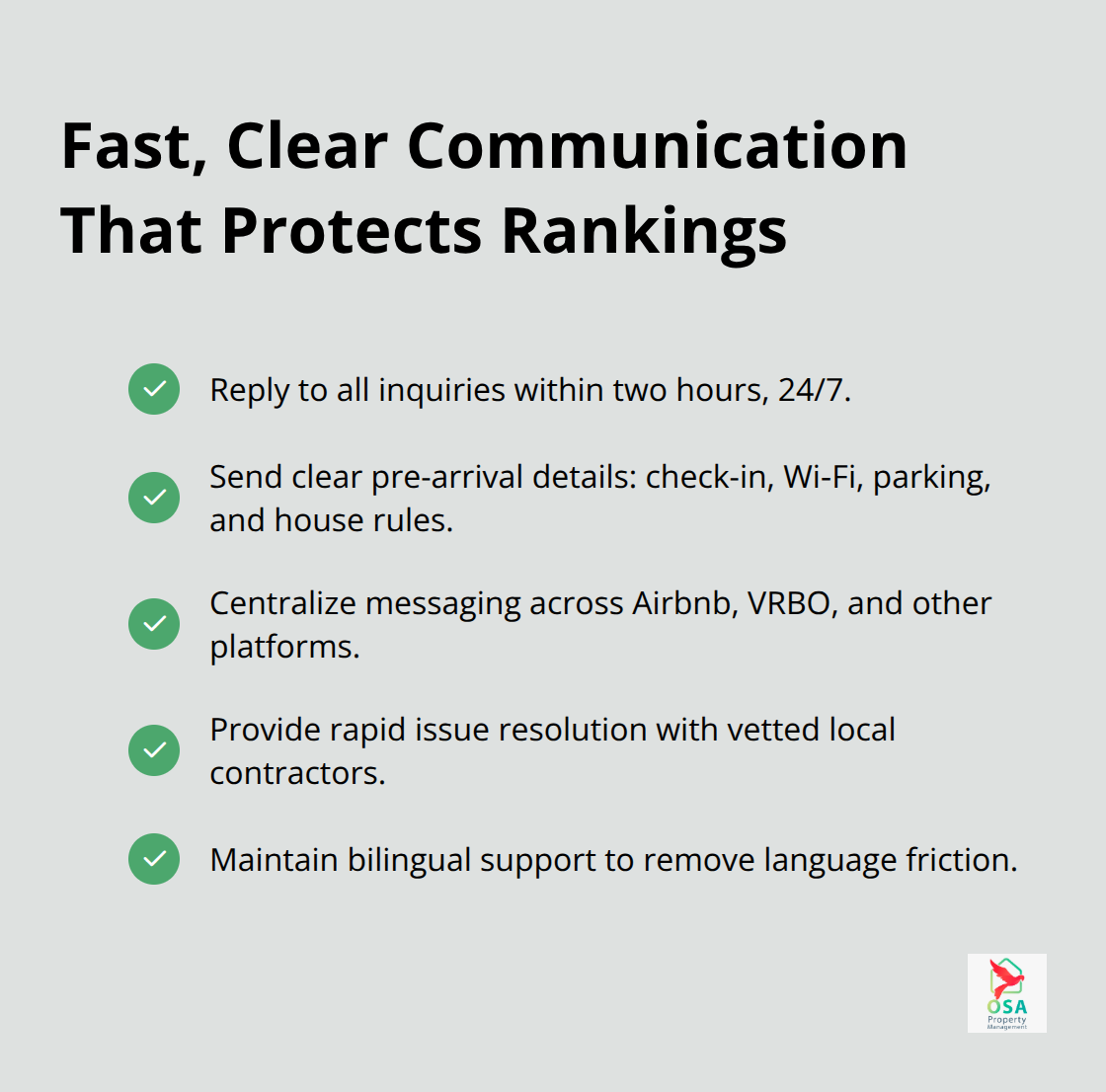
A guest messages at 2 a.m. Costa Rica time asking about airport transfers, and no response until the next morning frustrates them before they even arrive. Poor communication compounds when guests encounter problems: a broken toilet becomes a one-star review if the owner takes eight hours to arrange a plumber, but a four-hour response with a solution becomes neutral or positive feedback. Professional managers operate with 24/7 guest support systems, bilingual staff, and established contractor networks that respond within hours.
Guest Screening Prevents Problem Bookings and Protects Your Property
Owners who accept every booking request expose themselves to guests with eviction histories, patterns of low ratings, or destructive behavior. Professional managers screen guests before booking to reject problematic applicants-someone with multiple evictions in their history or a pattern of complaints elsewhere signals trouble ahead. This screening process (combined with clear house rules and damage policies) prevents the high-turnover costs and reputation damage that derail Manuel Antonio properties.
A guest with a history of property damage or noise complaints costs owners far more than the single booking fee in repairs, cleaning, and lost future bookings from negative reviews. Screening takes time and requires access to guest history across platforms; owners managing properties alone lack the tools and experience to identify red flags effectively. Professional managers maintain databases of guest behavior and flag risky applicants before they book.
These mistakes-underpricing, deferred maintenance, and inconsistent communication-erode the occupancy and pricing advantages that Manuel Antonio properties naturally possess. Owners who ignore these areas watch their 80% occupancy rates drop to 60%, their $400 nightly rates compress to $250, and their annual returns shrink by half. The path to protecting and maximizing returns lies in understanding how professional management addresses each of these problems systematically.
How Professional Management Transforms Property Returns
Dynamic Pricing Captures Revenue That Static Rates Miss
Professional property managers in Manuel Antonio adjust rates based on real-time demand data, competitor pricing, and local event calendars rather than setting prices once and leaving them unchanged. A three-bedroom villa might rent at $350 per night during shoulder season but jump to $500 during school holidays or when major events draw tourists to the area. Managers who monitor booking patterns weekly rather than monthly capture these spikes and adjust rates accordingly.
Static pricing costs owners thousands annually.
Tools like Hostfully integrate with Airbnb, VRBO, and other platforms to sync availability and adjust rates automatically, eliminating the manual work that most DIY owners cannot sustain across multiple properties and time zones. Professional managers also know that aggressive early-season pricing (offering discounts for bookings made 60+ days in advance) fills calendars during slower months, while last-minute rate increases capture spontaneous travelers willing to pay premiums. Properties managed professionally achieve 75% to 85% occupancy year-round, compared to 55% to 65% for owner-managed properties in the same market.
Multi-Platform Marketing Reaches More Travelers and Increases Bookings
Professional managers list properties on Airbnb, VRBO, Booking.com, and niche platforms like Luxury Retreats or FlipKey simultaneously, maximizing visibility to different traveler segments. Each platform requires optimized photography, tailored descriptions, and strategic keyword placement to rank well in search results. Professional photography alone increases booking inquiry rates by 30% to 40% because travelers make split-second decisions based on images.
Managers also coordinate seasonal promotions tied to local events, weather patterns, and competitor activity. A property near Manuel Antonio National Park benefits from wildlife-focused marketing during green season (May through November) when monkey and sloth sightings peak, while dry season messaging emphasizes beach access and water activities.
Responsive Guest Communication Protects Search Rankings and Reputation
Coordinating guest communication across platforms prevents the missed messages and delayed responses that damage reviews and search rankings. A 24/7 response system ensures inquiries receive replies within two hours, and dedicated staff handle pre-arrival messaging, check-in coordination, and problem resolution without the language barriers or time-zone friction that plague remote owners.
Booking platforms prioritize response time heavily in their algorithms; a manager who replies to inquiries within two hours gets higher search visibility than one who responds in twelve hours. A guest messaging at 2 a.m. Costa Rica time asking about airport transfers receives a prompt response, setting a positive tone before arrival. Poor communication compounds when guests encounter problems: a broken toilet becomes a one-star review if the owner takes eight hours to arrange a plumber, but a four-hour response with a solution becomes neutral or positive feedback.
Preventive Maintenance Protects Property Value and Guest Satisfaction
Professional managers schedule quarterly inspections before problems become visible to guests and address tropical climate challenges proactively (pest control, mold prevention, pool chemistry). They maintain relationships with trusted contractors who respond within hours to emergencies. A guest discovering a broken air conditioning unit mid-stay and waiting eight hours for repair leaves a one-star review that reduces bookings for months. A professional team dispatching a technician within four hours prevents the damage and preserves the property’s earning potential.
Repeat repairs on identical issues signal contractor incompetence and wasted money, making preventive maintenance and contractor accountability essential. Professional managers identify and replace underperforming contractors quickly, protecting both property condition and owner budgets.
Guest Screening Prevents Problem Bookings and Costly Turnover
Professional managers screen applicants before booking to reject guests with eviction histories, patterns of low ratings, or destructive behavior. This screening process (combined with clear house rules and damage policies) prevents the high-turnover costs and reputation damage that derail Manuel Antonio properties. A guest with a history of property damage or noise complaints costs owners far more than the single booking fee in repairs, cleaning, and lost future bookings from negative reviews.
Owners managing properties alone cannot access guest history across platforms or identify red flags effectively. Professional management eliminates guesswork in tenant selection and protects owners from costly mistakes in legal compliance and operational efficiency.
Final Thoughts
Manuel Antonio remains one of Costa Rica’s most profitable property markets because tourism demand stays consistent, location premiums are real, and short-term rental models generate cash flow that long-term rentals cannot match. The difference between a property that produces $80,000 annually and one that produces $40,000 comes down to execution-underpricing, deferred maintenance, and poor guest communication are not minor mistakes but wealth destroyers that compound over years. Professional Manuel Antonio property management eliminates these mistakes systematically through dynamic pricing, preventive maintenance, responsive guest communication, and rigorous guest screening.
We at Osa Property Management have spent over 20 years building the systems and contractor networks that make this work across the southern Pacific zone. Our team handles marketing, guest communication, maintenance coordination, accounting, and tax compliance so owners can actually relax and watch their investments perform. Connect with Osa Property Management to discuss how professional management transforms your property into a consistent income generator.