

Getting your Manuel Antonio rental license right is non-negotiable if you want to operate legally and protect your investment. Many property owners skip steps or miss deadlines, which leads to fines and operational shutdowns.
We at Osa Property Management have guided countless owners through this process, and we know exactly where things go wrong. This guide walks you through each requirement, common pitfalls, and how to stay compliant from start to finish.
What Licenses Do You Actually Need in Manuel Antonio
The Three Registrations That Matter
Costa Rica’s short-term rental framework under Law No. 9742 (2019) requires three separate registrations, and skipping even one creates legal exposure. The Costa Rica Tourism Institute (ICT) demands that every property operating as a non-traditional accommodation register and obtain a tourism license through an electronic form at ict.go.cr. This isn’t optional-unlicensed operations trigger fines reaching up to 10 times the license cost in some areas, plus potential property closure.
Beyond the ICT license, you must register with your local municipality to obtain a Patente, which is the municipal business permit. These two registrations work together: the ICT confirms your property qualifies as a tourism rental, while the municipality verifies zoning compliance and collects local fees. Finally, the Dirección General de Tributación (DGT) requires you to file income declarations using Form D-125 monthly and meet quarterly tax installment deadlines.
The DGT’s Enforcement Track Record
The DGT has conducted enforcement crackdowns that identified hundreds of properties with unreported income, imposing back taxes and penalties that often exceed initial licensing costs. Many owners mistakenly think the ICT license alone covers everything, then face surprise audits when the DGT discovers undeclared income. This assumption costs owners thousands in back payments and penalties.
Zoning, Safety, and Platform Requirements
Zoning rules in Manuel Antonio determine whether your property can legally operate short-term rentals at all. Residential zones often restrict or ban short-term rentals, while commercial zones offer more flexibility-but this varies by neighborhood and changes without warning. The Ministry of Health conducts mandatory safety inspections covering fire equipment, sanitation, and guest safety standards; violations result in fines exceeding $5,000 and temporary closures.
Your HOA or condo association may also ban short-term rentals regardless of national law, so review bylaws before listing. Booking platforms including Airbnb increasingly require proof of legal compliance and remove listings without current licenses and registrations.
Four Authorities, Four Separate Powers
You answer to four separate authorities (ICT, municipality, DGT, MOH), each with independent inspection and enforcement powers. One missed deadline or incomplete registration doesn’t just delay your business-it compounds into fines, platform removal, and operational shutdown. Owners who treat licensing as a one-time checkbox invariably run into trouble within 12 months.
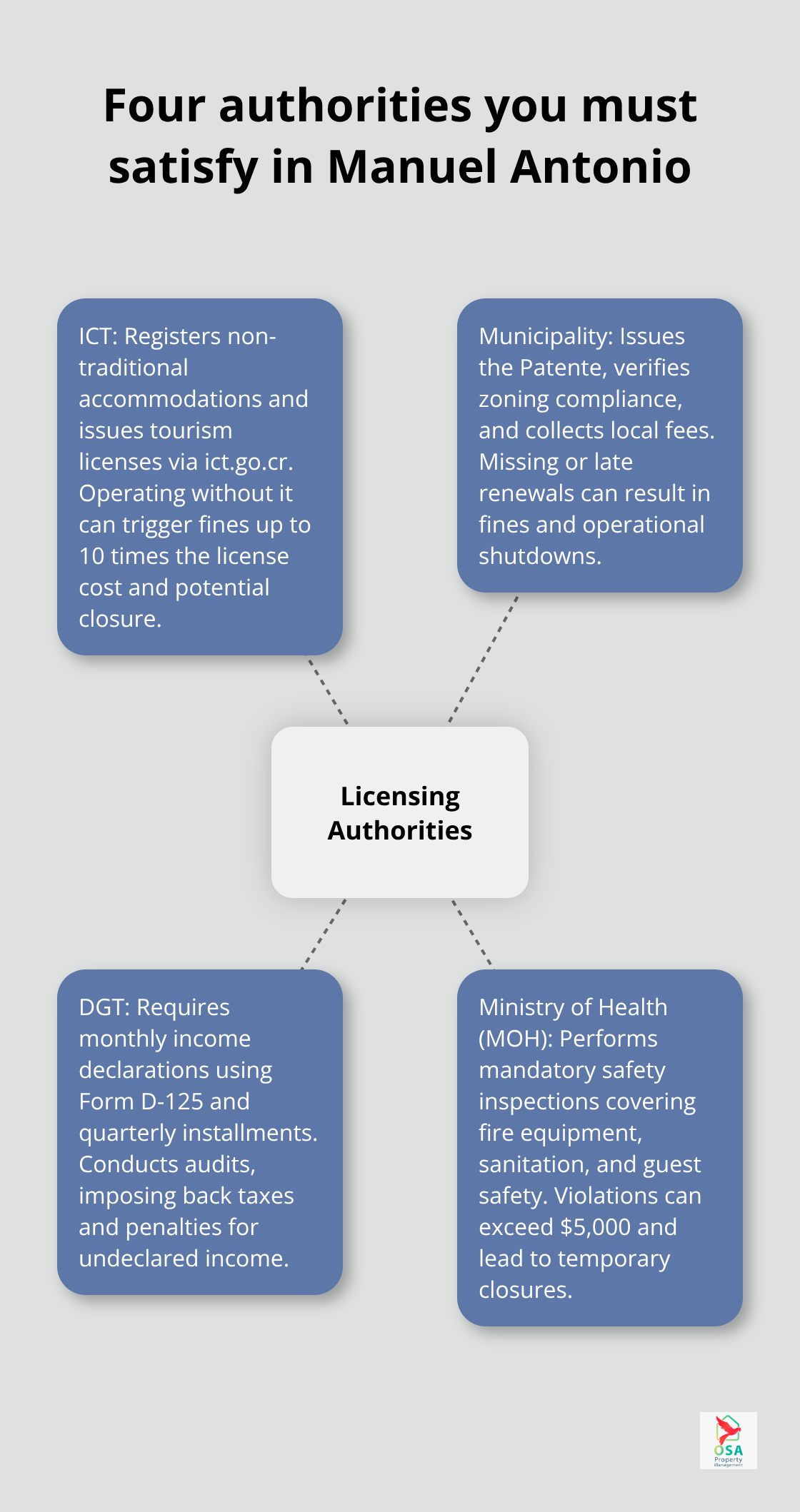
Understanding which authority oversees what, and when each deadline arrives, separates compliant operations from costly mistakes.
Getting Your Licenses Without Delays or Rejections
Gather Documents First, Submit Second
Start by collecting the exact documents your municipality requires, because each locality in Manuel Antonio enforces slightly different submission standards. Contact your municipality directly or visit their office in person-email requests often get lost or answered weeks later. You need a property deed or proof of ownership, a completed ICT application form (available at ict.go.cr in Spanish), your cedula or passport, proof of address for the property, and proof that utilities are connected and functional. Many owners skip the utility verification step, then face rejection weeks into processing. The municipality also requires a signed declaration stating the property meets health and safety standards, even though the Ministry of Health conducts the actual inspection later. Have these documents ready in both original and photocopy form; most authorities demand certified copies, which take 2–3 days to obtain from a notary.
Submit Applications in the Right Order
The ICT license application itself takes 15–20 minutes online, but the supporting documents take weeks to assemble correctly. Submit your ICT application first, because your ICT registration number becomes mandatory for the municipal Patente application that follows. Once the ICT confirms receipt, move immediately to your municipality to file for the Patente. This is where timing matters: processing typically takes 20–30 days, but delays compound if documents are incomplete or if the municipality requests clarifications. The DGT registration for Form D-125 happens simultaneously and takes about 5–10 days; file this before your first month of rental income arrives, since monthly declarations are mandatory from day one of operation.
Budget for Fees and Processing Time
Processing fees vary by municipality but expect to pay between 50,000 and 150,000 colones for the Patente alone, plus ICT fees and DGT registration costs. Budget approximately $400–600 USD total for all three registrations and associated notary copies. The Ministry of Health inspection, which determines fire safety and sanitation compliance, typically occurs within 30–45 days after you list the property, so schedule any safety upgrades before that window. Many owners underestimate this timeline and launch their property on Airbnb before inspections pass, risking platform removal if violations are found.
Compress Your Timeline by Filing Simultaneously
File all applications at the same time to compress the 60–90 day total timeline into the shortest possible window, because every week of delay is lost rental income and mounting frustration with bureaucratic processes. This approach prevents one delayed registration from blocking the others and keeps your property moving toward operational status faster. The next chapter covers the mistakes that derail this process and how to avoid them.
Common Mistakes Property Owners Make During Licensing
Documentation Errors Derail Applications
Documentation errors destroy more Manuel Antonio rental applications than any other factor. Owners submit photocopies instead of certified notary copies, forget to include utility connection proof, or provide expired identification documents. The municipality rejects the application, which delays everything by 15–20 days while you scramble to get corrections notarized. This mistake repeats constantly: an owner thinks a simple photocopy works, wastes two weeks waiting for a response, then discovers they need certified copies.
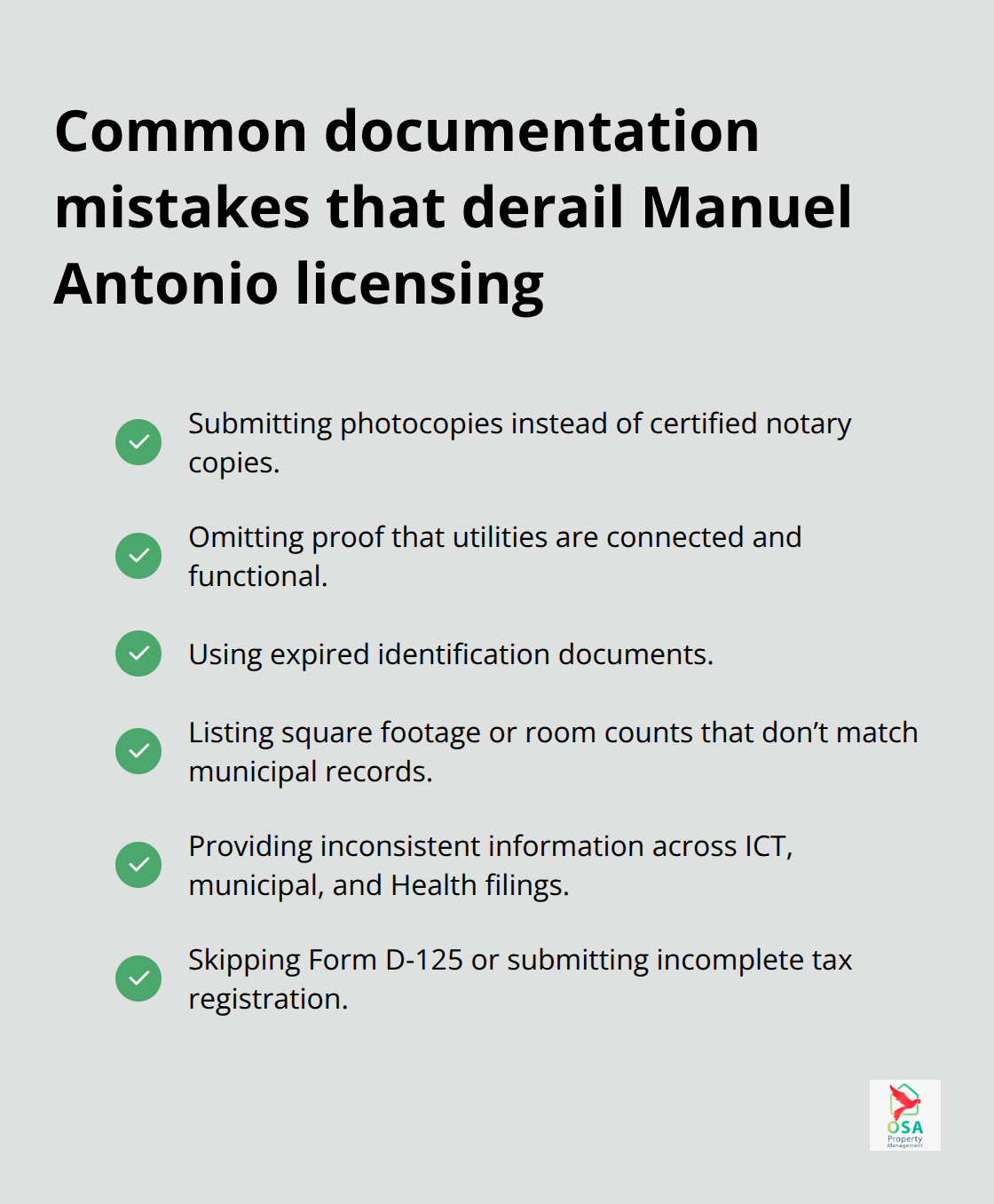
The Ministry of Health also rejects applications if your property declaration doesn’t match the actual square footage or room count listed with the municipality. Mismatched information between your ICT application, municipal filing, and health inspection request triggers automatic rejections.
Owners who photograph their documentation before submitting, verify every detail matches across all three applications, and obtain certified notary copies upfront compress their timeline by 20–30 days. The DGT’s enforcement crackdowns identified hundreds of unreported properties, many operating because owners submitted incomplete tax registrations or skipped Form D-125 entirely. File Form D-125 before you accept your first guest, not after, because monthly declarations become mandatory from day one and the DGT audits retroactively.
Renewal Deadlines Create Operational Shutdowns
Your ICT license, municipal Patente, and DGT registration all expire on different dates, and missing even one renewal converts your operation from legal to illegal overnight. The municipality typically sends no reminder notices, so marking renewal dates in your calendar means nothing if you manage multiple properties across Manuel Antonio. Many owners miss their Patente renewal by 30–60 days, then face fines of 50,000–100,000 colones plus operational shutdown orders.
Zoning violations and safety non-compliance create permanent licensing blocks that cost far more than preventive maintenance. A property in a residential zone that the municipality later reclassifies cannot legally operate short-term rentals, even if licensed years earlier. The Ministry of Health inspection identifies fire safety violations like missing fire extinguishers or blocked emergency exits. Owners who schedule annual safety audits six months before renewal deadlines catch these violations early and fix them without operational disruption. Your HOA bylaws may restrict short-term rentals entirely, invalidating your license regardless of municipal approval. Read your HOA documents before applying for any license, because discovering this restriction mid-application wastes 4–6 weeks of processing time and application fees.
Safety Standards Determine Long-Term Viability
The Ministry of Health doesn’t issue licenses; inspectors verify compliance with health and safety codes as a condition of your ICT and municipal permits. Properties fail inspection because owners assume platform requirements like clean linens and working plumbing satisfy government standards. The Ministry actually enforces fire safety equipment, structural integrity, adequate ventilation, sanitation protocols, and emergency egress routes. A property with no fire extinguisher, blocked stairwells, or mold in bathrooms fails immediately and gets temporarily closed until corrections occur.
Owners who hire a local safety consultant 30–45 days before their expected inspection identify violations in advance and budget for fixes. Booking platforms remove listings without current safety compliance, so a failed Ministry inspection ripples directly into lost bookings and revenue. Zoning compliance requires your property’s actual use to match municipal zoning classification; operating a rental in a residential zone without special variance permission creates daily fines and potential guest eviction orders. Contact your municipality before licensing to confirm zoning allows short-term rentals in your specific location, because some neighborhoods in Manuel Antonio permit rentals while adjacent blocks ban them entirely.
Final Thoughts
Manuel Antonio rental licensing demands ongoing attention, not a one-time checkbox. The three registrations-ICT license, municipal Patente, and DGT tax filing-work together, and missing even one creates legal exposure that compounds over months. Owners who understand the timeline, assemble documents correctly, and file simultaneously compress their path to operation and avoid costly rejections that delay income and drain resources.
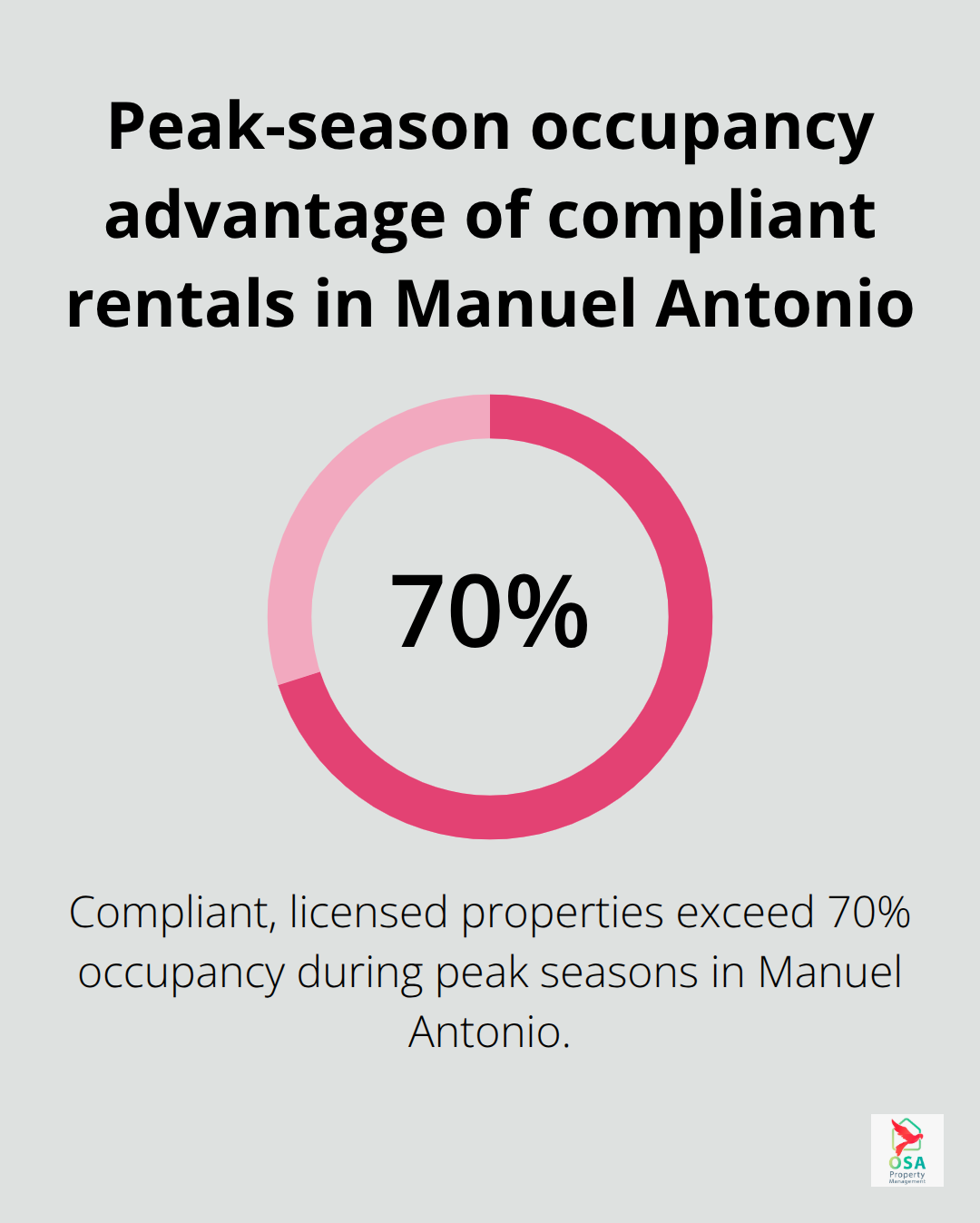
Proper compliance protects your investment in measurable ways. Your property stays listed on booking platforms, which remove unlicensed rentals without warning, and you avoid fines reaching 10 times your license cost plus temporary closures that eliminate rental income for weeks. Compliant properties attract quality guests who trust licensed operations, leave positive reviews, and drive occupancy rates above 70 percent during peak seasons in Manuel Antonio.
Manuel Antonio rental licensing requires local knowledge that most foreign owners lack. We at Osa Property Management handle ICT registration, municipal filings, DGT tax compliance, and Ministry of Health inspections so you navigate the process without bureaucratic delays or rejections.
To be contacted by an Osa Property Management representative and to learn more about our services, please send an email to info@osapropertymanagement.com or send a WhatsApp message to +17633068981 or +50671001006 / Para que un representante de Osa Property Management se ponga en contacto con usted y obtener más información sobre nuestros servicios, por favor envíe un correo electrónico a info@osapropertymanagement.com o un mensaje de WhatsApp al +17633068981 o al +50671001006.
Vacation rentals: https://costaricalasvillas.com