

Owning property on the Osa Peninsula means battling humidity, salt air, and tropical storms year-round. These conditions accelerate damage to roofs, plumbing, and foundations faster than most property owners expect.
At Osa Property Management, we’ve seen how small maintenance gaps turn into five-figure repair bills. Proactive upkeep stops this cycle before it starts.
What Damages Osa Peninsula Properties Most Quickly
Humidity, Salt Air, and Wood Rot Create a Perfect Storm
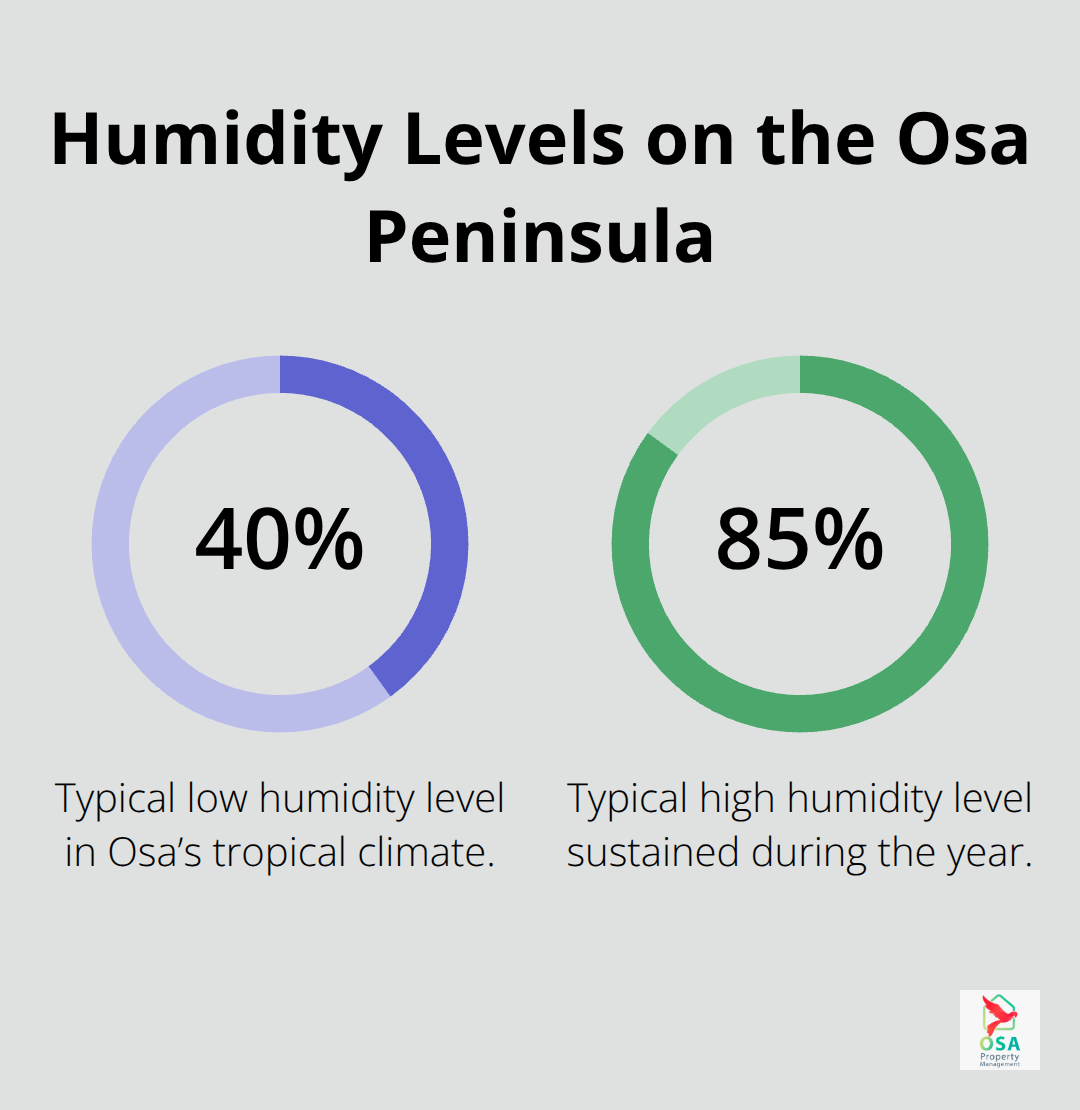
Humidity on the Osa Peninsula stays between 40% and 85% year-round, and this moisture creates three distinct threats that compound over time. Salt air corrodes metal railings, hinges, screws, and outdoor fixtures if left unprotected-coastal properties lose their shine faster than inland homes. Wood rot accelerates in this environment because moisture penetrates siding, window frames, and structural beams, weakening them from the inside out.
Mold and Termites Attack From Within
Mold grows aggressively in closets, bathrooms, and poorly ventilated spaces, spreading invisibly until it damages drywall and flooring. The Termite Research Group at the University of Costa Rica documents that termites cause millions of dollars in annual damage across the country, targeting untreated wood and foundations. Without intervention, a small leak becomes structural damage within one rainy season.
The Rainy Season Intensifies Every Threat
The rainy season from May through November intensifies these pressures-gutters overflow, water pools near foundations, and roofing membranes fail under constant moisture exposure. Small maintenance gaps turn expensive because tropical conditions accelerate every failure mode. A missing gutter guard costs nothing to ignore but leads to water intrusion that damages ceilings, walls, and electrical systems costing thousands to repair.
Quarterly Inspections Beat Annual Checks
Rust spots on a metal roof seem minor until rain finds the compromised metal, creating leaks that spread across multiple rooms. Quarterly roof inspections catch loose tiles and cracked flashing before storms arrive, while annual inspections miss the damage that develops between checks. Properties inspected bi-annually before and after the rainy season have significantly lower emergency repair costs because contractors address wear before it cascades.
Monthly Maintenance Prevents System Failures
Regular checks of plumbing, HVAC filters, and foundation drainage prevent expensive system failures that leave guests without water or cooling during peak season. Monthly pest control and dehumidifier maintenance avoid the $500 to $1,000 termite treatments and $300 to $500 mold remediation costs that reactive owners face annually. The difference between proactive and reactive maintenance often exceeds $3,000 to $5,000 per year on a single property, which is why understanding these specific threats matters before selecting a management partner to handle your upkeep schedule.
What Your Osa Peninsula Property Needs Every Month and Season
Roof and Gutter Care Cannot Wait
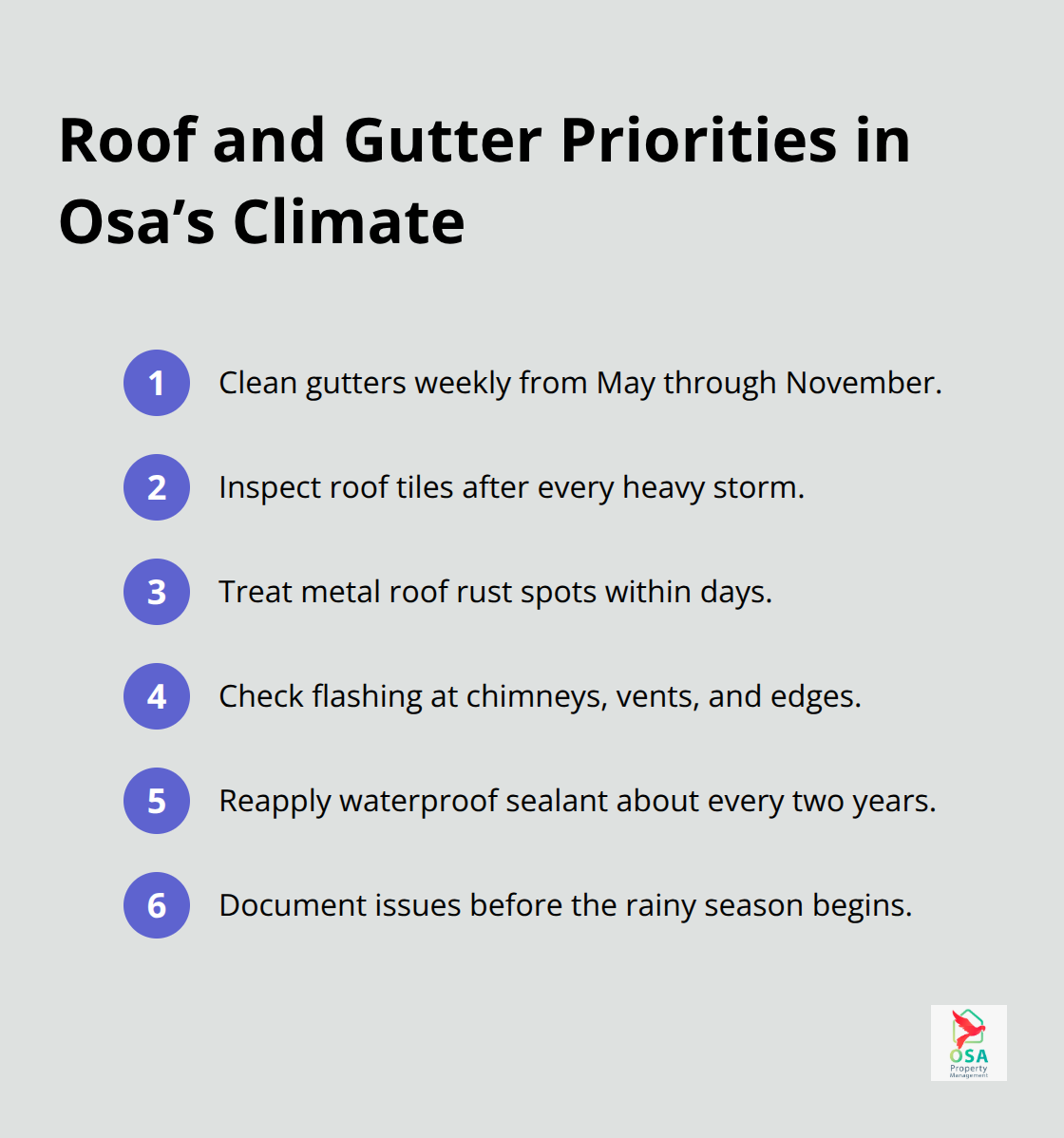
Gutters need cleaning weekly during the rainy season from May through November rather than monthly, because debris accumulates faster than most owners anticipate and standing water creates the exact conditions for mold growth and structural rot. Inspect roof tiles for looseness and displacement after heavy storms, since even minor shifts allow water to penetrate membranes underneath. Metal roofs require rust spot treatment within days of discovery because tropical salt air accelerates corrosion rapidly-a small rust hole becomes a leak path within weeks. Flashing around chimneys, vents, and roof edges fails first because these joints experience constant expansion and contraction from temperature swings and moisture exposure. Waterproof sealant on roof seams lasts only two to three years in Osa’s climate, so reapplication should happen every other year rather than waiting for leaks to appear.
HVAC and Plumbing Systems in Humid Conditions
Humid environments corrode metal components and promote mold inside ductwork and drain lines, causing HVAC and plumbing systems to fail faster than in drier climates. Air conditioning filters accumulate moisture and dust twice as quickly, requiring monthly replacement instead of quarterly changes, and professional service should occur at least twice a year. Drain lines in HVAC systems clog with algae and debris, causing water to back up into walls and ceilings-these lines need professional cleaning before and after the rainy season. Plumbing inspection should focus on exposed pipes and water heaters where salt air causes corrosion that weakens connections, and stainless steel fixtures significantly outperform standard metals in coastal properties. Foundation drainage demands attention because rainy season runoff pools against foundations if gutters or grading fails, and this standing water penetrates concrete and undermines structural integrity within a single season.
Pest Control and Moisture Management Year-Round
Pest control works only when scheduled quarterly year-round because termites operate continuously in tropical conditions, and waiting until visible damage appears means structural damage already exists. Dehumidifiers in closets and storage rooms prevent hidden mold growth that spreads undetected, and these units need emptying or drain-line checking weekly during the rainy season to maintain effectiveness. This combination of regular pest inspections and moisture control addresses the two threats that cause the most expensive structural failures on the Osa Peninsula, setting the stage for understanding how professional management coordinates these tasks across your property’s entire maintenance calendar.
Who Manages Your Maintenance Calendar
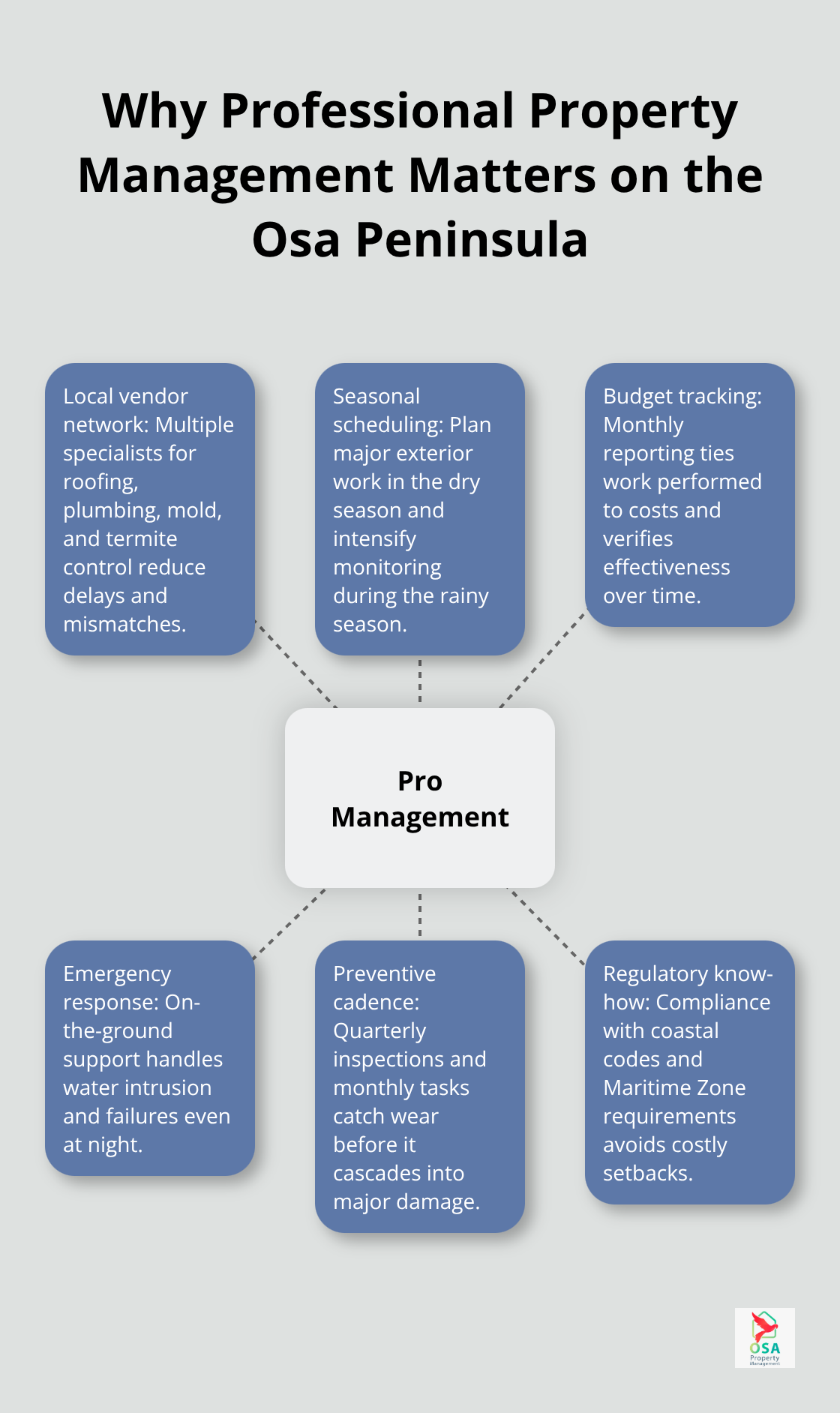
Coordinating quarterly roof inspections, monthly pest control, weekly gutter cleaning during rainy season, and bi-annual contractor quotes requires systems that most absentee owners cannot maintain from abroad. Professional property management exists because tropical maintenance demands local knowledge, vendor relationships, and someone on the ground when water intrusion happens at 2 AM during peak guest season. The difference between a property that generates revenue and one that hemorrhages money through emergency repairs comes down to whether maintenance happens on schedule or only after visible damage forces action.
Local Contractor Networks Stop Cascading Failures
Building a network of trusted local contractors takes years because you need specialists who understand Costa Rica’s Maritime Zone regulations, building codes specific to coastal construction, and the particular threats that salt air and humidity pose to different materials. A contractor who excels at termite treatment may not understand mold remediation, and someone skilled with plumbing may lack expertise in roof flashing repair. Professional management maintains relationships with multiple vendors for each major system to address this gap.
Local specialists know that metal roof rust requires treatment within days rather than weeks, that gutter cleaning during rainy season needs weekly attention instead of monthly visits, and that foundation drainage failures develop rapidly once water begins pooling against concrete. This coordination prevents the cascade effect where one neglected system damages another, turning a $200 gutter cleaning into a $5,000 ceiling repair.
Seasonal Scheduling Maximizes Dry-Season Work
Scheduling maintenance around Costa Rica’s weather patterns means treating the dry season from December through April as your window for exterior painting, major roof work, and landscaping projects that require dry conditions. The rainy season from May through November demands intensive monitoring of water intrusion, mold growth, and drainage system performance instead.
The National Association of Realtors benchmarks suggest allocating 1 percent of property value annually for routine maintenance, but Osa Peninsula properties in their second decade typically need 3 to 4 percent because salt air and humidity accelerate wear faster than inland Costa Rica. A $300,000 property should budget $3,000 to $4,000 yearly for scheduled maintenance plus an additional $6,000 to $9,000 emergency reserve for unexpected structural issues.
Budget Tracking Reveals True Maintenance Effectiveness
Managing maintenance budgets requires tracking every contractor invoice, labor hour, and material cost so you understand whether your roof treatment last year actually prevented rust, whether quarterly pest control reduced termite risk, or whether dehumidifier maintenance stopped mold in storage rooms. Detailed monthly maintenance reports show exactly what work occurred, which contractors performed it, what it cost, and whether it addressed the specific threat it targeted.
This accountability matters because some owners receive surprise bills for $8,000 roof repairs that could have been prevented with $500 in preventive sealant application. The difference comes from whether someone tracks maintenance effectiveness or simply responds to emergencies. Properties with professional oversight rarely tap emergency reserves because problems get addressed before they escalate into expensive structural failures.
Final Thoughts
Osa Peninsula property care demands commitment, but the payoff justifies every dollar spent on prevention. Properties that receive quarterly inspections, monthly pest control, and seasonal contractor coordination generate higher rental income, require fewer emergency repairs, and maintain their value far better than neglected homes. A $200 gutter cleaning prevents the $5,000 ceiling repair, quarterly roof inspections catch rust spots before they become leak paths, and monthly dehumidifier maintenance stops mold from spreading through walls.
Professional management eliminates the stress of coordinating contractors across time zones and tracking maintenance schedules from abroad. Someone on the ground handles emergencies at 2 AM during peak guest season instead of leaving you scrambling from thousands of miles away. We at Osa Property Management bring over 16 years of regional experience, a network of trusted local contractors, and a team dedicated to protecting your investment through understanding Maritime Zone regulations and the specific threats that salt air and humidity pose to different materials.
Peace of mind comes from knowing your property receives the attention it needs to thrive in Costa Rica’s tropical climate. That confidence translates into better guest experiences, higher occupancy rates, and long-term asset protection that keeps your Osa Peninsula investment generating returns for decades.