
Rental properties on the Osa Peninsula can generate strong income, but only if you get the fundamentals right. We at Osa Property Management have seen firsthand how the right Osa Peninsula rental strategies transform underperforming properties into consistent revenue generators.
This guide covers the specific tactics that work in our market: pricing that matches seasonal demand, marketing channels that actually convert guests, and operational practices that keep occupancy high.
Pricing the Osa Peninsula for Maximum Revenue
Two Seasons, Two Pricing Strategies
The Osa Peninsula operates on two distinct rental seasons, and your pricing must reflect this reality or you will leave thousands of dollars on the table. December through April is peak season, when occupancy rates climb to around 40% and nightly rates jump 20 to 30% above shoulder-season levels. January alone pulls the strongest bookings, with guests booking an average of 62 days in advance. This means you must lock in December rates by October at the latest. Data from AirROI shows that top-performing Osa properties command nightly rates of $171 or more, while median properties sit at $104. The difference between these tiers is not luck-it's strategic pricing combined with the right amenities and marketing.
May through November is green season, when rates drop 30 to 50% but opportunity still exists. The Osa Peninsula does not go dead in green season; it shifts. July and August bring humpback whale activity with 85% sighting probability in Golfo Dulce, which justifies higher rates during those specific months. September offers cultural immersion and waterfall adventures at lower international demand, while October features baby turtle hatchings. November is the best-value period for budget travelers, yet lodge discounts reach about 60%-a sign that aggressive promotion, not deep discounting, should fill your calendar.
Competitive Analysis and Dynamic Pricing
You need competitive analysis across Airbnb, VRBO, and local platforms by studying 10 or more comparable properties in your area. Supplement this with market analytics tools that track occupancy and rate trends. Most Osa bookings come with 31 to 90 days lead time, which means pricing adjustments take effect weeks before guests arrive. Adjust rates weekly based on booking pace, not monthly. If you have zero bookings 45 days out, your rate is too high.
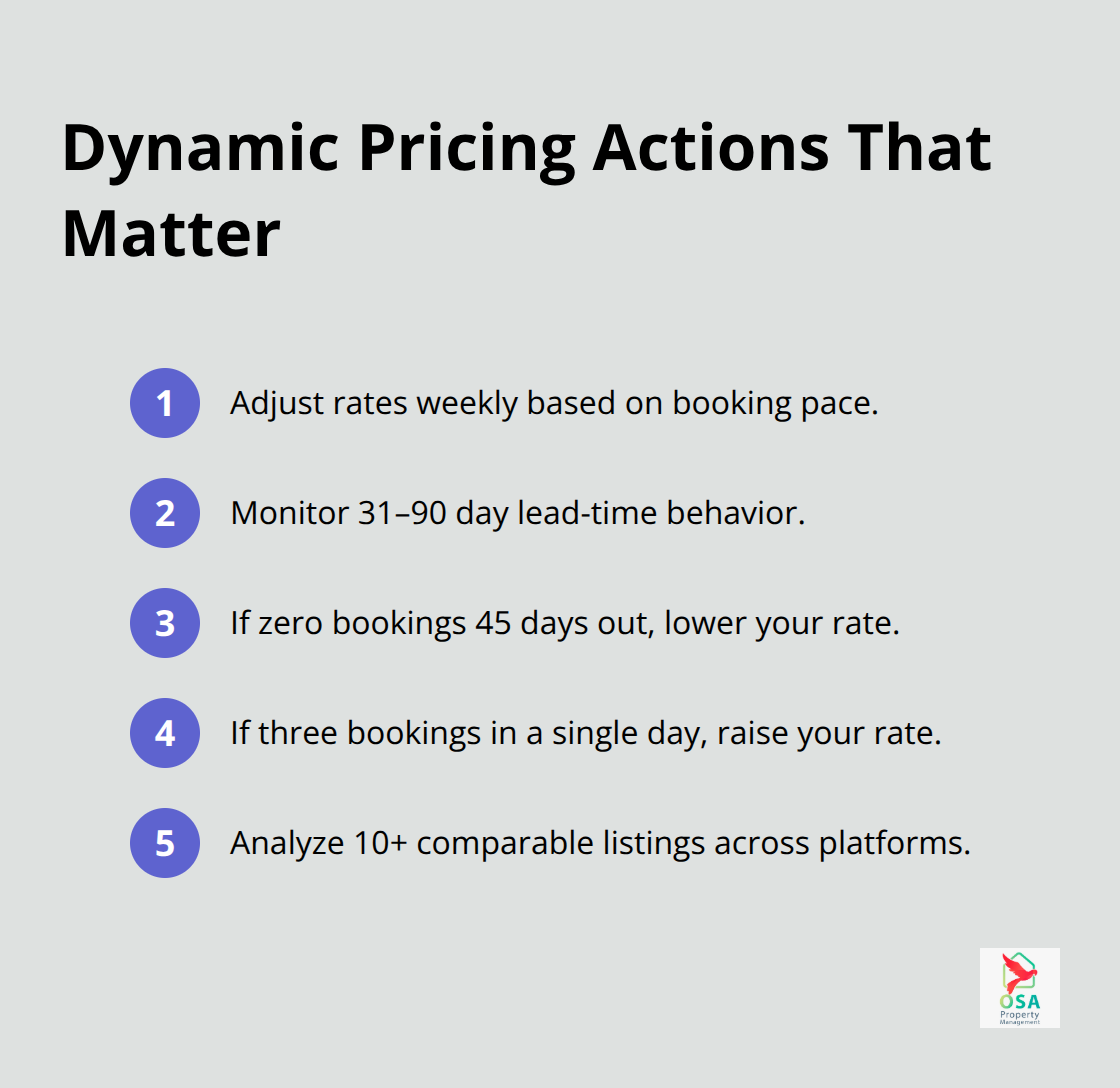
Dynamic pricing software automates this, syncing across all platforms simultaneously to prevent double bookings while capturing demand spikes. This approach transforms pricing from a static exercise into a responsive system that reacts to real market conditions.
Events, Weather, and Minimum Stay Settings
Local events create pricing opportunities that most owners miss entirely. The Envision Festival in Uvita, held in February, drives rates up 50 to 100% during event dates. Similar spikes occur around Christmas and New Year's, when families book weeks in advance and accept premium pricing. Weather patterns also matter: February and March deliver the calmest seas for snorkeling at Caño Island Biological Reserve, which justifies higher rates for ocean-view properties. March brings peak bird migration with 400 plus species visible in Corcovado in a single day, attracting specialized travelers willing to pay for premium birding itineraries.
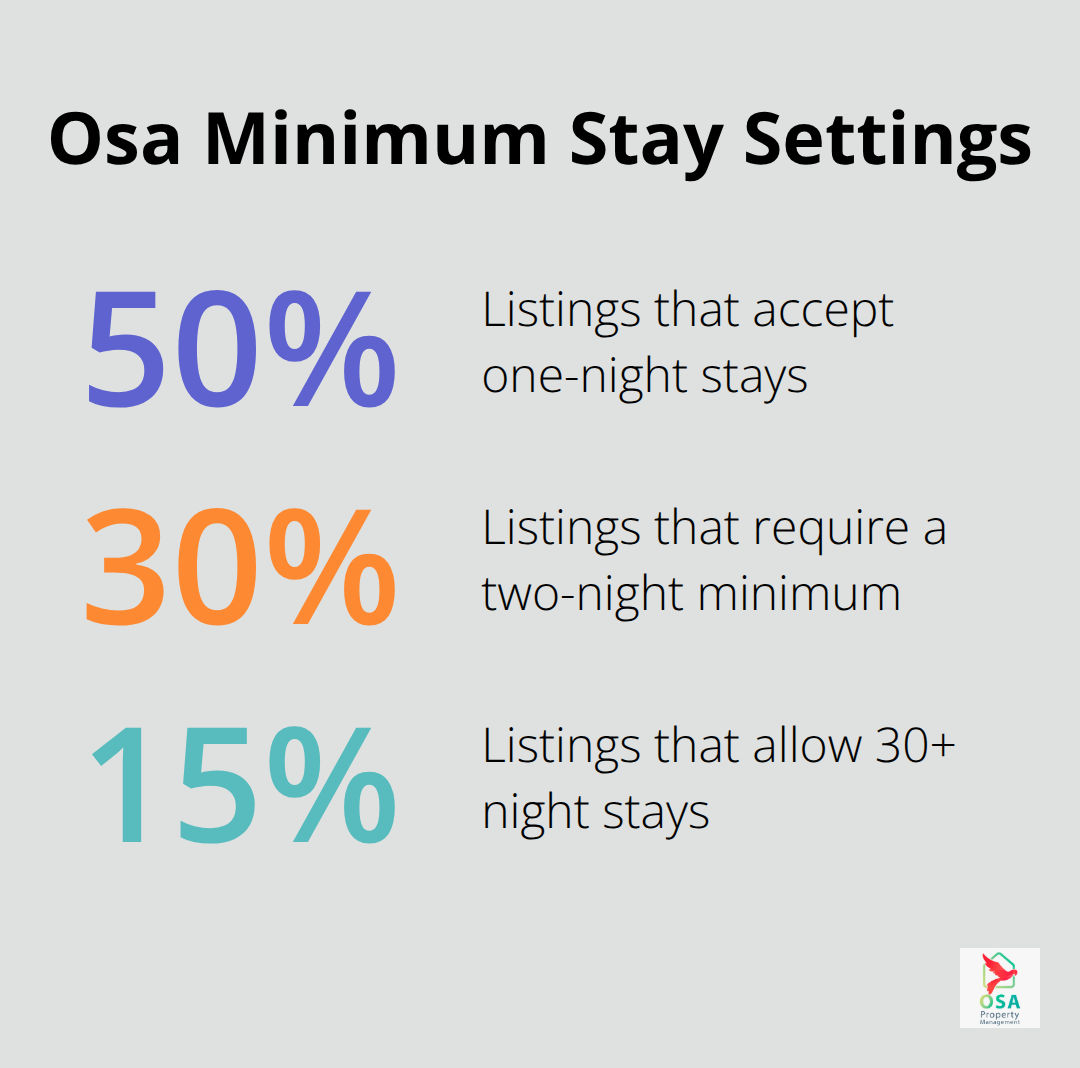
Set your minimum stay strategically. About 50% of Osa listings accept one-night stays, but 30% require two nights and 15% allow 30 plus night stays. One-night minimums capture last-minute bookings and tourists, while 30 plus night discounts (typically 15 to 25% below nightly rates) attract remote workers and extended-stay guests.
Amenities That Command Premium Rates
The Osa market shows that properties with reliable high-speed internet command premium rates over comparable listings without it. Solar panels and rainwater harvesting systems reduce your operating costs by about 30% while justifying higher rates to eco-conscious travelers. Private pools, outdoor kitchens, and yoga decks elevate your property above median performers and push occupancy from the typical 22% toward 42% or higher. These improvements cost money upfront but pay for themselves within a year through higher nightly rates and occupancy gains.
Performance Tiers and Revenue Reality
Your pricing evolves with demand, competition, and your property's performance tier. Properties in the top 10% of Osa Peninsula performers exceed $3,760 monthly revenue and maintain 70% plus occupancy. Strong performers hit around $1,932 monthly with 42% plus occupancy. Typical properties generate about $765 monthly at 22% occupancy. The bottom 25% earn around $333 monthly at 13% occupancy. The gap between tiers is not one or two percentage points-it is multiples. Moving from typical to strong performance requires pricing discipline, not desperation.
Pricing discipline alone does not guarantee results. Your property also needs visibility in the right channels, and that visibility depends on where you list and how you present your rental to potential guests.
Where Your Guests Actually Find You
Airbnb dominates conversation in the rental market, but relying on it exclusively costs you money. Owners who list only on Airbnb leave 15 to 20% of potential revenue on the table by ignoring secondary platforms and direct bookings. The Osa Peninsula market shows that about 80% of active listings are entire homes or apartments, which means competition for visibility is intense. Your pricing can be perfect and your property immaculate, but if guests cannot find you outside Airbnb, you are invisible to a significant portion of demand.
Multiple Platforms Capture Different Traveler Types
VRBO, Booking.com, and Airbnb each attract different traveler types and booking patterns. VRBO skews toward longer stays and families planning vacations months ahead. Booking.com captures business travelers and last-minute bookers. Airbnb remains strong for spontaneous weekend trips. Listing on all three simultaneously increases your booking volume because you are present when each segment searches. The commission trade-off is real-Airbnb charges 3% host fees while VRBO charges 5% and Booking.com varies-but higher occupancy from multiple channels offsets commission costs. Diversifying platforms also protects you if algorithm changes or policy shifts reduce visibility on any single site. Most Osa bookings come with 31 to 90 days lead time, which means guests actively shop across platforms during this window. If you list only on Airbnb, you miss the guests browsing VRBO or Booking.com during that critical decision period.
Direct Bookings Build Relationships and Eliminate Commissions
Direct bookings through your own website eliminate commissions entirely and build customer relationships you control. A dedicated booking page with photos, rates, and availability calendar removes friction from the reservation process. Guests who book direct often engage more deeply because they have already invested time researching your property specifically rather than browsing a platform feed. Direct bookers also tend toward longer stays and higher loyalty for repeat visits. Your website should link directly to your booking system so guests move from property description to confirmed reservation without leaving your site.
Social media-Instagram and Facebook-drives awareness and traffic to your website. Post seasonal updates, guest photos (with permission), and local experience packages monthly. Instagram particularly converts for vacation rentals because visual storytelling works. These platforms create touchpoints that keep your property top-of-mind when travelers plan their next trip.
Photography and Video Transform Conversion Rates
High-quality photography is non-negotiable. Professional photos boost occupancy rates significantly. Poor photos signal neglect and kill conversions regardless of actual property quality. Include exterior shots, common areas, bedrooms, bathrooms, and unique features like pools or ocean views. Add lifestyle shots showing the guest experience-relaxing on the patio, cooking in the kitchen, viewing wildlife.
Video tours perform even better than static images; a 60 to 90 second walkthrough video on your listing increases booking probability by roughly 25% compared to photos alone. Video creates confidence that the property matches expectations, which reduces cancellations and guest complaints.
Descriptions That Differentiate Your Property
Your property description must highlight what makes the Osa Peninsula worth booking. Generic descriptions-clean, comfortable, close to beach-fail to differentiate. Specific descriptions win. Instead of clean, state the property includes weekly professional cleaning and daily housekeeping available at 35 dollars per day. Instead of close to beach, mention walking distance to Marino Ballena National Park where guests can snorkel, spot dolphins, and watch sunset over the Pacific. Mention internet speed in megabits per second, not just high-speed. Mention specific wildlife viewing opportunities-July through October humpback whales with 85% sighting probability-rather than generic jungle references.
List exact amenities with quantities: three bedrooms with air conditioning, two full bathrooms, full kitchen with gas stove and refrigerator, private pool, outdoor shower, 60 megabit fiber internet. Be specific about what guests actually experience. This specificity attracts the right guests and repels those who would leave poor reviews because their expectations misaligned with reality. When your description matches your property precisely, guests arrive satisfied and leave positive reviews that compound your visibility and booking rates over time.
Turning Guest Satisfaction Into Consistent Occupancy
Your pricing strategy and marketing channels drive inquiries, but execution determines whether guests actually book and return. The gap between a mediocre property and a high-performing one comes down to three operational foundations: responsiveness that converts inquiries into bookings, cleanliness and amenities that earn five-star reviews, and turnover efficiency that prevents revenue gaps between guests. Most Osa Peninsula owners treat these as secondary concerns, which is exactly why their properties languish at 13% occupancy while top performers hit 70%.
Response Time Converts Inquiries Into Bookings
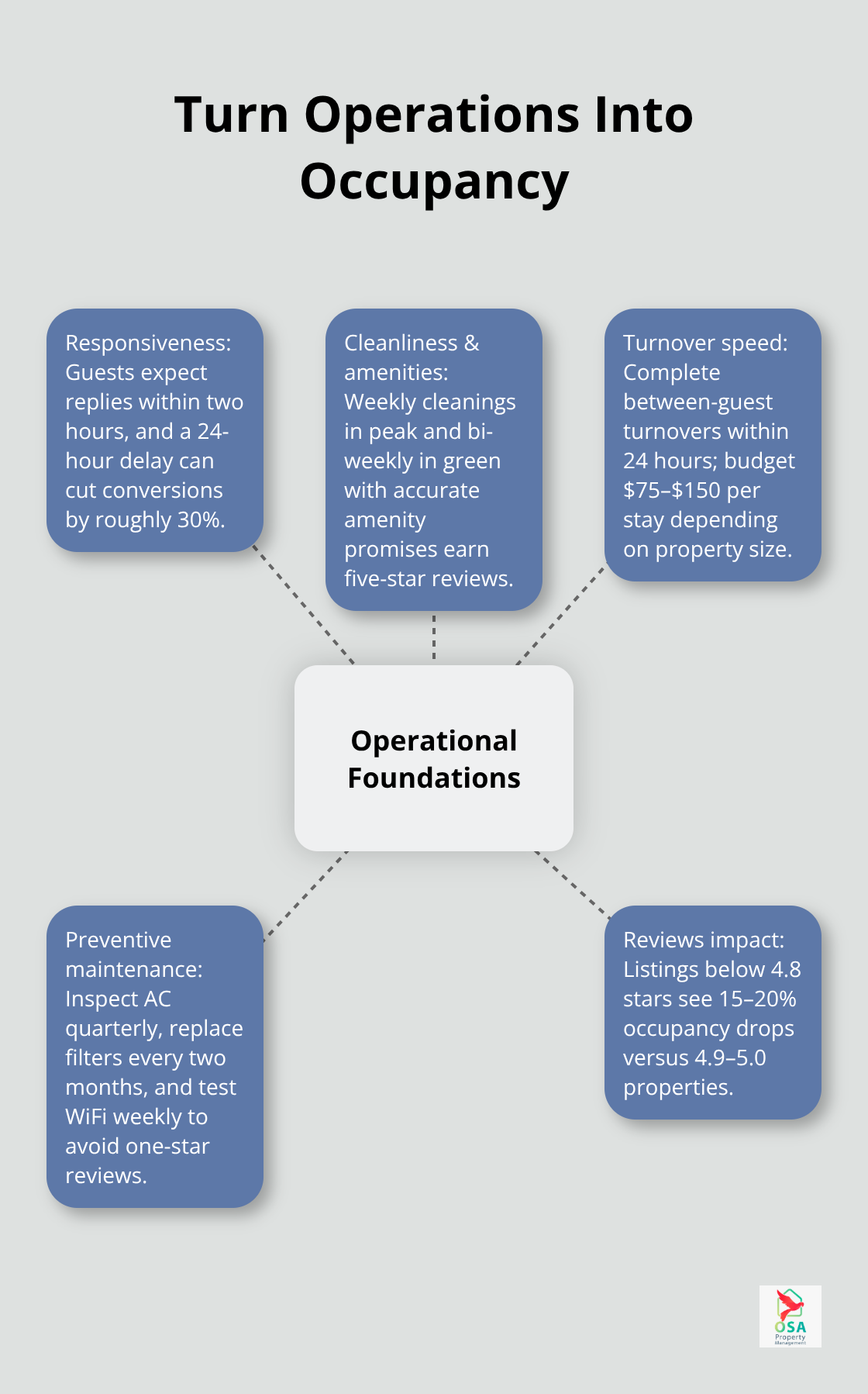
Guest communication to inquiries matters more than most owners realize. Guests browsing Airbnb or VRBO expect replies within two hours during peak season. A 24-hour response delay cuts your conversion rate by roughly 30% because the guest has already booked elsewhere. Property management software that syncs with all your listing platforms sends inquiries to your phone in real time. If you cannot respond within two hours consistently, hire a local property manager or a virtual assistant who can. The cost of a part-time assistant runs 300 to 400 dollars monthly, but converting even two additional bookings per month covers that expense entirely.
Your communication must also be specific and helpful. Generic responses like "thanks for your interest, let me know if you have questions" waste the opportunity. Instead, confirm their dates, mention specific amenities they asked about, provide WiFi speed in megabits, describe the exact view from the master bedroom, and ask clarifying questions about their trip purpose. If they travel with children, mention the pool and nearby beach access. If they mentioned work, emphasize internet reliability and quiet spaces. This personalization signals that you understand their needs and dramatically increases booking probability.
Five-Star Reviews Drive Occupancy Gains
High reviews are the currency of occupancy. Properties with an average rating below 4.8 stars on Airbnb see occupancy drop 15 to 20% compared to 4.9 or 5.0 star properties. The difference between 4.7 and 4.9 is not trivial; it represents hundreds of dollars in lost monthly revenue. One-star reviews often stem from unmet expectations about cleanliness, internet speed, or missing amenities. Your defense is precision in your listing description combined with relentless property standards.
Clean your property weekly during peak season and bi-weekly during green season, regardless of booking schedule. Inspect the property yourself monthly because cleaning companies miss details. Check air conditioning units quarterly to prevent mold and ensure they function properly in Costa Rica's humidity. Replace air filters every two months. Test WiFi speed weekly and contact your internet provider immediately if speeds drop below advertised levels. Replace worn linens, towels, and kitchen items annually rather than waiting until they fail. This preventive maintenance costs money upfront but eliminates the one-star reviews that tank your occupancy.
Fast Turnovers Eliminate Revenue Gaps
Between-guest turnovers must happen within 24 hours maximum. Successful Airbnb hosts responding within one hour achieve 25% more instant bookings. If you live far from your property, hire a local turnover specialist who handles checkout cleaning, linen changes, pool maintenance if applicable, and property inspection within that window. The turnover cost runs 75 to 150 dollars per guest depending on property size, but the alternative is empty nights that generate zero revenue.
Coordinate with your internet provider, pool service if you have one, and maintenance contractors so they respond within 48 hours to any reported issues. Slow maintenance response creates bad reviews and cancellations. When a guest reports broken air conditioning or WiFi down, they expect resolution the same day. This requires relationships with reliable local vendors before problems occur, not scrambling when crisis hits.
Final Thoughts
The Osa Peninsula rental market rewards owners who execute on fundamentals rather than chase trends. Pricing discipline, multi-channel marketing, and operational excellence separate properties earning $3,760 monthly from those stuck at $333, and these Osa Peninsula rental strategies work because they address real market conditions. You now understand how to price seasonally, where guests actually search, and how responsiveness and maintenance standards drive occupancy.
Implementing these tactics alone demands constant attention to weekly pricing adjustments, content creation across multiple platforms, 24-hour turnovers, same-day maintenance response, and monthly property inspections. Most owners underestimate the time commitment and abandon consistency after two months, which is exactly when results compound and occupancy accelerates. Professional management removes the operational friction that kills occupancy and leaves money on the table.
We at Osa Property Management have managed properties across Dominical, Uvita, and Ojochal for over 16 years, and our team handles the execution that transforms strategy into revenue through pricing optimization, marketing coordination, guest communication within two hours, and maintenance oversight. Contact us to discuss how professional management can unlock your property's revenue potential.