
Owning a vacation home in Playa Hermosa means dealing with salt air, humidity, and intense seasonal weather that can damage your property fast. A solid Playa Hermosa maintenance schedule isn’t optional-it’s what separates homes that hold their value from ones that deteriorate year after year.
We at Osa Property Management have seen firsthand how proactive maintenance saves owners thousands in repairs. This guide walks you through the seasonal tasks, common problems, and local contractors you need to keep your home in top condition.
Timing Your Maintenance Around Playa Hermosa’s Seasons
Pre-Rainy Season Preparations
The rainy season in Playa Hermosa runs from May through November, and it’s relentless. Heavy downpours dump inches of water in hours, turning minor drainage problems into major water intrusion disasters. You must prepare your property before this window opens, not during it. Start your pre-rainy season work in late April by inspecting gutters, downspouts, and roof flashing for debris and damage. Clear out leaves and sediment that accumulated during the dry months-clogged gutters cause water to back up and seep under roofing materials, leading to rot and mold inside walls.
Test your drainage system by running water through it and watching how it flows away from the foundation. If water pools near the house instead of running downhill, you have a grading problem that needs fixing before the rains arrive. Check your roof for loose or missing shingles to evaluate the roof’s condition and assess maintenance needs. A professional roofer should inspect if you’re uncertain-a small leak costs $200 to fix now but $5,000 to repair after water damage spreads through interior framing.
HVAC and Humidity Control Before the Rains
Schedule HVAC service before May to ensure your air conditioning and dehumidification systems work properly. High humidity during the rainy season creates ideal conditions for mold, which thrives when indoor humidity exceeds 60 percent. A functioning AC system keeps humidity down and prevents mold from taking hold in closets, bathrooms, and bedrooms.
Post-Rainy Season Inspections
After the rainy season ends in November, conduct a thorough post-season inspection before the dry season begins. Walk the entire property and look for water stains on ceilings, walls, or in crawl spaces-these reveal leaks you missed. Check window sills and door frames for water damage or soft wood that indicates rot. Inspect the foundation and exterior walls for cracks that may have widened from water pressure or settling.
Dry Season Focus: Sun and Salt Air Protection
During the dry season from December through April, shift your focus to sun and salt air damage. Recoat vulnerable exterior surfaces to combat salt spray and UV exposure. Coastal environments demand salt-fog resistance and UV-stable topcoats, while desert climates require UV-resistant, flexible coatings with high abrasion resistance. If your home has metal components like railings, fasteners, or roof flashing, check them monthly for rust and corrosion. Use stainless steel hardware when replacing corroded fasteners-it resists salt air far better than standard steel.
Increase garden irrigation to twice weekly if rainfall is sparse, since dry season sun stresses plants and landscape erosion exposes soil around the foundation. Power wash exterior surfaces in the dry season when weather cooperates, removing salt residue and algae that accumulate in the humid months. The dry season is also your window for major repairs and exterior painting, when weather won’t interfere with drying times and workers complete jobs on schedule.
Planning Major Work Around the Calendar
Understanding these seasonal windows helps you avoid costly mistakes and keeps your property protected year-round. The next section covers the specific problems that plague Playa Hermosa homes and how to stop them before they start.
What Damages Playa Hermosa Homes Most
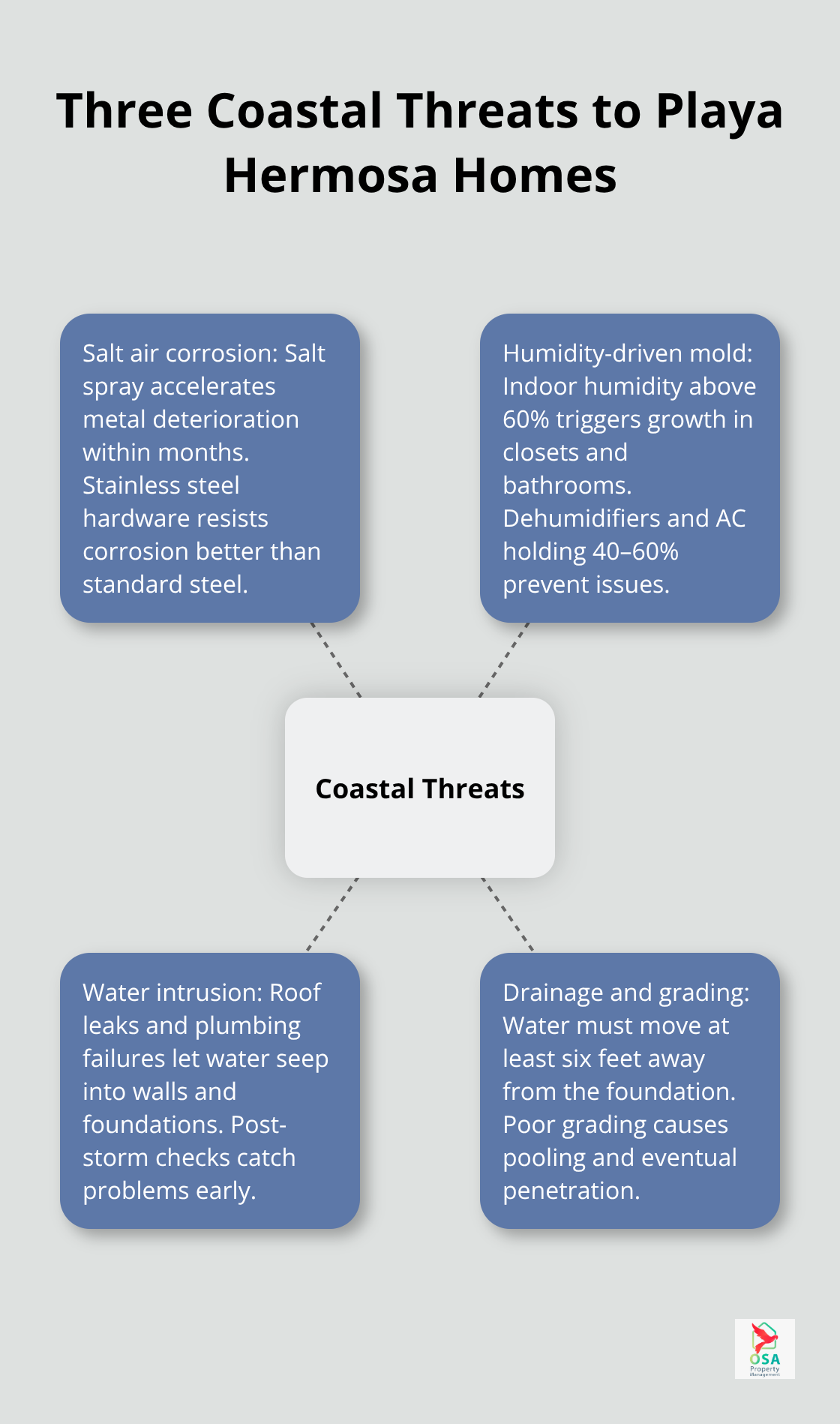
Playa Hermosa’s coastal environment creates three persistent threats that destroy unprotected properties: salt air corrosion, humidity-driven mold, and water system failures. Salt spray accelerates deterioration of metal components faster than inland climates. Metal railings, roof flashing, fasteners, and hardware corrode within months without protection, requiring stainless steel replacements instead of standard steel. A single corroded fastener on roof flashing costs $50 to replace, but water leaking through that opening costs thousands in interior damage.
Inspect all metal monthly during the dry season and immediately replace any showing orange rust stains or white salt deposits.
Salt Air Corrosion Demands Constant Vigilance
High humidity during the rainy season from May through November creates mold conditions that standard homeowner insurance doesn’t cover. Indoor humidity above 60 percent triggers mold growth in closets, bathrooms, and under-slab spaces within weeks. A functioning dehumidifier paired with air conditioning keeps humidity between 40 and 60 percent, preventing mold before it starts. Mold remediation costs $2,000 to $10,000 depending on affected area, making prevention far cheaper than cleanup.
Water Intrusion Remains Your Biggest Risk
Plumbing failures and roof leaks cause the most expensive damage in Playa Hermosa homes. Water from broken supply lines or failed drains seeps into walls and foundations, creating hidden rot that spreads for months before visible damage appears. Check outdoor hoses and connections monthly for cracks or loose fittings, and inspect indoor plumbing under sinks and around water heaters for soft wood or stains indicating active leaks. After heavy rainstorms, walk your property within 24 hours and look for water stains on ceilings or walls that reveal roof or flashing failures. A $300 roof inspection catches small leaks before they spread, whereas waiting until water damage appears means $5,000+ in structural repairs.
Your drainage system must move water away from the foundation at least six feet before sloping ends. Poor grading causes water to pool near the house, eventually penetrating the foundation and creating wet crawl spaces where mold thrives. Test drainage after heavy rain by observing water flow away from the house. If water pools or runs toward the foundation, hire a grader to reposition soil and establish proper slope. Schedule this work during the dry season when weather cooperates and crews finish faster.
HVAC Systems Stop Mold Before It Starts
Install appropriately sized air conditioning and dehumidification systems before the rainy season, not after mold appears. An undersized AC unit runs constantly without reaching target humidity, wasting electricity and failing to prevent mold. A properly sized unit reaches your home’s volume and maintains humidity below 60 percent reliably. Service your HVAC system every April before May rains arrive, replacing air filters and checking refrigerant levels. Inverter air conditioners paired with solar panels reduce electricity costs in Playa Hermosa’s year-round heat around 30 degrees Celsius. This combination provides reliable cooling while lowering monthly utility expenses, making it the practical choice for vacation homes occupied seasonally.
These three damage categories-salt corrosion, mold, and water intrusion-form the foundation of your maintenance strategy. The next section shows you how to work with local contractors who understand these specific threats and can execute repairs on Playa Hermosa’s timeline.
Hiring Contractors Who Understand Playa Hermosa’s Threats
Finding contractors in Playa Hermosa who understand the specific damage patterns of coastal properties separates owners who stay ahead of problems from those who react to crises. Most general contractors lack experience with salt corrosion protocols, tropical humidity management, and the compressed timeline for repairs during the dry season. When interviewing potential contractors, ask directly about their experience with stainless steel fastener installation, dehumidifier sizing for rainy season conditions, and post-storm water intrusion diagnostics. If they cannot explain why standard steel corrodes in months or describe humidity thresholds for mold prevention, they lack the coastal property expertise your home demands.
Vetting Contractors and Verifying Experience
Request references from other Playa Hermosa property owners and contact them to verify response times for emergency repairs and quality of completed work. A contractor who arrives within 24 hours for water damage calls outperforms one who schedules weeks out, since water damage spreads exponentially in tropical humidity. Interview at least three contractors before hiring, comparing their proposed solutions rather than just their hourly rates. The cheapest option often means cutting corners on materials or rushing through inspections, ultimately costing you thousands in preventable damage.
Understanding Local Building Codes and Permits
Local building codes in Costa Rica require permits for structural work, electrical upgrades, and plumbing modifications, but enforcement varies by municipality. Hire contractors who maintain current permits and carry liability insurance covering work on vacation homes. Many property owners skip permits to save money, but unpermitted work creates liability issues when selling the property and voids insurance coverage for damage related to that work. A contractor working without permits may disappear mid-project if inspectors flag violations, leaving you with incomplete repairs and no recourse.
Budgeting for Maintenance Costs
Track your actual spending over two years, then allocate between 1.5 to 3 percent of your property’s value annually for ongoing upkeep. A $400,000 home should budget $6,000 to $12,000 yearly for routine maintenance, with additional reserves for major repairs like roof replacement or HVAC system upgrades. Playa Hermosa’s coastal environment demands higher spending than inland properties because salt air accelerates material degradation and rainy season water management requires constant vigilance. This investment protects your property value and prevents expensive emergency repairs that disrupt guest stays and damage your rental income.
Professional Management Coordinates Contractor Networks
Managing multiple contractors, scheduling repairs around guest arrivals, and negotiating vendor rates consumes significant time and energy. Osa Property Management coordinates contractor networks and maintenance schedules across Playa Hermosa and surrounding areas, handling vendor relationships, quality oversight, and cost negotiation. Our team delivers transparent maintenance budgets and prevents surprise expenses by managing the contractor selection process and overseeing work completion.
Final Thoughts
Your Playa Hermosa maintenance schedule protects your investment far better than reactive repairs ever will. Salt air, humidity, and seasonal rains follow predictable patterns that you can prevent with timing and discipline. A $300 roof inspection stops $5,000 in structural damage, monthly metal checks catch corrosion before fasteners fail, and proper HVAC sizing prevents $2,000 to $10,000 in mold remediation costs.
Managing a coastal property from a distance demands local expertise that most owners lack. Contractor networks, permit requirements, seasonal timing, and material specifications require knowledge specific to Playa Hermosa’s climate and building environment. Osa Property Management coordinates maintenance schedules, vets contractors, and oversees work quality across the southern Pacific zone, handling the relationships and oversight that protect your property while you focus elsewhere.
Start your maintenance plan today by scheduling pre-rainy season inspections and contacting local contractors for quotes. Your property’s condition five years from now depends on the decisions you make this month. Contact us to discuss how we can streamline your Playa Hermosa maintenance schedule and protect your investment.