

Costa Rica’s tropical climate is brutal on properties. Heat, humidity, salt air, and heavy rains wear down buildings faster than you’d expect, turning small issues into expensive repairs.
We at Osa Property Management have seen countless owners face unexpected costs because they skipped preventive maintenance in Costa Rica. The good news is that regular checks catch problems early, saving you thousands of dollars and headaches down the road.
Why Preventive Maintenance Matters in Costa Rica
Costa Rica’s climate doesn’t just damage properties-it accelerates damage at a rate that catches most owners off guard. The combination of salt air, intense UV exposure, heavy rainfall, and humidity creates a perfect storm for deterioration. Coastal properties need repainting every 2–3 years at a cost of $2,000–$5,000, while inland properties stretch to 4–5 years. Without preventive maintenance, you multiply costs instead of controlling them. A roof inspection that costs $150–$300 today prevents water damage repairs that can reach $20,000 later. Termites, mold, corrosion, and plumbing failures worsen silently until the bill arrives.
The Real Numbers Behind Early Detection
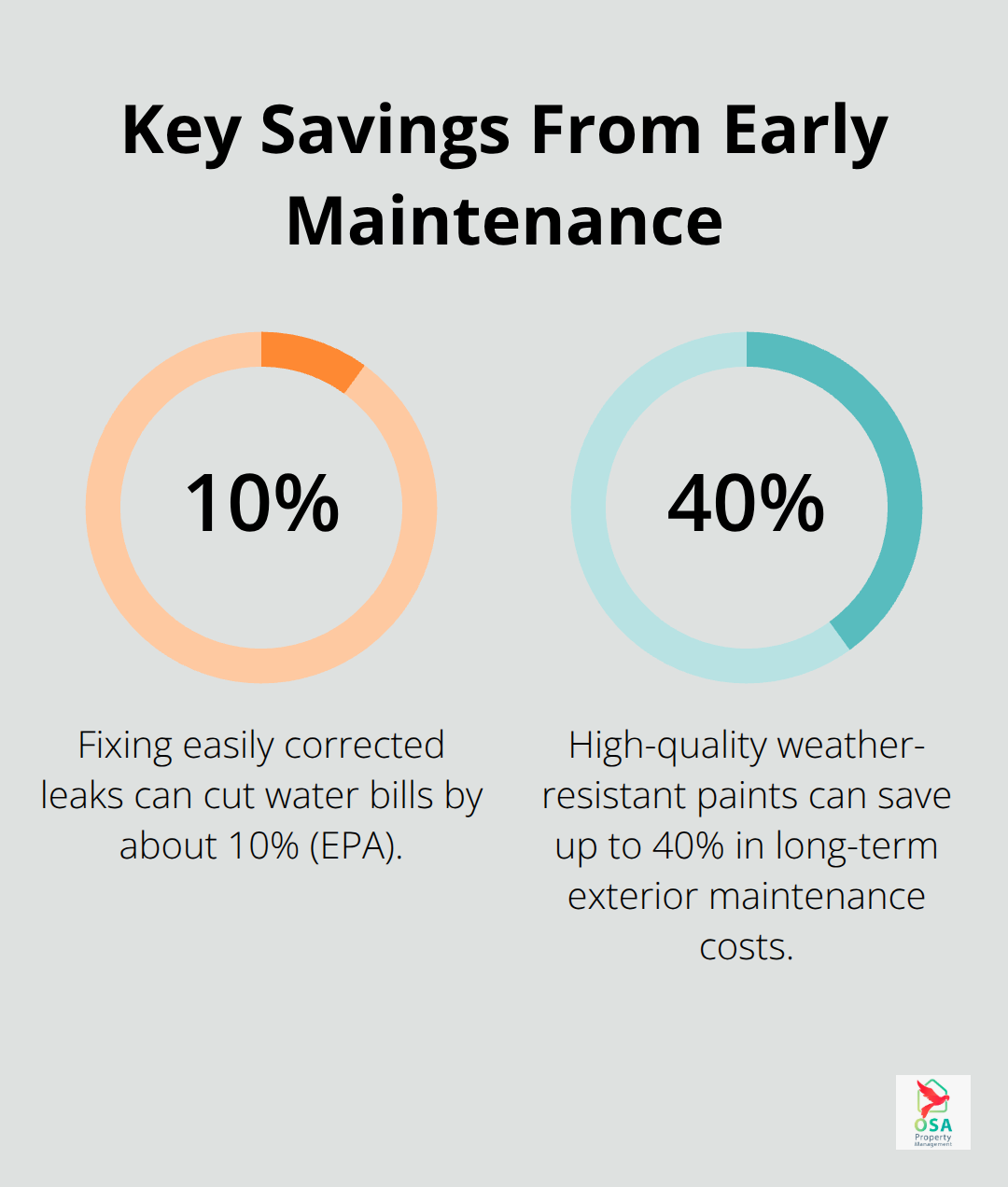
Fixing a leaking pipe before it saturates your foundation saves tens of thousands. The U.S. Environmental Protection Agency found that fixing easily corrected leaks saves about 10% on water bills alone, but the real savings come from preventing structural damage. In Costa Rica’s high-humidity environment, a small roof leak becomes mold within weeks, and mold remediation costs can reach $20,000. Bi-annual roof inspections plus quarterly gutter cleaning prevent these cascades entirely. For HVAC systems, replacing air filters every three months maintains efficiency and reduces energy consumption by 5–15% according to the U.S. Department of Energy.
Quarterly pest control inspections catch termite colonies before they compromise structural integrity. A $300,000 property should have 1–3% of its value budgeted annually for maintenance-roughly $3,000–$9,000 per year. This isn’t an expense; it’s insurance that protects your equity from the relentless Costa Rican climate.
How High-Quality Materials Extend Equipment Life
Professional property management teams familiar with Costa Rica’s specific challenges make planning straightforward. They schedule inspections around the rainy season, maintain relationships with trusted local contractors, and catch problems when they’re small. High-quality materials like marine-grade stainless steel for outdoor fixtures cost more upfront but triple their lifespan in coastal environments, ultimately cutting long-term costs significantly. Comprehensive waterproofing upfront costs $5,000–$10,000 but prevents water damage repairs that often exceed $20,000. Smart technology like water leak sensors ($50–$100 each) and smart thermostats provide early warnings before small issues become disasters.
Building Your Financial Safety Net
Setting aside a 3–6 month emergency fund for unexpected repairs-about $2,500–$5,000 for that $300,000 property-keeps you from scrambling when something breaks. The alternative is reactive maintenance, where you pay premium prices for emergency repairs and accept extended downtime. These funds act as a buffer that protects your cash flow and property value. With the right preventive strategy in place, you’re ready to address the specific maintenance challenges that Costa Rican properties face year-round.
The Three Problems That Drain Costa Rican Property Owners
Humidity Transforms Properties Into Mold Factories
Humidity creates conditions where mold appears within weeks of a roof leak or plumbing failure in Costa Rica. The tropical climate keeps indoor humidity above 70% for most of the year, making moisture control your first priority. Install dehumidifiers in bathrooms, basements, and poorly ventilated spaces to stop mold before it starts. A $200–$400 dehumidifier pays for itself by preventing mold remediation costs that reach $3,000 or higher. Professional moisture meters detect hidden leaks behind walls before they become visible problems, catching water intrusion at the source. Quarterly pest control inspections matter because termites thrive in humid environments and compromise structural integrity silently. Address odd indoor odors immediately-they signal mold, mildew, or ventilation problems that worsen exponentially in coastal regions.
Salt Air Corrodes Everything Exposed to It
Coastal properties face accelerated corrosion that inland owners never encounter. Salt air attacks metal fixtures, outdoor HVAC coils, roofing materials, and siding with relentless force, making marine-grade stainless steel fixtures worth the investment despite higher upfront costs. Outdoor HVAC coils collect salt residue and sludge that degrades performance and creates odors; cleaning these coils quarterly prevents efficiency loss and extends system life significantly. Repainting coastal properties every 2–3 years protects your structure from salt-driven deterioration. High-quality weather-resistant paints extend repainting intervals to 4–5 years, saving up to 40% in long-term exterior maintenance costs compared to standard paints. Annual power washing of siding and decks removes salt deposits and mold before they cause permanent damage to surfaces.
Water Systems Fail Fast in Mineral-Rich Environments
Costa Rica’s mineral-rich water corrodes plumbing from the inside out, creating blockages and leaks that escalate quickly without professional attention. Monthly visible pipe inspections catch corrosion early, and moisture meters detect hidden leaks that destroy foundations and create mold. Fixing easily corrected leaks saves about 10% on water bills according to the Environmental Protection Agency, but the real value comes from preventing structural damage that costs $20,000 or more. Bi-annual professional plumbing inspections identify corrosion patterns specific to your water chemistry and property age. Comprehensive waterproofing installed upfront costs $5,000–$10,000 but prevents water damage repairs that often exceed $20,000 later, making it one of the highest-return investments you can make.
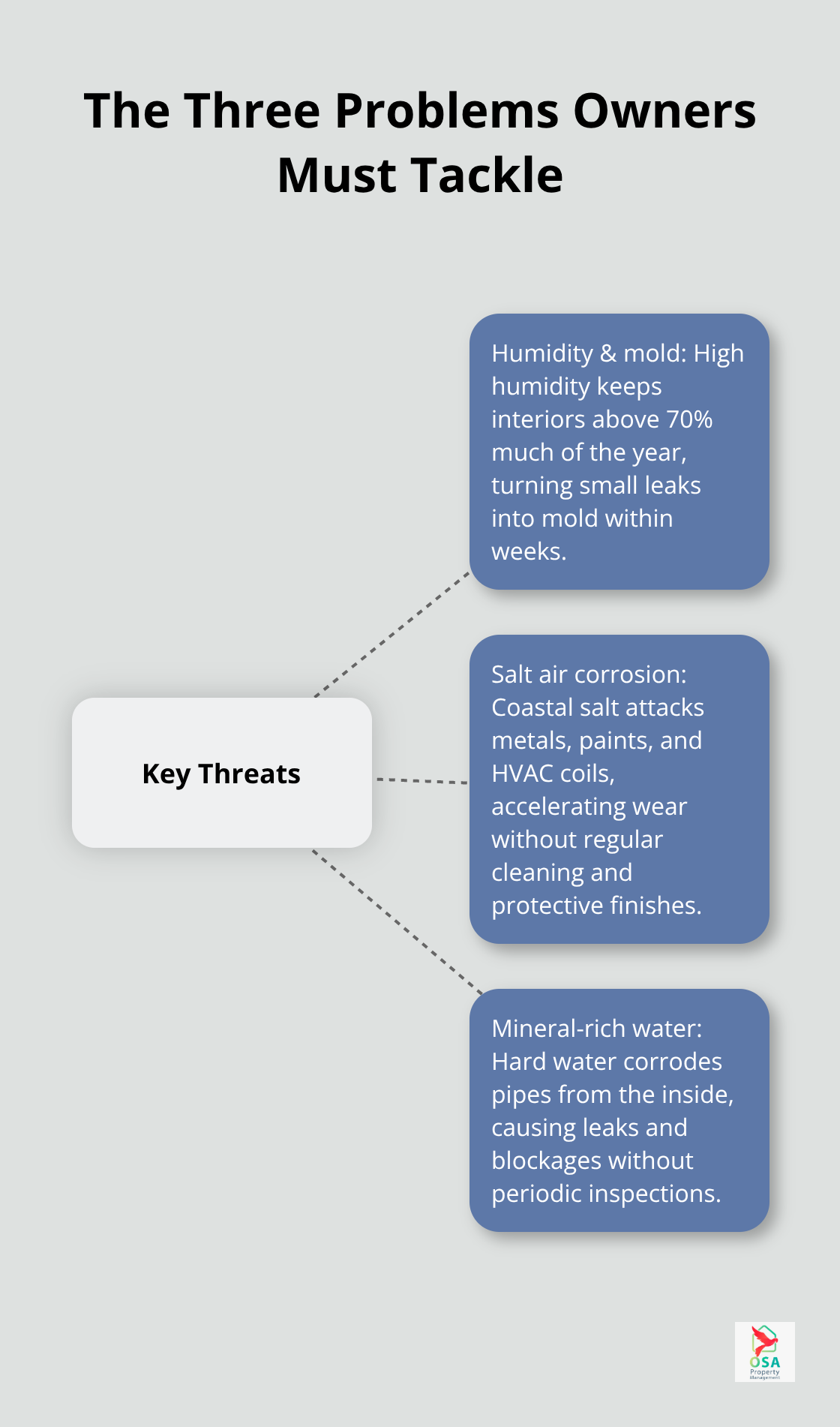
These three problems demand different strategies, but they share one solution: a maintenance plan that addresses each threat before it becomes catastrophic. The next section shows you how to build that plan and execute it effectively.
How to Build a Maintenance Schedule That Actually Works
Map out what breaks down when in Costa Rica’s climate, then schedule inspections before those failures happen. Seasonal timing matters enormously here. The rainy season runs up to eight months in some areas, so schedule roof and gutter inspections before it arrives and again after it ends to catch water damage early. Bi-annual roof checks plus quarterly gutter cleaning prevent water damage during the rainy season.
Set Inspection Frequencies Based on Climate Threats
For HVAC systems, quarterly maintenance including filter replacement keeps units running at peak efficiency and reduces energy consumption by 5–15% according to the U.S. Department of Energy. Plumbing inspections should happen twice yearly to catch mineral buildup and corrosion before leaks develop. Pest control needs quarterly professional inspections in coastal areas where termites and salt-attracted insects are aggressive; annual inspections work for inland properties. Your maintenance plan should list each system, its inspection frequency, estimated cost per visit, and the contractor who handles it.
Track Every Inspection and Repair
Document everything you do, including inspection dates, findings, contractor names, and repair costs. This record becomes invaluable when you need to prove maintenance history to insurers or identify patterns in what fails. A spreadsheet or property management software tracks tasks and their completion dates so nothing slips through.
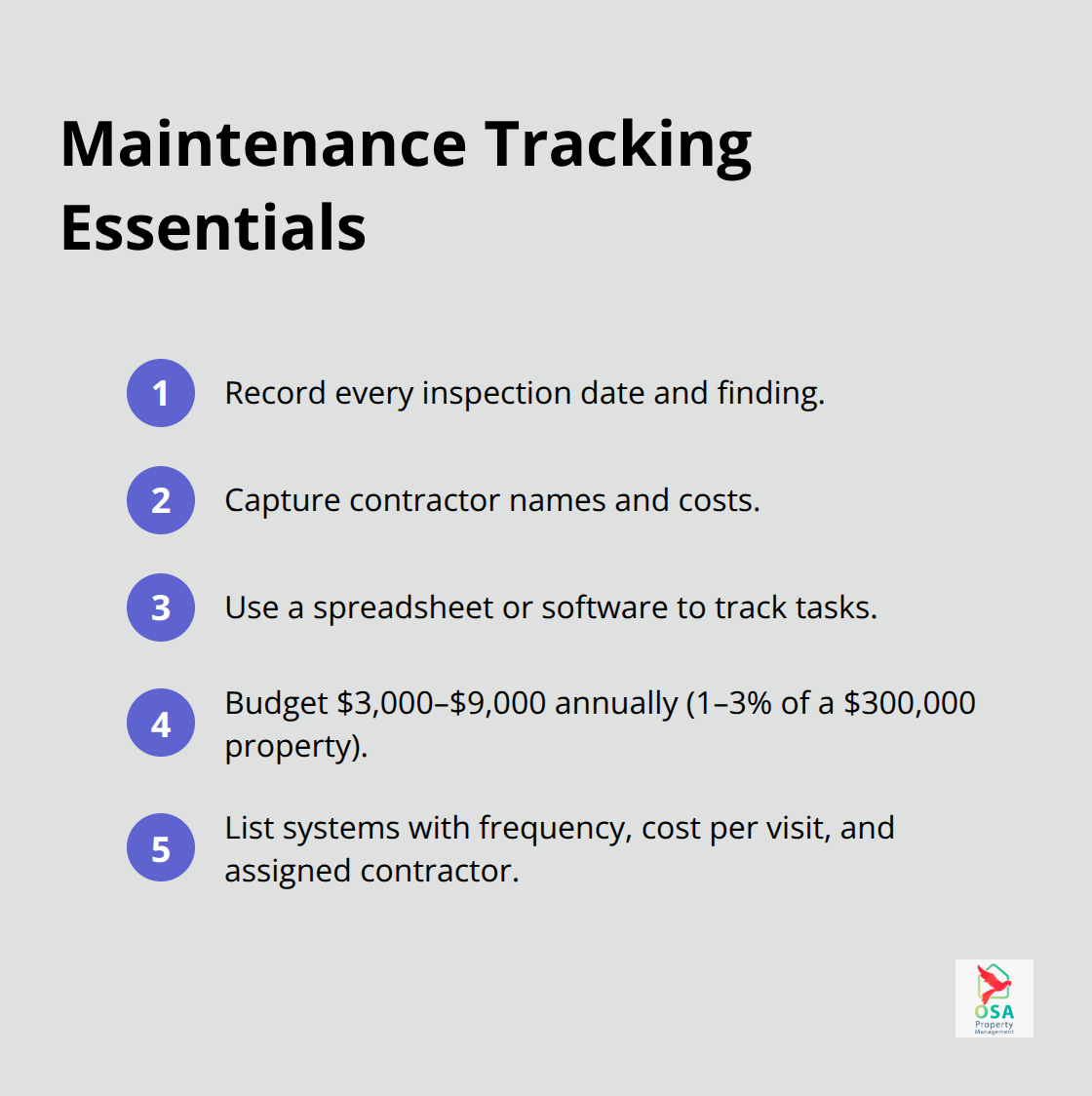
For a $300,000 property, allocate $3,000–$9,000 annually (1–3% of property value) across these categories: pest control ($50–$100 monthly), landscaping ($100–$200 monthly), plumbing checks ($50–$200 per incident), electrical maintenance ($100–$300 yearly), and exterior painting on a 2–3 year cycle for coastal properties.
Partner with Local Contractors Who Know Costa Rica
Local contractors understand Costa Rican climate challenges better than outside firms, and they cost less because they avoid travel expenses and import delays. Build relationships with three to five trusted contractors before you need emergency repairs, so you call a known quantity instead of searching frantically when something fails. Ask potential contractors for references from other property owners, verify their insurance coverage, and confirm they understand the specific wear patterns your property faces based on its location and age. Coastal properties need contractors familiar with salt air corrosion; older homes need specialists who recognize mineral-rich water problems; mountain properties require teams experienced with erosion and drainage issues. When you find contractors who show up on time, communicate clearly, and charge fair rates, lock in their contact information and preferred scheduling windows. A contractor who can fit your roof inspection in before the rainy season saves you thousands in water damage costs.
Let Professional Management Handle Contractor Networks
Professional property management companies maintain contractor networks as part of their core service, handling coordination and quality oversight so owners don’t manage multiple vendors themselves. The alternative is cobbling together contractors reactively, which always costs more and delivers slower results when problems emerge.
Final Thoughts
Preventive maintenance in Costa Rica stops expensive problems before they start. A $150–$300 roof inspection prevents $20,000 in water damage, quarterly HVAC filter changes cut energy costs by 5–15%, and a $5,000–$10,000 waterproofing investment avoids repairs exceeding $20,000. Owners who skip preventive checks pay emergency rates for reactive repairs, accept extended downtime, and watch their property values decline.
Building and executing a maintenance plan demands time, local knowledge, and contractor relationships that most owners lack. You need someone tracking inspection schedules around the rainy season, coordinating with contractors who understand salt air corrosion and mineral-rich water problems, and maintaining records that prove your property received proper care. We at Osa Property Management handle these details for property owners across Tarcoles, Jaco, Dominical, Manuel Antonio, Ojochal, Uvita, and Golfito, maintaining trusted contractor networks and scheduling inspections based on climate threats specific to your property’s location.
The peace of mind comes from knowing your property receives consistent, expert care without you managing multiple contractors or worrying whether inspections happened on schedule. Professional property management transforms preventive maintenance in Costa Rica from a burden into a system that protects your investment and maximizes returns. Your Costa Rican property is too valuable to leave to chance.