

A solid property management agreement template protects both property owners and management companies from costly disputes and misunderstandings.
We at Osa Property Management have seen too many partnerships fail due to poorly written contracts that leave important details unclear.
The right agreement template covers everything from fee structures to maintenance responsibilities, creating a foundation for successful long-term partnerships.
What Should Every Property Management Agreement Include?
Complete Legal Identification of All Parties
Every effective property management agreement starts with complete legal identification of all parties involved. Property owners must provide their full legal names, current addresses, and tax identification numbers. Management companies should include their business registration details and licensed broker information. We recommend that you include backup contact methods for both parties, as clear communication channels prevent disputes that commonly arise in property management relationships.
The property description section requires precise details that include the complete address, property type, square footage, and specific amenities like pools or security systems. This level of detail prevents future disagreements about what falls under management responsibilities.
Fee Structures That Prevent Disputes
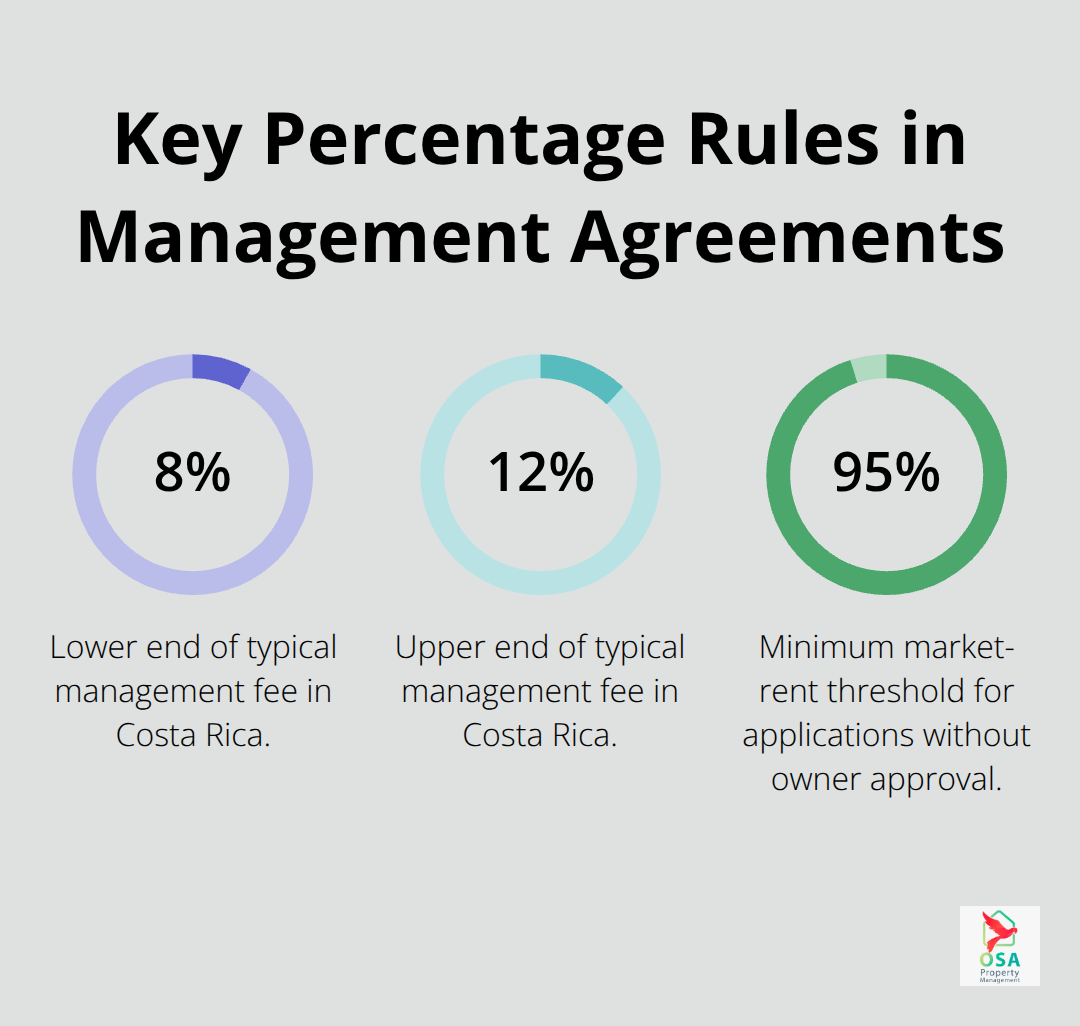
Management fees should specify exact percentages or flat rates, payment schedules, and additional charges for services like tenant placement or emergency repairs. Most Costa Rican property management companies charge between 8% and 12% of monthly rental income, but agreements must clearly state whether this applies to gross or net rental income.
Hidden costs destroy trust quickly – we’ve seen contracts terminated within six months when owners discover unexpected charges for basic services like rent collection or property inspections. Include specific dollar amounts for common services: tenant placement typically costs $50-75 per applicant (depending on market conditions), while emergency repair authorizations should have clear limits before owner approval becomes required.
Contract Duration and Exit Strategies
Standard property management agreements run 12 to 24 months, with automatic renewal clauses that require 30 to 60 days written notice for termination. Smart property owners negotiate shorter initial terms of 6 months to evaluate performance before they commit long-term.
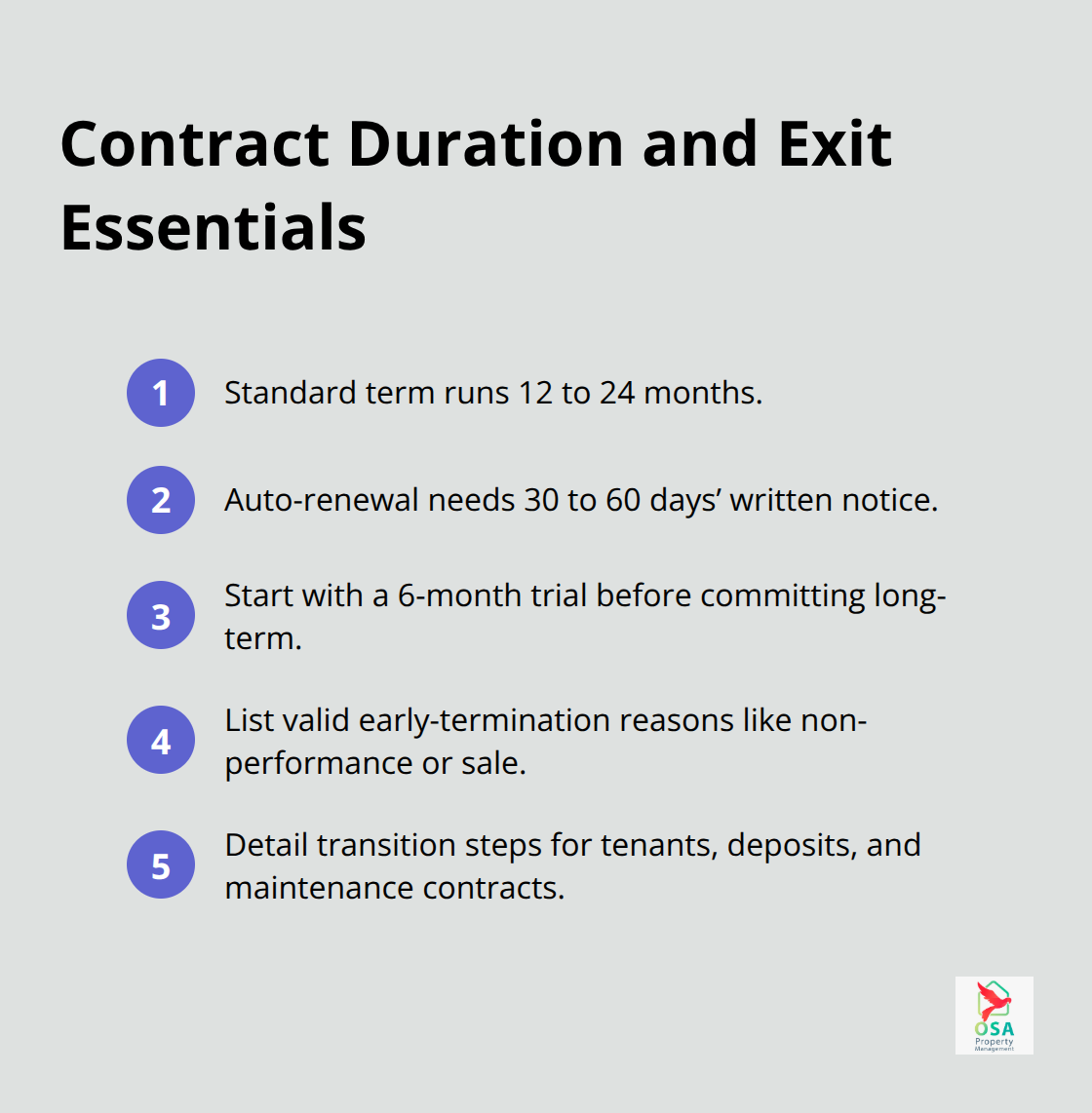
Termination clauses must specify valid reasons for early contract termination, which include non-performance, property sale, or breach of agreement terms. Include specific procedures for the transition of tenant relationships, security deposits, and maintenance contracts when the management relationship ends. These clear exit procedures set the stage for the specific clauses that protect both parties throughout the partnership.
Which Clauses Protect Your Investment
Maintenance Authority and Spending Limits
Property managers need clear authority to handle repairs effectively, but unlimited access to your funds creates unnecessary risk. Set specific dollar thresholds for different types of maintenance work – routine repairs under $200 should not require owner approval, while major repairs that exceed $1,000 must have written authorization within 24 hours.
Include approved contractor lists with pre-negotiated rates to prevent inflated repair costs. Emergency repairs for issues like water leaks or electrical problems require immediate action authority up to $500, with owner notification within 6 hours. Costa Rican property management companies typically mark up contractor services by 10-15%, so agreements should specify whether markups apply to emergency work or routine maintenance.
Tenant Screening Standards and Leasing Control
Weak tenant screening costs property owners thousands in lost rent and property damage. Your agreement must specify minimum criteria including credit scores above 650, monthly income at least three times the rent amount, and clean criminal background checks.
Property managers should verify employment history for the past two years and contact previous landlords directly. Managers cannot accept applications below 95% of market rent without owner approval (this protects your investment from below-market deals). Include mandatory tenant placement fees of $75 per application to cover thorough screening costs.
Financial Reporting and Documentation Requirements
Financial reporting requirements should mandate monthly statements that show rent collection rates, maintenance expenses, and vacancy periods within 10 days of month-end. Require quarterly property inspections with photographic documentation to track property condition and tenant compliance with lease terms.
These documentation standards create the accountability framework that prevents the common mistakes many property owners make when they draft their first management agreement.
What Agreement Mistakes Cost Property Owners Most
Property management agreements fail when owners accept generic templates without customization for their specific situation. We at Osa Property Management review dozens of problematic contracts monthly, and most contain the same preventable mistakes that lead to expensive disputes within the first year.
Vague Language Creates Legal Disputes
Generic phrases like “reasonable maintenance” or “timely repairs” mean nothing in legal disputes. Property managers interpret “reasonable” as anything under $300, while owners expect approval for expenses above $100. Vague language in contracts creates situations where plaintiff property owners sue management companies, claiming negligence in maintenance and landscaping performance. Specify exact dollar amounts: emergency repairs require owner notification within 4 hours for expenses that exceed $200, routine maintenance needs written approval for costs above $150.
Include precise definitions for terms like “normal wear and tear” versus tenant damage. Carpet replacement after 3 years qualifies as normal wear, but pet stains require tenant responsibility. Courts favor specific language over vague interpretations when disputes arise.
Missing Emergency Procedures Cost Thousands
Emergency procedures cost owners thousands when managers cannot reach them during water leaks or electrical failures. Your agreement must include primary and secondary contact methods, response time requirements within 2 hours for emergencies, and backup decision-makers for trusted local contacts.
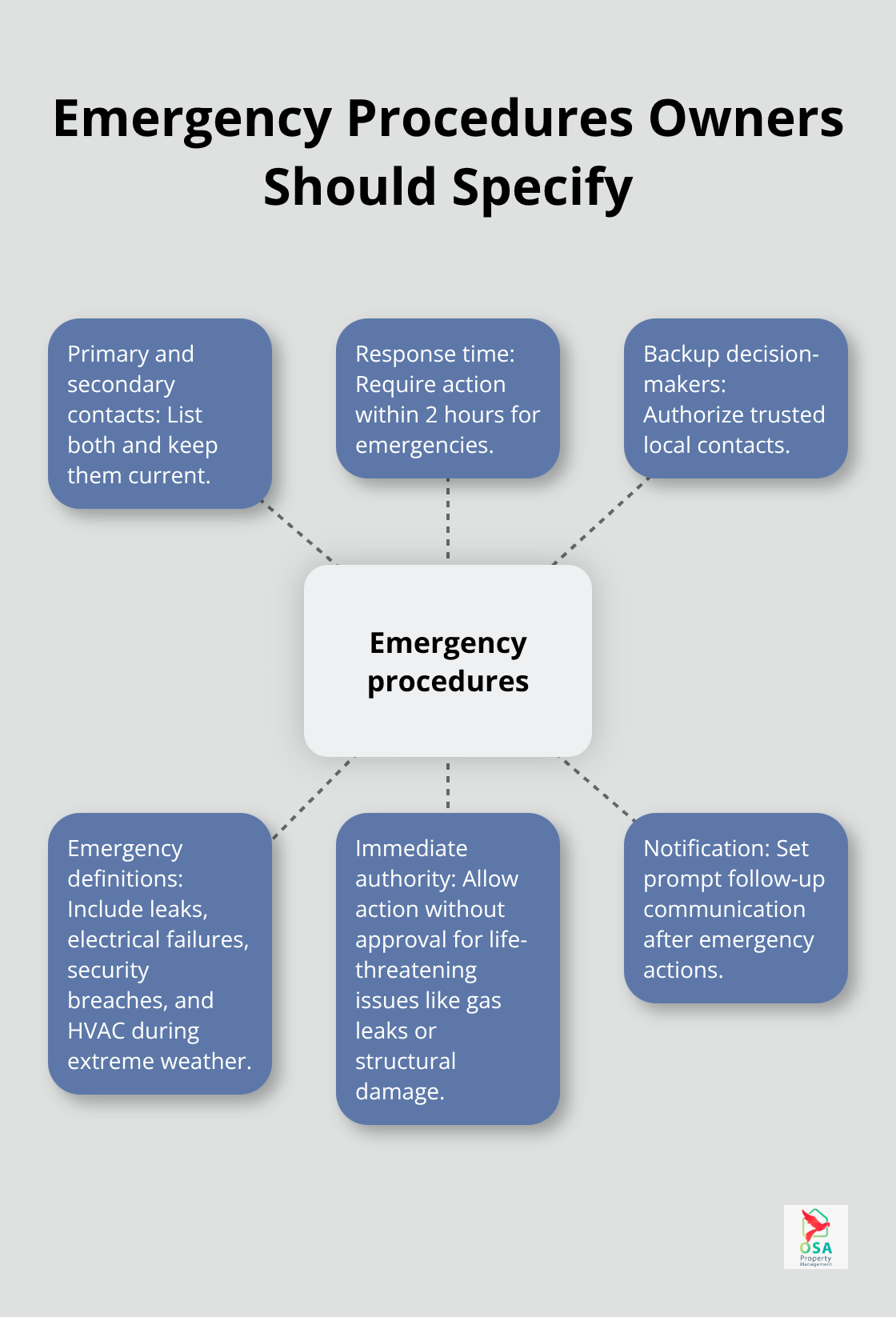
Define what constitutes an emergency: water leaks, electrical failures, security breaches, or HVAC breakdowns during extreme weather. Managers need authority to act immediately for life-threatening situations (gas leaks or structural damage) without owner approval.
Hidden Fees Destroy Trust
Hidden fees destroy management relationships faster than poor performance. Property management companies often bury common fees in fine print that owners discover only after signing contracts. These undisclosed costs can include markups on contractor services, application fees, or lease renewal charges.
Demand itemized fee schedules that specify whether management percentages apply to gross or net income, exact costs for tenant placement services, and markup percentages on maintenance work. Costa Rican property managers typically charge 8-12% of monthly rental income, but agreements must clarify if this includes utilities or applies only to rent collection.
Unclear Property Access Rights
Property access rights require specific language about inspection schedules, advance notice requirements of 24-48 hours, and emergency access procedures. Managers need keys for emergencies but cannot enter properties without tenant notification except for life-threatening situations like gas leaks or floods.
Include monthly inspection rights with 48-hour written notice to tenants, quarterly deep inspections for property condition assessment, and immediate access authority for emergency repairs that threaten property damage or tenant safety.
Final Thoughts
A comprehensive property management agreement template serves as the foundation for successful rental property partnerships. Property owners who invest time in detailed contracts with specific fee structures, clear maintenance procedures, and precise termination clauses avoid the costly disputes that plague generic agreements. Professional legal review becomes essential when you manage properties in Costa Rica’s unique regulatory environment.
Local attorneys familiar with Costa Rican property law can identify compliance requirements and liability issues that standard templates often miss. This investment in legal expertise typically costs $300-500 but prevents thousands in potential dispute resolution costs. Property owners should prioritize experienced management companies that understand local market conditions and regulatory requirements.
Osa Property Management brings extensive experience across Costa Rica’s Pacific coast regions, from Tarcoles to Uvita. We offer comprehensive services from marketing to tax compliance for property owners who want professional management. The next step involves customization of your property management agreement template to reflect your specific property type, location, and management preferences (start with a solid template, add location-specific clauses, and have legal professionals review the final document before you sign).