

Owning rental property in Costa Rica comes with unique challenges that most property owners don't anticipate. From navigating local tax laws to managing guests across time zones, the complexity adds up fast.
At Osa Property Management, we've seen firsthand how professional management transforms property ownership from stressful to profitable. This guide walks you through what property management in Costa Rica actually involves and how to find the right partner for your investment.
Why Professional Management Matters in Costa Rica
Tax compliance protects your investment
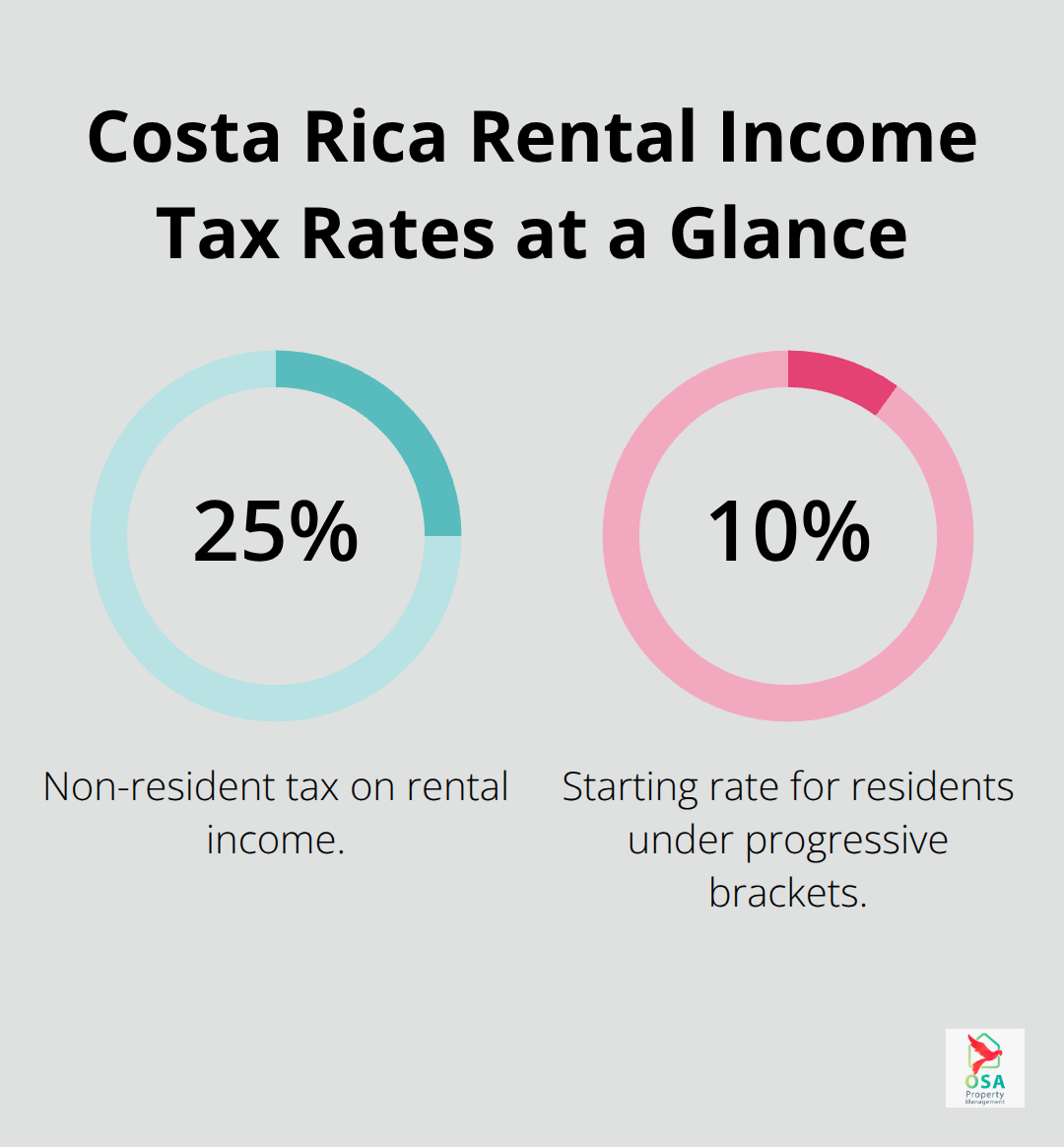
Costa Rica's tax system treats property owners differently based on residency status, and mistakes cost thousands annually. Non-resident property owners pay a 25% tax on rental income, while residents pay progressive rates starting at 10%. The country also requires quarterly estimated tax payments, annual property declarations, and compliance with local labor laws if you employ staff.
Seasonal demand shapes pricing strategy
Tourism in Costa Rica follows distinct patterns. The dry season from December through April drives peak demand, while the green season from May through November requires aggressive pricing strategies to maintain occupancy. Airbnb data shows professionally managed properties in Costa Rica achieve 65-75% occupancy year-round, compared with 45-55% for owner-managed listings. That 20-30% occupancy gap translates to tens of thousands of dollars in lost annual revenue on properties earning $50,000-$100,000 per year. Dynamic pricing that adapts to real-time demand, local events, and seasonal patterns maximizes revenue rather than static pricing. Local market knowledge reveals demand shifts from new resort openings or festivals that data alone misses. Property managers with regional experience understand when to discount aggressively during slow periods and when to raise rates during peak windows, directly protecting your bottom line.
Remote ownership demands local infrastructure
Tropical climates require preventive maintenance to prevent mold, salt-air corrosion, and drainage problems that deter guests and damage property value. Remote owners face plumbing emergencies at 2 AM, roof leaks discovered mid-booking, and time-zone delays that turn minor issues into expensive disasters. A network of vetted local contractors ensures fast, reliable repairs with controlled costs, preventing emergency pricing and service delays. Preventive maintenance reduces emergency repairs and protects occupancy during peak season when lost bookings cost the most. Professional managers conduct regular inspections, coordinate repairs before problems escalate, and maintain relationships with trusted vendors who prioritize their referrals. Without this local infrastructure, owners either pay premium rates for emergency services or lose guests and revenue while waiting for responses across time zones.
Understanding these challenges explains why property managers handle far more than simple rent collection. The next section outlines the specific services that transform these obstacles into manageable, profitable operations.
What Professional Property Managers Actually Do
Marketing pulls guests from multiple channels
Professional property management in Costa Rica involves three interconnected operations that directly impact your rental income and property condition. Marketing pulls guests from multiple channels simultaneously, accounting tracks every colón accurately, and maintenance prevents the small problems that turn into guest complaints and lost bookings. These aren't separate functions-they work together. A property listed on Airbnb, Vrbo, and Booking.com attracts more bookings, which generates more revenue to report accurately, which funds preventive maintenance that keeps guests happy and occupancy high.
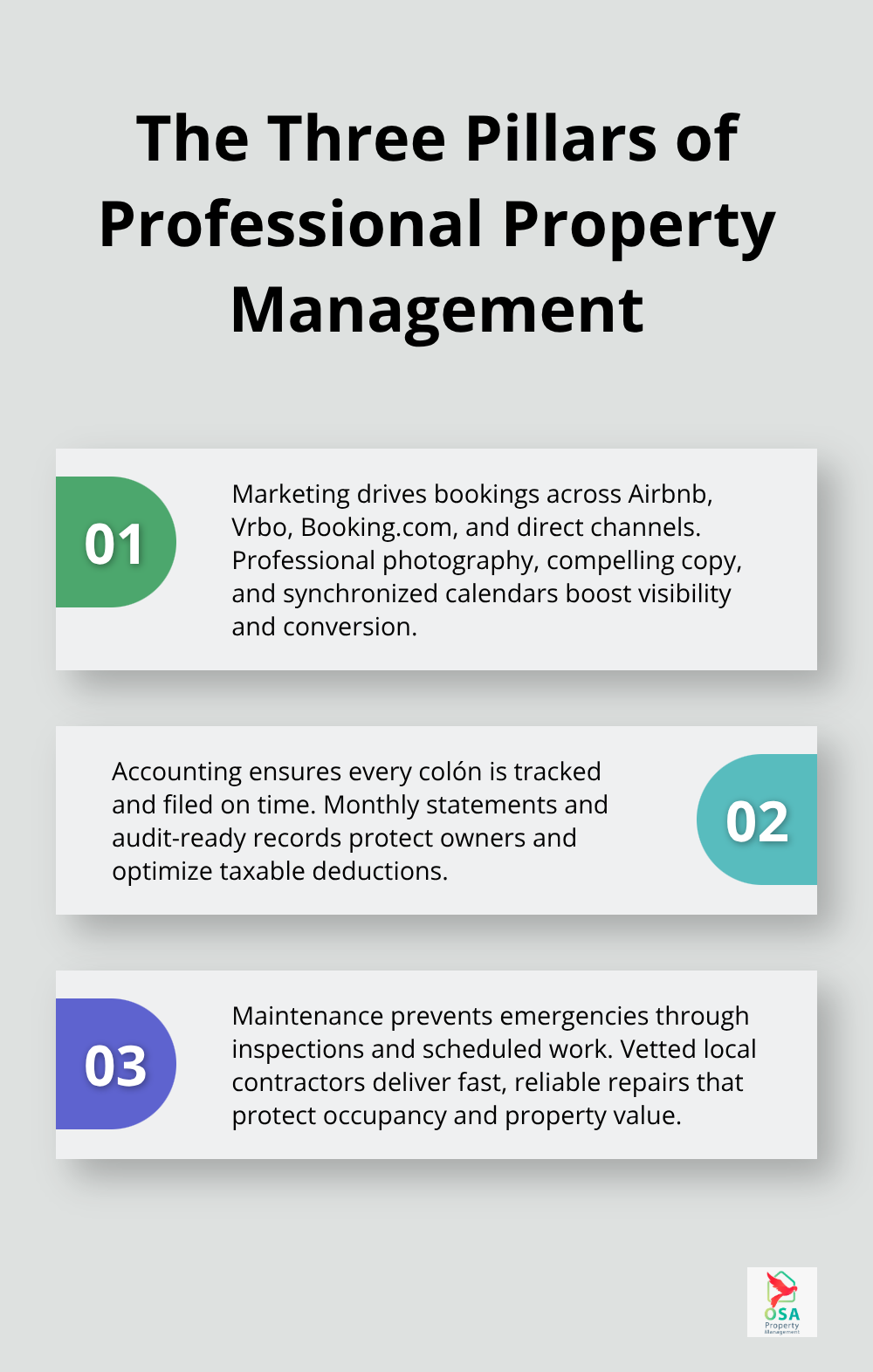
Costa Rica has no MLS system, so visibility depends entirely on digital presence and platform diversity. A property listed only on Airbnb misses Vrbo guests and direct booking customers who search Google first. Professional managers coordinate calendars and pricing across all platforms simultaneously, preventing double-bookings and inconsistencies that damage reputation and cause refund disputes. They invest in professional photography and compelling descriptions that convert browsers into bookers, then monitor performance data to identify which seasons need aggressive discounting or premium pricing.
Accounting handles tax filings and financial transparency
Costa Rica requires monthly tax filings, quarterly estimated payments, and annual property declarations that non-resident owners often miss entirely. Professional managers file these on schedule, track deductible expenses like repairs and utilities, and prepare monthly statements showing gross income and net profit after costs. They maintain records that protect you during audits and understand which expenses reduce your taxable income. Local tax authorities receive proper coordination on your behalf, eliminating the compliance gaps that trigger penalties.
Maintenance prevents emergencies and protects occupancy
Maintenance oversight stops the 2 AM plumbing disaster that costs you a guest and hundreds in emergency rates. Professional managers conduct regular inspections, identify leaks before they spread mold, and schedule preventive work during low-occupancy periods. They maintain relationships with vetted local contractors who prioritize their referrals, ensuring fast, reliable repairs with controlled costs. This proactive approach costs less than reactive emergency repairs and keeps your property in condition that attracts quality guests and protects long-term value.
The result is predictable revenue, compliant tax filings, and a property that performs consistently across seasonal demand cycles. Understanding what these services accomplish sets the stage for evaluating which property management company can deliver them reliably in your specific region.
How to Choose the Right Property Manager in Costa Rica
Regional expertise determines your actual revenue
Experience in Costa Rica's specific regions matters far more than general property management credentials. A manager with five years in Tamarindo won't understand Uvita's demand patterns, seasonal cycles, or the contractor networks that keep repairs affordable and fast. Over 20 years operating across Dominical, Uvita, Ojochal, Manuel Antonio, Jaco, Tarcoles, and Golfito teaches which neighborhoods command premium rates during green season, which local events drive last-minute bookings, and which contractors deliver quality on schedule.
When interviewing managers, ask specifically about occupancy rates during slow seasons and request references from property owners in your exact area, not generic testimonials. Verify they understand local tax obligations, CAJA contributions, and Costa Rica's quarterly filing deadlines rather than relying on outside accountants who miss deadlines. Ask how they price properties during peak versus slow periods and whether they adjust dynamically based on real-time demand or use static rates that leave money on the table. A manager claiming 65-75% year-round occupancy should explain their strategy for maintaining bookings during May through November when competition intensifies and guests disappear. Experience translates directly to revenue-a manager unfamiliar with your region will underprice during peak season and overprice during slow periods, costing you thousands annually.
Fee structure reveals true alignment with your interests
Standard Costa Rica property management fees typically range from 4% to 12% of monthly rental income, aligning incentives with your occupancy rates, but some firms charge flat rates starting around $150 monthly regardless of performance. Demand a detailed breakdown showing exactly what's included: Does 10% cover marketing across all platforms, or do they charge extra for professional photography and listing optimization? Are maintenance coordination costs separate, or included? Do they charge additional fees for deep cleaning between guests, emergency repairs, or seasonal inspections?
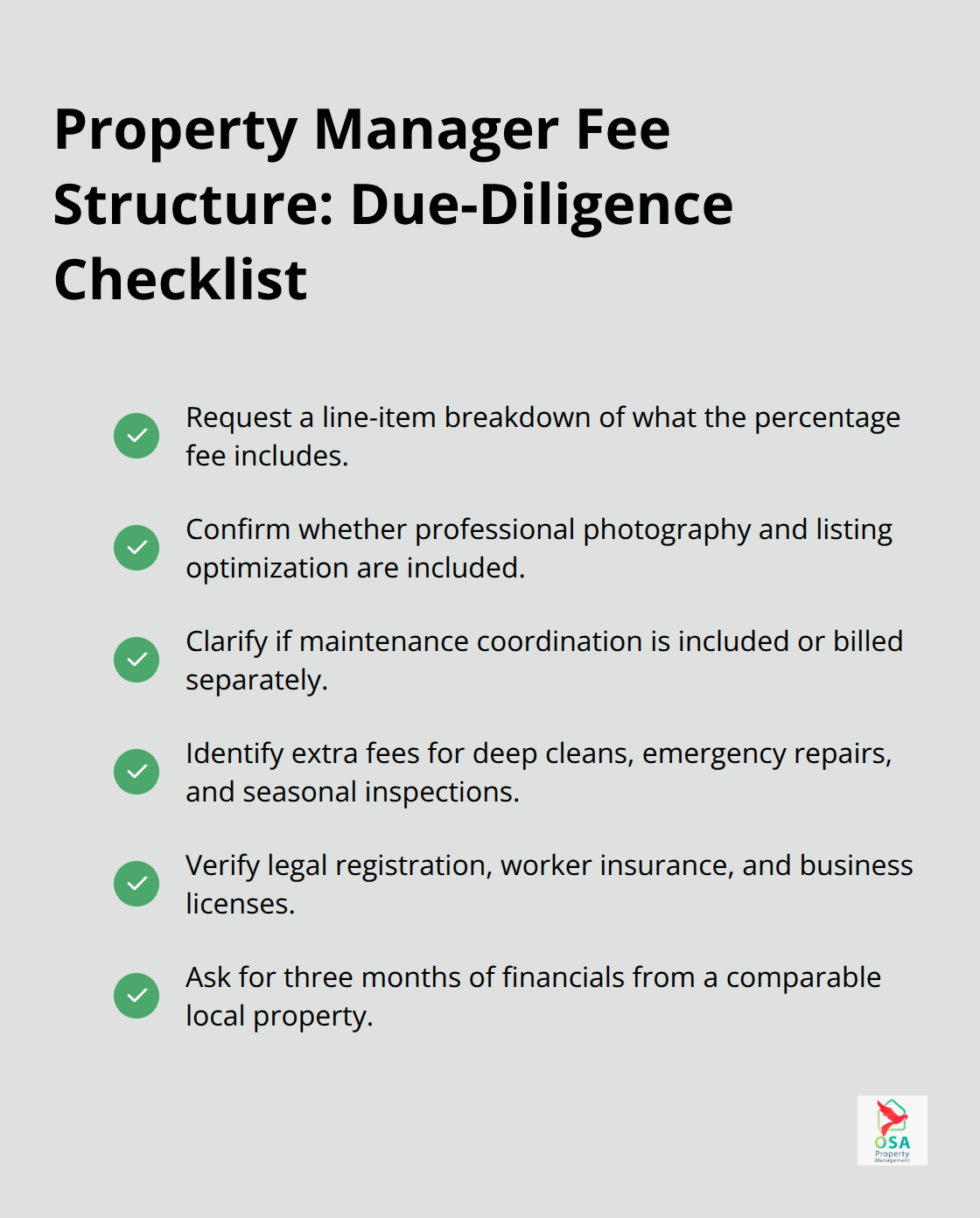
A manager with 40 full-time employees handling everything from accounting to housekeeping typically charges higher percentages but delivers better results because they control quality and response times. Smaller operations outsourcing maintenance to random contractors often seem cheaper until a 2 AM emergency repair costs triple the normal rate. Verify they're legally registered with Costa Rica's tax authority, carry worker insurance for their employees, and hold proper business licenses-unregistered managers expose you to liability if something goes wrong on your property. Request their last three months of financial statements from a comparable property in your area to see actual net revenue after their fees, not just occupancy claims. A manager earning you $8,000 monthly after their 10% fee beats one charging $150 flat that delivers $5,000 because they ignore marketing during slow periods.
Industry recognition signals operational competence
Recognition from industry bodies and booking platforms matters because it signals operational competence and alignment with current market standards. Osa Property Management received selection as the only property management company invited to Airbnb Corporate's invitation-only Host Summit in Mexico City for the top 150 companies across the Caribbean, Mexico, and Central America. COTUOSA, the leading tourism chamber in the southern Pacific zone, recognized Osa Property Management as the 2025 Company of the Year, validating expertise in the Dominical, Uvita, and Ojochal regions.
These aren't generic awards-they reflect actual performance metrics tracked by platforms and regional tourism bodies. When evaluating companies, ask whether they hold Airbnb Superhost status across their portfolio, have formal partnerships with booking platforms, or maintain relationships with local tourism boards. Avoid managers claiming awards without verifiable sources or testimonials from unnamed clients. Check Google reviews and Airbnb guest reviews on properties they manage to see if guests actually experience the service quality promised, not just owner satisfaction. A manager's portfolio breadth-managing everything from budget condos to luxury beachfront properties-indicates they've solved problems across price points and can handle your specific situation rather than specializing only in luxury or budget segments.
Final Thoughts
Professional property management in Costa Rica eliminates the stress of remote ownership while protecting your investment and maximizing revenue. The occupancy gap between professionally managed properties and owner-managed listings translates directly to thousands of dollars annually, and that's before accounting for tax compliance mistakes, missed maintenance issues, and pricing errors. When you outsource these operations to experienced managers, you gain access to local contractor networks, dynamic pricing strategies, and tax expertise that individual owners cannot replicate across time zones.
Regional experience matters far more than generic credentials when selecting a property management Costa Rica firm. A manager with 20 years operating in Dominical, Uvita, and Ojochal understands local demand patterns, contractor reliability, and tax obligations better than someone with five years in a different region. Verify their fee structure in writing, request references from property owners in your exact area, and check whether they hold industry recognition from platforms like Airbnb or regional tourism bodies that validate actual performance.
Osa Property Management delivers the infrastructure and expertise that transforms property ownership from stressful to profitable. With over 20 years in the market, a team of 40 full-time employees, and recent recognition as COTUOSA's 2025 Company of the Year, they handle the 2 AM emergencies, file quarterly taxes on schedule, and coordinate repairs before small problems become expensive disasters. Your investment in professional management pays for itself through higher occupancy rates, compliant tax filings, and properties maintained to standards that attract quality guests and protect long-term value.