

Rental property owners in Costa Rica face a complex tax landscape that demands careful planning and accurate filing. At Osa Property Management, we've helped countless property owners navigate rental tax filing in CR without overpaying or missing critical deadlines.
This guide walks you through the deductions you can claim, the records you need to keep, and the practical steps to organize your finances efficiently.
What Income Counts as Taxable Rental Revenue in Costa Rica
Costa Rica taxes rental income at 15% on 85% of gross rental income according to the Income Tax Law. You pay tax on the full amount tenants pay you, minus a standard 15% deductible expense allowance. This applies whether you rent long-term, short-term through platforms like Airbnb, or operate a mix of both models. The tax base is straightforward: every colón that flows from a tenant into your account counts as taxable income.
How Platform Reporting Changed the Game
Since December 2024, Costa Rica introduced new short-term rental requirements focusing on safety, quality, and tax transparency. Airbnb and similar platforms now report income details directly to Costa Rican tax authorities. Your internal records must align with what these platforms report, so discrepancies trigger immediate audit flags. The Dirección General de Tributación cross-references platform data with your filings, making accurate bookkeeping non-negotiable.
Filing Requirements and Tax Deadlines
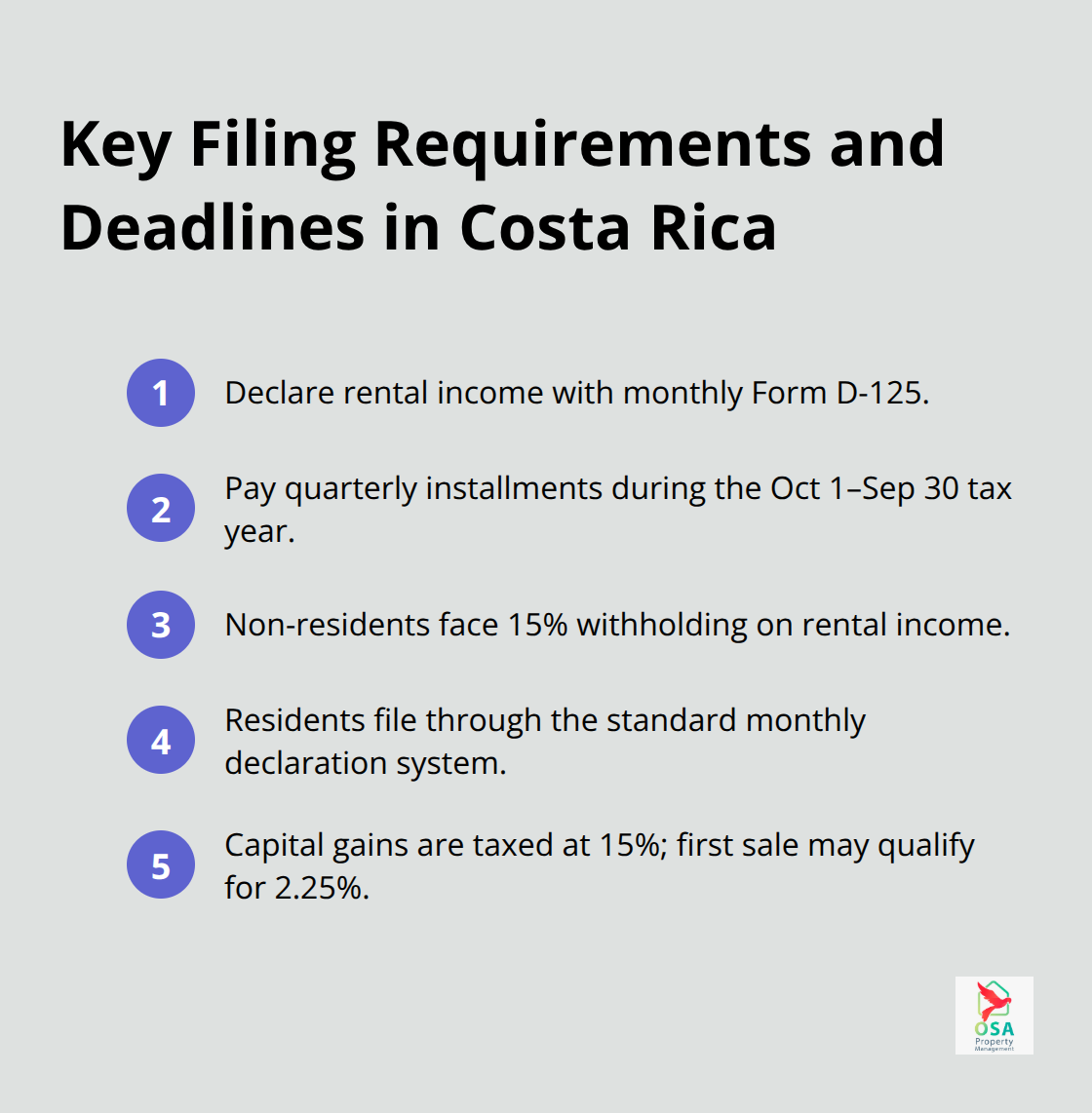
You must declare rental income through the real estate capital income return using monthly Form D-125 submissions with quarterly installments during the tax year running October 1 to September 30. Non-resident property owners face withholding tax at 15% on rental income, while residents file through the standard monthly declaration system. If you sell a rental property later, capital gains are taxed at 15%, though a preferential 2.25% rate may apply to your first sale of each asset after July 1, 2019 under Law 9635.
How the 15% Deduction Works
The 15% deductible expense allowance is predetermined, meaning you don't itemize repairs and utilities individually on your tax filing itself. However, this allowance is substantial: a property generating 1,000,000 colones monthly in rental income automatically qualifies for a 150,000 colone deduction, lowering your taxable base to 850,000 colones. If you operate through a real estate fund structure, that deduction increases to 20%, giving you even more tax relief.
Documentation Requirements That Matter
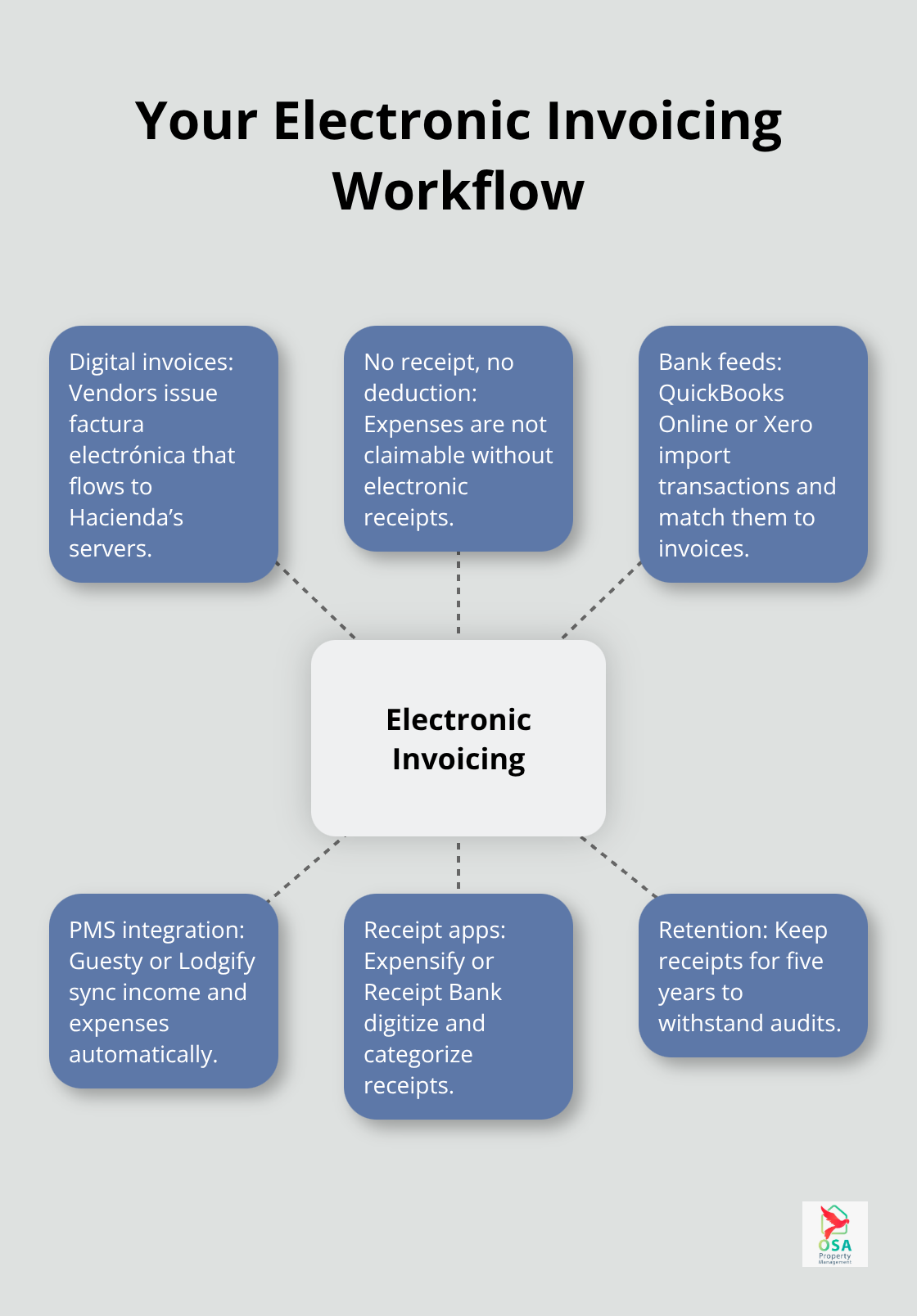
You must keep meticulous records of actual maintenance costs, management fees, utilities, mortgage interest, and property depreciation over 50 years because these expenses reduce your taxable income at year-end and support your annual tax return. Residential property depreciation alone can eliminate significant taxable income over time. The Dirección General de Tributación requires receipts retained for at least five years, and since Costa Rica uses electronic invoicing through factura electrónica, every utility bill, repair invoice, and management fee must carry the 13% VAT notation to qualify as deductible. Proper documentation transforms your tax filing from a guessing game into a defensible record that withstands scrutiny.
Understanding what counts as taxable income and how deductions work sets the foundation for your tax strategy. The next section walks you through the specific deductions that actually reduce your tax bill and how to organize your records to support them.
What Deductions Actually Reduce Your Rental Tax Bill
The 15% deductible expense allowance is automatic, but it's just the floor. You can claim far more if you track actual expenses properly. Maintenance and repair costs are fully deductible when supported by factura electrónica receipts showing the 13% VAT notation. A roof repair costing 500,000 colones, a plumbing fix at 150,000 colones, or interior painting at 200,000 colones all reduce your taxable income directly. The Dirección General de Tributación cross-references platform-reported income with your expense documentation, so every receipt matters.
Property Management and Administrative Costs
Property management fees paid to a professional company are entirely deductible when invoiced through the electronic invoicing system. If you pay 50,000 colones monthly for property management, that's 600,000 colones annually knocked off your taxable base. Administrative costs for accounting, legal services, and tax preparation also qualify as deductible expenses when properly documented. These professional services protect your investment and simultaneously reduce your tax liability.
Operating Expenses That Count
Utilities including water, electricity, and internet are deductible when you hold the factura electrónica receipt. A property with monthly utilities averaging 75,000 colones generates 900,000 colones in annual deductions. Insurance premiums for property coverage, liability, and guest protection are fully deductible expenses. If your annual insurance costs 200,000 colones, that amount directly reduces taxable income. Mortgage interest (not principal) is deductible, which matters significantly in early years when interest comprises most payments. A mortgage with 400,000 colones in annual interest deducts entirely from taxable income.
Electronic Invoicing as Your Deduction Foundation
Costa Rica's factura electrónica system is mandatory for all business expenses, and this requirement is your advantage. Every vendor from electricians to insurance companies to property managers must issue digital invoices that flow directly to Hacienda's servers. You cannot claim expenses without these electronic receipts. Cloud accounting software like QuickBooks Online or Xero captures transactions through automatic bank feeds, then matches them to invoices.
Depreciation and Long-Term Tax Strategy
Residential property depreciation over 50 years is a major deduction that most owners overlook. If your rental property cost 5,000,000 colones to purchase or improve, you depreciate 100,000 colones annually over 50 years, directly reducing taxable income. Over a decade, depreciation alone eliminates 1,000,000 colones in taxable income. The key is separating the land value from the building value at purchase; only improvements depreciate. A property appraised at 3,000,000 colones with 2,000,000 colones in building value and 1,000,000 colones in land generates 40,000 colones annual depreciation. Property owners who ignore depreciation systematically overpay tax year after year. A local tax professional familiar with Costa Rica's rental tax landscape ensures you capture every allowable deduction and time them correctly across the October-to-September tax year. The combination of actual expenses, electronic invoicing, and depreciation can reduce your effective tax rate dramatically compared to owners relying solely on the 15% standard allowance.
With your deductions mapped out and your documentation system in place, the next step is organizing these records throughout the year so your tax filing becomes straightforward rather than stressful.
Streamlining Your Tax Preparation Process
Separate Your Rental Finances from Personal Spending
Open a dedicated bank account for rental income and expenses only, then route all tenant payments and property bills through that single account. This separation cuts audit risk dramatically because the Dirección General de Tributación can instantly verify your declared income against bank deposits. When utilities, repairs, insurance, and management fees flow through the same account, reconciliation takes hours instead of days. The tax authority cross-references platform-reported income with your bank records, so a unified rental account eliminates confusion and strengthens your audit defense.
Automate Your Income and Expense Tracking
Cloud accounting software like QuickBooks Online or Xero connects directly to your Costa Rican bank account through automatic feeds, meaning transactions populate your records the moment they clear. Property management platforms such as Guesty or Lodgify integrate seamlessly with QuickBooks or Xero, automatically logging every Airbnb booking as income and syncing payouts to your accounting system. This integration eliminates manual data entry where most errors happen. Since Airbnb and similar platforms now report income directly to Costa Rican tax authorities, your internal records must match platform reports exactly-automation guarantees alignment. Digital receipt management tools like Expensify or Receipt Bank let you photograph receipts on your phone, which the software automatically categorizes and stores with searchable metadata. The Dirección General de Tributación requires retention of receipts for at least five years, so cloud storage with backup redundancy protects you far better than filing cabinets.
Create a Tax Calendar and Weekly Routine
Establish a weekly bookkeeping routine lasting 30 minutes every Monday to reconcile accounts and catch discrepancies early, preventing the scramble that happens when tax deadlines arrive. Mark Form D-125 monthly declarations, quarterly installments due during the October-to-September tax year, and the February 15 annual return deadline on your calendar so nothing surprises you. This calendar approach transforms tax compliance from a reactive scramble into a predictable rhythm that fits your schedule.
Work with Local Tax Professionals
A local tax professional familiar with Costa Rica's rental tax landscape handles monthly declarations and annual filings while ensuring you capture every deductible expense and apply depreciation correctly. The Dirección General de Tributación cross-references platform-reported income with your filed deductions, so professional guidance prevents audit triggers that cost far more than the fees you'd pay. Tax professionals stay current with Costa Rica's changing regulations-since December 2024 alone, new short-term rental requirements emerged-and adjust your filing strategy accordingly. If you operate multiple properties, professionals generate separate financial statements per property to identify top performers and underperformers, then guide improvements and pricing decisions based on actual profitability data. This unit-level clarity transforms tax preparation from a compliance burden into a business intelligence tool that informs your investment strategy.
Coordinate Tax Preparation with Property Management
Property managers who specialize in tax coordination handle invoicing, bill payments, and documentation so you focus on your rental's performance rather than compliance details. We at Osa Property Management work with property owners across the southern Pacific zone to coordinate tax preparation alongside property management, ensuring that your filings remain accurate and complete throughout the year.
Final Thoughts
Rental tax filing CR requires three core practices: separate your rental finances from personal spending, automate income and expense tracking through cloud software, and maintain meticulous electronic invoicing records. These steps transform tax compliance from a stressful scramble into a predictable process that protects you during audits and prevents costly penalties. The Dirección General de Tributación cross-references platform-reported income with your filed deductions, so accuracy matters more than ever since December 2024.
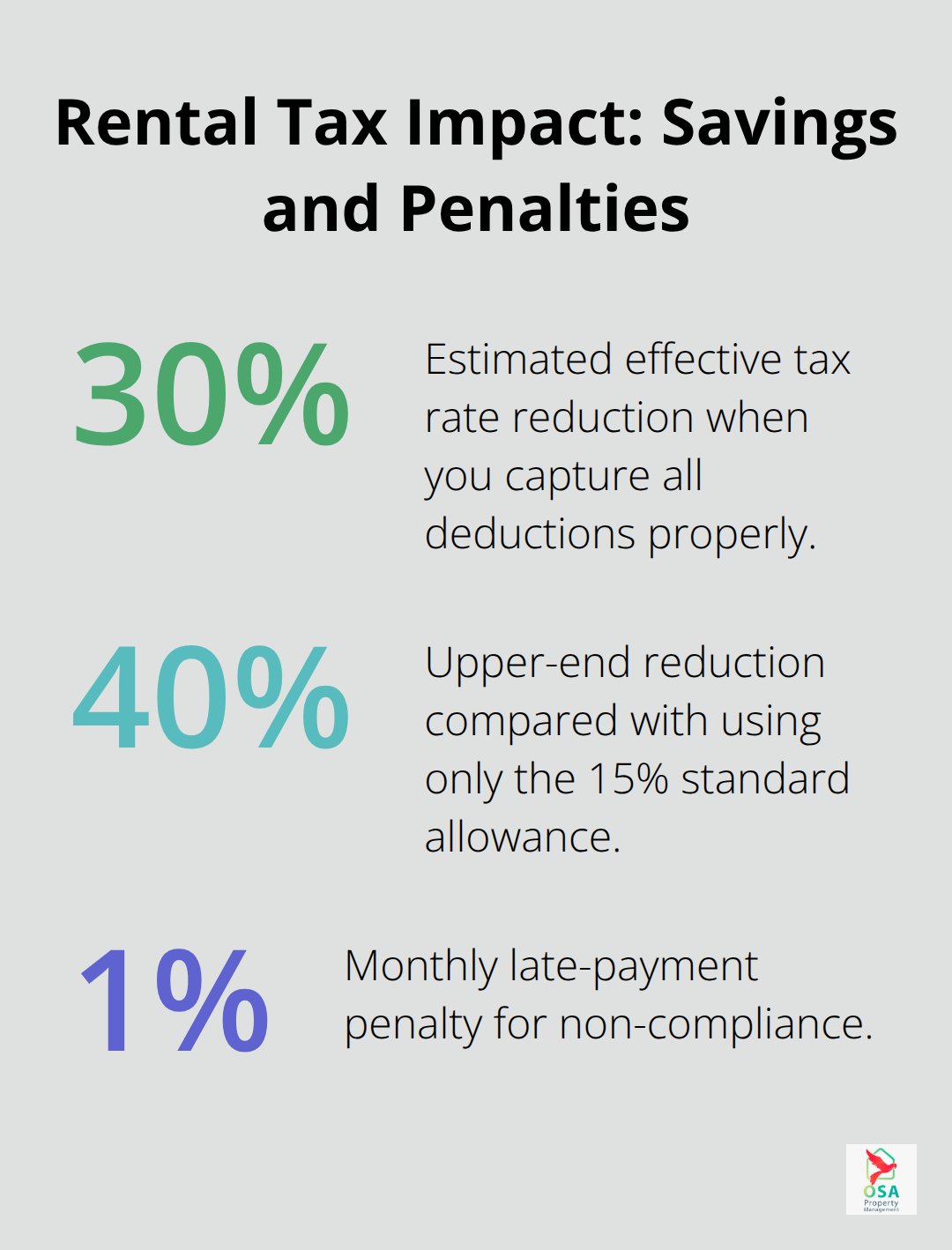
Capturing every deductible expense, applying depreciation correctly, and filing monthly Form D-125 declarations on schedule can reduce your effective tax rate by 30 to 40 percent compared to owners who rely solely on the 15% standard allowance. Non-compliance triggers penalties ranging from 1% monthly on late payments to audit flags that consume time and money. Property owners who organize their records throughout the year avoid the February 15 deadline panic and position themselves for accurate filings that withstand scrutiny.
Open a dedicated rental bank account this week, connect it to cloud accounting software, and photograph receipts weekly to establish the systems described in this guide. If you manage multiple properties or coordinate with short-term rental platforms, professional guidance becomes essential. We at Osa Property Management work with property owners across the southern Pacific zone to handle tax coordination, invoicing, bill payments, and documentation so you focus on your rental's performance.