
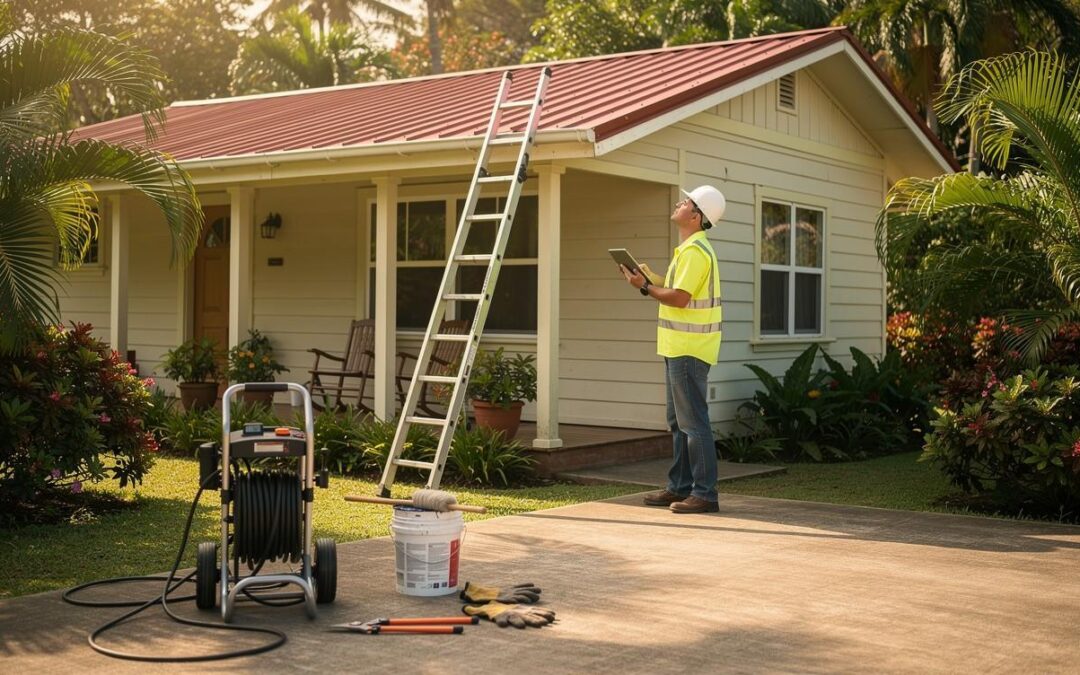
San Buenas sits in one of Costa Rica’s most humid regions, where tropical weather works against your property every single day. Mold spreads faster, metal rusts quicker, and roofs take a beating from constant rainfall.
At Osa Property Management, we’ve seen firsthand how San Buenas property maintenance separates owners who protect their investments from those who face expensive emergency repairs. The good news is that smart, preventative care stops most problems before they start.
Why Maintenance Matters in San Buenas
Tropical climates destroy property faster than temperate zones, and San Buenas is no exception. The National Roofing Contractors Association reports that prompt minor roof repairs extend a roof’s life by up to 25%, yet many San Buenas owners skip routine inspections until leaks appear during the May rainy season. Rust develops in metal fixtures within 3–5 years without protective coatings, and mold colonizes dark, damp spaces in weeks when humidity stays above 65%.
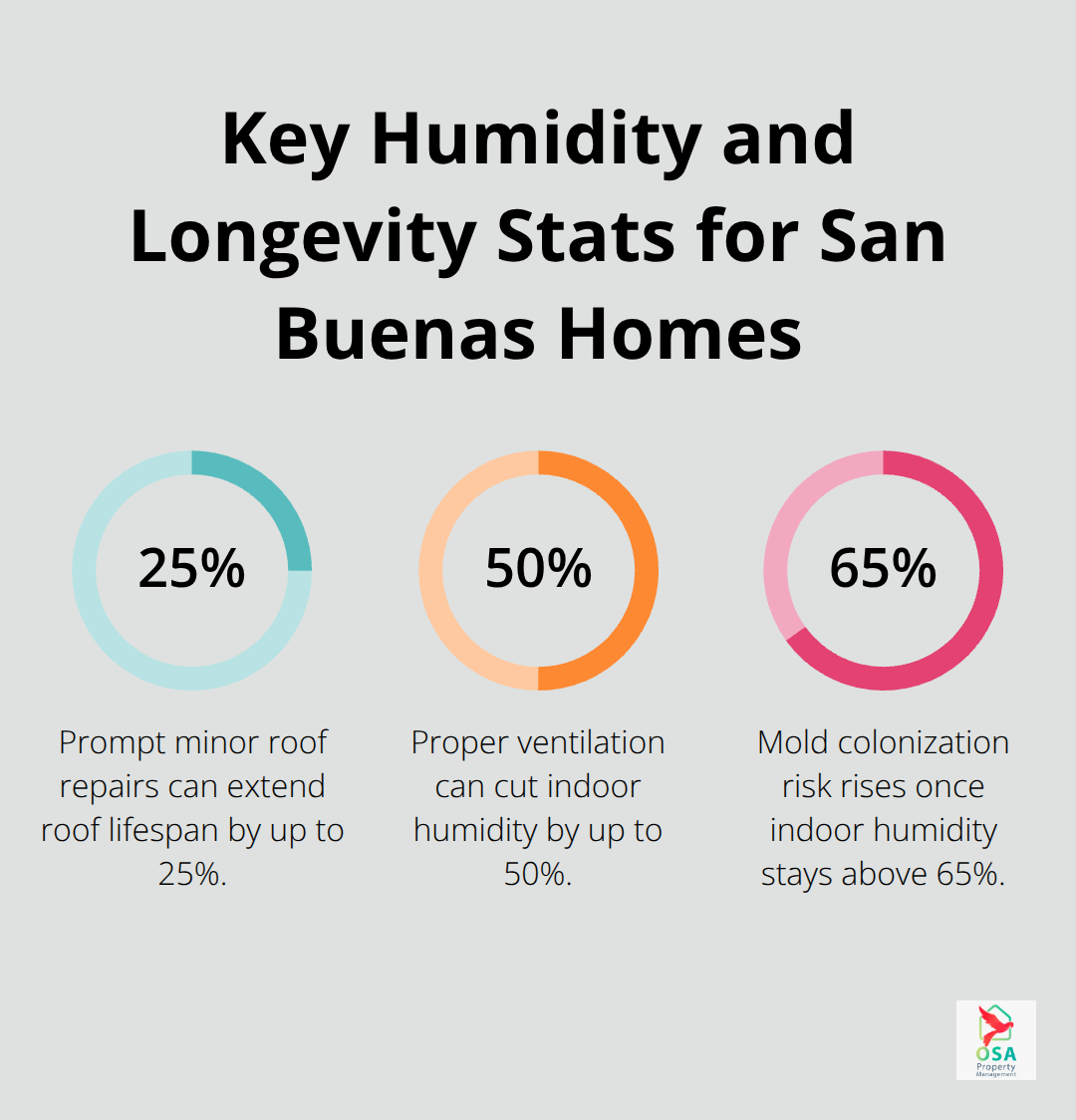
The U.S. Department of Energy notes that proper ventilation cuts indoor humidity by up to 50%, yet most homes sit unventilated between guest stays, accelerating moisture damage. Owners who skip preventative care spend 5–10 times more on emergency repairs than those who maintain properties consistently. A roof inspection before the rainy season costs a few hundred dollars and prevents thousands in water damage. Quarterly inspections of metal components and monthly mold checks cost almost nothing and catch problems when they’re small and cheap to fix.
The Real Cost of Waiting
Emergency repairs destroy rental income and guest satisfaction simultaneously. If a roof fails mid-season, the property goes offline for weeks, killing bookings and revenue. Mold remediation on a 3-bedroom home runs $2,000–$5,000 once it spreads, while monthly dehumidifier use and proper ventilation cost less than $50. Preventive maintenance lowers long-term facility costs significantly compared to reactive repairs. Well-maintained San Buenas properties command 15–20% higher nightly rates because guests pay premiums for homes that stay clean, dry, and rust-free. Properties on consistent maintenance schedules maintain 85%+ occupancy rates and generate higher per-booking revenue than properties that cut corners on upkeep. The math is brutal: spending 1–4% of your property’s annual value on maintenance prevents 10–15% losses from emergency repairs and vacancy.
What Separates Smart Owners from Reactive Ones
Smart owners act before problems appear. They schedule roof inspections before May, clean gutters every three months, and trim branches ten feet away from the roof. They install dehumidifiers in high-moisture areas (closets, crawl spaces) and run exhaust fans for at least 20 minutes after showers. They inspect metal components quarterly and apply marine-grade paint or sealant to vulnerable areas. Reactive owners wait for visible damage, then scramble to find contractors during peak season when prices spike and availability vanishes.
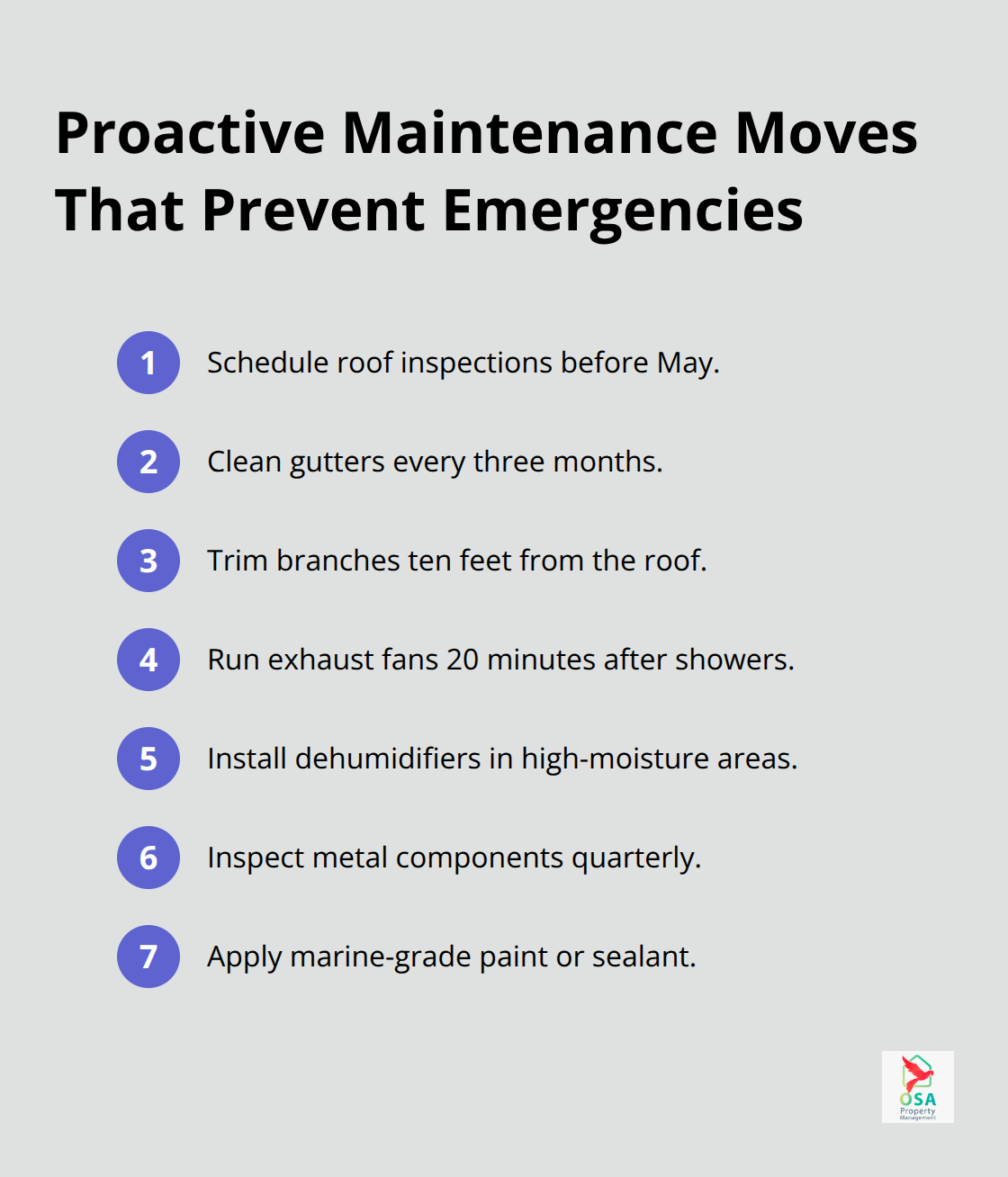
The difference in outcomes is stark: proactive maintenance keeps properties guest-ready and revenue-generating, while reactive maintenance creates gaps in occupancy and erodes property value.
Building Your Maintenance Foundation
Start with a detailed inspection checklist that covers the entire property-from roof to foundation-with extra attention to high-wear areas like kitchens and bathrooms. Document everything with photos and dates. Set aside 1–4% of your property’s annual value for maintenance and use historical data to forecast future expenses. Establish a clear emergency response protocol with a 24/7 network of reliable contractors to minimize damage when problems strike. Partner with local contractors who understand coastal property challenges, verify insurance and Costa Rica registration, and seek references before hiring. The cheapest bid rarely delivers the best results in San Buenas, where salt-tolerant materials and proper ventilation matter more than cutting costs. These foundations transform maintenance from a burden into a system that protects your investment and keeps properties performing at their peak.
What Destroys San Buenas Properties Most Quickly
Mold: The Silent Threat in Humid Climates
Mold thrives in San Buenas because humidity lingers year-round, not just during the May–November rainy season. The U.S. Department of Energy confirms that indoor humidity above 65% creates ideal conditions for mold colonization within weeks. Monthly inspections focusing on dark, damp spots in closets, crawl spaces, and bathrooms catch problems early, when a bleach solution (1 cup per gallon of water) stops growth immediately. Once mold spreads across walls or ceilings, remediation costs $2,000–$5,000 on a 3-bedroom home and forces rental blackouts while contractors work.
Prevention costs almost nothing: run exhaust fans for at least 20 minutes after showers, wipe damp surfaces daily, dry sink and shower walls, store dry goods in airtight containers, and keep cooling running or use a dedicated dehumidifier when the property sits vacant. These simple habits eliminate the moisture that mold needs to colonize your home.
Rust and Corrosion on Metal Components
Coastal humidity accelerates rust in metal components-galvanized pipes, exterior fixtures, and structural elements corrode within 3–5 years without protective coatings. Quarterly inspections of metal components followed by marine-grade paint or sealant application prevent costly replacements. A few hundred dollars spent on protective coatings today avoids thousands in replacement costs later.
Roof and Gutter Failures During Rainy Season
Roof and gutter damage compounds moisture problems because heavy rainfall during the rainy season tests these systems relentlessly. Gutters clogged with debris funnel water toward foundations instead of away, causing pooling that damages concrete and creates ideal mold environments. Clean gutters every three months, increasing frequency if trees overhang your property, and extend downspouts at least five feet from the foundation.
Trim branches at least ten feet away from the roof to reduce debris accumulation and minimize storm damage from falling limbs. Schedule professional roof inspections before May each year-this costs a few hundred dollars but prevents thousands in water damage once leaks develop.
Foundation Damage from Water Pooling
Foundation and structural damage emerges from water pooling near the base of the property, so check quarterly for new cracks larger than 1/8 inch and moisture stains. Address drainage issues immediately because poor drainage, high humidity, and moisture interact to worsen problems far more than any single factor alone. Water that pools near your foundation doesn’t just sit there-it penetrates concrete, weakens structural integrity, and accelerates mold growth simultaneously.
Timing Separates Success from Crisis
The difference between San Buenas owners who stay ahead of these issues and those who face emergencies comes down to timing and consistency. Reactive owners wait until visible mold appears, roofs leak during storms, or rust eats through fixtures-then scramble to find contractors during peak season when prices spike and availability disappears. Proactive owners build quarterly inspection routines into their calendars, maintain detailed checklists covering high-wear areas, and establish relationships with reliable property caretaking services before problems strike.
The math is straightforward: investing $50–$200 monthly in preventative care prevents $2,000–$15,000 emergency repairs and weeks of lost rental income. Understanding what destroys San Buenas properties fastest helps you prioritize where to focus your maintenance efforts-and that’s where a solid maintenance plan becomes your greatest asset.
How to Build a Maintenance System That Actually Works
Inspections matter far more than most San Buenas owners realize, and timing them correctly prevents the costliest disasters. Schedule your first roof and structural inspection in March or April, before the May rainy season hits and contractors disappear under urgent repair calls. This inspection costs $300–$500 but catches loose tiles, gutter damage, and foundation cracks when fixing them is straightforward. After that first inspection, move to a quarterly schedule covering the entire property-roof, gutters, metal fixtures, foundation, plumbing, and electrical systems. Create a simple checklist with photos and dates so you track what changes between inspections. If you find new cracks larger than 1/8 inch, moisture stains, or rust spreading on metal components, address them within two weeks before humidity and rainfall worsen the damage. Most San Buenas owners skip inspections until problems become visible emergencies, then spend five to ten times more on repairs while losing weeks of rental income. Quarterly inspections eliminate that trap entirely because small problems stay small and cheap to fix.
Finding Contractors Who Understand Coastal Property Challenges
Your contractor choice determines whether maintenance actually prevents problems or just patches symptoms temporarily. Hire only contractors with documented coastal property experience in Costa Rica-they understand salt-tolerant materials, proper drainage for tropical rainfall, and ventilation standards that inland contractors miss completely. Verify their insurance, Costa Rica registration, and ask for three references from property owners they’ve worked with in the past two years. Call those references and ask specifically about response time, quality of work, and whether the contractor showed up when promised. The cheapest bid always loses in San Buenas because low-cost contractors often skip critical steps like marine-grade sealants on metal or proper drainage slopes that prevent foundation damage.
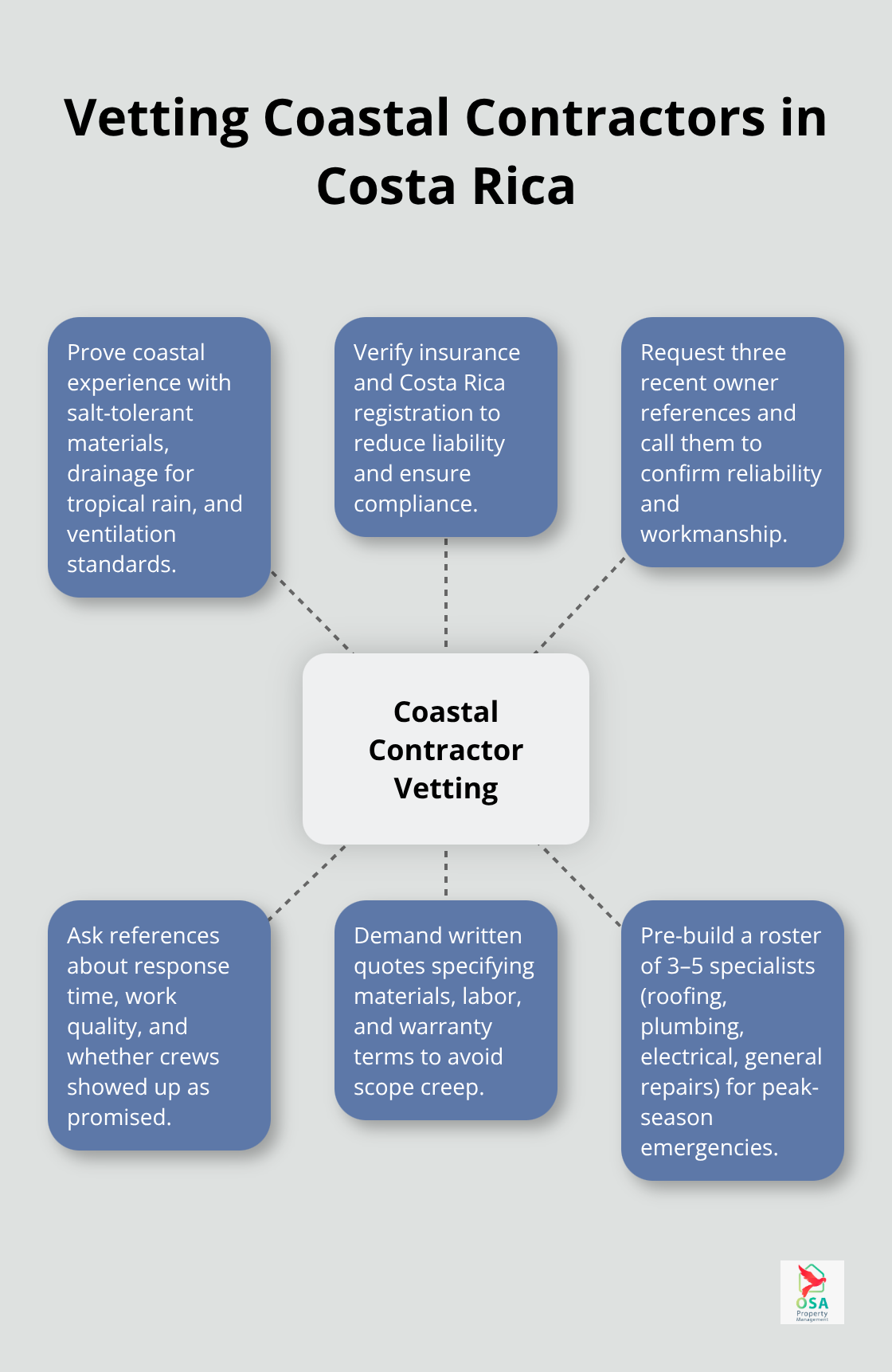
Request written quotes that specify materials, labor costs, and warranty periods. Build relationships with three to five reliable contractors before you need them urgently-one for roofing, one for plumbing, one for electrical, one for general repairs. When an emergency strikes during peak season, you’ll have contractors who know your property and prioritize your calls instead of scrambling to find someone available.
Setting a Realistic Maintenance Budget and Schedule
Set aside 1–4% of your property’s annual value for maintenance and treat this as non-negotiable operating costs, not optional expenses. If your home rents for $3,000 monthly, budget $360–$1,440 annually for preventative care. Break this into monthly allocations: $30–$120 per month covers routine expenses like exhaust fan usage, dehumidifier operation, gutter cleaning supplies, and quarterly contractor visits. Use your historical data to forecast future costs-if you spent $800 on roof repairs two years ago, budget for similar work every three to four years. Schedule routine tasks in advance: gutter cleaning in February and August, metal component inspections in March and September, mold checks monthly during rainy season, and HVAC servicing annually. This forward planning prevents the chaos of reactive maintenance where you’re calling contractors in crisis mode and paying premium emergency rates. Document every maintenance expense, contractor invoice, and repair work because these records prove to future buyers that your property was maintained consistently, which justifies higher sale prices and rental rates. Owners who treat maintenance as a planned system with dedicated budget and scheduled contractors spend less overall, maintain higher occupancy rates, and protect property value far more effectively than those who treat maintenance as an afterthought until something breaks.
Final Thoughts
San Buenas property maintenance separates owners who protect their investments from those who face devastating emergency repairs. The tropical climate here moves fast-mold spreads in weeks, rust eats through metal in years, and a single rainy season destroys roofs that contractors never inspected beforehand. Owners who treat maintenance as a planned system with quarterly inspections, realistic budgets, and reliable contractors spend less overall and earn more from their properties than those who wait for emergencies to force their hand.
Climate-specific care matters more in San Buenas than anywhere else in Costa Rica because generic maintenance advice from temperate regions misses the salt-laden air, relentless humidity, and intense rainfall that define this region. Your contractors need to understand marine-grade sealants, proper drainage for tropical downpours, and ventilation standards that prevent mold colonization (these details separate competent coastal contractors from those who lack regional experience). Your inspection schedule needs to account for the May rainy season and the persistent humidity that lingers year-round, while your budget needs to reflect the reality that preventative work costs far less than emergency repairs.
Working with experienced local teams transforms maintenance from a constant headache into a system that protects your investment and keeps your property performing at its peak. At Osa Property Management, we’ve spent over 16 years managing properties across the southern Pacific zone, including San Buenas, with insured staff who understand exactly what this region demands. Professional property management removes the guesswork from San Buenas property maintenance and keeps your investment revenue-generating year-round.