

Tarcoles properties sit in one of Costa Rica's most competitive rental markets. The seasonal swings, coastal climate challenges, and demanding guest expectations mean that generic management approaches simply don't work here.
At Osa Property Management, we've built our approach around what actually moves the needle for Tarcoles property owners: smart pricing, targeted marketing, and maintenance that prevents costly problems before they start.
Why Tarcoles Needs Different Management Than Anywhere Else
Seasonal Tourism Patterns That Reshape Revenue
Tarcoles operates on two completely different timelines. December through April brings the dry season, when tourism peaks and occupancy rates soar to 80–90% for well-managed properties. July and August see a secondary surge as families travel during summer breaks. Outside these windows, occupancy drops sharply, forcing properties into survival mode if they lack the right strategy. This isn't a minor fluctuation-it's the difference between annual net ROI of 8–12% and properties that barely cover expenses.
Generic property managers set pricing once and forget it, or worse, they discount heavily during slow months instead of targeting the specific guest segments who actually travel in shoulder seasons. Dynamic nightly rates and shifted marketing focus toward remote workers and retirees who book longer stays outside peak periods turn dead months into productive revenue windows.
Coastal Competition Demands Tactical Positioning
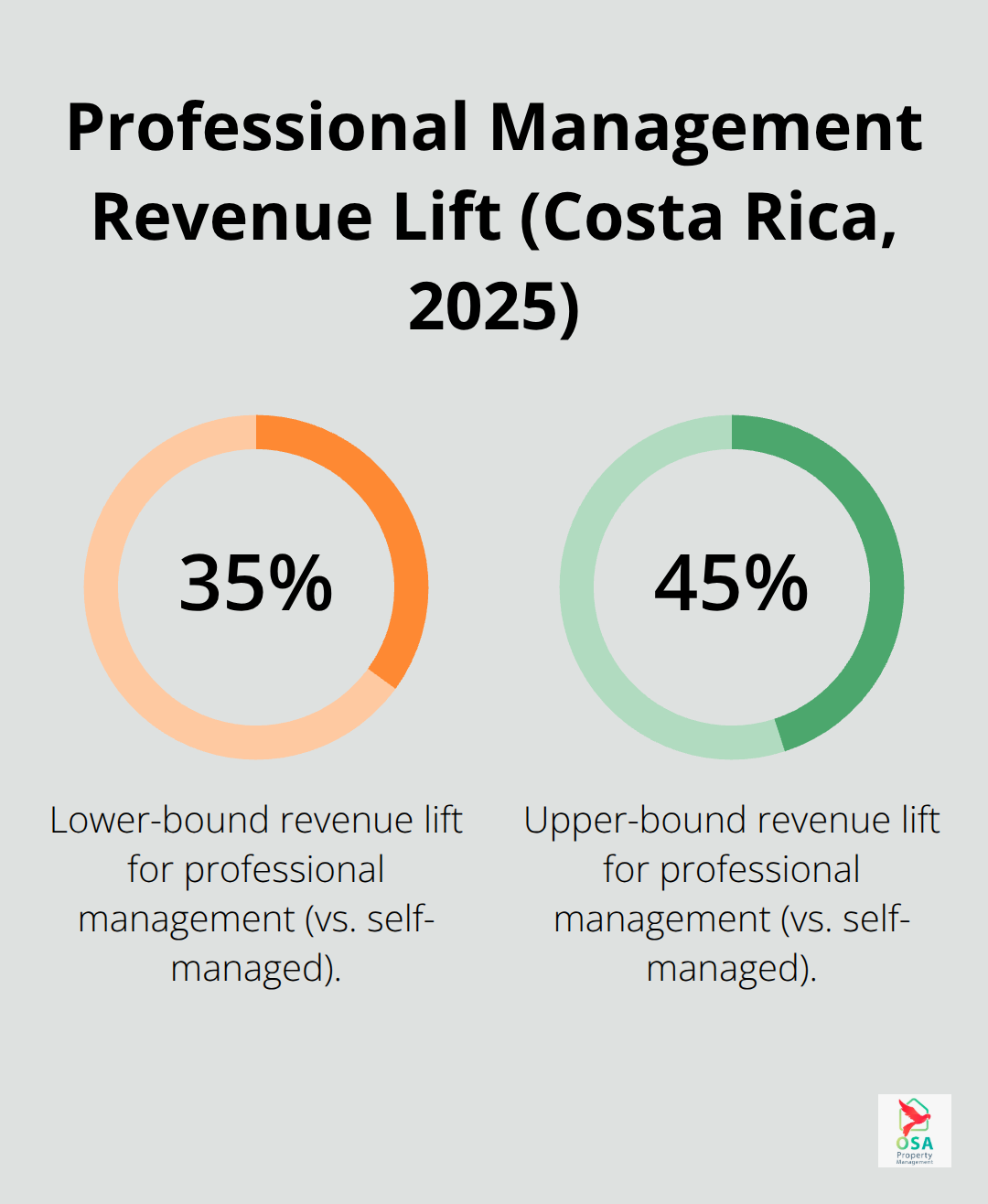
Tarcoles competes directly with Tamarindo, Manuel Antonio, Uvita, and Nosara-all established markets with strong infrastructure and brand recognition. Properties here don't win on location alone; they win on execution. A 2025 analysis of vacation rental performance across Costa Rica shows that properties with professional management outperform self-managed equivalents by 35–45% in annual revenue, largely because professionals optimize listings, manage pricing algorithmically, and respond to guest issues within hours instead of days.
Local relationships matter enormously. Plumbers, electricians, and cleaning crews in Tarcoles often deliver results within hours if you have standing relationships with them-something only managers with deep roots in the region can access. Properties near Carara National Park attract eco-tourism guests who stay longer and tolerate slightly lower amenities if wildlife access is guaranteed. This requires marketing expertise specific to the region, not generic vacation rental templates.
Coastal Climate Demands Aggressive Maintenance Habits
Salt air, high humidity, and seasonal storms accelerate wear on appliances, furniture, and structural elements. Air conditioning units fail faster here than inland. Metal fixtures corrode. Mold develops in weeks during rainy season if ventilation lapses. Ninety-two percent of guests cite cleanliness and upkeep as the most important booking factor, and in Tarcoles that standard applies even more rigidly because guests pay premium rates and expect flawless conditions.
Preventive maintenance isn't optional-it's the foundation of occupancy and pricing power. Properties that wait for problems to surface lose bookings, accumulate bad reviews, and watch revenue collapse. Scheduled preventive checks before rainy season, monthly air conditioning inspections, and relationships with trusted local contractors who mobilize quickly when issues arise protect your investment and keep guests satisfied.
These operational realities shape everything that follows: how you price, how you market, and how you maintain your asset. Revenue optimization in Tarcoles starts with understanding these constraints and turning them into competitive advantages.
Revenue Optimization Strategies for Tarcoles Rentals
Dynamic Pricing Captures Seasonal Demand Shifts
Pricing in Tarcoles isn't about charging what feels right or copying competitors. It's about matching nightly rates to demand curves that shift dramatically across the year. Properties managed with static pricing leave money on the table, while managers who adjust rates weekly based on occupancy trends, booking pace, and local events capture that margin.
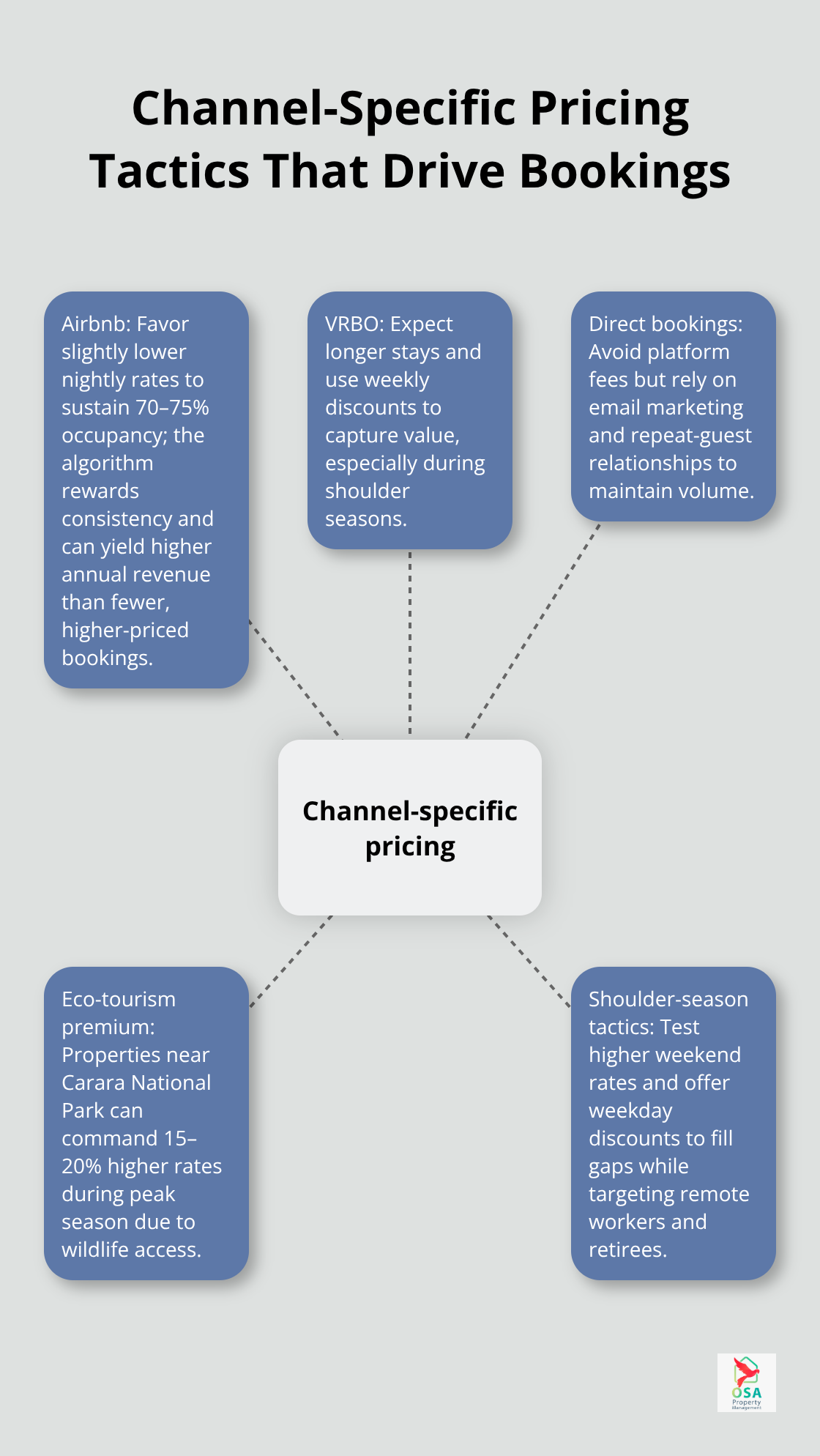
During December through April, premium ocean-view properties in gated communities like Costa Montana command $250–400 per night. The same property drops to $80–120 in September and October unless you shift marketing toward remote workers and retirees who book 30–90 day stays at discounted monthly rates. Shoulder seasons in May, June, and November sit between these extremes, requiring tactical pricing that tests higher rates on weekends while offering weekday discounts to fill inventory.
Properties near Carara National Park can charge 15–20% premiums during peak season because eco-tourism guests specifically seek wildlife access and tolerate higher prices for guaranteed bird watching or river tours. The mechanics matter too: Airbnb, VRBO, and direct booking channels each require different pricing strategies. Airbnb's algorithm rewards consistent occupancy, so slightly lower nightly rates that drive 70–75% occupancy often generate more annual revenue than higher rates that drop occupancy to 50%. VRBO guests tend to book longer stays and accept weekly discounts, making that platform ideal for shoulder-season inventory.
Professional managers benchmark every listing against 40–50 comparable properties in real time, adjusting rates daily based on occupancy forecasts, competitor moves, and booking velocity. Dynamic pricing boosts vacation rental revenue by 10-40% annually through real-time rate adjustments.
Professional Marketing Converts Browsers Into Bookers
Generic vacation rental listings with phone photos and boilerplate descriptions don't convert in Tarcoles. High-performing listings include drone footage showing ocean views, Carara proximity, and wildlife potential; detailed descriptions of nearby activities like river tours, surfing, and yoga retreats; keyword-rich headlines that mention specific features guests search for; and honest reviews that build credibility.
Occupancy rates correlate directly with review scores: properties with 4.8+ stars on Airbnb maintain 75–85% occupancy year-round, while 4.2 stars drop to 55–65%. This matters because guest experience drives those scores. Clear check-in instructions, responsive communication within 2 hours, and thoughtful welcomes like local coffee or beach towels cost $5–15 per booking but routinely earn five-star reviews. Properties that respond to guest messages within hours rather than days book 30–40% more repeat guests and referrals.
Multi-channel distribution amplifies reach: properties listed on Airbnb, VRBO, and Booking.com simultaneously capture guests across platforms rather than relying on a single channel. Cross-promoting through local tour operators and eco-lodges near Carara adds occupancy during shoulder seasons when direct bookings slow.
Strategic Marketing Investment Drives Revenue Growth
Marketing spend should reflect revenue potential: investing 3–5% of gross revenue into professional photos, video, and platform optimization yields 20–35% revenue increases for properties not yet performing at market rates. Professional managers handle listing optimization, multi-channel distribution, and guest communication through dedicated concierge teams, ensuring consistent messaging and rapid response times that translate directly into bookings and positive reviews.
These pricing and marketing strategies form the foundation of occupancy and revenue stability. Yet consistent bookings mean nothing if your property deteriorates between guests or fails to meet the cleanliness and maintenance standards that drive those five-star reviews. The next section examines how professional care and maintenance standards protect your investment while sustaining the guest experience that keeps occupancy rates high.
Professional Care and Maintenance Standards
90% of guests prioritize cleanliness and property upkeep when booking vacation rentals. In Tarcoles, this standard becomes non-negotiable because guests pay premium rates for ocean views and wildlife access, then expect flawless conditions to match those prices. A single negative review about mold, broken air conditioning, or dirty fixtures tanks your occupancy rate for months. Professional property managers prevent this collapse through scheduled inspections and preventive maintenance cycles aligned to Tarcoles' coastal climate.
Inspections and Preventive Maintenance Drive Occupancy
Before rainy season arrives in May, properties need AC servicing, gutter cleaning, and mold-prevention checks. Monthly inspections catch corroded fixtures, worn appliances, and structural issues before guests encounter them. Properties managed this way maintain 75–85% occupancy year-round and command premium nightly rates because their condition justifies the price. Properties that defer maintenance or wait for guest complaints drop to 55–65% occupancy within two seasons, losing tens of thousands in annual revenue.
The math is straightforward: spending $800–1,200 monthly on preventive maintenance generates 20–30% higher occupancy and revenue gains that far exceed those costs. A $150 AC filter replacement catches problems before a $3,000 compressor failure. Monthly gutter cleaning costs $80 but prevents $5,000+ water damage to ceilings and walls.
Local Vendors Mobilize Within Hours
Coastal property emergencies happen fast in Tarcoles. A burst pipe, AC failure, or roof leak during rainy season can destroy guest experiences and damage your asset within hours if response times exceed 4–6 hours. Professional managers maintain standing relationships with plumbers, electricians, HVAC technicians, and contractors who mobilize within 1–2 hours because they have consistent work flow and established trust.
Generic property managers lack these networks and rely on cold calls or yellow pages, losing critical time. When a guest reports water damage at 8 PM on a Saturday, the manager with local relationships calls their trusted contractor and has someone on-site by 9:30 PM. The manager without relationships spends two hours finding someone available, losing the property to water damage.
Maintenance Software Tracks Costs and Completion
Maintenance software like Turno or Breezeway automates task scheduling, assigns jobs to vendors with real-time tracking, and integrates directly with your accounting system so you see costs and completion status immediately. This transparency prevents hidden maintenance bills and ensures vendors complete work on schedule. Professional managers document every inspection, every repair, and every vendor interaction in centralized systems so you track spending patterns and identify cost-saving opportunities.
Seasonal Cycles Prevent Costly Failures
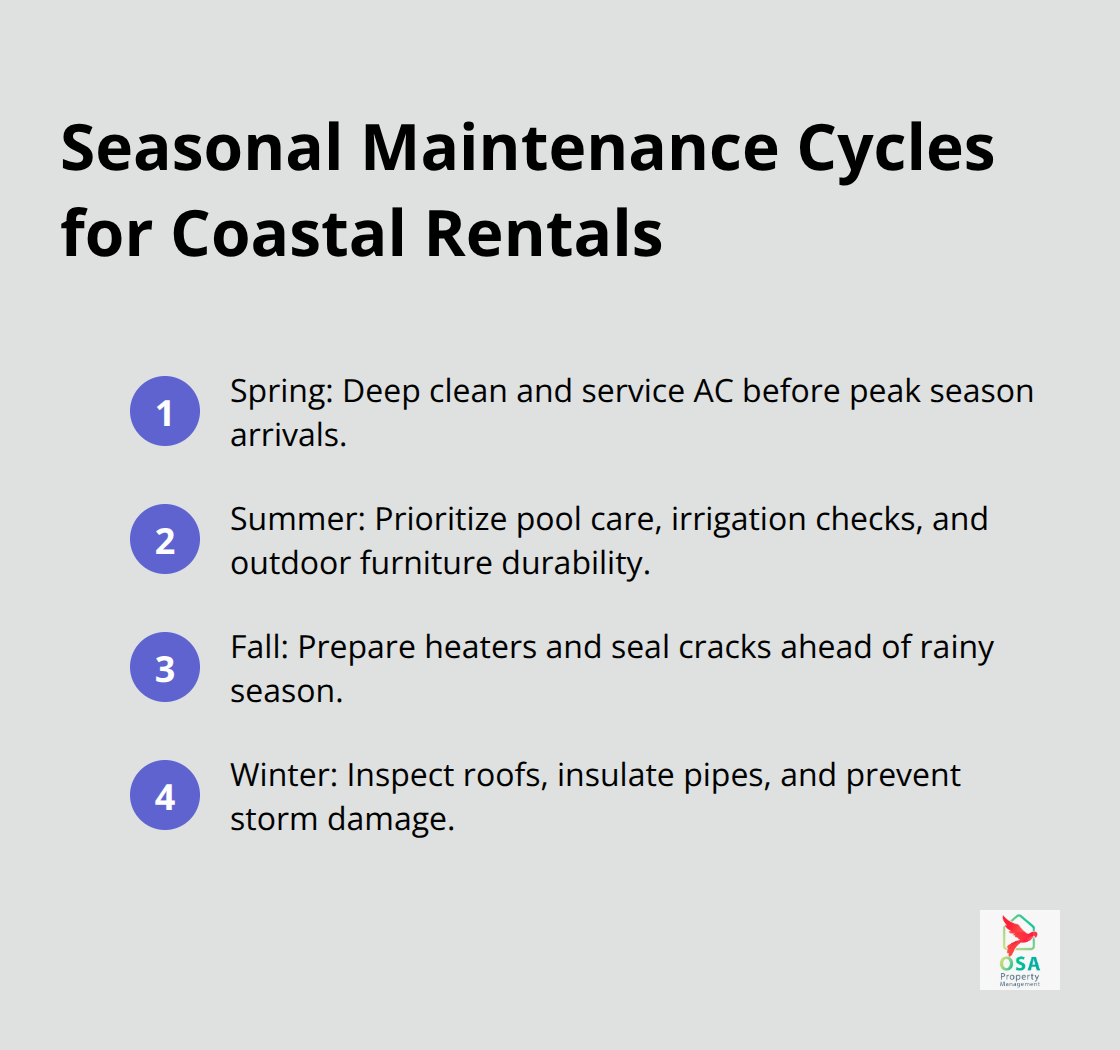
Strategic maintenance planning prevents costly failures that spike expenses and damage occupancy. Spring requires deep cleaning and AC service before peak season bookings arrive. Summer focuses on pool maintenance, irrigation systems, and outdoor furniture durability checks. Fall means heater preparation and sealing cracks before rainy season.
Properties that follow these cycles spend 40–50% less on emergency repairs annually compared to reactive approaches because small issues stay small. This data also protects you during insurance claims because you have proof of preventive maintenance and rapid response, strengthening your coverage and reducing liability risk. Coastal properties that maintain consistent inspection schedules and address issues proactively retain their premium positioning in the market and sustain the occupancy rates that drive annual revenue targets.
Final Thoughts
Tarcoles property management succeeds when three elements align: dynamic pricing that captures seasonal demand, marketing that converts browsers into repeat guests, and preventive maintenance that protects your asset while sustaining occupancy. A $300,000 property generating 12% annual ROI produces $36,000 in net income, while the same property managed reactively drops to 6% ROI and loses $18,000 annually. Over a decade, that difference compounds to $180,000 in lost wealth, making professional management the difference between building equity and treading water.
Your asset faces constant pressure from coastal climate, seasonal tourism swings, and competitive markets that demand specialized expertise rather than generic approaches. Salt air corrodes fixtures, rainy season brings mold and water damage, and peak season requires flawless conditions or guests book competitors instead. Shoulder seasons demand tactical pricing and targeted marketing to fill inventory, and only managers with deep local knowledge navigate these challenges effectively.
We at Osa Property Management have spent over 20 years building the local networks, market knowledge, and operational systems that turn these challenges into competitive advantages. Our team handles dynamic pricing, multi-channel marketing, guest communication, vendor relationships, maintenance scheduling, and financial reporting so you focus on ownership returns instead of operational headaches. Contact Osa Property Management to discuss a customized Tarcoles property management strategy tailored to your property and financial goals.