

Tarcoles rental properties face a tough reality: seasonal swings and fierce competition make consistent bookings feel impossible without the right approach.
We at Osa Property Management have spent years cracking the code on what actually works for properties in this market. The difference between properties that book solid year-round and those that sit empty comes down to strategy, execution, and professional management.
Why Tarcoles Properties Fail to Book Consistently
Tarcoles sits in a market that looks attractive on paper but punishes poor execution. AirDNA data shows the market has 688 short-term rental listings competing for guests, with occupancy at just 35% year over year. That means nearly two-thirds of properties in Tarcoles sit empty on any given night. The reason most properties underperform has nothing to do with location and everything to do with how owners manage them. Properties that struggle typically share three fatal flaws: they ignore seasonal demand patterns, they compete against professional operators without professional tools, and they present themselves poorly to potential guests.
Seasonal demand creates real revenue gaps
Tarcoles experiences dramatic swings in tourism demand. The dry season from December through April brings peak occupancy and allows properties to command premium nightly rates, often 30 to 50% higher than off-season prices. From May through November, the green season attracts budget-conscious travelers and digital nomads willing to pay less for longer stays. Properties with static pricing and no seasonal strategy watch their occupancy crater during green season. The AirDNA market score for Tarcoles shows a Seasonality rating of 66, meaning seasonal swings are significant and demand active management. Properties that adjust pricing strategically and target different guest segments during off-season maintain occupancy in the 70 to 80% range annually, while self-managed properties often drop below 30% during slower months.
Competition from poorly managed properties undermines your rates
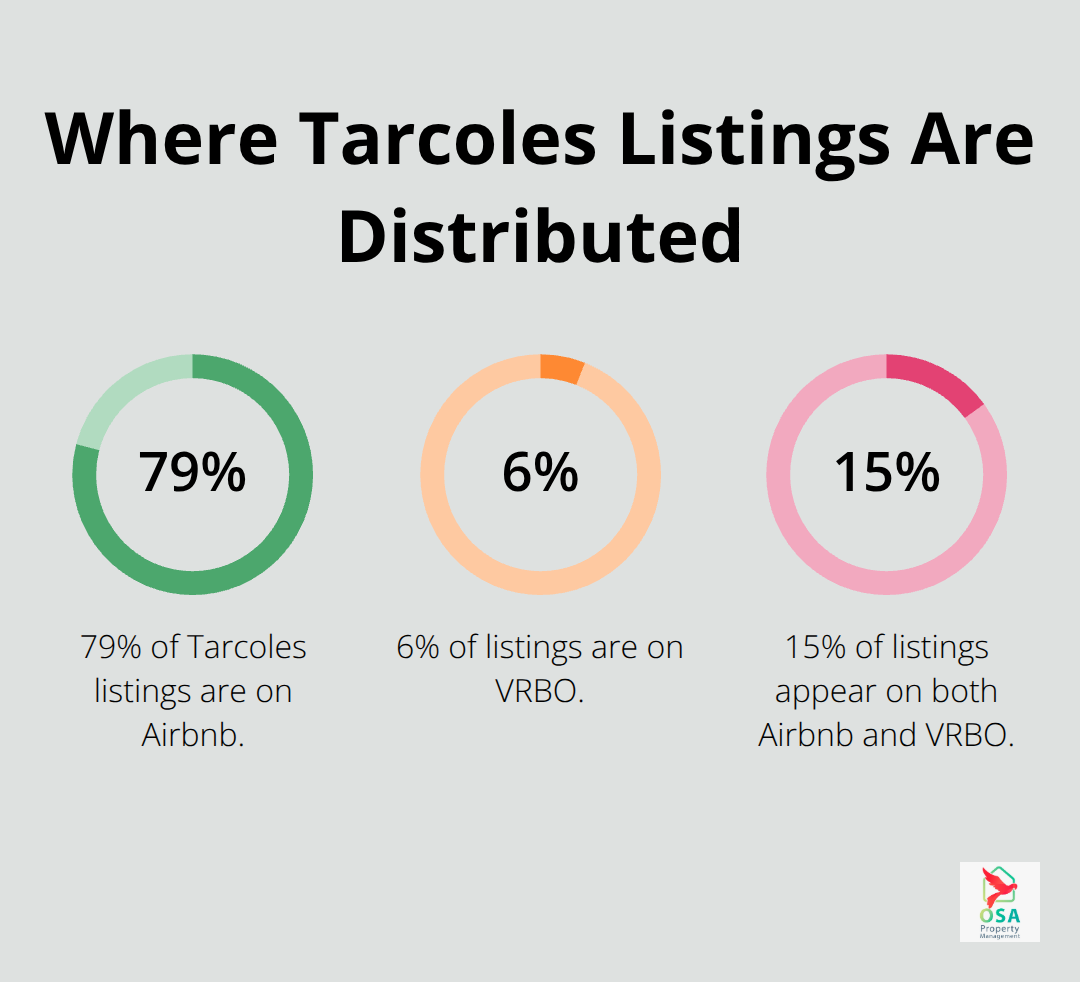
The market has grown 3% overall with active listings up 8% year over year, intensifying competition. Yet 79% of listings appear on Airbnb, 6% on VRBO, and 15% on both platforms, showing fragmented distribution. Many owners list on a single platform and hope for bookings, missing entire segments of travelers.
Poor listing quality costs you direct bookings
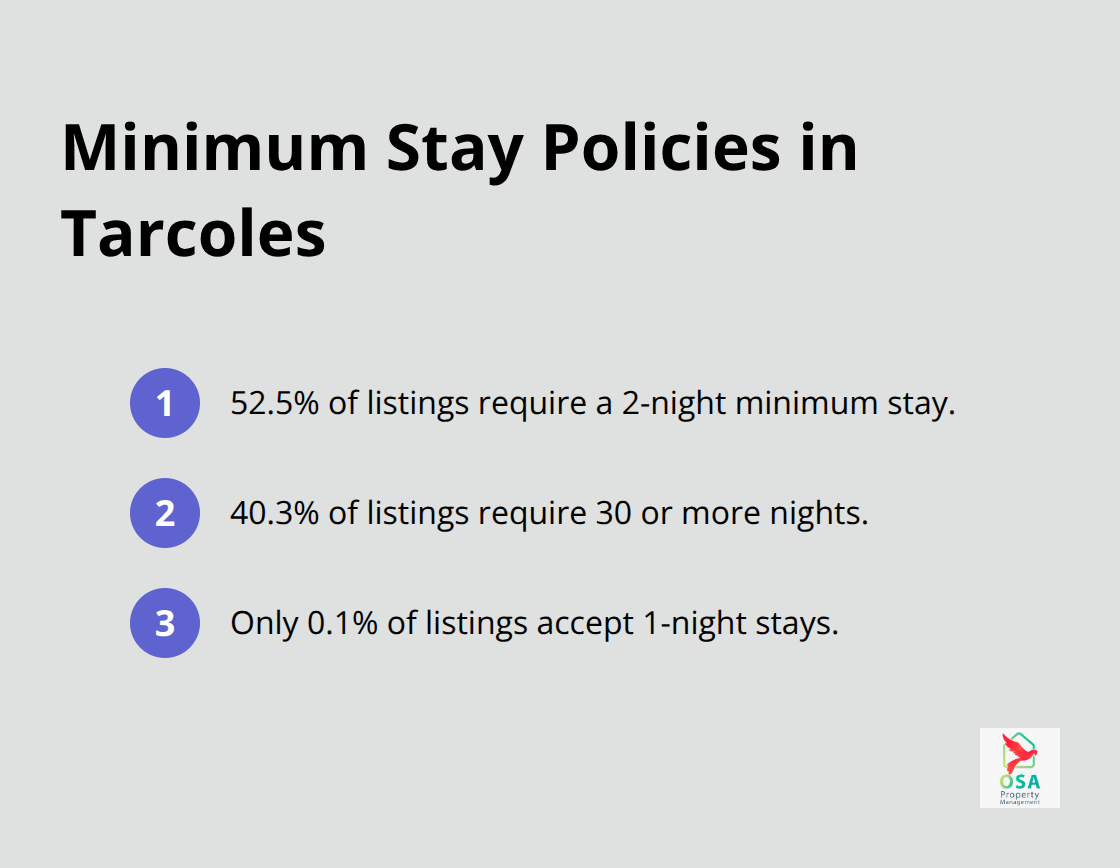
Most Tarcoles properties fail at the basics of presentation. A listing without high-quality images, without clear descriptions of nearby activities, and without highlighting what makes the property unique sits invisible in a crowded market. The top amenities across Tarcoles (Internet at 97%, Air Conditioning at 95%, Parking at 94%, and Kitchen at 90%) are table stakes, not differentiators. Properties that describe themselves in generic terms blend into hundreds of similar listings. Instead, successful properties tell a story about the experience: proximity to Marino Ballena National Park, hiking trails, waterfront access, or local dining. Minimum stay requirements also matter. Tarcoles listings show 52.5% require a 2-night minimum with 40.3% requiring 30 or more nights, yet only 0.1% accept 1-night stays.
These three obstacles explain why so many Tarcoles properties underperform. The solution requires more than hope-it demands strategic action across pricing, presentation, and guest management. Properties that address these gaps transform their performance, and the next section reveals the proven strategies that separate consistent performers from the rest of the market.
What Transforms Tarcoles Listings From Invisible to Booked
Professional Photography Converts Browsers Into Bookers
High-quality photos convert 30 to 40% more browsers into bookers compared to amateur images. This matters because 79% of Tarcoles listings sit on Airbnb alone, meaning first impressions happen through images. Professional photography shot with proper lighting showcases rooms, outdoor spaces, and amenities in ways smartphone photos cannot match. Potential guests scroll through dozens of listings in minutes-weak photos eliminate your property from consideration before they read a single word about it.
Descriptions Must Speak to Guest Experience, Not Features
Listing descriptions that move past generic amenity lists speak directly to what makes the property worth booking. Instead of writing "Air Conditioning" and "Kitchen," describe the experience: a fully equipped kitchen with ocean views where guests prepare fresh seafood, or an air-conditioned bedroom overlooking Marino Ballena National Park. Properties that emphasize proximity to hiking trails, waterfront access, or nearby restaurants command higher rates because guests understand what they actually get. Descriptions answer the question guests ask themselves: What will I do here? Properties that answer this question outperform those that simply list features.
Minimum stay policy also shapes booking patterns. With 52.5% of Tarcoles listings requiring 2-night minimums and 40.3% requiring 30 or more nights, properties that accept 1 or 2-night stays capture last-minute bookings that rigid policies miss entirely. The flexibility pays off in occupancy rates.
Strategic Pricing Separates High Performers From Average Properties
Tarcoles average daily rates sit at $225.50 according to AirDNA, but properties that adjust pricing weekly based on demand, local events, and school holidays outperform static-rate competitors significantly. The dry season from December through April justifies rate increases of 30 to 50% above off-season baselines. During green season, dropping rates strategically attracts longer stays and maintains occupancy that would otherwise crater. Properties that track competitor rates and local event calendars avoid leaving money on the table during peak periods and prevent vacancy during slow periods.
Guest Reviews Drive Occupancy and Justify Premium Rates
Properties with ratings below 4.5 stars lose bookings to higher-rated competitors, yet many owners ignore negative feedback or fail to respond to reviews at all. Responding to every review within 48 hours signals attentiveness to potential guests reading reviews. Addressing criticism constructively-acknowledging issues and explaining improvements made-converts skeptical prospects into bookers. Properties that invest in the guest experience generate 4.8-star ratings, which directly translate to higher occupancy and justify premium pricing.
These three levers work together: compelling presentation attracts inquiry, strategic pricing maximizes revenue per available night, and exceptional guest experiences create reviews that feed the next booking cycle. Yet executing all three simultaneously while managing daily operations, maintenance, and guest communication demands more than most property owners can handle alone. The next section reveals how professional management transforms these strategies from theory into consistent, measurable results.
How Professional Management Drives Year-Round Bookings
Multi-Channel Distribution Captures Demand Across All Platforms
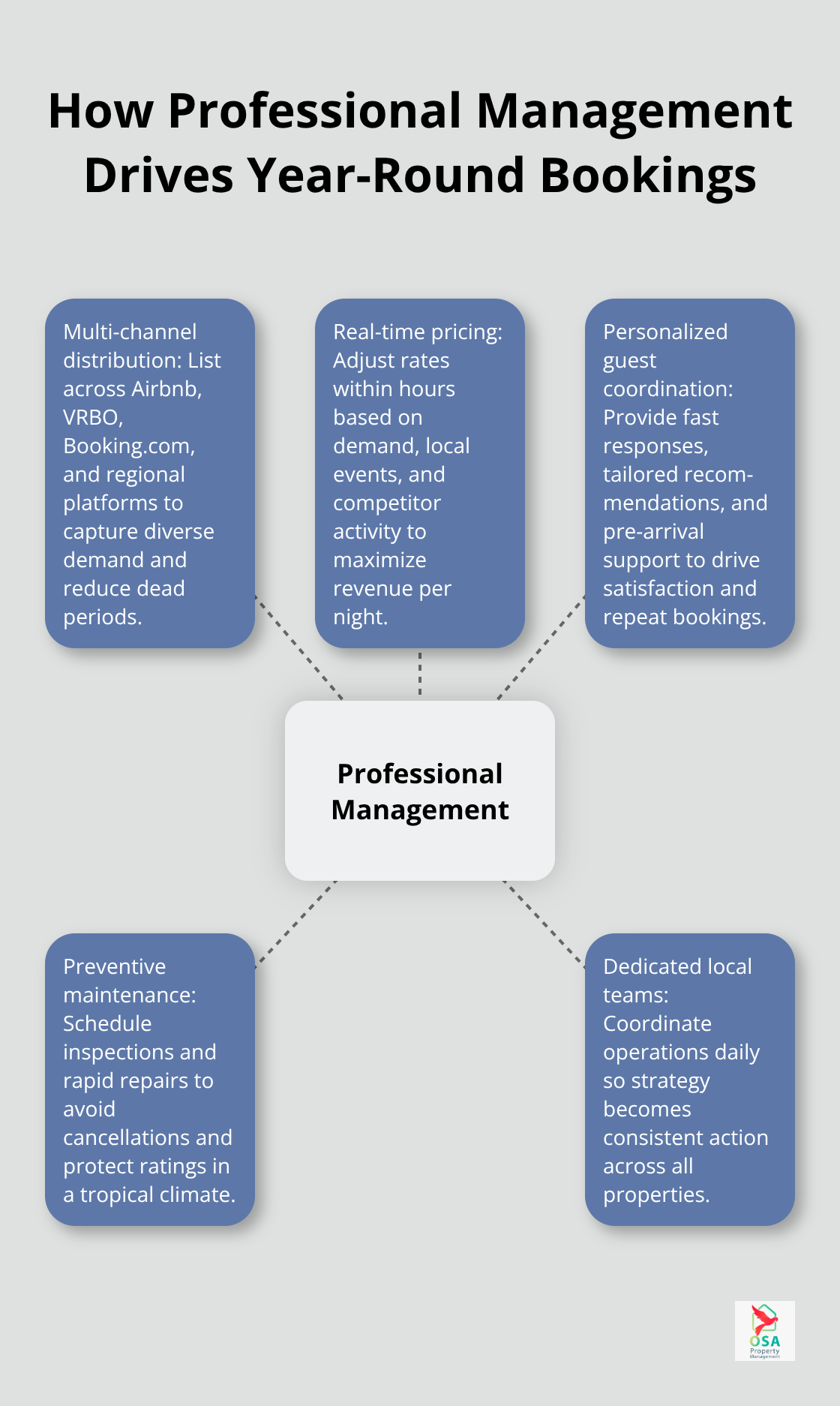
Single-platform reliance costs owners money. AirDNA data shows 79% of Tarcoles listings sit on Airbnb alone, meaning those properties miss the 21% of demand flowing through other channels like VRBO, Booking.com, and regional Costa Rica platforms. Properties listed on both Airbnb and VRBO capture travelers who prefer one platform over another, reducing the dead periods that single-channel properties experience. Professional management adjusts pricing independently on each platform based on real-time demand, local events, and competitor activity. When school holidays hit in Costa Rica or international travelers shift between platforms, pricing responds within hours rather than staying static for weeks.
Real-Time Pricing Adjustments Maximize Revenue Per Night
Tarcoles average daily rates sit at $225.50 according to AirDNA, but properties using dynamic pricing often see an average increase in overall revenue compared to static pricing models. The dry season from December through April justifies rate increases of 30 to 50% above off-season baselines. During green season, dropping rates strategically attracts longer stays and maintains occupancy that would otherwise crater. Professional management tracks competitor rates and local event calendars to avoid leaving money on the table during peak periods and prevent vacancy during slow periods. This approach transforms pricing from a set-it-and-forget-it task into an active revenue lever that responds to market conditions.
Personalized Guest Coordination Generates Repeat Bookings
Pre-arrival coordination separates properties that book repeatedly from those that struggle with one-time guests. Guests receive personalized communication including airport transfer options, detailed check-in instructions, WiFi passwords, and curated activity recommendations. Professional teams handle special requests before arrival-restaurant reservations, activity bookings, dietary preferences-so guests feel anticipated rather than simply accommodated. Quick communication within hours significantly boosts booking likelihood and guest satisfaction scores. Properties with this level of attention generate 4.8-star ratings that feed repeat bookings and justify 30 to 50% rate premiums during peak season. Exclusive experiences bundled with bookings (such as private tours near Marino Ballena National Park) create perceived value that justifies higher nightly prices.
Preventive Maintenance Protects Occupancy and Reputation
Tropical climate conditions accelerate roof degradation, mold growth, and plumbing failures, making scheduled inspections non-negotiable. Quarterly inspections address humidity-related issues before they become guest problems. Vetted local contractor networks respond to emergency repairs within hours rather than days, preventing cancellations that destroy revenue and ratings. When air conditioning fails mid-stay or a pipe bursts before check-in, delayed repairs create negative reviews that persist for months. Properties that maintain preventive schedules avoid this trap entirely. A $400 preventive HVAC inspection saves far more in cancelled bookings and reputation damage than reactive repairs cost. Professional management tracks maintenance costs against occupancy gains, treating prevention as an investment rather than an expense.
Professional Teams Execute Strategy Across All Properties
Executing multi-channel pricing, guest coordination, and maintenance simultaneously demands more than most property owners can handle alone. Professional management companies with established local networks and dedicated teams handle this coordination without owner involvement.
Final Thoughts
The gap between Tarcoles properties that book consistently and those that sit empty comes down to one factor: professional management. Self-managed properties struggle because owners juggle pricing adjustments, guest communication, maintenance coordination, and marketing simultaneously while holding down other jobs. A guest inquiry goes unanswered for two days, pricing stays static while competitors adjust for a local event, or a maintenance issue gets delayed because the owner is traveling-each gap costs bookings and damages reviews that took months to build.
Properties managed professionally operate differently. They adjust pricing across multiple platforms in real time based on demand data and local events, respond to guest inquiries within hours rather than days, and execute maintenance on schedule before problems become emergencies. Tarcoles rental management that stays active across Airbnb, VRBO, Booking.com, and regional platforms simultaneously captures demand that single-channel properties miss entirely, resulting in professionally managed properties maintaining occupancy rates of 70 to 80% annually while self-managed properties often drop below 30% during slower months.
We at Osa Property Management have built our reputation on this difference over 20 years managing properties across Tarcoles and surrounding areas. Our team of over 40 full-time employees handles marketing, guest coordination, concierge services, maintenance oversight, and financial management so owners can focus on their lives rather than their properties (we were recently recognized as COTUOSA 2025 Company of the Year and selected as one of only 150 property management companies invited to Airbnb's 2025 Host Summit in Mexico City). If your property sits empty too often or generates less revenue than it should, contact us to learn how professional management secures your revenue stream.