

Costa Rica’s property tax system catches many expats off guard with its unique assessment methods and municipal obligations. Most foreign property owners pay more than necessary due to poor planning.
We at Osa Property Management see expats struggle with residency requirements and filing deadlines regularly. Smart tax planning can save thousands while keeping you compliant with local regulations.
How Does Costa Rica’s Property Tax System Really Work
Costa Rica’s property tax system operates on a flat 0.25% annual rate that applies to your property’s registered value, not its market value. The National Registry conducts regular assessments that often lag behind actual market prices by 20-40%. This creates opportunities for smart tax planning. Properties of high value face an additional luxury tax that is imposed yearly on residential properties with the purpose of funding social housing initiatives, which makes accurate valuations essential for high-end properties.
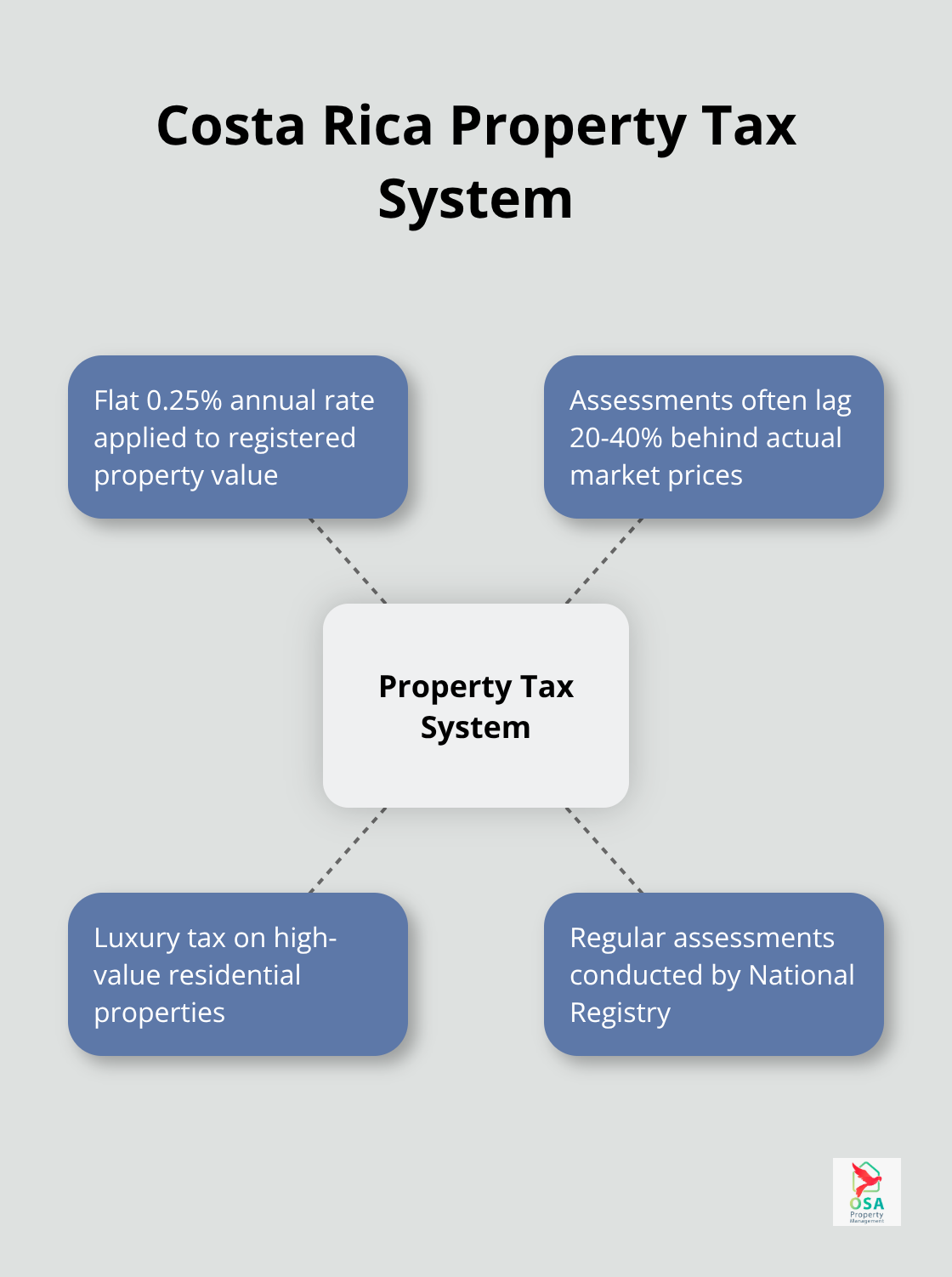
The Assessment Gap Creates Tax Advantages
The assessment cycle means your tax burden stays predictable while property values fluctuate. Expats benefit most when they purchase shortly after reassessment periods, which locks in lower taxes for years. You can voluntarily declare higher property values to reduce future capital gains taxes, though most owners prefer the immediate savings. Municipal offices handle collections locally, with each municipality that sets specific payment deadlines and discount structures.
Payment Schedules Offer Significant Savings
Most municipalities offer 10-15% discounts for full annual payments that property owners make by January 31st. Quarterly payments come due on March 31st, June 30th, September 30th, and December 31st. Late payments trigger 1.5% monthly interest charges plus penalties that reach up to 50% of the original tax amount. The online payment systems accept international credit cards, though foreign transaction fees typically add 2-3% to your costs.
Annual Declarations Remain Mandatory
Property owners must file annual declarations even when values remain unchanged, or they face fines up to ten times the annual tax amount. This requirement catches many expats who assume no changes mean no paperwork. The declaration process requires specific forms and deadlines that vary by municipality.
Smart property owners who understand these assessment cycles and payment structures position themselves to minimize tax burdens while they maintain full compliance. However, the luxury tax and ownership structures present additional considerations that can dramatically impact your overall tax strategy.
How Should Expats Structure Property Ownership for Maximum Tax Benefits
Costa Rican corporation ownership delivers the strongest tax advantages for expat property owners, despite common misconceptions about complexity. Corporate ownership caps annual property taxes at 0.25% while it provides liability protection and streamlined transfer processes that individual ownership cannot match. The corporate structure eliminates the 3.5% transfer tax when you sell properties between corporations, which saves $17,500 on a $500,000 property sale. Trust structures work best for estate planning since Costa Rica recognizes foreign trusts, though they require annual filings that cost $800-1,200 through local attorneys.
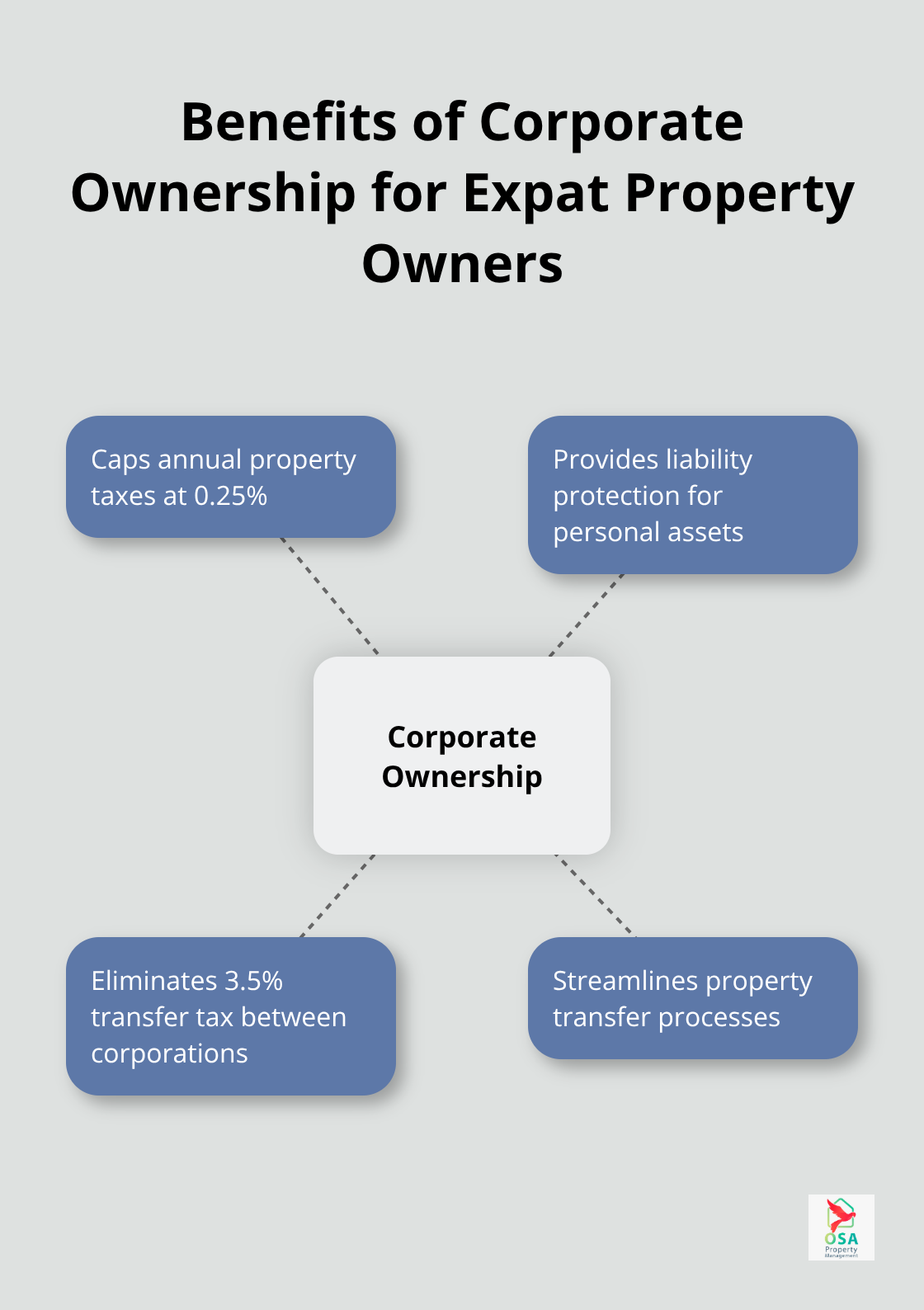
Corporate Structure Eliminates Major Transfer Costs
Individual ownership exposes you to personal liability and higher transfer costs, which makes it the weakest option for serious investors. Corporations shield personal assets from property-related lawsuits and simplify ownership transfers when you want to sell. The corporate tax rate remains at 30% on profits, but most property holding companies show minimal taxable income through proper expense management.
Multiple Properties Demand Professional Coordination
Multiple property holdings require professional management to avoid municipal tax penalties that compound quickly across jurisdictions. Each municipality operates independent payment systems with different deadlines, and you face 1.5% monthly interest charges when you miss payments in one area while staying current in another. Property management companies handle multi-property tax compliance across all major expat areas (including Tarcoles, Jaco, Dominical, and Uvita). Self-management becomes unworkable once you own three or more properties in different municipalities.
Local Tax Professionals Prevent Expensive Mistakes
Local tax professionals charge $150-300 per property annually for compliance services, but mistakes from DIY approaches cost far more. The National Registry requires specific documentation formats that change annually, and incorrect filings trigger penalties that reach ten times your annual tax bill. Bilingual CPAs with Costa Rican credentials handle both local obligations and US reporting requirements, though you should expect to pay $2,000-4,000 annually for comprehensive dual-country tax services.
Most expats underestimate these compliance complexities until they face their first audit or penalty notice, which leads to common mistakes that cost thousands in unnecessary fees and penalties.
What Costly Tax Mistakes Do Most Expats Make
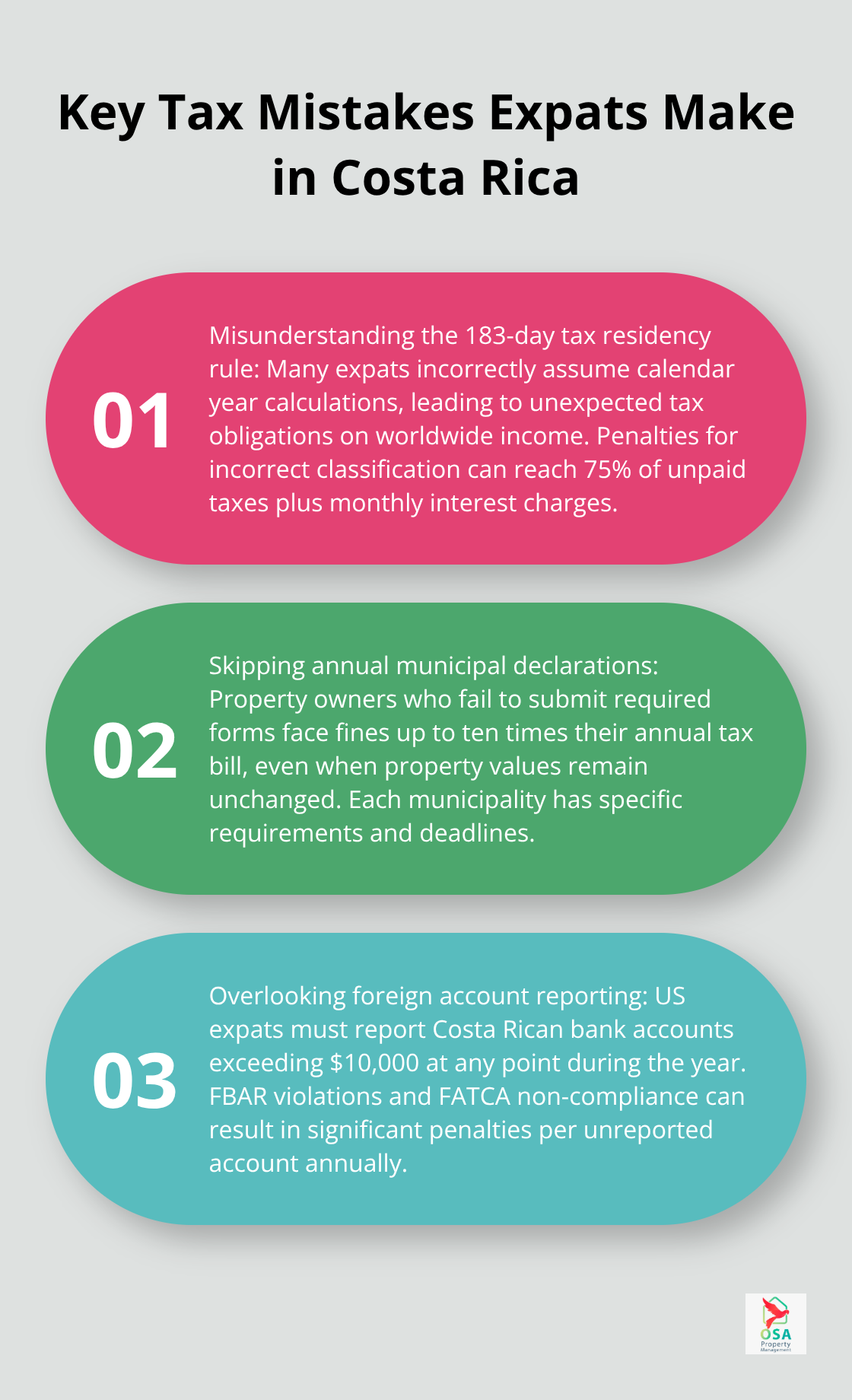
Tax residency confusion costs expats thousands annually when they misunderstand Costa Rica’s 183-day rule. The National Tax Administration considers you a tax resident after you spend more than 183 days in the country during any fiscal year (which runs from October 1st to September 30th). Most expats incorrectly assume calendar year calculations and face unexpected tax obligations on worldwide income. Tax residents must file annual returns on all global income by March 15th, while non-residents only report Costa Rican-sourced income. The penalty for incorrect residency classification reaches 75% of unpaid taxes plus monthly interest charges of 1.5%.
Documentation Errors Generate Massive Penalties
Property owners who skip annual municipal declarations face fines up to ten times their annual tax bill, even when property values remain unchanged. Each municipality requires specific forms that you must submit by different deadlines, and you still trigger maximum penalties when you miss one jurisdiction while you comply with others. The D-101 income tax form requires precise property income reports, and errors in rental income calculations result in 50% penalties plus back taxes.
Foreign Account Violations Cost Americans Dearly
Foreign Bank Account Reports violations cost US expats significant penalties per unreported account annually, while FATCA non-compliance adds substantial penalties. Americans must report all Costa Rican bank accounts that exceed $10,000 at any point during the year. The IRS treats property rental income as US taxable income regardless of your residency status, which creates dual-country obligations that many expats overlook.
Municipal Tax Coordination Failures
Municipal tax offices operate independently with zero coordination, so expats who manage multiple properties across different areas must track separate requirements. Each area maintains different payment schedules and documentation formats that change annually without centralized notification systems. Property owners face 1.5% monthly interest charges when they miss payments in one area while they stay current in another.
Final Thoughts
Smart tax planning separates successful expat property owners from those who pay excessive penalties and fees. Corporate ownership structures deliver the strongest protection while they minimize transfer costs and liability exposure. The 0.25% property tax rate remains manageable when you understand assessment cycles and payment schedules that offer substantial early-payment discounts.
Municipal compliance demands professional oversight across multiple jurisdictions. Each area operates independent systems with different deadlines and documentation requirements that change annually. Self-management becomes impossible once you own multiple properties in different municipalities (especially across Guanacaste, Puntarenas, and San José provinces).
US tax obligations continue regardless of your Costa Rican residency status. The 183-day rule determines local tax obligations while FBAR and FATCA requirements create dual-country compliance challenges that cost thousands when handled incorrectly. Osa Property Management handles tax compliance, bill payment, and coordination across major expat areas with extensive experience in property management services.