

VAT exemptions for rentals in Costa Rica can save you thousands annually, but only if you understand the rules. Many property owners miss out on legitimate tax breaks simply because they don’t know what qualifies.
At Osa Property Management, we’ve seen firsthand how proper VAT planning transforms rental profitability. This guide walks you through exactly what you need to know to protect your investment and maximize your returns.
How Long-Term Rentals Qualify for VAT Exemptions
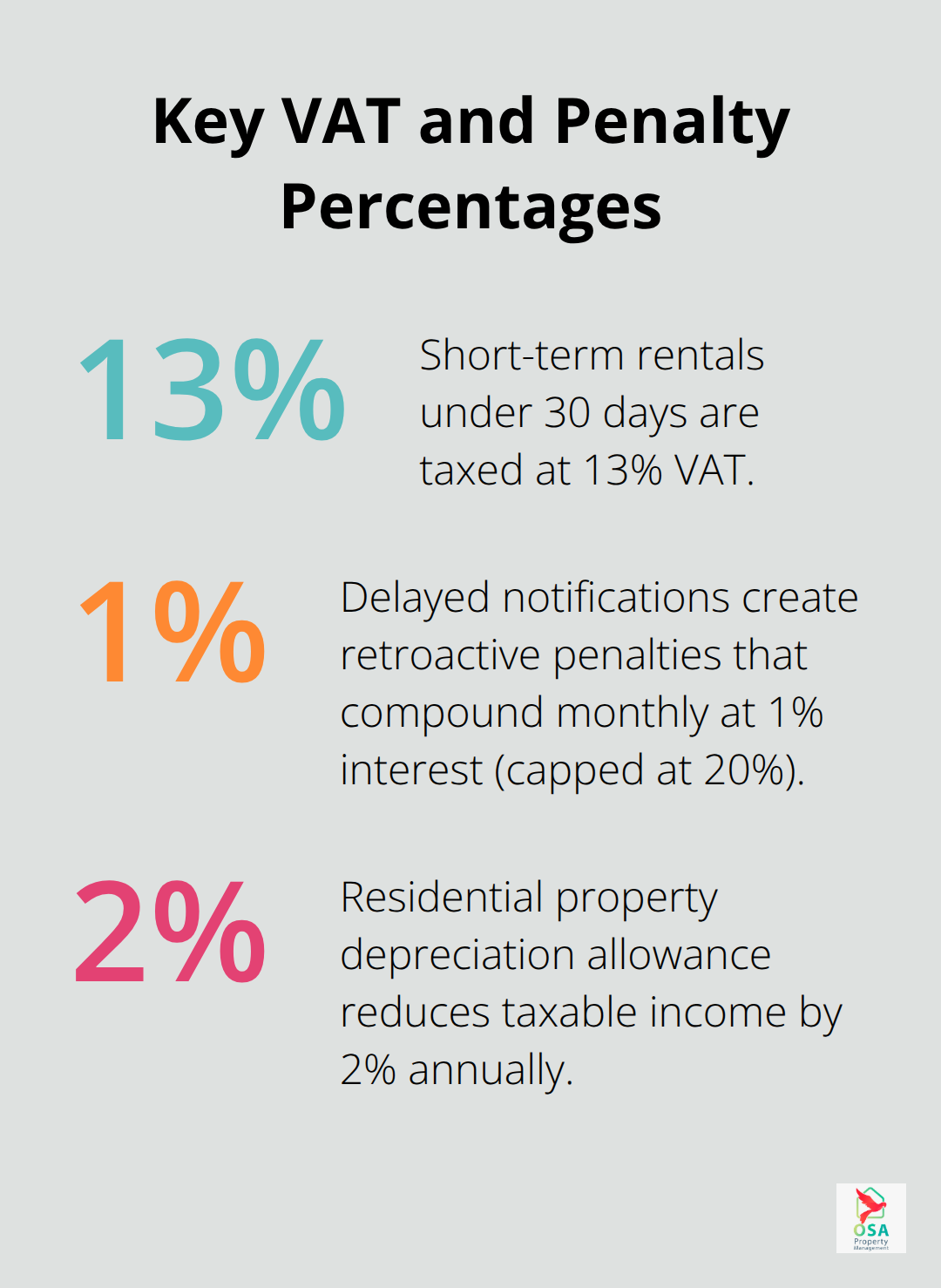
Costa Rica’s VAT system creates a sharp divide between short-term and long-term rentals, and the difference matters enormously to your bottom line. Short-term rentals under 30 days face the full 13% VAT tax, while long-term rentals exceeding 30 days qualify for exemptions under Costa Rica’s tax law. This exemption applies only to residential properties, not commercial ones. The practical effect is substantial: a property generating $10,000 monthly in short-term rental income owes $1,300 in VAT each month, while the same property rented long-term owes nothing.
The 30-Day Threshold That Changes Everything
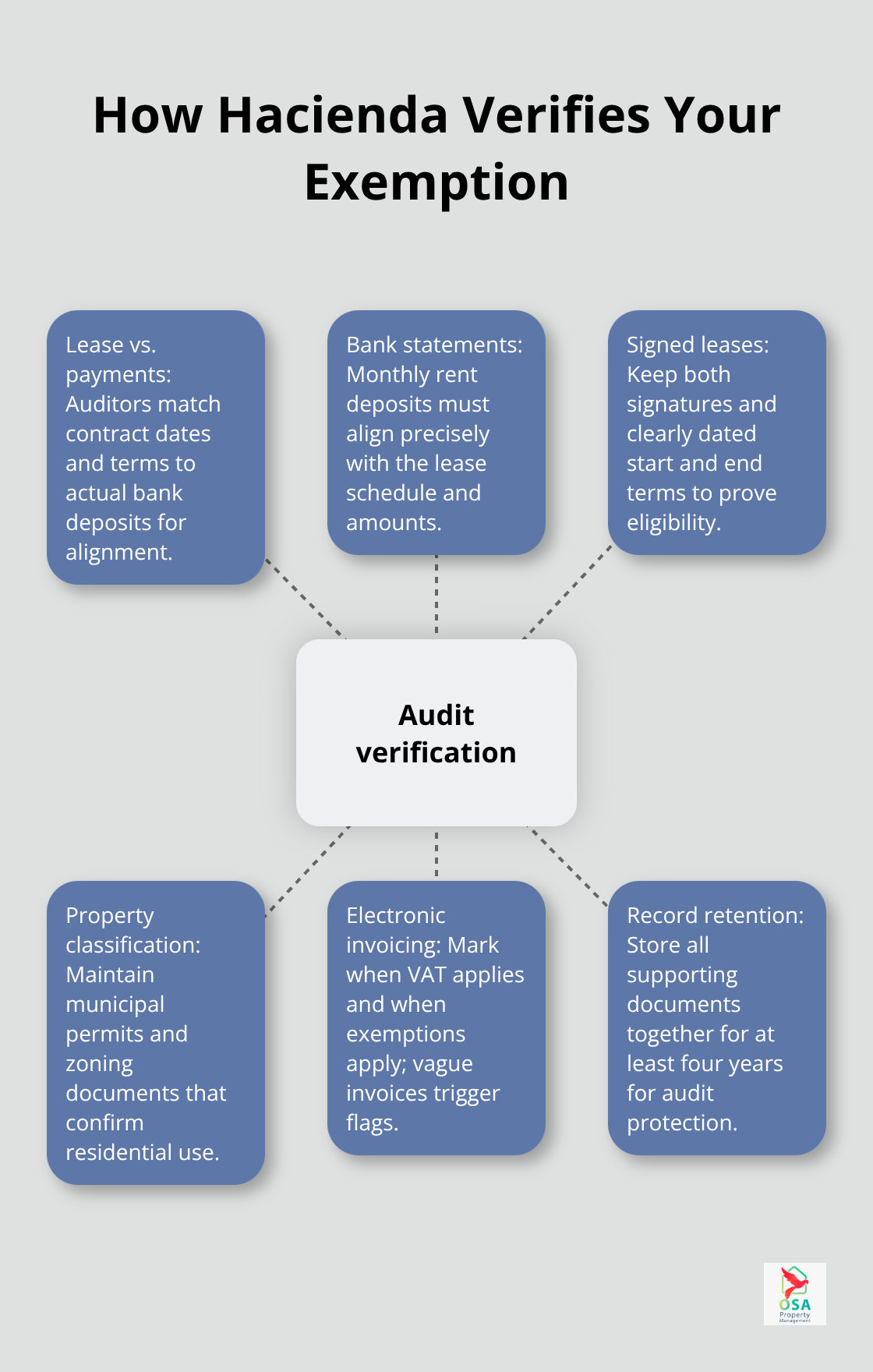
Hacienda enforces this distinction strictly, and misclassifying your rental period costs far more than the tax you’d avoid. To qualify for the exemption, your lease agreement must explicitly state a rental term of 31 days or longer with clear start and end dates signed by both parties. Ambiguous renewal options or early termination clauses within 30 days jeopardize your exemption eligibility entirely. Your property must also hold residential zoning classification; beachfront properties with tourism zoning typically cannot claim exemptions regardless of lease length. Before claiming any exemption, obtain a municipal use permit confirming residential rental activity.
How Hacienda Verifies Your Exemption Claims
Hacienda cross-references your lease agreements against digital payment records during audits, so alignment is non-negotiable. Bank statements showing monthly rent deposits must match your contract dates exactly. Store your lease with both signatures, dated rental periods, and property classification documents together for at least four years. Electronic invoices must clearly indicate when VAT applies and when exemptions take effect; vague invoicing triggers automatic audit flags.
Managing Multiple Properties and Seasonal Changes
If you manage multiple properties or switch between short-term and long-term rentals seasonally, maintain separate bank accounts and accounting codes for each arrangement. This separation prevents Hacienda from assuming you mix taxable and exempt income. When rental terms change, notify Hacienda immediately rather than hoping they won’t notice. Delayed notifications create retroactive penalties that compound monthly at 1% interest, capped at 20%.
The complexity of these rules means that many property owners face audit risks simply because they lack proper guidance on classification and documentation. Understanding what triggers an audit and how to structure your rental agreements correctly determines whether you keep thousands in tax savings or lose them to penalties.
What Your Real Revenue Looks Like After VAT Exemptions
The Financial Gap Between Exempt and Taxable Rentals
The difference between claiming a VAT exemption and missing it amounts to thousands annually. A $10,000 monthly rental income subject to 13% VAT costs you $1,300 every month-that’s $15,600 annually-while an identical property qualifying for long-term residential rentals generates zero VAT liability. Over five years, the cumulative difference reaches $78,000, enough to fund major renovations or acquire a second property. Hacienda data shows that properties correctly classified as long-term residential rentals operate with significantly higher net margins than their short-term counterparts in the same markets. In tourist areas like Manuel Antonio, Uvita, and Ojochal, this distinction separates profitable operations from those barely breaking even after tax obligations.
How Pricing Strategy Shifts with Exemption Status
Pricing strategy shifts fundamentally once you secure exemption eligibility. Property owners operating short-term rentals typically absorb 3–5% of the 13% VAT burden to remain competitive, meaning they raise rates by 8–10% overall just to maintain comparable profit margins. Long-term exempt properties avoid this pressure entirely and can price closer to their actual cost structure. A residential property in Dominical rented long-term at $1,500 monthly generates $18,000 annually without VAT complications, while an identical property rented short-term requires pricing around $1,630–$1,650 nightly just to match that annual revenue after absorbing VAT costs. This pricing advantage compounds when you consider guest psychology; longer-term renters expect stability and reasonable rates, while short-term guests tolerate higher nightly fees.
Capturing Deductions Through Systematic Expense Tracking
Tax planning extends beyond exemptions into expense tracking and deductible categories. Hacienda permits deductions for maintenance, repairs, property management fees, insurance, utilities, mortgage interest, property taxes, and advertising costs-with energy-efficient upgrades becoming deductible starting in 2025. Depreciation allowances further reduce taxable income at 2% annually for residential properties over 50 years. Property owners using cloud accounting software like QuickBooks Online or Xero capture 15–20% additional deductions through systematic expense tracking compared to manual spreadsheet approaches. Maintaining separate bank accounts for rental activity and tracking expenses in real time prevents missed deductions and simplifies Hacienda cross-checks during audits.
Why Professional Tax Guidance Pays for Itself
A Costa Rican accountant typically charges $300–$600 annually and saves owners $2,000–$5,000 through proper deduction identification and quarterly tax payment optimization (making professional guidance financially essential rather than optional). These professionals handle quarterly tax payments on February 20, May 20, August 20, and November 20, plus the annual return by December 15, reducing your compliance burden significantly. They also manage the electronic invoicing system and maintain records that withstand Hacienda audits. The investment in professional support transforms tax compliance from a source of stress into a strategic advantage that protects your revenue and prevents costly penalties.
The mistakes that cost property owners the most money stem not from the tax rules themselves but from poor documentation and misclassification decisions made early in the rental lifecycle.
Common Mistakes Property Owners Make with VAT Compliance
Misclassifying Your Property’s Zoning Status
The costliest mistakes happen before a single guest arrives. Property owners misclassify their rentals based on incomplete information, then discover too late that Hacienda rejected their exemption claims and assessed retroactive penalties. Zoning classification determines exemption eligibility far more than lease length does, yet most owners never verify this before committing to their rental strategy. A beachfront property with tourism zoning cannot qualify for long-term residential exemptions regardless of whether you rent it for 31 days or 365 days annually. Hacienda data from tourist areas including Manuel Antonio, Uvita, and Ojochal shows that properties misclassified as residential when zoned commercial face penalties reaching 50% of the minimum monthly wage plus 1% monthly interest capped at 20%. Obtain your municipal use permit and confirm residential classification with your municipality before structuring any lease or pricing strategy. Many owners skip this step because they assume zoning matches the property’s physical appearance, then face audit triggers years later when Hacienda cross-references your classification codes against municipal records.
Creating Lease Agreements That Fail Hacienda Scrutiny
Documentation failures compound classification errors into financial disasters. Lease agreements with vague renewal language, missing signatures, or undated periods give Hacienda grounds to deny exemptions outright. Electronic invoices must clearly indicate when VAT applies and when exemptions take effect; generic invoicing without exemption notation triggers automatic audit flags according to Hacienda’s published audit protocols. Your lease agreement must explicitly state a rental term with clear start and end dates signed by both parties. Ambiguous renewal options or early termination clauses jeopardize your exemption eligibility entirely. Hacienda cross-references your lease agreements against digital payment records during audits, so alignment is non-negotiable. Bank statements showing monthly rent deposits must match your contract dates exactly.
Mixing Income Streams and Triggering Audit Flags
Property owners mixing short-term and long-term income in the same bank account and accounting codes make Hacienda assume all income is taxable until proven otherwise. The practical fix requires maintaining separate bank accounts for each rental arrangement and using distinct accounting codes within your cloud software like QuickBooks Online or Xero. When you switch from short-term to long-term rentals seasonally, notify Hacienda immediately rather than hoping the change goes unnoticed; delayed notifications create retroactive tax assessments that compound monthly at 1% interest. Store all lease documents, bank statements, municipal permits, and electronic invoices together in a single digital folder organized by property and year, with four years of historical records maintained for audit protection. This systematic approach transforms compliance from reactive firefighting into a defendable position that withstands Hacienda scrutiny.
Final Thoughts
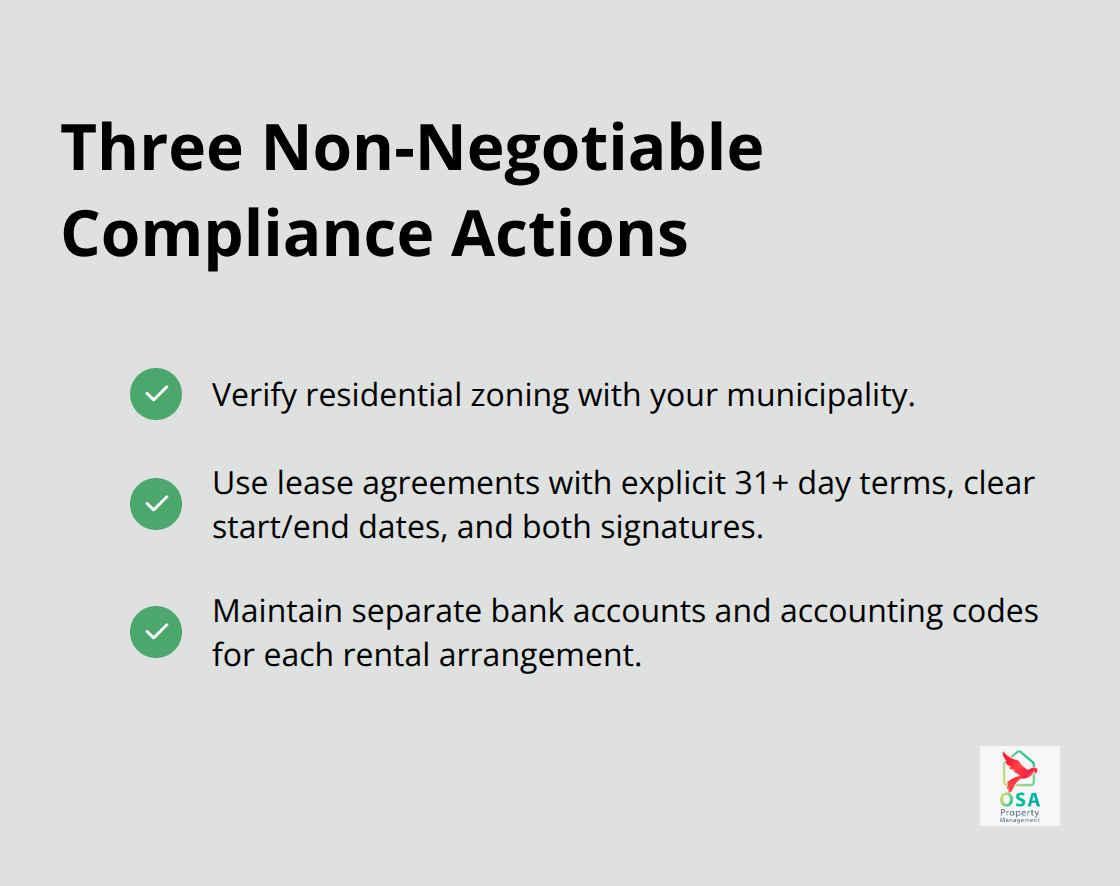
VAT exemptions for rentals in Costa Rica require three non-negotiable actions: verify your property’s residential zoning classification with your municipality, structure lease agreements with explicit 31+ day terms and clear signatures, and maintain separate bank accounts and accounting codes for each rental arrangement. Missing any of these steps costs thousands in retroactive penalties and forfeited tax savings. A property generating $10,000 monthly in long-term exempt income saves $15,600 annually compared to short-term taxable rentals, compounding to $78,000 over five years.
Professional tax guidance transforms compliance from a source of stress into a strategic advantage. A Costa Rican accountant handling quarterly tax payments, electronic invoicing, and deduction tracking typically costs $300–$600 annually while saving $2,000–$5,000 through proper expense identification and audit protection. These professionals understand how Hacienda cross-references lease agreements, bank statements, and municipal permits during audits, and they structure your documentation to withstand scrutiny.
We at Osa Property Management manage VAT exemptions for rentals across Dominical, Uvita, Ojochal, and other southern Pacific regions with over 16 years of experience. Our team handles tax compliance, electronic invoicing, accounting, and property management so you focus on returns rather than regulations. Contact Osa Property Management to discuss how we structure VAT compliance for maximum returns on your Costa Rican rental property.