

Costa Rica’s tropical climate brings unique challenges for homeowners. Heavy rains, humidity, and salt air can damage properties quickly if you’re not prepared.
At Osa Property Management, we’ve seen how strategic planning prevents costly repairs down the road. This guide covers everything you need to know about timing and budgeting Costa Rica home repairs throughout the year.
When to Schedule Major Repairs in Costa Rica
Costa Rica’s climate operates on two distinct seasons, and timing repairs around them separates smart owners from those facing emergency bills. The dry season runs December through April, while the rainy season stretches May through November. Schedule all major structural work, roof repairs, exterior painting, and foundation assessments during the dry season. Weather stability allows contractors to work consistently without delays, materials stay dry during application, and you avoid the foundation settlement issues that heavy rainfall accelerates. A roof inspection in April costs $400 to $800 in preventive maintenance; waiting until June can cost $8,000 in emergency roof replacement after water infiltrates your structure.
Why Rainy Season Repairs Create Cascading Damage
The rainy season brings significant rainfall to many regions, and humidity regularly exceeds 70 percent. Water infiltration represents the single largest threat to expat homes in Costa Rica. Once water penetrates your roof or exterior sealants, it triggers foundation settlement, structural cracks, mold colonies, and wood rot that spread faster than expected. Mold thrives in humidity above 60 percent and damages drywall, insulation, and structural integrity within weeks. Contractors battle muddy access roads, slower logistics, and potential landslides in certain areas during May through November, which inflates costs and extends timelines by 30 to 50 percent. Interior painting, plumbing repairs, and electrical work all suffer from moisture interference during this period, making any work feel temporary.
The Four Systems That Fail First
Roof, plumbing, electrical, and exterior paint or sealants fail fastest in Costa Rica’s tropical environment. Galvanized metal roofs require protective coatings every three to four years; follow-up inspections after heavy rainy seasons catch corrosion and damage before it spreads. Local water quality and pressure stress plumbing fittings constantly, so schedule annual inspections and clean water tanks every two years. Septic systems sized incorrectly lead to backups costing $2,000 to $5,000, making proper sizing during repairs non-negotiable.
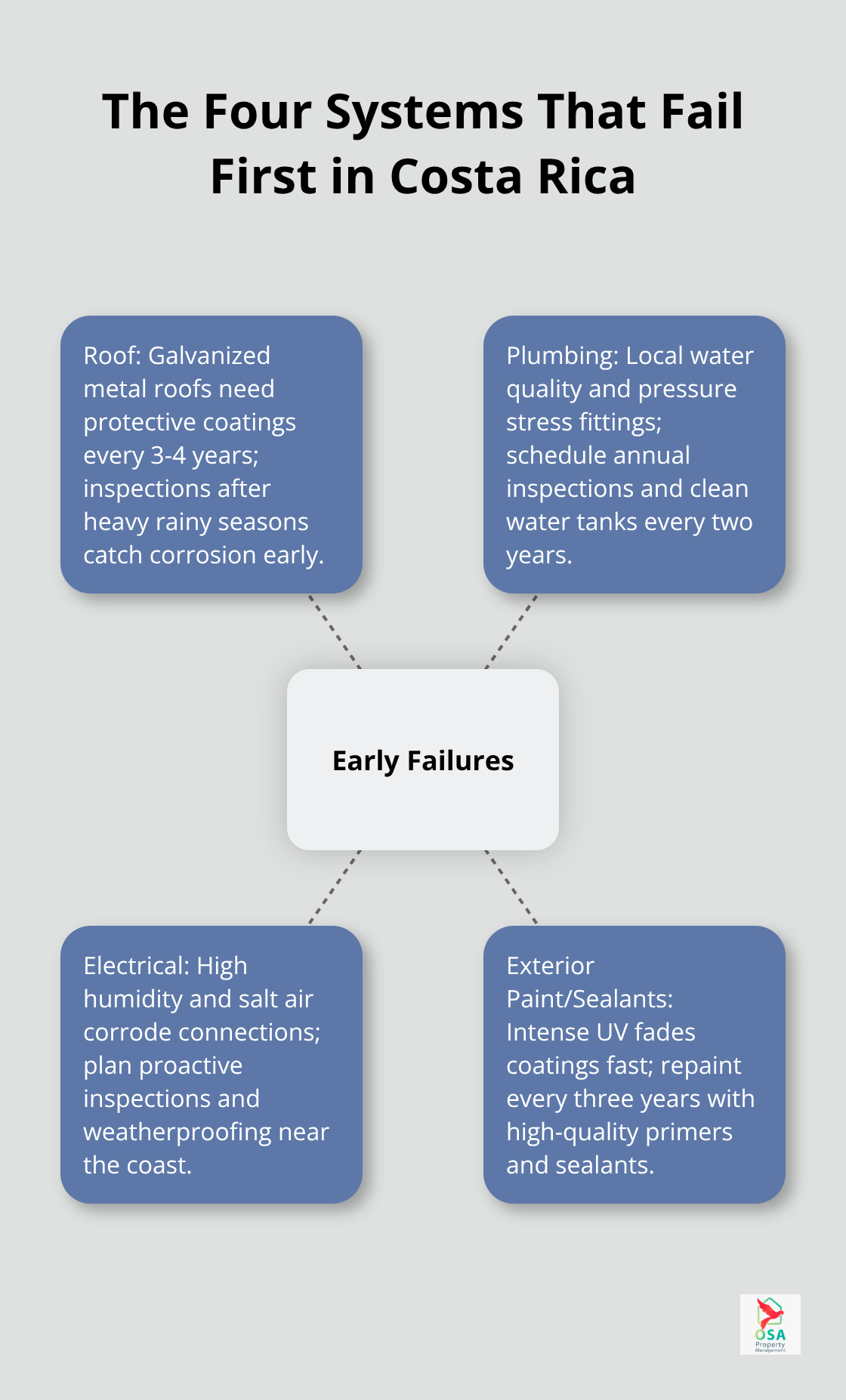
Exterior paint fades under equatorial UV exposure, so repaint every three years rather than five and use high-quality primers and coatings. Light-colored paint reduces heat absorption, lowering cooling costs.
Gutter and Drainage Management Year-Round
Weekly gutter cleanings during rainy season prevent blockages that compromise water management and accelerate foundation issues. Gutters clogged with debris redirect water toward your foundation instead of away from it, creating the exact conditions that trigger expensive damage. Install downspouts that direct water at least six feet from your home’s perimeter, and inspect them monthly for debris or damage. Addressing these four systems proactively during the dry season prevents the expensive cascade of damage that defines neglected tropical properties. With proper timing and maintenance, your home withstands Costa Rica’s climate challenges without the emergency repairs that drain both time and money.
Understanding when to repair is only half the battle-knowing how much to budget and which contractors to trust completes the picture.
How Much Should You Budget for Costa Rica Home Repairs
Assessing repair costs in Costa Rica requires understanding three price tiers that dictate what you’ll actually pay. Basic repairs run $800 to $1,200 per square meter, mid-range work costs $1,200 to $1,800 per square meter, and luxury finishes exceed $1,800 per square meter. These figures represent structural work, materials, and labor-but hidden costs routinely catch owners off guard. Hookups for water and electricity, road access, perimeter walls, legal fees, and permit documentation add 15 to 25 percent to your initial estimate.
Exchange Rates and Quote Locks
Exchange rate fluctuations between USD and Costa Rican colón shift costs monthly, so lock in contractor quotes within 48 hours and confirm whether pricing holds if the project extends beyond three months. Expect major renovations to take 12 to 24 months from planning through occupancy; smaller repairs compress into three to six months but still require permits and municipal inspections.
Finding Trustworthy Contractors
The single best way to avoid budget shock is obtaining quotes from three different contractors before committing to any work. Costa Rica has no Better Business Bureau equivalent, so rely instead on referrals from your real estate agent, home inspector, lawyer, and local expat groups. Interview each contractor about their experience with your specific repair type, ask for photos of completed projects in similar climate zones, and verify they hold municipal engineering department licenses. Contractors unfamiliar with Costa Rica’s permit requirements, seasonal delays, and tropical material degradation will underestimate timelines and costs-a mistake that compounds quickly.
Why Preventative Maintenance Costs Far Less Than Emergency Repairs
Spending 1-4% of your property’s value annually on preventative maintenance prevents approximately $15,000 in foundation repairs, $8,000 in roof replacements, and $5,000 in septic failures, resulting in 40 to 60 percent fewer repairs over five to ten years. This calculation comes from actual property data in tropical climates where deferred maintenance cascades into structural failure. A $400 roof inspection in April catches deteriorated rubber washers and flashing before the rainy season floods your interior; ignoring it costs $8,000 in emergency replacement plus interior water damage remediation. Monthly air conditioning filter replacements prevent 15 to 20 percent efficiency loss and extend compressor life by years; quarterly replacement schedules common in temperate climates fail in Costa Rica’s high-humidity environment. Annual plumbing inspections detect corrosion in local fittings before leaks damage walls and foundations; waiting for visible problems means replacing entire sections of pipe hidden behind walls.
Documentation Increases Resale Value
Document every inspection, repair, and contractor visit with photographs, dates, and costs-this maintenance history increases resale value significantly because Costa Rican buyers specifically ask about roof condition and maintenance records when evaluating a property. Professional property managers coordinate trusted contractors, schedule seasonal tasks, and provide monthly updates with photos, removing the stress of managing repairs from abroad. Osa Property Management brings over 20 years of regional experience across Tarcoles, Jacó, Dominical, Manuel Antonio, Ojochal, Uvita, and Golfito, with legally insured staff who know exactly which contractors deliver quality work on schedule and within budget.
With your budget and contractor strategy in place, the next step involves understanding which repairs demand immediate attention and which ones you can schedule strategically throughout the year.
What Maintenance Tasks Prevent Major Damage in Costa Rican Homes
Mold thrives in humidity above 60 percent and spreads through walls, insulation, and structural components within weeks once moisture enters your home. The University of Costa Rica’s research on termites documents millions of dollars in annual damage across the country, making pest prevention non-negotiable. You need a maintenance approach that addresses mold, water damage, roof deterioration, and termite infiltration simultaneously rather than treating them as separate problems.
Weekly and Monthly Tasks That Stop Water Damage
Clean gutters weekly during rainy season to prevent water pooling near your foundation. Install dehumidifiers in bedrooms, bathrooms, and enclosed spaces where humidity concentrates, and position ceiling fans to maintain air movement that prevents mold colonies from establishing. Check your air conditioning unit monthly for refrigerant leaks and clean coils quarterly, since salt-laden coastal air accelerates corrosion of AC components and reduces cooling efficiency by 15 to 20 percent. Replace AC filters monthly rather than quarterly because Costa Rica’s humidity and dust load clog filters faster than temperate climates allow. Test your main water shutoff valve annually to confirm it operates during emergencies, and schedule professional plumbing inspections every 12 months to catch corrosion in local fittings before leaks damage walls behind surfaces you cannot see.
Roof Inspections Before Rainy Season Arrives
Roof inspections should occur in April, before the rainy season peaks, focusing on rubber washers, flashing, tile integrity, and gutter attachment points. Preventive washer replacement during this inspection helps avoid costly emergency repairs that follow water infiltration into your structure. Galvanized metal roofs need protective coatings every three to four years, with follow-up inspections after heavy rainy seasons catching corrosion before damage spreads.
Termite Prevention and Pest Control Schedules
Termite prevention requires scheduling pest control every four to six weeks rather than annually, since Costa Rica’s warm climate accelerates termite reproduction cycles beyond temperate-region timelines. Use termite-treated wood or non-wood materials in repairs, and seal gaps around plumbing penetrations and electrical conduits where termites enter. Photograph your property quarterly to document any new damage patterns that indicate pest activity.
Coastal Salt Corrosion and Electrical Protection
Coastal properties face accelerated corrosion of galvanized metal, so upgrade to marine-grade electrical components and inspect outdoor wiring annually with weatherproof protective covers. Test your electrical panel monthly for corrosion and address any discoloration immediately. Document every inspection, repair, and contractor visit with photographs and dates, creating a maintenance history that increases resale value because Costa Rican buyers specifically ask about roof condition and documented maintenance records when evaluating properties.
Final Thoughts
Planning Costa Rica home repairs strategically transforms how you manage property ownership in a tropical climate. A $400 roof inspection in April stops $8,000 in emergency repairs, monthly AC filter replacements prevent efficiency loss and compressor failure, and weekly gutter cleanings during rainy season protect your foundation from water infiltration that costs $15,000 to remediate. These small investments compound into 40 to 60 percent fewer repairs over five to ten years, and documentation matters because Costa Rican buyers specifically ask about maintenance records when evaluating properties.
Managing Costa Rica home repairs from abroad creates real stress, especially when contractors operate on unfamiliar timelines and permit requirements shift by municipality. We at Osa Property Management handle this complexity for you-with over 20 years of regional experience across Tarcoles, Jacó, Dominical, Manuel Antonio, Ojochal, Uvita, and Golfito, our insured team coordinates trusted contractors, schedules seasonal maintenance, and provides monthly updates with photos so you know exactly what’s happening at your property. Your documented maintenance plan increases resale value and gives you confidence that your home withstands the humidity, salt air, and intense UV exposure that define tropical living.
Contact Osa Property Management to learn how professional management removes the stress of repairs and maximizes your property’s long-term value.