

If you own rental property in Costa Rica, understanding IVA is non-negotiable. The tax system works differently here than in many other countries, and mistakes can be expensive.
At Osa Property Management, we've helped countless landlords navigate Costa Rica rental IVA requirements. This guide walks you through what you owe, when you owe it, and how to minimize your tax burden legally.
What is IVA and Who Pays It
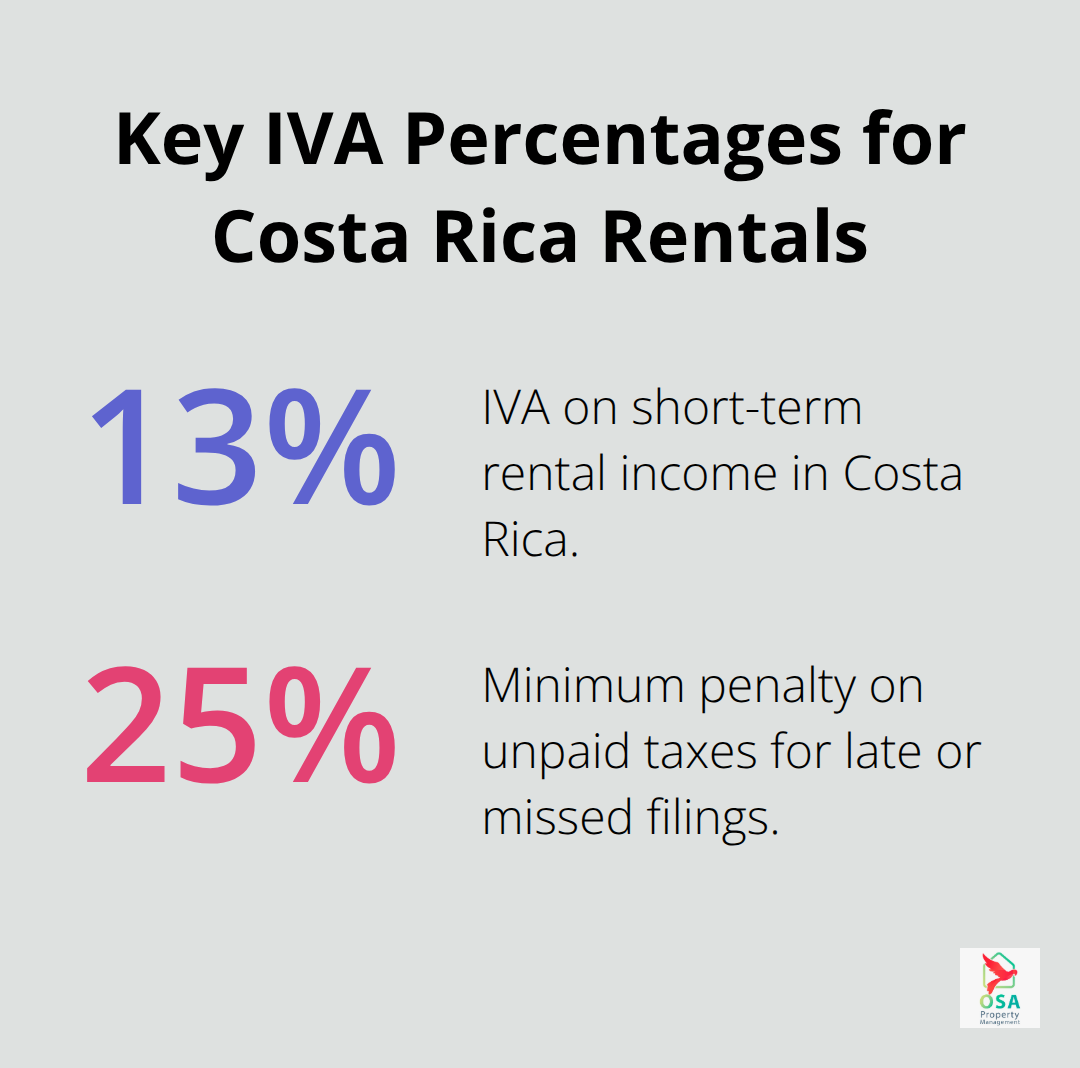
IVA stands for Impuesto sobre el Valor Agregado, which translates to Value-Added Tax. In Costa Rica, it's a 13% tax applied to short-term rental income-any lease under 30 days. Long-term rentals over 30 days are VAT-exempt, which creates a clear financial incentive to structure agreements beyond that threshold if possible. The tax applies whether you rent through Airbnb, VRBO, direct bookings, or your own website.
Where Compliance Matters Most
The Ministry of Finance audits rental properties coastal zones like Manuel Antonio and Uvita, so compliance isn't optional-it's a business necessity. Hosts and property owners must stay attentive to oversight from the Costa Rican Tourism Institute (ICT) and Costa Rica's tax authority (DGT). If your annual rental income exceeds roughly 1,000,000 colones, you must register as an IVA taxpayer and file monthly returns with Hacienda, Costa Rica's tax authority. Below that threshold, you can operate without formal IVA registration, but you'll forfeit the ability to deduct business expenses or recover the 13% IVA paid on purchases like maintenance, repairs, and cleaning supplies. That's a costly mistake.
Filing Deadlines and Monthly Requirements
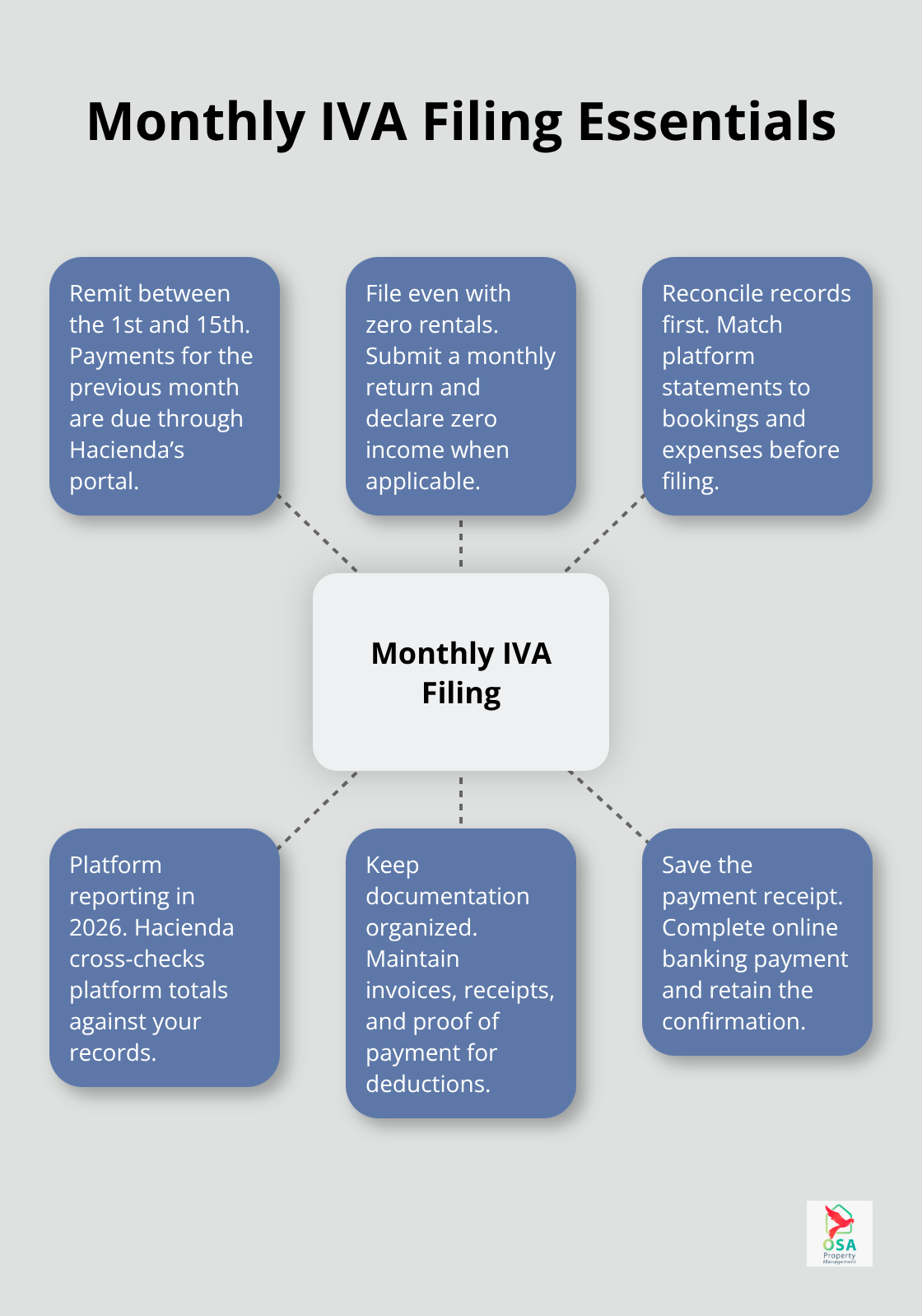
The fiscal month runs from the 1st to the 31st, and you must remit taxes between the 1st and 15th of the following month. You must file monthly even when there are no rentals-declare zero income if needed. As of 2026, digital platforms collect host IDs and report transaction data to Hacienda, making monthly bookkeeping essential. The tax authority can now cross-check platform totals against your records, so meticulous record-keeping protects your business.
How the Math Works in Practice
A $1,000 rental generates $1,130 in gross revenue: the $1,000 base plus $130 in IVA. You collect that $130 from guests and remit it to Hacienda. If you're registered as an IVA taxpayer, you can offset IVA paid on legitimate business expenses. A $2,000,000 colones renovation, for example, yields roughly 260,000 colones in recoverable IVA. This is where professional accounting matters.
Documentation and Expense Recovery
You need meticulous documentation-invoices with your registration details, receipts, and proof of payment for every expense. Digital tools like Wave or Zoho Books help categorize expenses and speed up monthly calculations. Paying contractors by bank transfer or credit card, never cash, ensures expenses are recognized for IVA recovery. Set aside a portion of monthly rental income specifically for IVA payments to avoid cash-flow gaps and penalties. Penalties for non-compliance range from 25% to 100% of unpaid taxes, plus daily interest, making timely payments critical. Compliance reduces total costs compared to avoiding IVA, and organized records help maximize deductions and minimize liability.
Understanding these fundamentals positions you to manage your tax obligations effectively. The next section covers the specific monthly filing process and what Hacienda expects from you.
How to File and Pay IVA Monthly in Costa Rica
Filing IVA in Costa Rica requires precision and consistency. The fiscal month runs from the 1st to the 31st, and you must remit taxes between the 1st and 15th of the following month through Hacienda's online portal. If you collect rental income in January, you file and pay in February. Missing this window triggers penalties starting at 25% of unpaid taxes, plus daily interest that compounds quickly. You must file monthly even when you have zero rentals-declare zero income and zero IVA if applicable. As of 2026, digital platforms report your transaction data directly to Hacienda, so the tax authority cross-checks platform totals against your submitted records. This makes sloppy bookkeeping a liability, not just an inconvenience. The payment process itself is straightforward: log into online banking, navigate to Impuestos, select Impuesto del Valor Agregado, enter the amount owed, pay, and save the receipt. The friction point isn't the payment-it's having accurate numbers ready when the deadline arrives.
Reconcile Your Numbers Before the Deadline
Most landlords underestimate how much time accurate monthly reconciliation takes. You need platform statements, your own booking records, expense receipts, and utility invoices all organized and cross-checked before the 15th. A $1,000 rental generates $130 in IVA owed to Hacienda. Multiply that across a property with 20 bookings per month, and you manage $2,600 in monthly IVA liability. One missed or late filing costs more than professional accounting fees for the entire year.
Organize Invoices With Your Registration Details
Documentation is where most landlords fail. Hacienda does not accept vague expense claims or handwritten notes. You need invoices with your IVA registration number printed on them, bank transfer receipts proving payment, and digital records showing what was purchased and when. Construction materials, contractor services, cleaning supplies, maintenance repairs, insurance, and utilities-every expense that relates to the rental business requires documentation. If a contractor issues an invoice without your registration details, it will not count for IVA recovery. This means you must communicate your registration number to every service provider upfront.
Use Digital Tools to Track Expenses
Digital accounting tools like Wave or Zoho Books eliminate the chaos of spreadsheets and paper trails. These platforms categorize expenses automatically, flag missing documentation, and generate reports ready for monthly filing. The cost runs typically $15–$30 per month, far cheaper than hiring someone to manually organize receipts. More importantly, they create an audit trail that protects you if Hacienda questions your deductions. Set up a dedicated bank account for all rental-related expenses-separate from personal spending. Pay contractors by bank transfer or credit card, never cash. Cash payments leave no paper trail and will not be recognized for IVA recovery, even if you have the receipt. This single habit eliminates disputes about whether expenses actually occurred.
Calculate Your IVA Recovery Potential
A $2,000,000 colones renovation yields roughly 260,000 colones in recoverable IVA, but only if invoices are properly documented and payments are traceable. The difference between organized records and disorganized ones is significant money. Hacienda's 2026 reporting requirements mean the tax authority now possesses detailed transaction data from platforms, making accurate expense documentation your strongest defense against audit risk. Your next step involves understanding which expenses qualify for recovery and how to structure your rental agreement to maximize deductions.
Managing IVA Through Deductions and Smart Structure
IVA recovery determines whether landlords win or lose money. The 13% tax hits your rental income, but you reclaim it on qualifying business expenses-if documentation is airtight. Maintenance repairs, contractor labor, cleaning supplies, property insurance, utilities tied to the rental, and professional accounting fees all qualify. A $2,000,000 colones renovation delivers roughly 260,000 colones in recoverable IVA according to Hacienda guidelines, but only invoices with your IVA registration number printed on them count. This means you must provide your registration details to every contractor, utility company, and supplier before work starts.
Document Every Expense With Your Registration Number
Many landlords lose thousands in potential recovery because they pay cash or accept invoices without their registration information. You need invoices with your IVA registration number, bank transfer receipts proving payment, and digital records showing what was purchased and when. Set up a dedicated business bank account and pay every expense via transfer or card-never cash. This creates an unbreakable audit trail that protects you during audits. Digital accounting software like Wave or Zoho Books automatically flags expenses lacking proper documentation, preventing incomplete claims from reaching Hacienda.
Reconcile Monthly Records Before Filing
The monthly reconciliation takes two to three hours if organized, or two to three days if chaotic. Most landlords underestimate this time and file late, triggering penalties that exceed professional accounting fees for the entire year. You need platform statements, your own booking records, expense receipts, and utility invoices all cross-checked before the 15th of each month. One missed filing costs more than hiring an accountant to handle the work.
Hire a Professional to Maximize Deductions
A local Contador Público Autorizado with real estate experience typically costs 150,000 to 300,000 colones annually, but they recover far more in deductions than they cost. A professional identifies renovation expenses you missed, coordinates with contractors to verify proper invoicing, and handles monthly filing to prevent penalties starting at 25% of unpaid taxes plus daily interest. They also advise on rental agreement structure-a critical but overlooked strategy.
Consider Long-Term Rentals to Eliminate IVA
Long-term rentals over 30 days are VAT-exempt, meaning if you shift a property to leases of 31+ days, you eliminate the 13% IVA liability entirely. This works if your market supports it; in tourist zones like Manuel Antonio or Uvita, short-term rental income typically exceeds long-term rental income, so the trade-off rarely makes sense. But in secondary markets or during low seasons, converting to longer leases reduces tax burden significantly. Your accountant models both scenarios and shows the financial impact.
Protect Yourself Against Audit Risk
As of 2026, digital platforms report your rental data directly to Hacienda, so the tax authority cross-checks platform income against your filed returns. Accurate bookkeeping isn't optional-it's your defense against audit risk. Organized records and proper documentation eliminate disputes about whether expenses actually occurred and whether you qualify for IVA recovery.
Final Thoughts
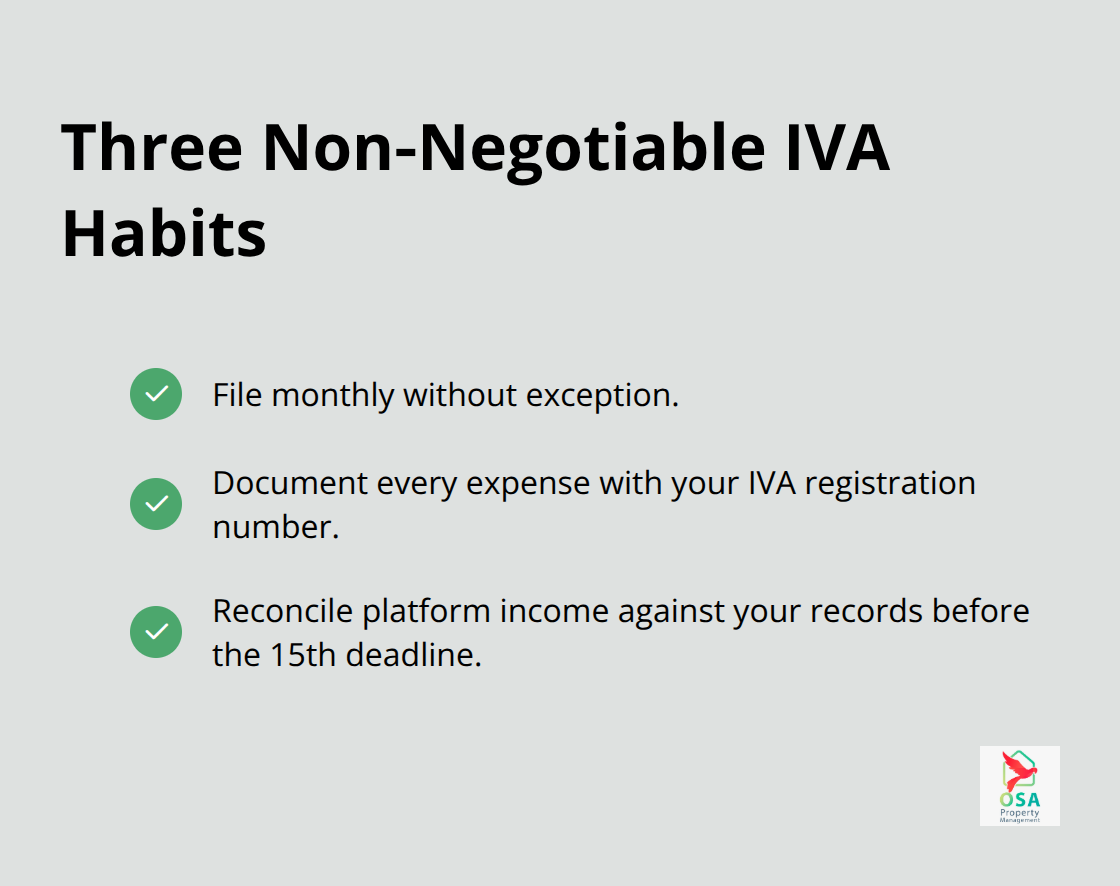
IVA compliance in Costa Rica requires three non-negotiable habits: file monthly without exception, document every expense with your IVA registration number, and reconcile platform income against your records before the 15th deadline. Missing even one filing triggers penalties starting at 25% of unpaid taxes plus daily interest that compounds quickly. The 2026 shift to platform reporting means Hacienda now cross-checks your declared income against transaction data from Airbnb and VRBO, making accurate bookkeeping your strongest defense against audit risk.
Common mistakes cost landlords thousands annually-paying contractors in cash, accepting invoices without your registration details, and filing late rank as the three most expensive errors. A $2,000,000 colones renovation yields roughly 260,000 colones in recoverable IVA, but only if documentation is airtight. Hiring a local accountant for 150,000 to 300,000 colones per year pays for itself through deductions you'd otherwise miss and penalties you'll avoid.
Register with Hacienda if your annual rental income exceeds 1,000,000 colones, set up a dedicated business bank account, and establish a monthly filing routine before the 15th of each month. If managing Costa Rica rental IVA feels overwhelming, professional property management firms like Osa Property Management handle accounting, tax compliance, and monthly filing as part of their service packages. With over 20 years of regional experience in areas like Dominical, Uvita, and Manuel Antonio, they understand the specifics of coastal rental markets and can simplify your compliance burden while maximizing your deductions.