

Missing an IVA payment deadline in Costa Rica can cost you thousands in penalties. We at Osa Property Management help property owners and business operators navigate these requirements with confidence.
This guide breaks down exactly when payments are due, what documentation you need, and how to stay compliant year-round.
IVA in Costa Rica: What You Collect and When You Pay
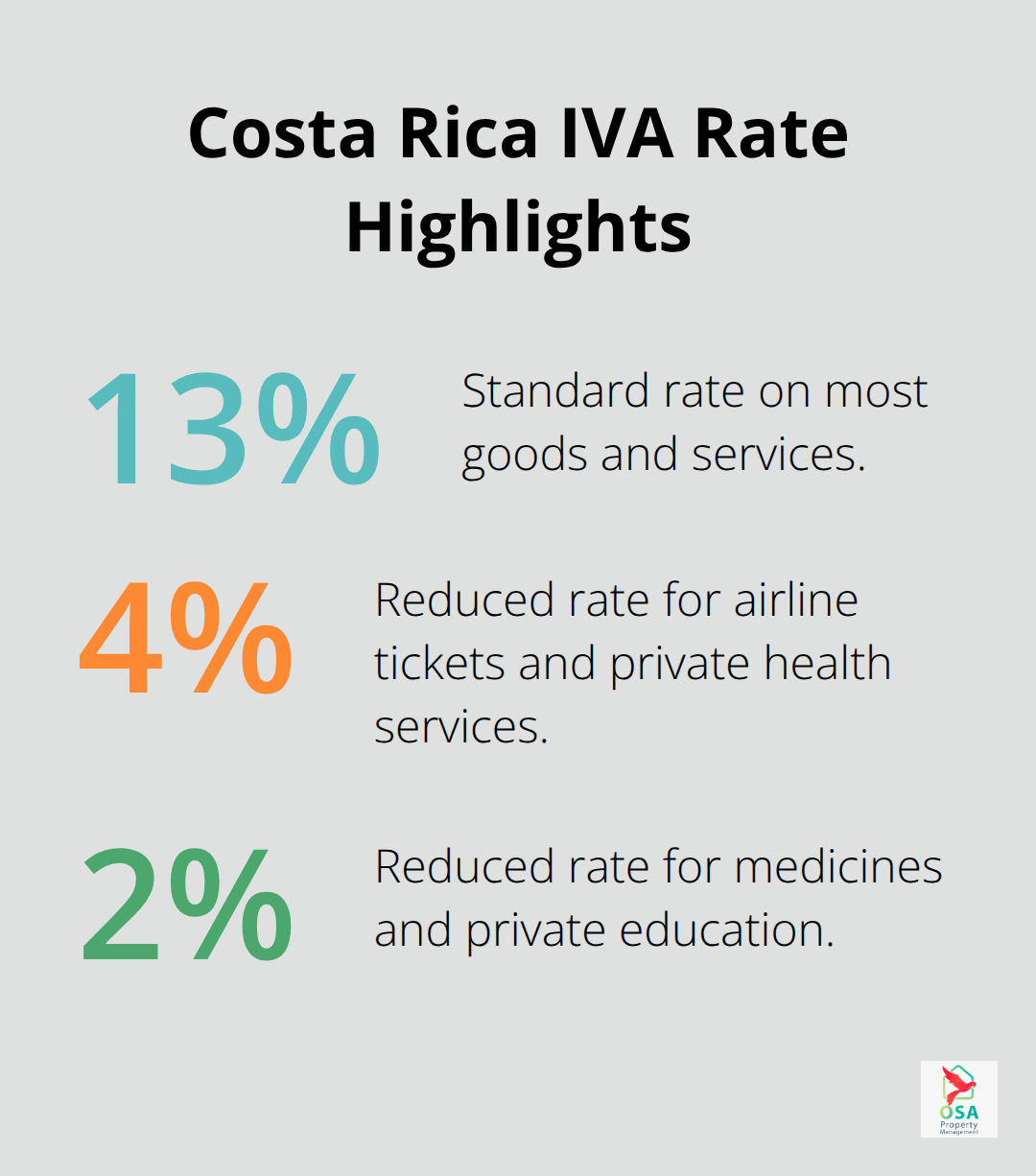
IVA, or Impuesto de Valor Agregado, is Costa Rica’s value-added tax system that applies to most goods and services. The standard rate sits at 13 percent, according to PwC’s 2025 tax summaries. When you sell a rental property, provide services, or import goods, you collect tax on behalf of the government and must remit it monthly. The system works differently than many expect: you collect 13 percent from customers, but you can deduct the IVA you paid on business expenses. For a $1,000 vacation rental, you collect $1,130 total (including the 13 percent IVI on the base fee) and remit $130 to Hacienda the following month.
Reduced Rates and Zero-Rated Exemptions
Reduced rates apply to specific categories across Costa Rica’s tax structure. The 4 percent rate covers airline tickets and private health services, while medicines and private education fall under 2 percent. Agricultural goods qualify for 1 percent, and certain farm equipment receives 0.5 percent. Zero-rated exemptions include exports, public transportation, residential electricity and water, basic groceries, and public healthcare. These tiered rates mean your actual tax obligation depends on what you sell or the services you provide.
How IVA Works for Vacation Rentals and Add-On Services
Vacation rental operators collect 13 percent IVI on the base rental fee plus 13 percent IVA on any add-on services like tours, private chefs, or concierge offerings. This dual-rate structure requires careful tracking to ensure you remit the correct amounts. You must issue a factura electrónica (digital invoice) for each reservation to document IVA/IVI collection and maintain it as a tax record. The renter pays these taxes through the rental price, and you remit the collected amount to Hacienda monthly.
Registration Requirements and Mandatory Compliance
Registration has no VAT threshold in Costa Rica, meaning virtually all businesses must register, including non-established overseas businesses that must appoint a fiscal representative and residential agent. The fiscal month runs from the 1st to the last day, with IVA declarations due between the 1st and 15th of the following month through the Hacienda portal. You must declare every month regardless of activity; even zero-income months require a $0 declaration. Rental properties operating legally must be registered as IVI/IVA taxpayers, and renting without registration is illegal and triggers penalties or audits. Non-registered properties remain invisible to tax authorities, but that invisibility carries serious legal risk.
Digital Invoicing and Third-Party Platforms
Digital invoicing is mandatory for all sales-you must issue factura electrónica to document collection and maintain them as tax records. This requirement applies whether you work directly with renters, use platforms like Airbnb or Vrbo, or partner with a property manager. If you collect taxes from renters, you cannot rely on third-party platforms alone; you must set up your own VAT collection and reporting processes to maintain compliance and protect yourself during audits. Your documentation becomes critical when tax authorities review your filings.
When IVA Payments Come Due in Costa Rica
IVA payments in Costa Rica follow a strict monthly schedule that leaves no room for guesswork. The fiscal month runs from the 1st to the last day of each calendar month, and your IVA declaration must be filed within the first 10 natural days of the following month through the Hacienda portal. If you collect rent in January, you declare and remit that tax by the 10th of February. The payment deadline is not negotiable, and Hacienda enforces it consistently across all taxpayers.
Many property owners miss this window because they assume their accountant handles everything or they confuse the declaration date with the collection date. You must declare every single month regardless of activity-even months with zero rentals require a $0 declaration filed on time. Failing to file, even with nothing to report, counts as a missed deadline and triggers penalties. For vacation rental operators, this means tracking both your base 13 percent IVI on rental fees and the 13 percent IVA on add-on services separately when you file, since both amounts must be remitted together by the deadline.
Late Payments Carry Steep Penalties
Late IVA payments carry significant penalties according to Costa Rica’s tax regulations. The penalty structure is designed to be punitive rather than forgiving, so the cost of procrastination escalates quickly. Beyond the initial penalty, you also owe interest on the unpaid tax amount, which compounds monthly.
If you miss the deadline and file late, you pay the original tax plus interest plus applicable penalties. If you continue missing deadlines, Hacienda can place a lien on your property, freeze your bank accounts, or initiate collection proceedings. The enforcement system ensures that consistent compliance is far more cost-effective than attempting to catch up later.
Third-Party Platforms Don’t Remit Your Taxes
Property owners who operate through platforms like Airbnb sometimes assume the platform remits taxes on their behalf-they do not. You remain personally responsible for declaring and paying, even if a third party collects the money. This confusion has cost many operators thousands in accumulated penalties.
Digital Invoices Protect You During Audits
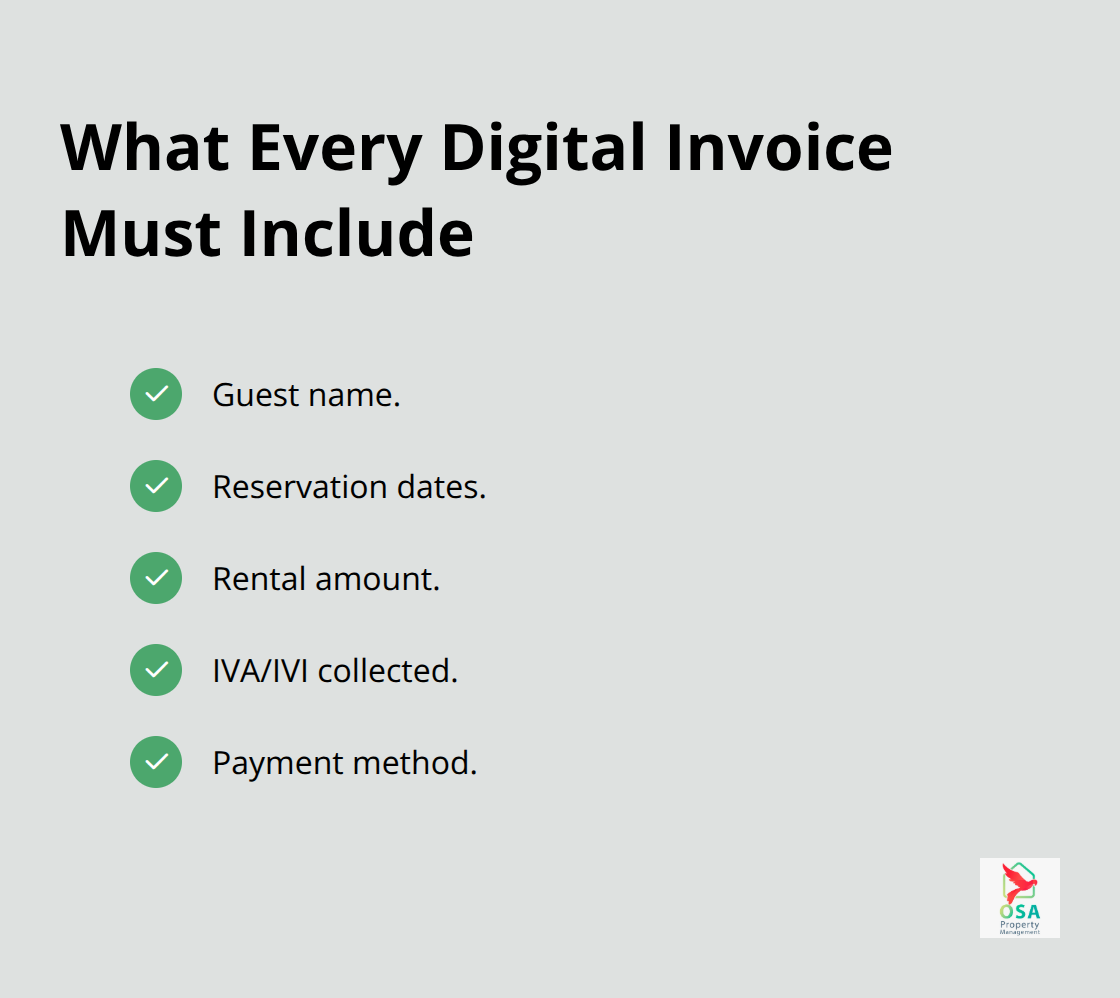
Your factura electrónica (digital invoice) for each reservation serves as your primary defense against audit challenges. Every invoice must include guest name, reservation dates, rental amount, IVA/IVI collected, and payment method, and must be issued in digital form through an approved system.
Keep copies organized by month in case Hacienda questions your filings.
Your monthly declaration to Hacienda should match your invoice records exactly-discrepancies trigger audits. If you work with a property manager, request monthly tax summaries that reconcile your collected amounts with your filed declarations. This documentation becomes critical when tax authorities review your compliance history. Properties that maintain clean records and file consistently face far fewer audit complications than those with gaps or inconsistencies.
Operating Informally Creates Serious Exposure
The digital invoicing requirement means you cannot operate informally; renting without issuing proper invoices and filing declarations is illegal and creates exposure to much steeper penalties than late payment fines. Non-registered properties remain invisible to tax authorities initially, but that invisibility carries serious legal risk when discovered. Hacienda’s audit focus on transfer pricing, sales tax credits, gross margin on sales, employee benefits, and income tax means your rental operation will eventually face scrutiny if you operate outside the system.
How to Build a Compliance System That Actually Works
Treat IVA compliance as a non-negotiable operational requirement, not something you handle when you remember. Set a specific calendar reminder for the 8th of each month-two days before the Hacienda deadline-to review your invoices, reconcile your rental income, and prepare your declaration. Monthly filing deadlines fall between the 1st and 15th of each month for the previous month’s activity. This two-day buffer prevents last-minute scrambling and gives you time to address discrepancies before filing. Use your phone’s calendar app, a project management tool like Asana, or a simple spreadsheet with automated alerts; the tool matters less than the consistency.
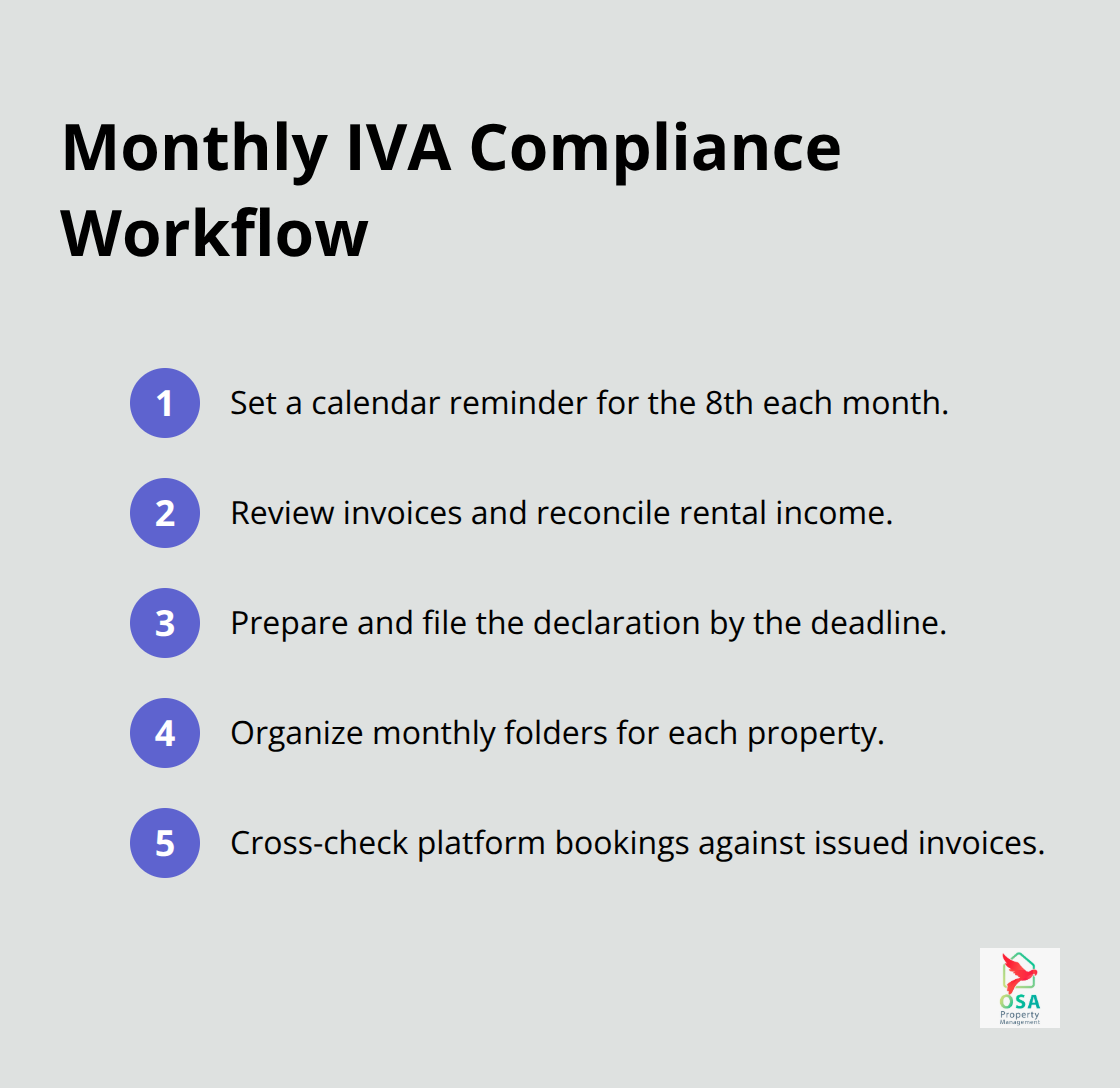
Document your rental activity in real time rather than reconstructing it from memory at month-end. If you manage multiple properties, create a separate folder for each one containing monthly summaries of bookings, IVA collected, and add-on services invoiced. When Hacienda audits your account, this organization proves you track activity deliberately rather than guessing at figures. The digital invoicing requirement means every transaction leaves a digital footprint anyway-you might as well organize it systematically from day one.
Hire a Costa Rican Accountant Familiar with Rental Operations
Do not outsource IVA compliance to an accountant unfamiliar with vacation rental taxation. Many general accountants understand corporate income tax but miss the nuances of IVA collection on rental fees versus add-on services, or they fail to catch months where you forgot to file a zero-income declaration. A rental-focused accountant costs between 15,000 and 25,000 colones monthly but saves you far more in avoided penalties and audit complications. They monitor your filing deadlines, flag discrepancies between your invoices and declarations, and respond immediately if Hacienda issues an audit notice.
They also know which deductions apply to rental properties-maintenance costs, property management fees, insurance, and utilities-that reduce your taxable income. Request monthly tax summaries that show exactly what you collected, what you declared, and what you remitted. If you work with a property manager, confirm they provide detailed monthly tax documentation that separates base rental IVA from add-on service IVA so your accountant can reconcile everything accurately. An accountant who understands your full financial picture can also optimize your overall tax position, potentially reducing your total tax liability through legitimate deductions and timing strategies that a generalist would miss.
Use Digital Tools to Track and File Consistently
Costa Rica’s mandatory digital invoicing system through the Hacienda portal creates an opportunity: use invoicing software that integrates with your tax filings rather than managing spreadsheets manually. Platforms certified by Hacienda allow you to issue invoices directly to renters, store them digitally, and generate monthly tax summaries in the format Hacienda requires. These systems cost roughly 10,000 to 20,000 colones monthly but eliminate transcription errors and reduce time spent on data entry to under an hour per month.
If you operate through Airbnb or Vrbo, download your booking data monthly and cross-reference it against your issued invoices to catch any gaps. Set up a simple spreadsheet with columns for reservation date, guest name, rental amount, IVA collected, add-on services, IVA on services, and total remittance due. This backup system serves as your audit defense when Hacienda questions your filings. The new TRIBU-CR electronic invoicing platform will eventually become mandatory, so familiarity with digital tax tools now positions you ahead of operators still using paper records. Property owners who maintain organized digital records report audit resolution in weeks rather than months because their documentation is immediately verifiable.
Final Thoughts
IVA payment deadlines in Costa Rica demand strict adherence, and the cost of missing them extends far beyond the original tax amount. Hacienda enforces these deadlines consistently across all taxpayers, and penalties accumulate quickly when you fall behind. Property owners who file consistently and maintain organized digital records avoid audit complications and keep their tax obligations manageable.
Timely compliance protects your property, your bank accounts, and your ability to operate legally in Costa Rica. Those who operate informally or miss deadlines face liens, frozen accounts, and penalties that dwarf the cost of proper compliance from the start. The monthly filing window between the 1st and 15th of each month remains your responsibility alone, regardless of whether you work with a property manager or use third-party platforms.
We at Osa Property Management handle IVA compliance, digital invoicing, monthly declarations, and tax coordination for property owners throughout the southern Pacific zone. Our team manages the administrative burden so you can focus on your investment returns, and professional expertise pays for itself through avoided penalties and optimized deductions. Contact us if you need full property management or tax guidance to navigate Costa Rica’s IVA payment deadlines with confidence.