
Renting out property in Costa Rica comes with tax obligations that confuse many owners. We at Osa Property Management help property owners navigate these requirements every day.
Understanding CR rental tax basics doesn't have to be complicated. This guide breaks down what you owe, how to calculate it, and the mistakes that cost owners money.
How Costa Rica's Rental Tax Works
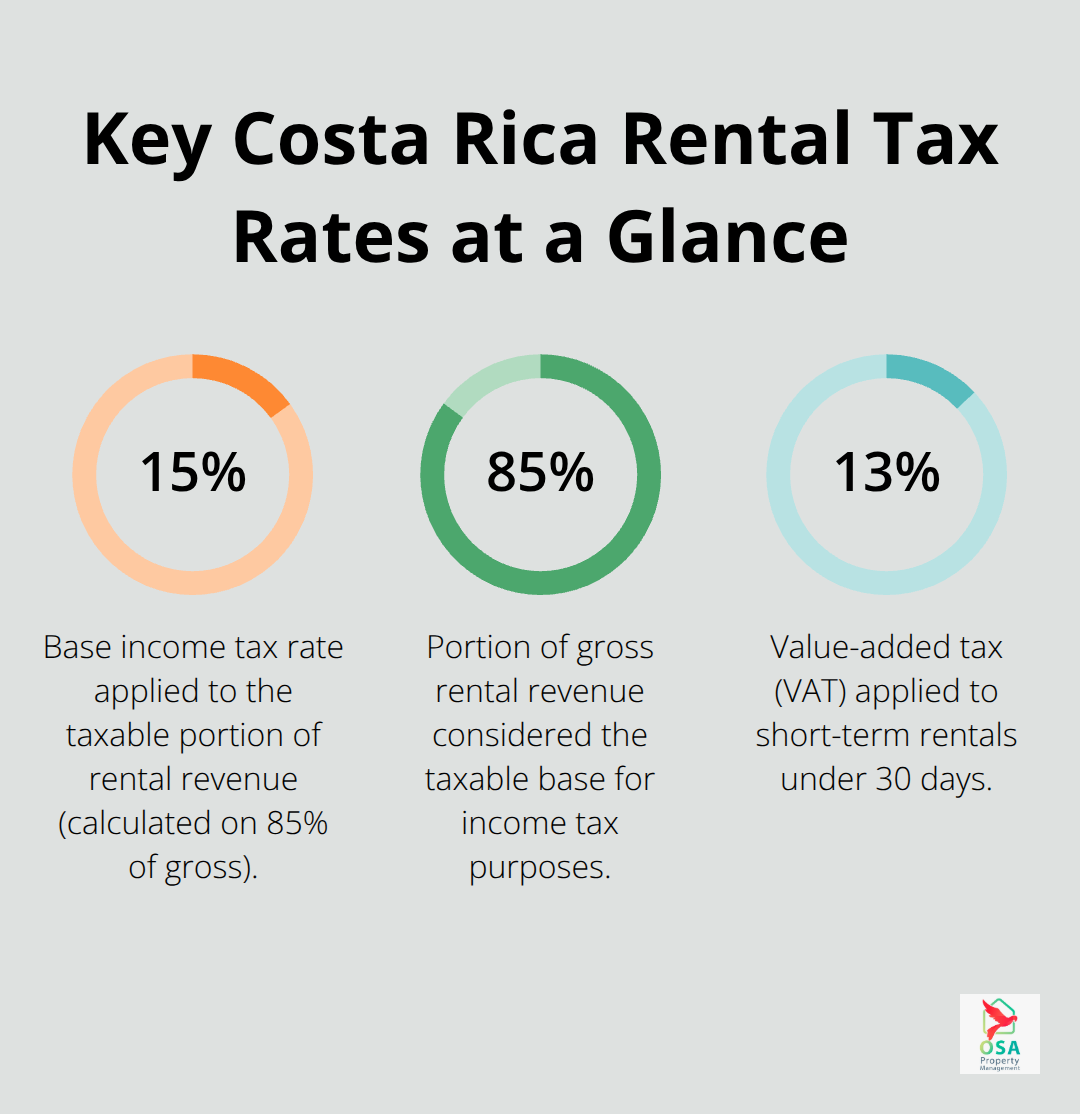
Costa Rica taxes rental income at a base rate of 15% applied to 85% of your gross rental revenue, creating an effective tax burden of around 12.75% according to the Dirección General de Tributación. However, the first 3.8 million colones of annual rental income remains tax-exempt, which means smaller property owners often pay nothing.
Short-term rentals carry an extra 13% VAT burden
Short-term rentals under 30 days face a mandatory 13% value-added tax on top of the standard rental income tax, effective since July 1, 2019. You must collect this VAT from guests and remit it monthly. Long-term rentals exceeding one month remain VAT-exempt only if monthly rent stays at or below 650,000 colones (currently around $1,085 USD). Exceeding this threshold triggers the 13% VAT even on long-term leases. Both local and foreign owners face identical tax treatment on rental income, though foreign owners sometimes face additional withholding requirements depending on their residency status and visa classification. The key difference lies in compliance complexity-foreign owners managing properties remotely often struggle with monthly Form D-125 filing requirements and maintaining proper documentation across time zones.
Documentation requirements are non-negotiable
The Dirección General de Tributación requires you to file Form D-125 monthly, even in months with zero income. You must maintain electronic receipts for all deductible expenses, bank statements showing rental deposits, and records of any property improvements. Many owners lose deductions worth thousands of colones simply because they lack organized digital records. Cloud-based accounting systems like QuickBooks Online or Xero help you separate rental and personal expenses, preventing the common mistake of mixing categories. Tax authorities have increased scrutiny on rental properties, especially those listed on platforms like Airbnb, so meticulous record-keeping protects you during audits. The administrative burden is real-owners typically spend 8–12 hours per month on compliance tasks-which is why many turn to professional property management to handle this work systematically.
Calculating Your Rental Income and Tax Liability
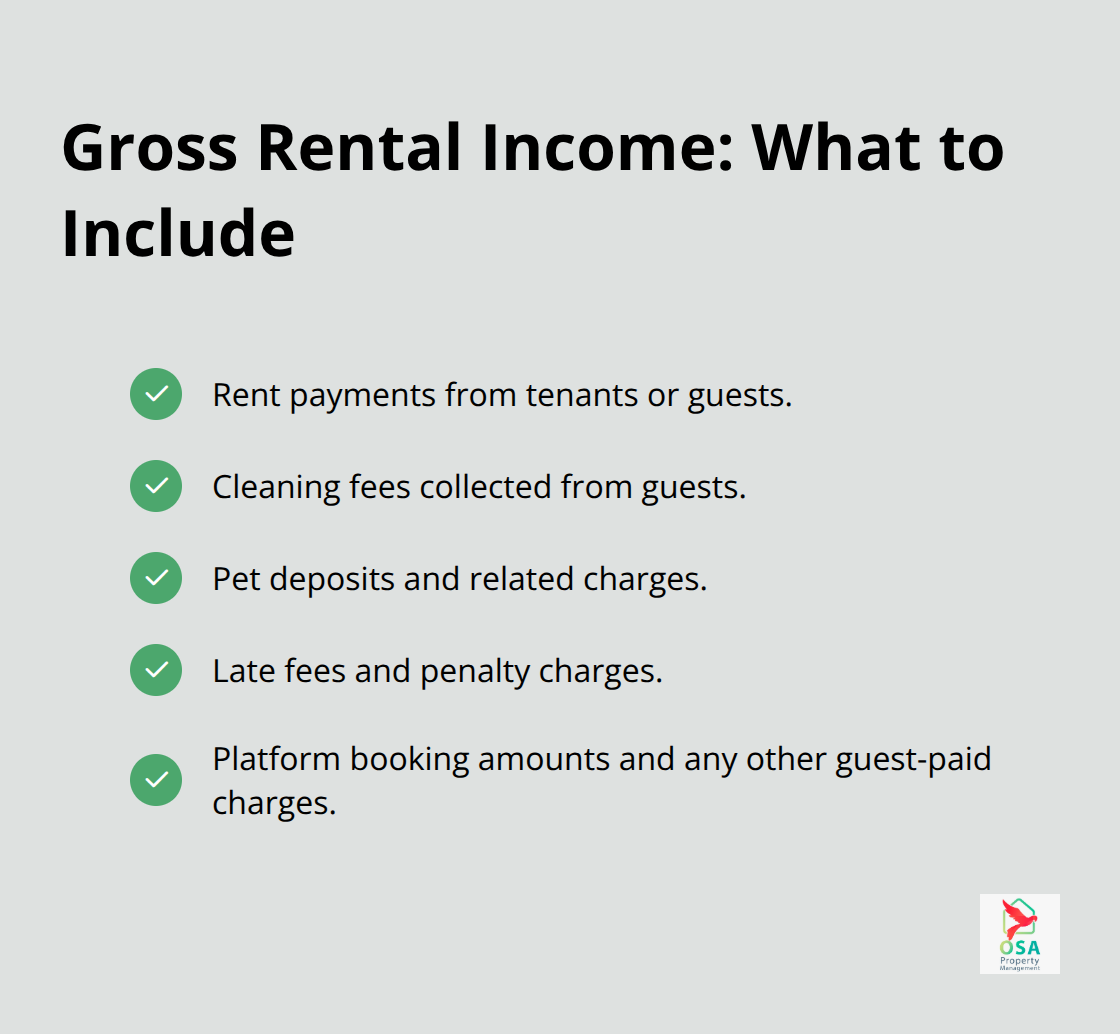
Start with gross rental income, which includes every colón you receive from tenants or platform bookings. This means rent payments plus cleaning fees, pet deposits, late fees, and any other charges guests pay. If you rent through Airbnb, download your annual summary report to verify total income, then cross-check it against your bank deposits. Tax authorities audit records when owners underestimate income by forgetting ancillary fees, and penalties follow quickly.
Open a Separate Bank Account for Rental Income
Open a separate bank account for rental income and maintain it exclusively for property-related transactions. This single step prevents the common mistake of mixing personal and rental expenses, which triggers audits and penalties. Use cloud-based accounting software like QuickBooks Online or Xero to categorize expenses automatically, reducing manual entry errors and saving 3–4 hours per month. Store electronic receipts digitally, organized by expense type and month, so you can retrieve them instantly during tax season or audits.
Track Guest Payments and Platform Income
Create a spreadsheet tracking guest payments, booking dates, and fees collected to reconcile against platform reports. Keep bank statements, property insurance documents, permits, and maintenance invoices in a secure digital folder accessible from anywhere. Tax authorities scrutinize Airbnb properties heavily, so timestamped photographs of maintenance work and written contractor agreements strengthen your compliance position.
File Monthly Declarations and Set Reminders
File Form D-125 monthly through the Dirección General de Tributación's online portal, even in months with zero income, because missing filings trigger automatic penalties regardless of whether you owed taxes. Set calendar reminders for the four annual installment deadlines and the Form D-125 filing date each month, preventing costly oversights. Professional property management companies handle this entire process systematically, filing monthly declarations, organizing receipts, and flagging deduction opportunities most owners miss-which often recovers thousands in overlooked deductions annually. This administrative burden (typically 8–12 hours per month) explains why many owners turn to experts who manage compliance as their core responsibility, freeing you to focus on property improvements and guest experience instead.
Common Mistakes Property Owners Make With Rental Taxes
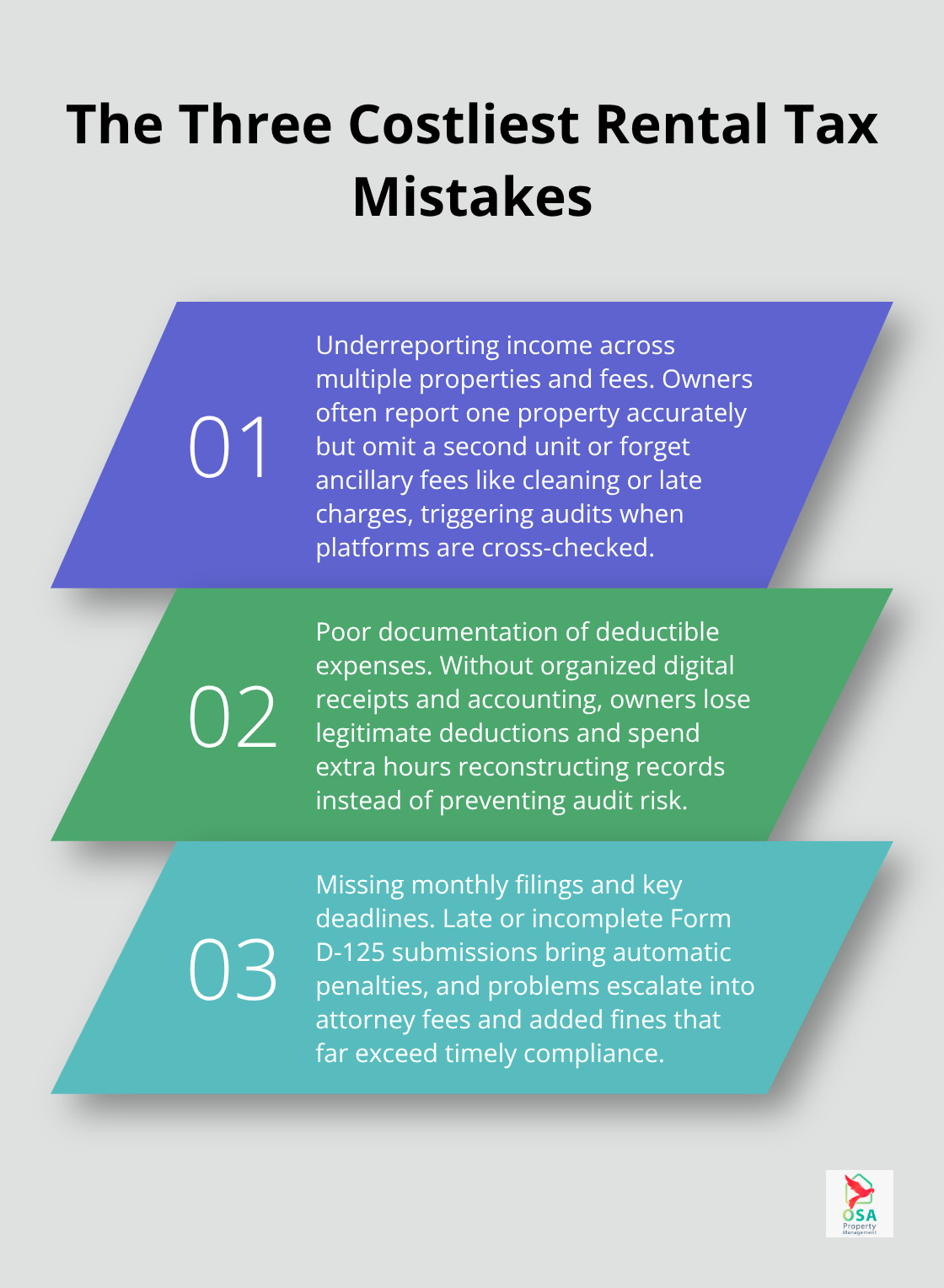
Property owners in Costa Rica consistently make three mistakes that drain thousands of colones annually. The first mistake occurs when owners with multiple properties fail to report all income sources to the Dirección General de Tributación. Many owners track rental income from one property meticulously but omit supplementary income from a second property, or they underestimate ancillary fees across multiple units. Tax authorities cross-reference platform reports like Airbnb statements against filed declarations, and discrepancies trigger audits that cost far more than the original unpaid taxes.
Underreporting Income Across Multiple Properties
Owners who operate multiple rental properties often report income from their primary unit while overlooking secondary properties or forgetting to include cleaning fees, pet deposits, and late charges. Tax authorities now scrutinize Airbnb properties heavily and cross-check platform statements against your filed declarations. When discrepancies appear, audits follow immediately, and the costs multiply fast. You face attorney fees of 150 to 250 USD per hour plus penalties that reach 25% to 100% of unpaid taxes. The solution is straightforward: create a master spreadsheet listing every property, every income source, and every ancillary fee collected from guests, then reconcile it monthly against your bank deposits and platform reports.
Failing to Maintain Organized Expense Records
The second mistake involves failing to maintain organized expense records. Owners who lack systematic documentation cannot claim legitimate deductions for property management fees, maintenance, utilities, insurance, or energy-efficient upgrades that the Dirección General de Tributación allows. Without cloud-based accounting systems like QuickBooks Online or Xero, owners spend 8 to 12 hours monthly reconstructing records instead of preventing audit risk. Open a separate bank account for rental income and maintain it exclusively for property-related transactions. This single step prevents the common mistake of mixing personal and rental expenses, which triggers audits and penalties. Store electronic receipts digitally, organized by expense type and month, so you retrieve them instantly during tax season or audits.
Missing Filing Deadlines and Accumulating Penalties
The third mistake is missing Form D-125 filing deadlines or submitting incomplete monthly declarations. Tax authorities impose automatic penalties for late filings regardless of whether you owed taxes that month, and missing even one deadline triggers escalating fines that compound monthly. Set calendar reminders for the four annual installment deadlines and the Form D-125 filing date each month, preventing costly oversights. Property owners who implement systematic record-keeping from purchase, open separate rental bank accounts, and maintain organized digital files reduce audit risk significantly while recovering thousands in overlooked deductions annually. Professional property management companies handle this entire process systematically, filing monthly declarations, organizing receipts, and flagging deduction opportunities most owners miss, which often recovers thousands in overlooked deductions annually.
Final Thoughts
Costa Rica's rental tax system demands attention to detail, but understanding CR rental tax basics protects your income and prevents costly penalties. Report all rental income including ancillary fees, maintain organized expense records, file Form D-125 monthly, and comply with VAT obligations for short-term rentals. Income above 3.8 million colones faces progressive taxation, but systematic record-keeping and proper deduction tracking recover thousands annually that most owners overlook.
Missing deadlines or underreporting income triggers audits that cost 150 to 250 USD per hour in attorney fees plus penalties reaching 25% to 100% of unpaid taxes, making compliance far cheaper than non-compliance. Professional tax compliance eliminates the administrative burden that typically consumes 8 to 12 hours monthly. We at Osa Property Management manage properties across Tarcoles, Jaco, Dominical, Manuel Antonio, Ojochal, Uvita, and Golfito, handling accounting and tax compliance as core services that ensure you capture every legitimate deduction while meeting all filing deadlines systematically.
Start today by opening a separate rental bank account and implementing cloud-based accounting software like QuickBooks Online or Xero. Set calendar reminders for monthly Form D-125 filings and annual installment deadlines. If managing compliance feels overwhelming, professional support recovers far more in deductions than it costs, freeing you to focus on property improvements and guest experience instead of tax administration.